Old Maps of Albion, Maine
Explore 53 old maps of Albion, spanning from 1892 to today. These high-resolution historic maps reveal how streets, neighborhoods, landmarks, and natural features evolved over time — perfect for genealogy, metal detecting, research, and local history exploration.
What you can do with these maps:
- See how Albion changed over time: Compare historical maps to modern-day views to trace roads, homesites, rail lines & more.
- View detailed metadata: Each map includes creators, publishers, year, scale, and archive source.
- Overlay maps with satellite & LiDAR: Visualize the past alongside modern tools to explore terrain & human change.
- Trusted historical sources: Maps sourced from the USGS, Library of Congress, and other archives.
- Access maps your way: View online, download high-res files, or order prints for personal or research use.
Start exploring old maps of Albion to uncover forgotten places, hidden landmarks, and the deep history beneath your feet.
Albion, ME maps
(53)- 1892 Map of Waterville
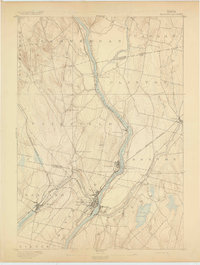 1892 Waterville1892 Print · USGSCentral Maine thrived along the river valleys during the late nineteenth-century rail boom. Researchers can trace the development of the Maine Central Railroad through Waterville or locate older river crossings like Pishon Ferry.7 unique versions available
 - 1893 Map of Vassalboro
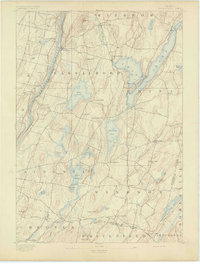 1893 Vassalboro1893 Print · USGSMaine's heartland in the 1890s reveals a network of mill villages and lakeside settlements along the Kennebec River. Genealogists can trace early homesteads and landmarks near China Lake, North Vassalboro, and the rural crossroads of Weeks Mills.5 unique versions available
 - 1898 Map of Vassalboro, 1935 Print
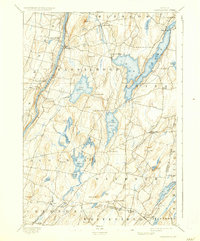 1898 Vassalboro1935 Print · USGSKennebec County at the close of the nineteenth century reveals a landscape of mill towns and interconnected lakes. Researchers can trace the early industrial footprint at Weeks Mills and Cooper Mills or follow the path of the Maine Central R.R. along the Kennebec River.
 - 1916 Map of Liberty
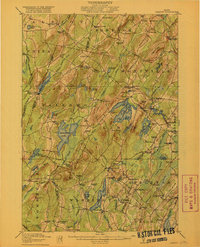 1916 Liberty1916 Print · USGSMid-coast Maine at the start of the Great War was a patchwork of small townships and family farmsteads connected by narrow-gauge rails. Researchers can locate dozens of country schools and named crossroads such as The Kingdom, Hibberts Gore, and Woodmans Mills.6 unique versions available
 - 1926 Map of Burnham
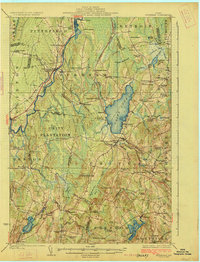 1926 Burnham1926 Print · USGSWaldo and Kennebec counties in the mid-1920s are captured here as a landscape of rural schoolhouses and family-named corners centered on the Sebasticook River. Genealogists can trace family roots through landmarks like Quaker Hill Church, the Freedom Town House, and dozens of district sites like Beech Hill School.3 unique versions available
 - 1941 Map of Vassalboro, 1954 Print
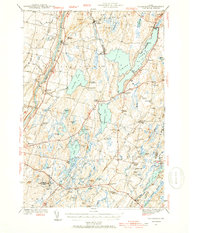 1941 Vassalboro1954 Print · USGSCentral Maine in the early 1940s reveals a landscape of lakeside settlements and scattered rural schoolhouses between the Kennebec and Sheepscot rivers. Genealogists can trace family roots through sites like Oak Grove Seminary, Friends Cem, and Weeks Mills.2 unique versions available
 - 1942 Map of Liberty
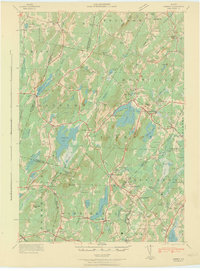 1942 Liberty1942 Print · USGSWaldo and Lincoln County lands are documented here just before mid-century, showing a landscape of rural schools and family-named corners. Genealogists can trace property near Hibberts Gore or locate ancestral homesites near Handy Sch and Montville Post Office.
 - 1943 Map of Vassalboro
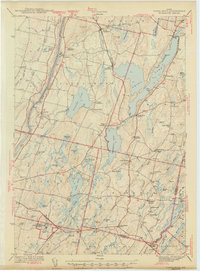 1943 Vassalboro1943 Print · USGSCentral Maine in the early 1940s is a landscape of expansive lake systems and interconnected mill villages. Researchers can trace the heritage of local institutions like Oak Grove Seminary, the stop at Windsor Station, and the historic Friends Cem.
 - 1943 Map of Waterville
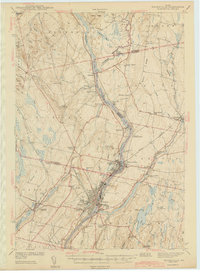 1943 Waterville1943 Print · USGSThe Kennebec and Sebasticook river valleys are shown in detail during the early 1940s, highlighting the rail hubs of Waterville and Winslow. Genealogists can trace family landmarks like Pratt Cem or the rural Covell Sch and Ten Lots Chapel.2 unique versions available
 - 1948 Map of Bangor
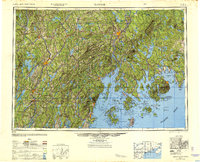 1948 Bangor1948 Print · USGSThe Maine coast and its industrial river valleys are captured here shortly after the war, showing the vital shipping and rail hubs of the late 1940s. Genealogists and historians can trace the tracks of the Maine Central RR connecting Bangor, Augusta, and Old Town.
 - 1950 Map of Liberty
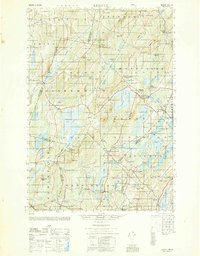 1950 Liberty1950 Print · USGSMid-century Waldo County and its neighbors are defined here by a network of crossroad hamlets and upland ridges just after the war. Local historians can trace the foundations of The Kingdom, identify family sites near Hutchins Corner, or locate rural schoolhouses like Hallidale Sch.
 - 1956 Map of Vassalboro, 1958 Print
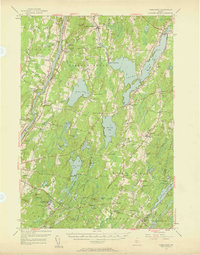 1956 Vassalboro1958 Print · USGSThe Kennebec River valley and the shores of China Lake are captured here during the mid-fifties. Researchers can trace historic institutions and rural centers like the Oak Grove Seminary, Erskine Academy, and the Windsor Fairgrounds.3 unique versions available
 - 1956 Map of Bangor, 1966 Print
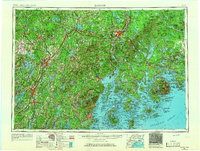 1956 Bangor1966 Print · USGSMid-century Maine comes alive in this survey of the rugged coast and river valleys during the 1950s. Genealogists and historians can trace the vital rail corridors of the Maine Central RR connecting timber towns like Old Town to the coast at Bar Harbor.3 unique versions available
 - 1957 Map of Waterville, 1959 Print
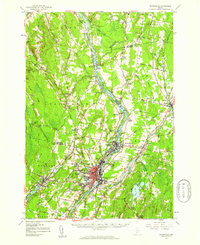 1957 Waterville1959 Print · USGSThe Kennebec River valley in the late fifties shows a bustling industrial landscape centered on the rail-and-river hub of Waterville. Researchers can trace historic institutions like Colby College, the Central Maine Sanatorium, and family-named sites such as Pishon Ferry or Ten Lots Chapel.3 unique versions available
 - 1957 Map of Burnham, 1959 Print
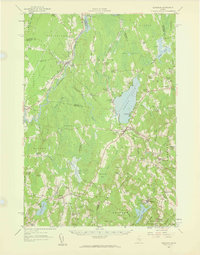 1957 Burnham1959 Print · USGSCentral Maine in the late 1950s reveals a landscape of tight-knit crossroads and small academies centered on the Unity Pond basin. Genealogists can trace family names through landmarks like Reynolds Corner, Freedom Academy, and the winding Belfast and Moosehead Lake Railroad.2 unique versions available
 - 1960 Map of Bangor
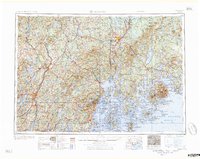 1960 Bangor1960 Print · USGSCentral Maine in the sixties reveals a landscape of river-powered industry and sprawling coastal island chains. Researchers can trace the rail corridors of the Maine Central or locate mid-century aviation landmarks like Dow Air Force Base.
 - 1961 Map of Bangor
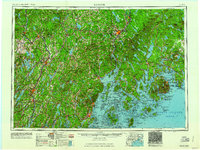 1961 Bangor1961 Print · USGSMid-century Maine comes alive through its busy river ports and rocky archipelagoes during a period of steady maritime and rail commerce. Researchers can trace the path of the Maine Central railroad and locate coastal landmarks from Acadia National Park to Vinalhaven Island.
 - 1961 Map of Palermo, 1964 Print
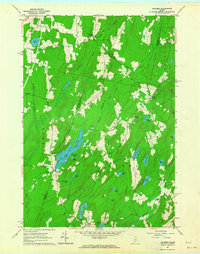 1961 Palermo1964 Print · USGSThe Waldo County interior in the early sixties remains a landscape of rural settlements and glacial waters. Genealogists can locate family landmarks like Sennetts Corner, the Palermo Sch, and the Perkins Cem near the banks of Sheepscot Pond.3 unique versions available
 - 1975 Map of Waterville SE, 1980 Print
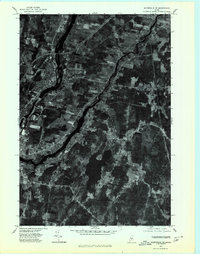 1975 Waterville SE1980 Print · USGSThe Kennebec and Sebasticook River corridors in the mid-1970s reveal a landscape of riverside industry and expanding rural neighborhoods. Genealogists and local historians can trace the footprints of Waterville, Winslow, and the outlying settlement at Goodwin Corner.
 - 1975 Map of Burnham SE, 1980 Print
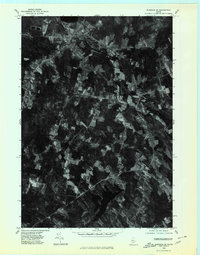 1975 Burnham SE1980 Print · USGSWaldo County at the height of the 1970s shows a landscape of enduring rural character and organized woodlots. Local historians can trace family locations and land use patterns around Unity, Freedom, and the crossroads at Knox Corner.
 - 1975 Map of Burnham SW, 1980 Print
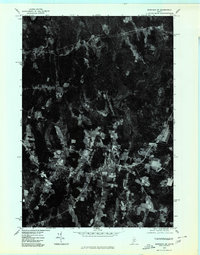 1975 Burnham SW1980 Print · USGSKennebec County as it appeared in the mid-seventies, showing the agricultural and forested landscape of central Maine. Genealogists and researchers can trace local landmarks like Albion, South Albion, and the winding Fifteenmile Stream.
 - 1975 Map of Vassalboro NE, 1980 Print
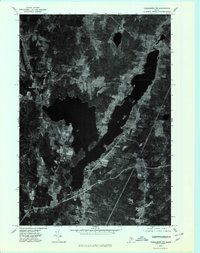 1975 Vassalboro NE1980 Print · USGSCentral Maine in the mid-1970s is shown in this aerial survey focused on the waters of China Lake. Local historians can trace the rural layouts of North Vassalboro, South China, and Dirigo Corner exactly as they appeared then.
 - 1982 Map of Unity, 1983 Print
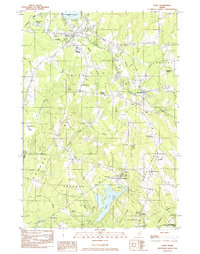 1982 Unity1983 Print · USGSWaldo County's agricultural and academic heartland is mapped here in the early eighties, centered on the village of Unity and the waters of Unity Pond. Genealogists and historians can locate numerous rural burial grounds like Saywood Cem, trace the Belfast and Moosehead Lake rail line, or find the Strawberry Fields Sch near Freedom.
 - 1982 Map of Albion, 1983 Print
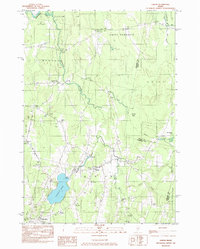 1982 Albion1983 Print · USGSAlbion and the Kennebec County interior are captured in the early eighties as a landscape of interconnected wetlands and small farm settlements. Researchers can trace family history through sites like the Besse Sch, Puddledock Hall, and the Quaker Hill Cem.
 - 1982 Map of Fairfield, 1983 Print
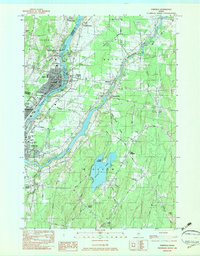 1982 Fairfield1983 Print · USGSKennebec County river towns thrive along the banks of the Kennebec River during the early eighties. Researchers can trace family roots through numerous burial grounds like Reed Cem and Holt Cem, or locate historic school sites such as the Boston Ave Sch.2 unique versions available
Showing maps 1-25 of 53
Top cities near Albion
- Augusta historical maps
- Waterville historical maps
- Winslow historical maps
- Fairfield historical maps
- Skowhegan historical maps
- Oakland historical maps
See more
Top neighborhoods of Albion
Frequently asked questions
- What are the different types of historical maps available for Albion?
- What is the oldest map of Albion?
- Where can I purchase historical maps of Albion for my home or office?
- Where can I download high-res historical maps of Albion?
- Are there historical topographic maps available for Albion?
- Is there historical aerial imagery available for Albion?
- Where are historical maps of Albion sourced from?