1900s (20th Century) Maps of Medianía Baja, Loíza
Explore 12 historic maps of Medianía Baja from the 1900s (20th Century). These maps offer a rare glimpse into what life looked like during the 1900s — showing old roads, neighborhoods, homes, and landmarks that have changed or disappeared over time.
Whether you're researching your family's past, planning a metal detecting trip, or studying how Medianía Baja's landscape evolved across the 1900s, these high-resolution maps are a powerful tool for exploring the history of this region.
- Focus on a specific era: All maps on this page are from the 1900s, giving you a focused view of this time period.
- See what’s changed: Compare century-old streets, trails, and buildings to today's modern landscape using overlays and satellite layers.
- Research with precision: Use these maps for genealogy, historical research, land use analysis, or educational projects.
- View, download, or print: Maps are fully viewable online in high resolution, and can be downloaded or printed for your own records.
Start exploring Medianía Baja's history through authentic maps from the 1900s. This is your window into the past.
Medianía Baja, Loíza maps
(12)- 1940 Map of Carolina
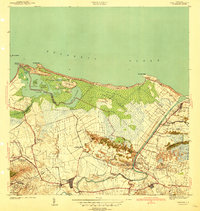 1940 Carolina1940 Print · USGSNortheast Puerto Rico is shown here just before the era of rapid modernization, when sugar production dominated the coastal plains. Researchers can trace the layout of agricultural colonies like Colonia Monserrate and historic centers such as Loiza Aldea and Central Victoria.
 - 1941 Map of Rio Grande
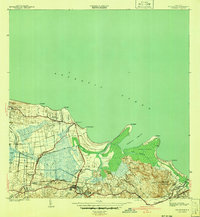 1941 Rio Grande1941 Print · USGSCoastal Puerto Rico in the early 1940s reveals a landscape of tidal marshes and agricultural estates. Genealogists and researchers can trace family lands through the numerous named colonias like Colonia Blasini and Colonia Dolores, or locate early settlements such as Poblado Honduras.2 unique versions available
 - 1941 Map of Carolina
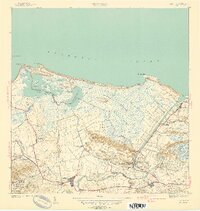 1941 Carolina1941 Print · USGSCoastal Puerto Rico at the start of the 1940s shows a landscape of sugar centrales and traditional settlements along the Atlantic. Researchers can trace family ties at Loiza Aldea, locate the rail spurs of Central Victoria, or explore the limits of the Bosque Insular de Piñones.
 - 1947 Map of Carolina
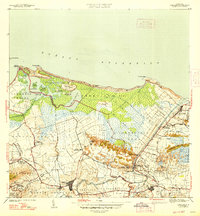 1947 Carolina1947 Print · USGSNortheast Puerto Rico is documented here in the late 1940s as a landscape of coastal lagoons and thriving sugar centrals. Genealogists can trace family roots through numerous worker settlements like Poblado Sabana Abajo, Colonia Las Delicias, and Loíza Aldea.3 unique versions available
 - 1947 Map of Rio Grande
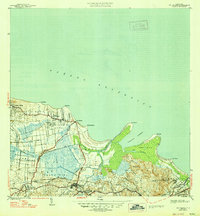 1947 Rio Grande1947 Print · USGSThe northeastern coast of Puerto Rico is captured here in the mid-1940s, highlighting a landscape defined by river deltas and sugar colonias. Genealogists and historians can trace family locations in settlements like Poblado Honduras and Colonia Fortuna.3 unique versions available
 - 1949 Map of Rio Grande SO
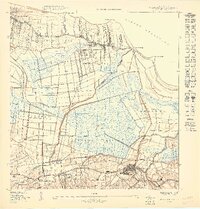 1949 Rio Grande SO1949 Print · USGSNortheast Puerto Rico is shown here in the late 1940s, where the coastal plains meet the mouths of major river systems. Genealogists and historians can trace the family-named agriculture centers like Colonia Mimi and early settlements such as Poblado Honduras.
 - 1950 Map of Carolina SE
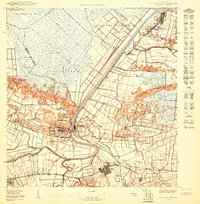 1950 Carolina SE1950 Print · USGSThe coastal and riverine landscape of Loíza and Carolina comes to life in this mid-century survey of Puerto Rico's sugar country. Researchers can trace the industrial footprint of Central Canóvanas and the narrow-gauge Fajardo Development Co RR as they wind through agricultural enclaves like Colonia Santa Barbara.
 - 1956 Map of Rio Grande, 1958 Print
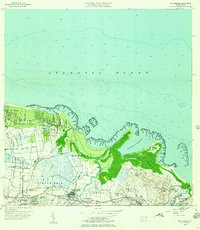 1956 Rio Grande1958 Print · USGSCoastal Puerto Rico comes to life in the 1950s, showing a landscape of sugar-era settlements and river deltas. Genealogists can locate specific homesteads at Poblado Honduras or trace community roots at Colonia Dolores and Comunidad Dolores.
 - 1957 Map of Carolina, 1959 Print
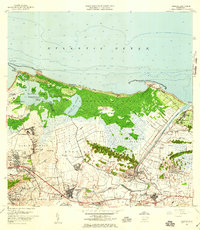 1957 Carolina1959 Print · USGSNortheastern Puerto Rico is captured in the late fifties as sugar mills and new transit hubs like the Aeropuerto Internacional reshaped the coast. Trace the Rio Grande de Loiza past the Central Canovanas and the local post office at Loíza.
 - 1963 Map of Carolina, 1965 Print
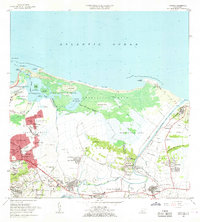 1963 Carolina1965 Print · USGSThe coastal area east of San Juan comes to life in the early sixties, showing the vital waterways and growing barrios of the north shore. Genealogists and historians can locate family landmarks from Loiza Aldea to Canóvanas, including the Escuela Santa Catalina and the Hipodromo El Comandante.
 - 1963 Map of Rio Grande, 1965 Print
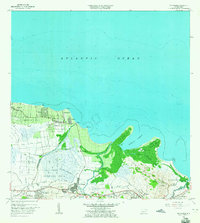 1963 Rio Grande1965 Print · USGSCoastal Puerto Rico in the early sixties shows a landscape of growing barrios and winding rivers before modern development. Genealogists and historians can trace family roots in settlements like Suárez and Mini Mini or locate the Escuela Luis Calderón.4 unique versions available
 - 1969 Map of Carolina, 1972 Print
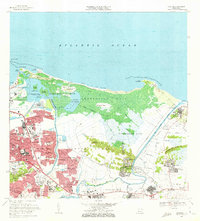 1969 Carolina1972 Print · USGSCoastal Puerto Rico underwent rapid transformation in the late sixties as urban growth met the natural wetlands of the Atlantic shore. Genealogists and researchers can trace local neighborhoods from Loíza Aldea to Villa Carolina or locate the Seminario Episcopal del Caribe.3 unique versions available
End of results
Showing maps 1-12 of 12
Frequently asked questions
- What are the different types of historical maps available for Medianía Baja?
- What is the oldest map of Medianía Baja?
- Where can I purchase historical maps of Medianía Baja for my home or office?
- Where can I download high-res historical maps of Medianía Baja?
- Are there historical topographic maps available for Medianía Baja?
- Is there historical aerial imagery available for Medianía Baja?
- Where are historical maps of Medianía Baja sourced from?