1900s (20th Century) Maps of Fireweed Fields, Alaska
Explore 10 historic maps of Fireweed Fields from the 1900s (20th Century). These maps offer a rare glimpse into what life looked like during the 1900s — showing old roads, neighborhoods, homes, and landmarks that have changed or disappeared over time.
Whether you're researching your family's past, planning a metal detecting trip, or studying how Fireweed Fields's landscape evolved across the 1900s, these high-resolution maps are a powerful tool for exploring the history of this region.
- Focus on a specific era: All maps on this page are from the 1900s, giving you a focused view of this time period.
- See what’s changed: Compare century-old streets, trails, and buildings to today's modern landscape using overlays and satellite layers.
- Research with precision: Use these maps for genealogy, historical research, land use analysis, or educational projects.
- View, download, or print: Maps are fully viewable online in high resolution, and can be downloaded or printed for your own records.
Start exploring Fireweed Fields's history through authentic maps from the 1900s. This is your window into the past.
Fireweed Fields, AK maps
(10)- 1950 Map of Anchorage C-7, 1963 Print
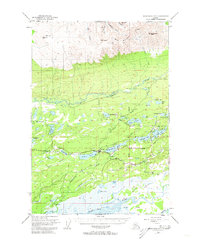 1950 Anchorage C-71963 Print · USGSWasilla and the surrounding lake country are captured here at the start of the 1950s as the rail-and-road network expanded through the Matanuska Valley. Local researchers can trace the early layout of the Alaska Railroad and find landmarks like the Thorpe Mine and Wasilla Lake.2 unique versions available
 - 1951 Map of Anchorage
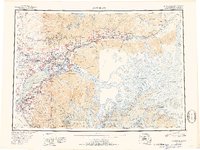 1951 Anchorage1951 Print · USGSMid-century Anchorage and the Matanuska Valley are seen here during a period of rapid strategic growth. Trace the development of Fort Richardson, early rail stops at Wasilla, and established mining operations like the Independence Mine or Premier Mine.4 unique versions available
 - 1951 Map of Anchorage C-7, 1958 Print
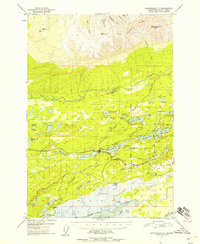 1951 Anchorage C-71958 Print · USGSThe Matanuska Valley center of Wasilla is captured here in the early fifties, just as post-war infrastructure began to define the region. You can trace the path of The Alaska Railroad and find early homestead landmarks like Lucile Lake, Paradise Lake, and Fishhook Road.
 - 1952 Map of Anchorage C-7
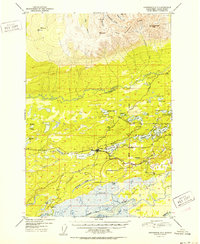 1952 Anchorage C-71952 Print · USGSThe Matanuska Valley was in a period of early post-war expansion in the 1950s, centered on the growing rail hub of Wasilla. Researchers can trace the early road network and remote landmarks like the Thorpe Mine, The Alaska Railroad, and Finger Lake.2 unique versions available
 - 1962 Map of Anchorage, 1966 Print
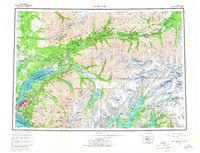 1962 Anchorage1966 Print · USGSThe Anchorage bowl and Matanuska Valley appear in this mid-century survey during a period of significant military and industrial expansion. Researchers can trace the Alaska Railroad through Sutton and Jonesville or locate historic stops like Meekins Roadhouse and the Watertower Inn.6 unique versions available
 - 1979 Map of Anchorage C-7 NW
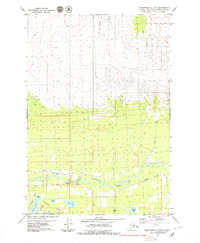 1979 Anchorage C-7 NW1979 Print · USGSThe Meadow Lakes region and the Little Susitna River valley are captured in the late seventies as local infrastructure began to expand. Genealogists and researchers can trace the early layout of Pittman Road and Church Road near Totuck Lake.2 unique versions available
 - 1979 Map of Anchorage, 1980 Print
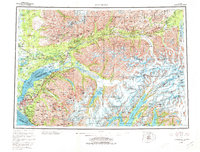 1979 Anchorage1980 Print · USGSThe Anchorage bowl and Matanuska Valley appear in the late seventies as the region's transportation and military infrastructure matured. Genealogists and historians can trace rail and road evolution through Wasilla, the Matanuska Branch line, and Jonesville.
 - 1979 Map of Anchorage C-7 SW, 1980 Print
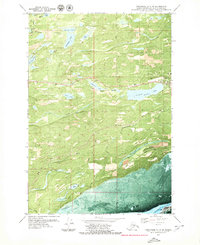 1979 Anchorage C-7 SW1980 Print · USGSWasilla and the surrounding lake country were experiencing steady growth in the late seventies as transportation and local services expanded. Genealogists and historians can trace the early layout of Wasilla, the path of The Alaska Railroad, and the location of Iditarod Sch.
 - 1992 Map of Anchorage C-7 SW
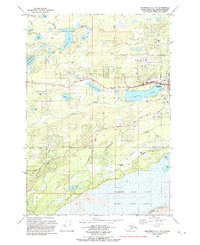 1992 Anchorage C-7 SW1992 Print · USGSWasilla and the surrounding Matanuska-Susitna Valley are captured here during a decade of rapid growth in the early nineties. Genealogists and researchers can trace local landmarks like Iditarod Sch, Lake Lucile, and the sprawling Palmer Hay Flats.
 - 1994 Map of Anchorage C-7, 2002 Print
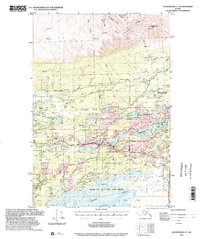 1994 Anchorage C-72002 Print · USGSThe Matanuska-Susitna Valley comes into focus in the 1990s as the community of Wasilla expands along its lake-strewn corridor. Genealogists and local historians can trace the development of the Alaska Railroad, the Iditarod Trail, and local landmarks like Snowshoe School.
End of results
Showing maps 1-10 of 10
Frequently asked questions
- What are the different types of historical maps available for Fireweed Fields?
- What is the oldest map of Fireweed Fields?
- Where can I purchase historical maps of Fireweed Fields for my home or office?
- Where can I download high-res historical maps of Fireweed Fields?
- Are there historical topographic maps available for Fireweed Fields?
- Is there historical aerial imagery available for Fireweed Fields?
- Where are historical maps of Fireweed Fields sourced from?