Old Maps of Windstream, Danville
Explore 38 old maps of Windstream, spanning from 1896 to today. These high-resolution historic maps reveal how streets, neighborhoods, landmarks, and natural features evolved over time — perfect for genealogy, metal detecting, research, and local history exploration.
What you can do with these maps:
- See how Windstream changed over time: Compare historical maps to modern-day views to trace roads, homesites, rail lines & more.
- View detailed metadata: Each map includes creators, publishers, year, scale, and archive source.
- Overlay maps with satellite & LiDAR: Visualize the past alongside modern tools to explore terrain & human change.
- Trusted historical sources: Maps sourced from the USGS, Library of Congress, and other archives.
- Access maps your way: View online, download high-res files, or order prints for personal or research use.
Start exploring old maps of Windstream to uncover forgotten places, hidden landmarks, and the deep history beneath your feet.
Windstream, Danville maps
(38)- 1896 Map of Mt. Diablo, 1964 Print
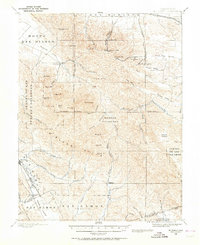 1896 Mt. Diablo1964 Print · USGSThe northern slopes of the Diablo Range come alive in the 1890s, where mining settlements like Nortonville and Somersville thrived alongside the Empire R. R. and Star Mine. Trace early rail lines, family landmarks, and the rural roots of Danville and San Ramon.
 - 1897 Map of Concord
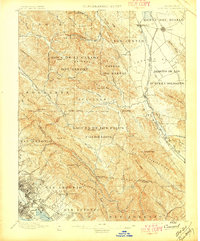 1897 Concord1897 Print · USGSThe East Bay hills and valleys appear here in the late nineteenth century, just as railroads began to reshape the old rancho lands. Researchers can trace the original tracks of the California and Nevada R. R. and early settlements like Pacheco and Lafayette.6 unique versions available
 - 1898 Map of Mt. Diablo
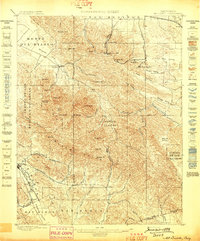 1898 Mt. Diablo1898 Print · USGSContra Costa County at the end of the nineteenth century was a rugged landscape of coal mining camps and cattle valleys. Genealogists and local historians can trace the early footprints of Nortonville, Stewartville, and the remote Star Mine nestled among the peaks of Monte del Diablo.7 unique versions available
 - 1915 Map of Concord
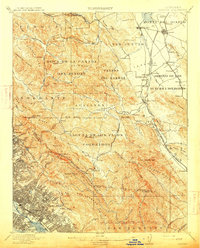 1915 Concord1915 Print · USGSContra Costa and Alameda counties are shown here just before the mid-century population boom, when the East Bay was a landscape of ranchos and rail stops. Genealogists can trace family footprints in small 1910s settlements like Moraga, Pacheco, and Lafayette.5 unique versions available
 - 1942 Map of Concord
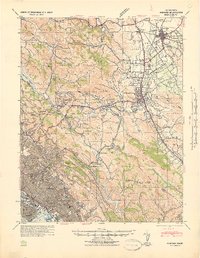 1942 Concord1942 Print · USGSThe East Bay interior was a landscape of expanding valley towns and deep-rooted ranching tracts in the early 1940s. Genealogists and historians can trace rail-era settlements like Concord, Lafayette, and Walnut Creek alongside local landmarks like St Marys College and Sherman Field.
 - 1943 Map of Concord
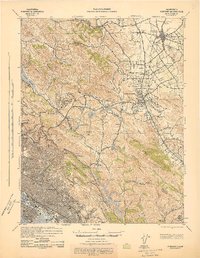 1943 Concord1943 Print · USGSThe East Bay and Contra Costa interior appear here during the wartime era, showing the transition from urban waterfronts to rural valley communities. Researchers can trace early rail lines like the Sacramento Northern RR and locate local landmarks such as St Marys College and Acalanes Sch.
 - 1943 Map of Mt. Diablo
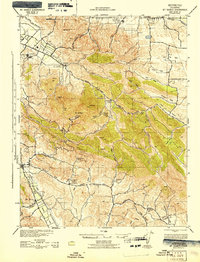 1943 Mt. Diablo1943 Print · USGSThe Mt. Diablo foothills and San Ramon Valley are captured here during the early 1940s, showcasing a landscape of cattle ranches and remote schoolhouses. Genealogists and local historians can locate early landmarks like Blackhawk Ranch, Cowell, and the Morgan Territory Sch.
 - 1947 Map of San Francisco, 1948 Print
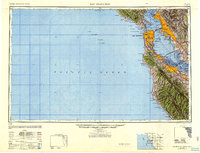 1947 San Francisco1948 Print · USGSThe Bay Area in the late 1940s reveals a region transitioning from wartime intensity to post-war suburban growth. Trace the historic rail lines of the Southern Pacific RR or locate early military footprints at Fort Funston and Moffett Field.
 - 1947 Map of San Jose, 1948 Print
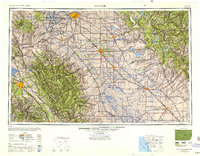 1947 San Jose1948 Print · USGSNorthern California's heartland is captured here just after the war, showing the rapid growth of the Santa Clara and Central Valleys. Researchers can trace the legacy of rail and water at Castle Air Force Base, Stockton, and the Hetch Hetchy Aqueduct.
 - 1947 Map of Las Trampas Ridge, 1956 Print
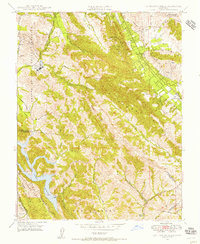 1947 Las Trampas Ridge1956 Print · USGSContra Costa County at the start of the postwar era shows a landscape of cattle ranches and early valley settlements. Trace the original footprints of Alamo and Danville alongside the Southern Pacific tracks and the St Marys College campus.
 - 1948 Map of San Francisco, 1951 Print
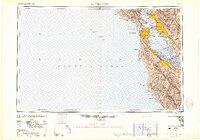 1948 San Francisco1951 Print · USGSThe Bay Area in the late 1940s reveals a landscape defined by rapid post-war growth and a heavy military presence at the Golden Gate. Trace the development of early trans-bay infrastructure like the Oakland-Bay Bridge and historic coastal defense sites such as Fort Funston and Alcatraz Island.
 - 1949 Map of Las Trampas Ridge
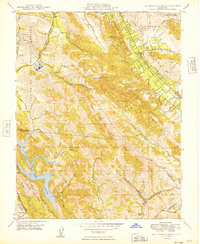 1949 Las Trampas Ridge1949 Print · USGSContra Costa and Alameda counties are shown here just after the war, featuring a landscape of steep ridges and developing valleys. Genealogists and researchers can trace the Southern Pacific line through Alamo, locate the Edenvale School, and study the early footprint of St Marys College.
 - 1953 Map of Diablo, 1954 Print
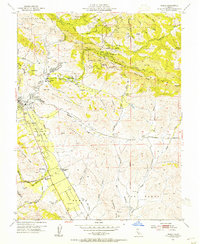 1953 Diablo1954 Print · USGSThe East Bay's inland valleys and foothills are captured here in the early fifties, just as the ranching era met suburban growth. Genealogists and local historians can locate early landmarks like Green Valley School, the San Ramon Siding, and the expansive Black Hawk Ranch.9 unique versions available
 - 1955 Map of San Francisco
 1955 San Francisco1955 Print · USGSThe San Francisco Bay Area and central coast are captured during the postwar boom as suburbs and infrastructure expanded rapidly. Trace the development of local communities and military installations like the Presidio and Fort Mason, or follow the Southern Pacific rail lines.
 - 1956 Map of San Jose
 1956 San Jose1956 Print · USGSCentral California in the mid-fifties reveals the transition from sprawling orchards to growing urban hubs like San Jose and Stockton. Genealogists and historians can trace the rail-era landscape of the Mother Lode through Chinese Camp and Tuttletown, or follow the water through the Joaquin River and Calaveras Reservoir.
 - 1956 Map of San Francisco
 1956 San Francisco1956 Print · USGSThe San Francisco Bay Area is captured in the mid-fifties, showing a landscape of rapid post-war growth and massive military installations. Researchers can trace the sprawling rail lines of the Southern Pacific and locate historic sites like Stanford University or the Hunters Point Naval Shipyard.4 unique versions available
 - 1957 Map of San Francisco
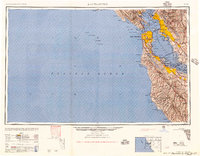 1957 San Francisco1957 Print · USGSThe Bay Area in the mid-fifties reveals a rapidly growing metropolitan landscape connected by its iconic spans and rail networks. Researchers can trace the layout of military sites like the Presidio and the extent of the Southern Pacific and Western Pacific railroads.
 - 1959 Map of Las Trampas Ridge, 1960 Print
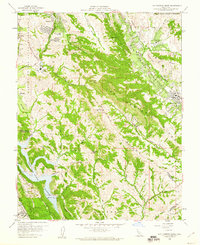 1959 Las Trampas Ridge1960 Print · USGSContra Costa County undergoes a suburban transformation in the late fifties as residential valleys expand toward the hills. Trace mid-century development near St Marys College, the Southern Pacific Railroad, and the Upper San Leandro Reservoir.5 unique versions available
 - 1959 Map of Concord, 1961 Print
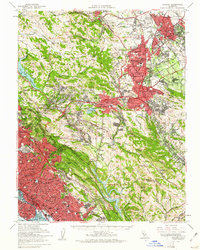 1959 Concord1961 Print · USGSThe East Bay's mid-century expansion is on full display here as suburban growth reaches into the interior valleys and ridges. Genealogists and local historians can trace legacy sites like Lafayette Cem, the small settlement of Eastport, and the campus of St Marys College.2 unique versions available
 - 1960 Map of San Francisco
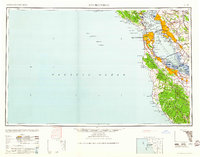 1960 San Francisco1960 Print · USGSThe San Francisco Bay Area at the start of the sixties reveals a landscape of rapid expansion and critical infrastructure. Researchers can trace the development of East Bay communities like Russell City and Mt Eden or locate early rural landmarks like Alpine School.
 - 1961 Map of San Francisco
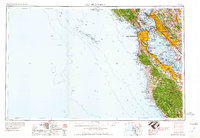 1961 San Francisco1961 Print · USGSThe Bay Area at the dawn of the 1960s reveals a landscape of growing cities and massive Cold War military installations. Genealogists and historians can trace the mid-century urban footprint from Berkeley to San Mateo, while locating landmarks like the Presidio, Alcatraz Island, and Moffett Field Air Station.
 - 1962 Map of San Jose
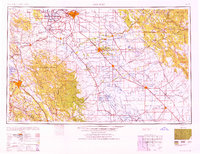 1962 San Jose1962 Print · USGSCentral California in the early sixties showcases the expansion of the San Joaquin and Santa Clara valleys. Researchers can trace the rail-to-road transition along the Southern Pacific RR or locate landmarks like Castle USAF Base and Loma Prieta.4 unique versions available
 - 1964 Map of San Francisco
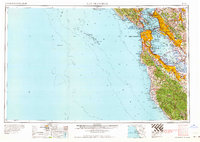 1964 San Francisco1964 Print · USGSThe Bay Area in the mid-sixties shows a region of rapid suburban expansion and major military installations. Researchers can trace the development of the South Bay near Stanford University or locate family plots in the historic Cypress Lawn Cem and Holy Cross Cem.
 - 1966 Map of San Jose
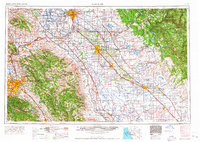 1966 San Jose1966 Print · USGSCentral California in the mid-1960s reveals a landscape of massive irrigation projects and expanding Cold War military footprints. Researchers can trace the rail-and-river network of the San Joaquin Valley or locate specialized sites like Castle Air Force Base and the Sharp General Depot (Military).
 - 1971 Map of San Francisco
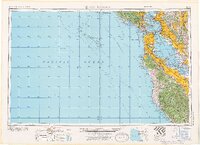 1971 San Francisco1971 Print · USGSThe San Francisco Bay Area at the start of the 1970s is shown here as a dense network of aerospace hubs, naval bases, and expanding suburbs. Researchers can trace the mid-century footprint of Stanford University, the industrial Salt Evaporators, and the Southern Pacific rail lines.
Showing maps 1-25 of 38
Frequently asked questions
- What are the different types of historical maps available for Windstream?
- What is the oldest map of Windstream?
- Where can I purchase historical maps of Windstream for my home or office?
- Where can I download high-res historical maps of Windstream?
- Are there historical topographic maps available for Windstream?
- Is there historical aerial imagery available for Windstream?
- Where are historical maps of Windstream sourced from?