1950s Maps of New Brighton, Sacramento
Explore 6 historic maps of New Brighton from the 1950s. These maps offer a rare glimpse into what life looked like during the 1950s — showing old roads, neighborhoods, homes, and landmarks that have changed or disappeared over time.
Whether you're researching your family's past, planning a metal detecting trip, or studying how New Brighton's landscape evolved across the 1950s, these high-resolution maps are a powerful tool for exploring the history of this region.
- Focus on a specific era: All maps on this page are from the 1950s, giving you a focused view of this time period.
- See what’s changed: Compare century-old streets, trails, and buildings to today's modern landscape using overlays and satellite layers.
- Research with precision: Use these maps for genealogy, historical research, land use analysis, or educational projects.
- View, download, or print: Maps are fully viewable online in high resolution, and can be downloaded or printed for your own records.
Start exploring New Brighton's history through authentic maps from the 1950s. This is your window into the past.
New Brighton, Sacramento maps
(6)- 1950 Map of Carmichael
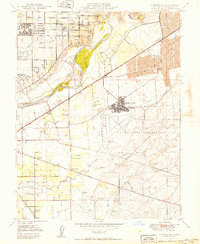 1950 Carmichael1950 Print · USGSThe Sacramento Valley landscape appears here in the years following World War II, defined by the growth of Carmichael and the presence of Mather Field. Researchers can trace early railroad stops like Walsh Station and find family landmarks including Mathew Kilgore Cem and Mayhew Ch.2 unique versions available
 - 1954 Map of Carmichael, 1955 Print
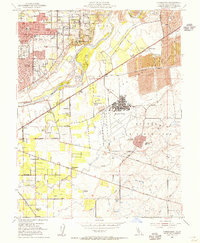 1954 Carmichael1955 Print · USGSSacramento's eastern suburbs and military installations show a region in transition during the mid-fifties. Researchers can locate family roots at the Bellevue Cemetery or trace the early industrial footprint of the Southern Pacific and the vast Dredge Tailings.3 unique versions available
 - 1954 Map of Sacramento East, 1956 Print
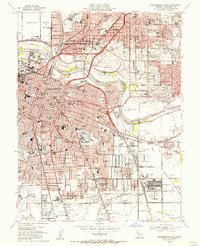 1954 Sacramento East1956 Print · USGSSacramento and its surrounding suburbs hum with mid-century activity along the American River. Genealogists and historians can trace the foundations of the capital city through landmarks like Sutter's Fort, the State Capitol, and several legacy burial grounds including St Marys County Cemetery.2 unique versions available
 - 1954 Map of Fair Oaks, 1957 Print
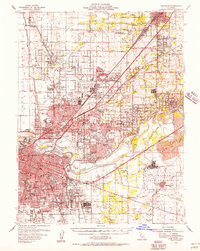 1954 Fair Oaks1957 Print · USGSSacramento and the American River suburbs underwent significant growth during the early Cold War era as military bases and new subdivisions expanded. Genealogists and historians can trace family roots through numerous schools like Grant Union HS, the St Patrick Orphanage, and small communities like Sylvan Corners.2 unique versions available
 - 1956 Map of Sacramento
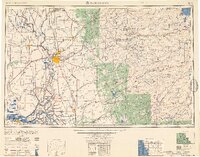 1956 Sacramento1956 Print · USGSMid-century California unfolds from the delta to the high Sierra, capturing a landscape of growing valley cities and burgeoning military airbases. Genealogists and historians can trace the rail lines and river towns from Woodland to Lodi, or explore the foothill settlements of Placerville and Jackson.2 unique versions available
 - 1957 Map of Sacramento, 1966 Print
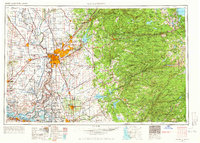 1957 Sacramento1966 Print · USGSIn the mid-twentieth century, the California heartland was a hub of river transport, rail lines, and military airbases. Genealogists and historians can trace the development of Gold Country towns like Angels Camp and Sonora or follow the path of the Southern Pacific RR through the growing suburbs of Sacramento.4 unique versions available
End of results
Showing maps 1-6 of 6
Frequently asked questions
- What are the different types of historical maps available for New Brighton?
- What is the oldest map of New Brighton?
- Where can I purchase historical maps of New Brighton for my home or office?
- Where can I download high-res historical maps of New Brighton?
- Are there historical topographic maps available for New Brighton?
- Is there historical aerial imagery available for New Brighton?
- Where are historical maps of New Brighton sourced from?