Old Maps of Hampshire Pond, Fort Collins for Academic Research
Study the evolution of Hampshire Pond with 17 high-resolution historic maps. Whether you're teaching, researching, or modeling changes in land use, these maps provide essential visual documentation of urban, environmental, and geographic change.
- Analyze long-term change: Track patterns in development, transportation, and natural features.
- Ideal for environmental or urban studies: Support academic projects with primary historical map data.
- Use in the classroom or lab: Educators and researchers rely on these maps to bring historical context to life.
These maps are a powerful tool for teaching, research, and visualizing how Hampshire Pond has changed over the decades.
Hampshire Pond, Fort Collins maps
(17)- 1906 Map of Fort Collins, 1955 Print
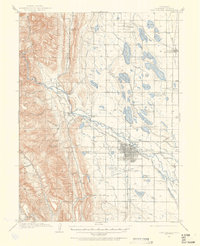 1906 Fort Collins1955 Print · USGSFort Collins and its surrounding ranchlands are shown at the start of the century as irrigation systems began to reshape the Larimer County plains. Researchers can trace early rail spurs like the Wellington Branch and find old landmarks like the Empire Mine and Colorado State Agricultural College.4 unique versions available
 - 1907 Map of Livermore, 1954 Print
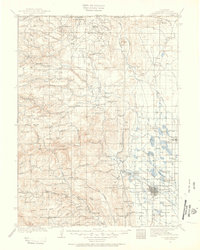 1907 Livermore1954 Print · USGSLarimer County at the turn of the century shows a frontier landscape transitioning into a settled ranching and rail corridor. Genealogists and historians can trace family-named sites like Maxwell Ranch alongside early landmarks like the Forks Hotel and Campbell Grove School.2 unique versions available
 - 1908 Map of Fort Collins
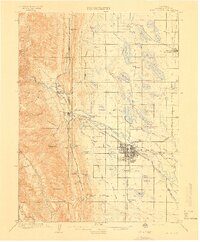 1908 Fort Collins1908 Print · USGSNorthern Colorado at the turn of the century reveals a landscape transformed by water engineering and rail. Genealogists and historians can trace the early footprints of Fort Collins, the Colorado State Agricultural College, and local industry at the Empire Mine.4 unique versions available
 - 1909 Map of Livermore
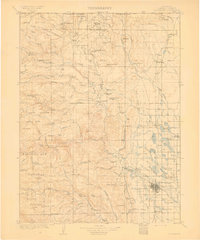 1909 Livermore1909 Print · USGSNorthern Colorado at the turn of the century shows a landscape of developing irrigation and early mountain industry. Trace the early streets of Fort Collins or find the remote Forks Hotel and Empire Mine among the foothills.4 unique versions available
 - 1954 Map of Greeley, 1966 Print
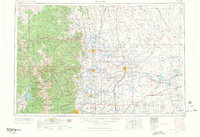 1954 Greeley1966 Print · USGSNorthern Colorado transitions from high-alpine peaks to the irrigated South Platte valley during this mid-century period of growth. Genealogists and historians can trace rail-connected hubs like Greeley and Longmont alongside landmarks like Horsetooth Reservoir and Estes Park.3 unique versions available
 - 1957 Map of Greeley
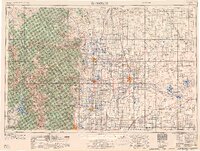 1957 Greeley1957 Print · USGSNorthern Colorado in the mid-fifties is captured here as the agricultural plains of Weld County meet the high peaks of the Front Range. Genealogists and historians can trace rail-linked towns like Keenesburg and Roggen or locate early water features such as Boyd Lake and Fossil Creek Reservoir.
 - 1958 Map of Greeley
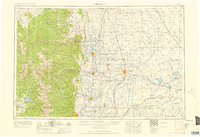 1958 Greeley1958 Print · USGSNorthern Colorado and the high peaks of the Front Range appear here in the mid-fifties as the region's agricultural and rail networks were fully established. Genealogists can locate family homes near Virginia Dale, Waverly, or Kuner, and trace the path of the Union Pacific Railroad through Greeley.
 - 1960 Map of Fort Collins, 1962 Print
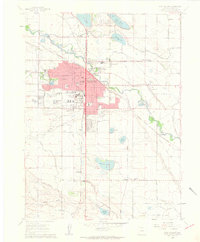 1960 Fort Collins1962 Print · USGSFort Collins during the early sixties shows a university town transitioning into a regional hub while maintaining its irrigation-fed agricultural roots. Researchers can trace historic neighborhoods near Buckingham, old burial sites at Harmony Cem, and the rail-side industry of the Sugar Refinery.6 unique versions available
 - 1961 Map of Greeley
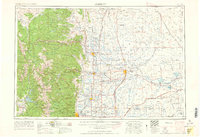 1961 Greeley1961 Print · USGSNorthern Colorado's transition from high mountain peaks to irrigated plains is captured here just as the post-war population boom reached the Front Range. Researchers can trace early water infrastructure and rail lines like the Great Western RR connecting sugar beet hubs from Fort Collins to Greeley.
 - 1964 Map of Greeley
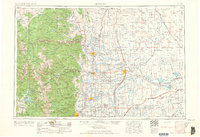 1964 Greeley1964 Print · USGSThe Front Range corridor and high peaks of the Rockies appear here in the mid-1960s, showing the intersection of mountain wilderness and plains agriculture. Trace the rail routes of the Great Western RR or locate landmarks like Longs Peak and Horsetooth Reservoir.
 - 1965 Map of Greeley
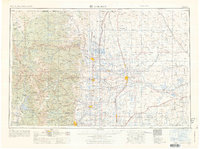 1965 Greeley1965 Print · USGSNorthern Colorado in the mid-sixties shows a landscape defined by high mountain summits and the growing irrigation networks of the plains. Genealogists and historians can trace rail-side towns like Wellington or follow the early tracks of the Union Pacific Railroad past Longs Peak.
 - 1980 Map of Fort Collins, 1981 Print
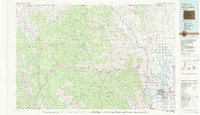 1980 Fort Collins1981 Print · USGSThe Front Range and high Rockies meet in Larimer County during the early 1980s. Local researchers can trace the growth of Fort Collins, the irrigation network around Wellington, and high-country outposts like Red Feather Lakes or the scenic canyon settlement of Mishawaka.
 - 2010 Map of Fort Collins, 2010 Print
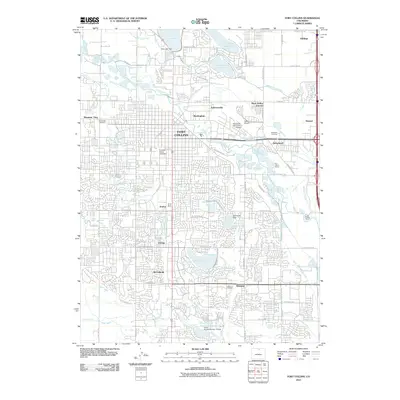 2010 Fort Collins2010 Print · USGSThe northern Colorado high plains meet urban expansion in the early 2000s, where irrigation canals still define the landscape around Fort Collins. Researchers can trace old neighborhood boundaries near Buckingham, find family roots at Roselawn Cemetery, or locate defunct landmarks like the Downtown Fort Collins Airpark.
 - 2013 Map of Fort Collins, 2013 Print
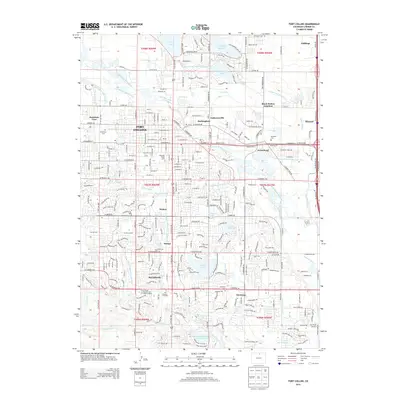 2013 Fort Collins2013 Print · USGSFort Collins and its surrounding agricultural reaches are captured here in the early twenty-first century. Researchers can trace the complex network of irrigation canals like the Flat Collins Irrigation Ditch and locate local landmarks including Colorado State Univ and Grandview Cem.
 - 2016 Map of Fort Collins, 2016 Print
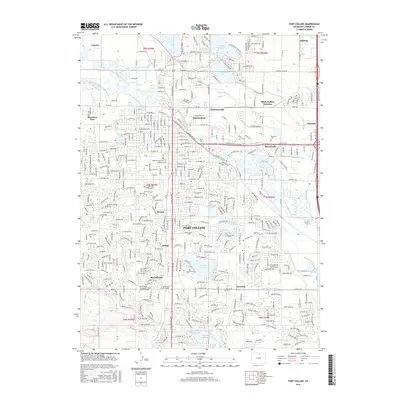 2016 Fort Collins2016 Print · USGSFort Collins and its eastern suburbs are shown here in the mid-2010s, capturing the city's modern expansion alongside its vital irrigation heritage. Researchers can trace the boundaries of Colorado State University or locate older sites like Andersonville, Buckingham, and Grandview Cemetery.
 - 2019 Map of Fort Collins, 2019 Print
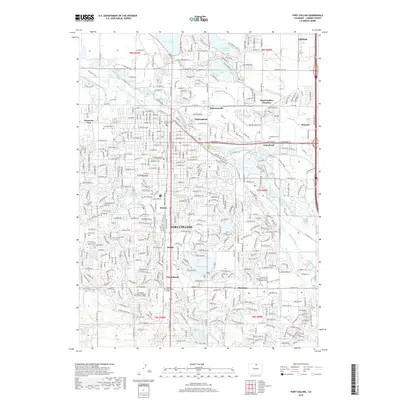 2019 Fort Collins2019 Print · USGSFort Collins and its surrounding Larimer County settlements are shown here in the late twenty-teens, dominated by a complex web of historic canals and reservoirs. Researchers can trace local history through sites like Grandview Cemetery, Andersonville, and the grounds of Colorado State University.
 - 2022 Map of Fort Collins, 2022 Print
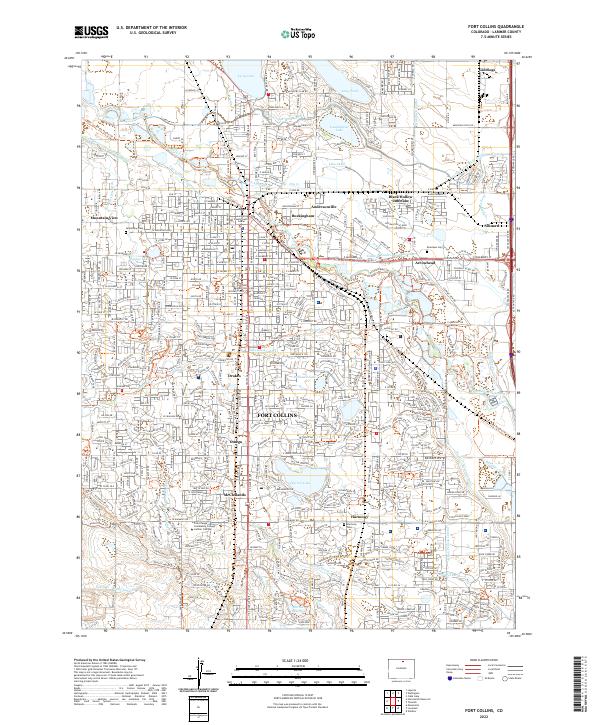 2022 Fort Collins2022 Print · USGSFort Collins in the 2020s shows a dense network of historic neighborhoods and modern institutions shaped by the Cache la Poudre River. Researchers can trace family sites at Grandview Cem or locate early settlements like Buckingham and McClellands.
End of results
Showing maps 1-17 of 17
Frequently asked questions
- What are the different types of historical maps available for Hampshire Pond?
- What is the oldest map of Hampshire Pond?
- Where can I purchase historical maps of Hampshire Pond for my home or office?
- Where can I download high-res historical maps of Hampshire Pond?
- Are there historical topographic maps available for Hampshire Pond?
- Is there historical aerial imagery available for Hampshire Pond?
- Where are historical maps of Hampshire Pond sourced from?