Old Maps of Fruita, Colorado
Explore 26 old maps of Fruita, spanning from 1934 to today. These high-resolution historic maps reveal how streets, neighborhoods, landmarks, and natural features evolved over time — perfect for genealogy, metal detecting, research, and local history exploration.
What you can do with these maps:
- See how Fruita changed over time: Compare historical maps to modern-day views to trace roads, homesites, rail lines & more.
- View detailed metadata: Each map includes creators, publishers, year, scale, and archive source.
- Overlay maps with satellite & LiDAR: Visualize the past alongside modern tools to explore terrain & human change.
- Trusted historical sources: Maps sourced from the USGS, Library of Congress, and other archives.
- Access maps your way: View online, download high-res files, or order prints for personal or research use.
Start exploring old maps of Fruita to uncover forgotten places, hidden landmarks, and the deep history beneath your feet.
Fruita, CO maps
(26)- 1934 Map of Colorado National Monument
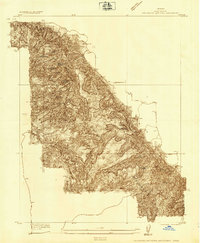 1934 Colorado National Monument1934 Print · USGSMesa County was beginning to see the formalization of its famous canyonlands in the mid-1930s. You can trace early park infrastructure near Park Headquarters and follow the original switchbacks of the Serpents Trail past the Coke Ovens.
 - 1956 Map of Grand Junction, 1973 Print
 1956 Grand Junction1973 Print · USGSThe Grand Valley and its surrounding high plateaus are captured here in the mid-twentieth century as the region's ranching and rail heritage remained central. Researchers can trace the path of the Denver & Rio Grande Western RR through Grand Junction or locate remote outposts like Dragon and Atchee.2 unique versions available
 - 1959 Map of Grand Junction
 1959 Grand Junction1959 Print · USGSThe Grand Valley and the high plateaus of the Colorado-Utah border come into focus in the late fifties as irrigation and rail lines define the landscape. Local historians can trace several industrial outposts labeled as abandoned, including Watson and Dragon, alongside the Denver and Rio Grande Western RR.
 - 1960 Map of Grand Junction
 1960 Grand Junction1960 Print · USGSThe Grand Junction area at the dawn of the 1960s shows a landscape of river-valley agriculture and high-plateau extraction. Researchers can trace the path of the dismantled railroad and find vanished sites like Watson and Sego.2 unique versions available
 - 1962 Map of Grand Junction
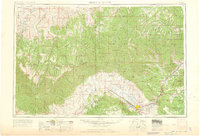 1962 Grand Junction1962 Print · USGSThe Western Slope of the early sixties comes into focus here, showing the irrigation-driven growth of the valley and the surrounding high desert. Trace the path of the Denver and Rio Grande Western RR or locate old outposts like Atchee and Dragon.
 - 1962 Map of Fruita, 1964 Print
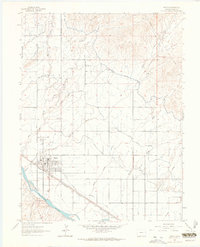 1962 Fruita1964 Print · USGSThe Grand Valley's irrigation network and rail corridors are captured here in the early sixties as Fruita expanded. Researchers can trace local genealogy and landmarks at Elmwood Cem, the Star Community Center, and the Denver and Rio Grande Western Railroad depot.4 unique versions available
 - 1962 Map of Mack, 1964 Print
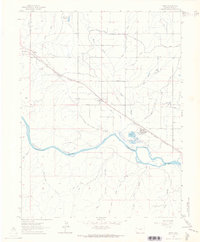 1962 Mack1964 Print · USGSMesa County settlement and industry are in focus here during the early sixties, centered on the railroad corridor between Mack and Loma. Local historians can trace the Denver and Rio Grande Western tracks past the Gilsonite refinery and down to the Horsethief Canyon Colorado River.3 unique versions available
 - 1962 Map of Colorado National Monument, 1964 Print
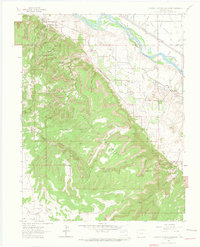 1962 Colorado National Monument1964 Print · USGSThe canyon country of Mesa County comes alive in the early sixties as the monument's roads and trails take shape near Redlands. Trace the historic Serpents Trail, find the Glade Park Cem, or locate the Redlands Sch along the river valley.6 unique versions available
 - 1964 Map of Grand Junction
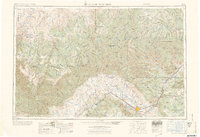 1964 Grand Junction1964 Print · USGSThe Colorado-Utah borderlands are shown here in the mid-1960s, a period when the river-valley settlements and high-desert rail outposts defined the region. Researchers can trace the legacy of remote camps like Atchee and Dragon or follow the agricultural expansion around Grand Junction and Fruita.
 - 1965 Map of Grand Junction
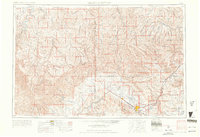 1965 Grand Junction1965 Print · USGSWestern Colorado and eastern Utah appear at a mid-century crossroads, where the irrigated orchards of the Grand Valley meet the high desert plateaus. Trace the Denver & Rio Grande Western RR as it connects Grand Junction to early settlements like Westwater and Cisco.2 unique versions available
 - 1981 Map of Grand Junction
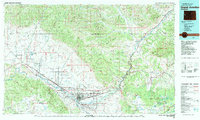 1981 Grand Junction1981 Print · USGSThe Grand Valley is shown during a period of steady growth in the early eighties, where the desert landscape meets the irrigated orchards of Palisade. Trace the historic Denver and Rio Grande Western Railroad route past the Cameo Mine and into the Book Cliffs.
 - 2010 Map of Fruita, 2010 Print
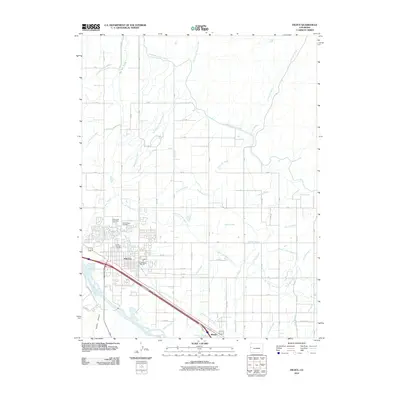 2010 Fruita2010 Print · USGSThe Colorado River valley at Fruita is captured here just after the turn of the millennium, showcasing a high-desert landscape defined by its intricate canal systems. Researchers can locate significant sites including Elmwood Cemetery, the Fruita Number Two Mine, and the historic rail siding area of Rhone.
 - 2010 Map of Colorado National Monument, 2010 Print
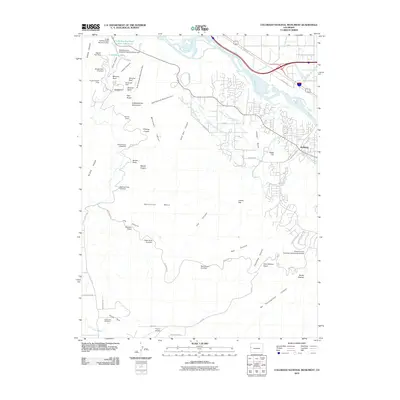 2010 Colorado National Monument2010 Print · USGSThe high plateau and deep canyons of Mesa County are captured here in the early twenty-first century as suburban growth meets protected wilderness. Trace local landmarks from Glade Park Cemetery to the irrigation works of the Redlands First Lift Canal.
 - 2010 Map of Mack, 2010 Print
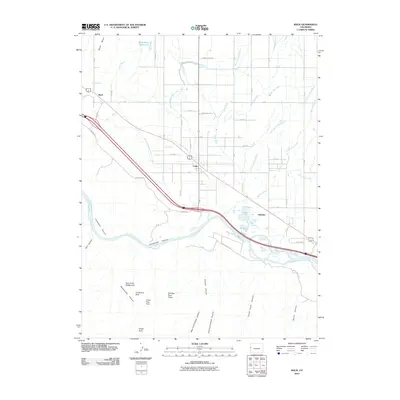 2010 Mack2010 Print · USGSMesa County at the turn of the decade shows the meeting of irrigated farmland and high-desert canyons. Genealogists and hikers can trace the geography around Loma and Mack or locate natural landmarks like Centennial Arch and Hole in the Bridge Arch.
 - 2013 Map of Colorado National Monument, 2013 Print
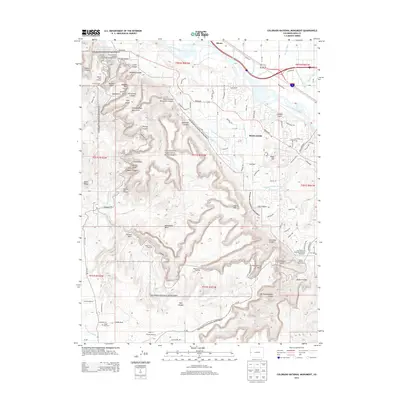 2013 Colorado National Monument2013 Print · USGSThe Grand Valley and its towering red rock formations are captured here just over a decade ago as suburban growth met the protected landscape. Researchers can trace the path of the Colorado River past Rhone and locate landmarks like Riggs Hill and Glade Park Cem.
 - 2013 Map of Mack, 2013 Print
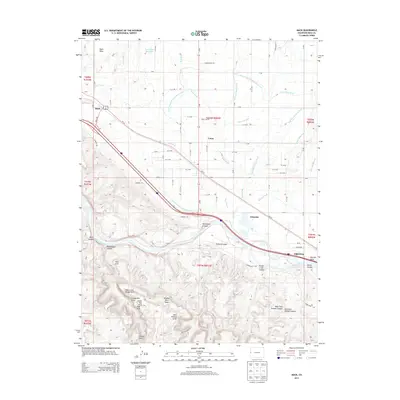 2013 Mack2013 Print · USGSMesa County's agricultural valley and canyonlands are on display here in the early twenty-first century. Researchers can trace the path of the Colorado River and the complex irrigation network including the Grand Valley Canal and Golden Hill Canal.
 - 2013 Map of Fruita, 2013 Print
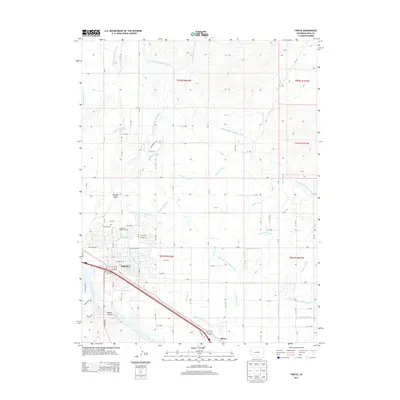 2013 Fruita2013 Print · USGSThe Fruita area comes into sharp focus during the early twenty-first century, showcasing the vital irrigation networks of the Grand Valley. Researchers can trace historic property boundaries and community sites like Elmwood Cem or follow the path of the Government Highline Canal.
 - 2016 Map of Fruita, 2016 Print
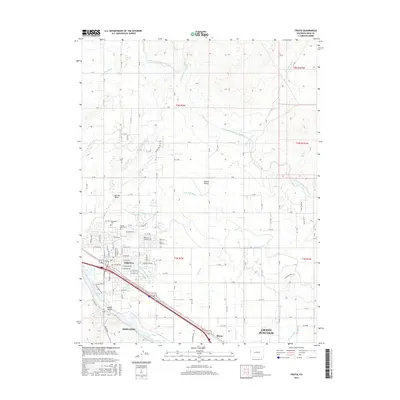 2016 Fruita2016 Print · USGSFruita and the Grand Valley are shown in the mid-2010s, highlighting the area's intricate irrigation systems and riverfront geography. Genealogists and local historians can trace family plots at Elmwood Cemetery or explore the rail-and-water history near Rhone and the Colorado River.
 - 2016 Map of Colorado National Monument, 2016 Print
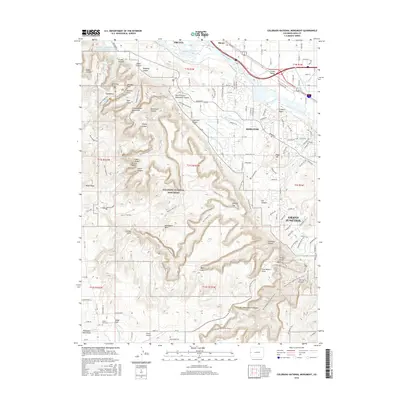 2016 Colorado National Monument2016 Print · USGSThe high desert canyons and growing Grand Valley suburbs meet in this mid-2010s survey of the western slope. Researchers can trace the engineering of the Hinderlider Lift Canal or locate local landmarks like Glade Park Cem and Devils Kitchen.
 - 2016 Map of Mack, 2016 Print
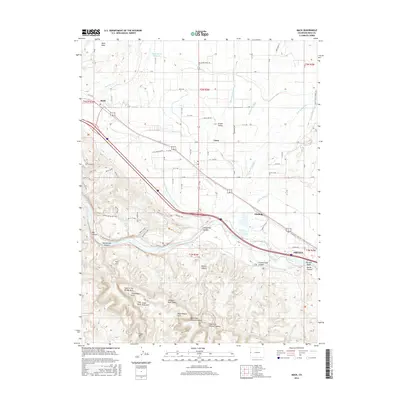 2016 Mack2016 Print · USGSThe Grand Valley in the mid-2010s shows a landscape defined by both industrial-scale irrigation and deep canyon wilderness. Trace the agricultural development around Loma and Mack or explore the backcountry landmarks of Pollock Canyon and Centennial Arch.
 - 2019 Map of Colorado National Monument, 2019 Print
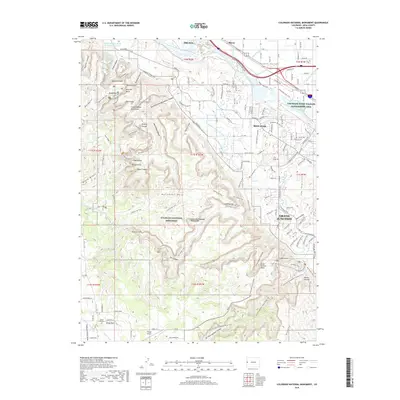 2019 Colorado National Monument2019 Print · USGSGrand Junction and the Redlands meet the high desert plateaus in this recent 2019 survey of the Colorado River valley. Researchers can trace the winding Rim Rock Drive through the Colorado National Monument past landmarks like Saddlehorn and the Coke Ovens.
 - 2019 Map of Fruita, 2019 Print
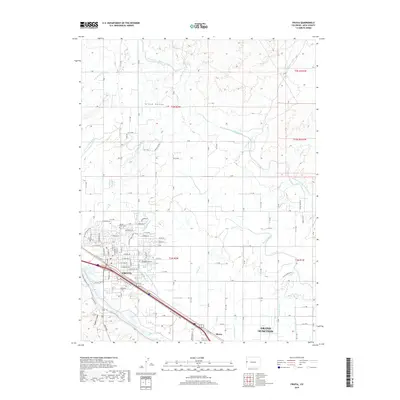 2019 Fruita2019 Print · USGSThe high desert of the Grand Valley is captured here in the late 2010s, revealing how irrigation defines the landscape. Trace the historic paths of the Government Highline Canal and Independent Ranchmens Ditch, or locate the Sacred Heart Cem near Fruita.
 - 2019 Map of Mack, 2019 Print
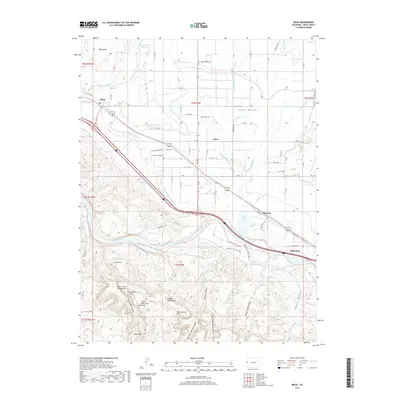 2019 Mack2019 Print · USGSThe Grand Valley at the close of the 2010s shows a landscape of engineered irrigation and desert wilderness. Trace the canyon country south of Fruita to find geological landmarks like Window Rock Tower and the Cedar Tree Arch.
 - 2022 Map of Fruita, 2022 Print
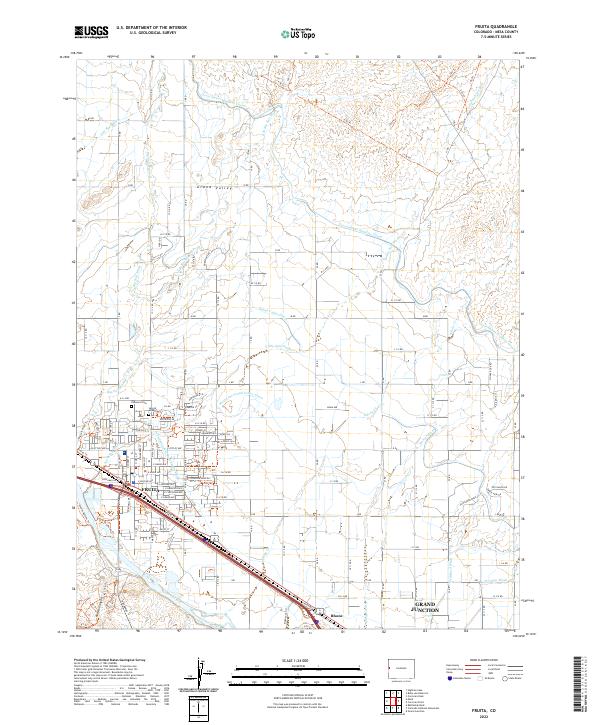 2022 Fruita2022 Print · USGSThe Grand Valley irrigation network is on full display here, showing the Fruita area in the early 2020s. Researchers can trace the path of the Government Highline Canal and locate family plots at Elmwood Cem and Sacred Heart Cem.
 - 2022 Map of Mack, 2022 Print
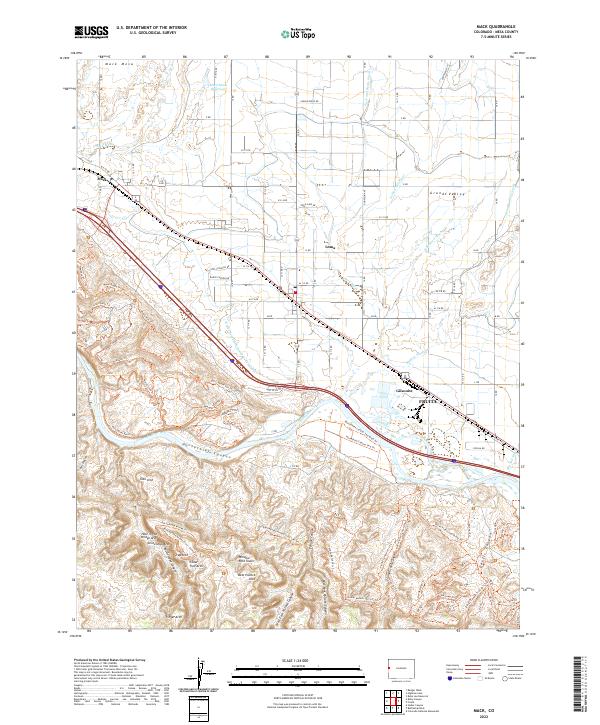 2022 Mack2022 Print · USGSThe Grand Valley's agricultural northern corridor meets the dramatic sandstone formations of the high desert in the early twenty-first century. Researchers can trace the intricate irrigation network through Loma and Gilsonite or locate specific geologic landmarks like Centennial Arch and Window Rock Tower.
Showing maps 1-25 of 26
Top cities near Fruita
Frequently asked questions
- What are the different types of historical maps available for Fruita?
- What is the oldest map of Fruita?
- Where can I purchase historical maps of Fruita for my home or office?
- Where can I download high-res historical maps of Fruita?
- Are there historical topographic maps available for Fruita?
- Is there historical aerial imagery available for Fruita?
- Where are historical maps of Fruita sourced from?