1900s (20th Century) Maps of Panama Park, Jacksonville
Explore 11 historic maps of Panama Park from the 1900s (20th Century). These maps offer a rare glimpse into what life looked like during the 1900s — showing old roads, neighborhoods, homes, and landmarks that have changed or disappeared over time.
Whether you're researching your family's past, planning a metal detecting trip, or studying how Panama Park's landscape evolved across the 1900s, these high-resolution maps are a powerful tool for exploring the history of this region.
- Focus on a specific era: All maps on this page are from the 1900s, giving you a focused view of this time period.
- See what’s changed: Compare century-old streets, trails, and buildings to today's modern landscape using overlays and satellite layers.
- Research with precision: Use these maps for genealogy, historical research, land use analysis, or educational projects.
- View, download, or print: Maps are fully viewable online in high resolution, and can be downloaded or printed for your own records.
Start exploring Panama Park's history through authentic maps from the 1900s. This is your window into the past.
Panama Park, Jacksonville maps
(11)- 1918 Map of Jacksonville
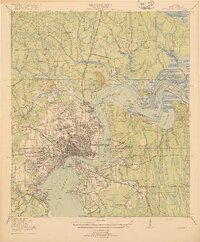 1918 Jacksonville1918 Print · USGSJacksonville and the winding St. Johns River are shown here during the First World War, capturing the city's rail-and-river industrial core. Genealogists and researchers can trace early neighborhoods like Brooklyn and Murray Hill, or locate rural landmarks like Otto Chapel School and the Braddock School.5 unique versions available
 - 1948 Map of Jacksonville
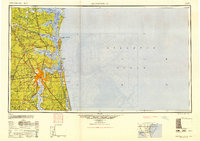 1948 Jacksonville1948 Print · USGSNortheast Florida and Southeast Georgia's coastal waterways and railroad towns are captured here in the years following the war. Genealogists can trace family connections through river towns like St Marys or identify long-standing military landmarks like Jacksonville NAS.
 - 1950 Map of Trout River
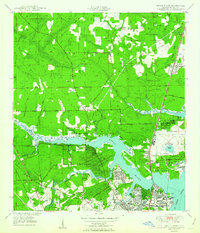 1950 Trout River1950 Print · USGSNorth of Jacksonville in the early postwar era, the riverfront is a landscape of growing suburbs and civic institutions. Genealogists and local historians can locate family burial sites at Restlawn Memorial Park or trace the early days of the Jacksonville Municipal Airport.
 - 1957 Map of Jacksonville, 1967 Print
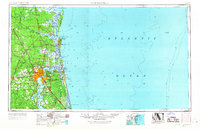 1957 Jacksonville1967 Print · USGSCoastal Florida and Georgia meet in the late fifties, showcasing a landscape of naval aviation, deep-water terminals, and barrier island communities. Researchers can trace the mid-century footprints of NAS Jacksonville, find small communities like Franklintown, and locate the historic Fort Clinch State Park.3 unique versions available
 - 1959 Map of Jacksonville
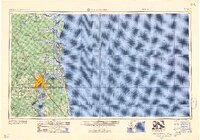 1959 Jacksonville1959 Print · USGSNortheast Florida and Southeast Georgia are seen here in the late fifties, dominated by the maritime activity of the St Johns River and the Atlantic coast. Researchers can trace the mid-century layout of Jacksonville and identify sprawling military sites like Camp Blanding Military Reservation and Kings Bay Ammunition Terminal.
 - 1960 Map of Jacksonville
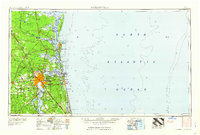 1960 Jacksonville1960 Print · USGSCoastal Florida and Georgia meet in this mid-century portrait of a region shaped by naval power and the winding St Johns River. Researchers can trace the development of military sites like Cecil Field or locate historic rural landmarks such as Jerusalem Ch and Kings Ferry.
 - 1964 Map of Trout River, 1966 Print
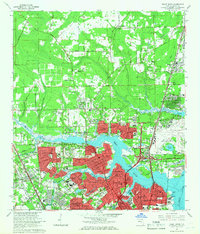 1964 Trout River1966 Print · USGSThe northern reaches of Jacksonville are shown here in the mid-1960s as suburban neighborhoods expanded around the Trout River and Imeson Airport. Researchers can trace the development of Ribault Manor, locate the Greenwood Cem, or find the former site of the Amusement Park.6 unique versions available
 - 1977 Map of Jacksonville, 1983 Print
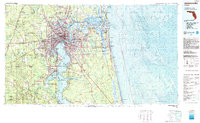 1977 Jacksonville1983 Print · USGSNortheast Florida during the late seventies shows a region defined by its deep-water naval bases and burgeoning riverfront suburbs. You can trace the rail networks of the Seaboard Coast Line, locate the Kingsley Plantation, and study the sprawling grounds of Cecil Field Naval Air Station.
 - 1980 Map of Jacksonville, 1984 Print
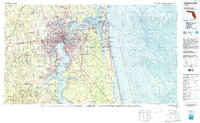 1980 Jacksonville1984 Print · USGSThe Jacksonville metropolitan area and the Atlantic coast are captured here during a period of significant late-century growth. Researchers can trace the massive military footprints of Cecil Field and Mayport Naval Station alongside historic communities like Mandarin and Switzerland.
 - 1988 Map of Jacksonville
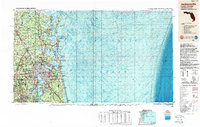 1988 Jacksonville1988 Print · USGSCoastal Florida and Georgia are captured here during the late eighties, documenting the rapid growth of the First Coast and its vital military installations. Researchers can trace the development of beach communities like Fernandina Beach and Atlantic Beach or locate family landmarks near Mickler Landing and Orange Park.
 - 1994 Map of Trout River, 2002 Print
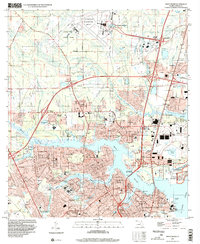 1994 Trout River2002 Print · USGSGreater Jacksonville in the mid-nineties shows a landscape of established neighborhoods and significant military and aviation infrastructure. Genealogists and local historians can trace family roots through numerous sites like Duval County Paupers Cem, Magnolia Gardens, and the Jacksonville Zoo.
End of results
Showing maps 1-11 of 11
Top cities near Panama Park
- Jacksonville historical maps
- Orange Park historical maps
- Neptune Beach historical maps
- Callahan historical maps
Frequently asked questions
- What are the different types of historical maps available for Panama Park?
- What is the oldest map of Panama Park?
- Where can I purchase historical maps of Panama Park for my home or office?
- Where can I download high-res historical maps of Panama Park?
- Are there historical topographic maps available for Panama Park?
- Is there historical aerial imagery available for Panama Park?
- Where are historical maps of Panama Park sourced from?