Old Maps of Sumter County, Georgia
Explore 109 old maps of Sumter County, spanning from 1953 to today. These high-resolution historic maps reveal how streets, neighborhoods, landmarks, and natural features evolved over time — perfect for genealogy, metal detecting, research, and local history exploration.
What you can do with these maps:
- See how Sumter County changed over time: Compare historical maps to modern-day views to trace roads, homesites, rail lines & more.
- View detailed metadata: Each map includes creators, publishers, year, scale, and archive source.
- Overlay maps with satellite & LiDAR: Visualize the past alongside modern tools to explore terrain & human change.
- Trusted historical sources: Maps sourced from the USGS, Library of Congress, and other archives.
- Access maps your way: View online, download high-res files, or order prints for personal or research use.
Start exploring old maps of Sumter County to uncover forgotten places, hidden landmarks, and the deep history beneath your feet.
Sumter County, GA maps
(109)- 1953 Map of Dothan, 1966 Print
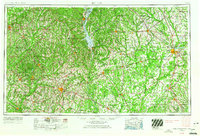 1953 Dothan1966 Print · USGSSoutheast Alabama and Southwest Georgia are captured during a period of massive hydraulic and military expansion in the mid-fifties. Genealogists and historians can trace rural landmarks like Antioch Church and School, the Andrew Jackson Monument, and the early footprint of Fort Rucker Military Reservation.3 unique versions available
 - 1953 Map of Waycross, 1967 Print
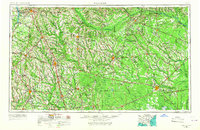 1953 Waycross1967 Print · USGSSouth Georgia's agricultural and rail heartland is captured here in the mid-1950s, showing a vast network of timber and farming towns. Researchers can trace the rail lines connecting Waycross and Tifton or locate landmarks like Jefferson Davis State Park and Lake Blackshear.2 unique versions available
 - 1954 Map of Dothan
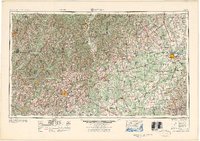 1954 Dothan1954 Print · USGSSoutheast Alabama and Southwest Georgia are seen here in the mid-fifties, during a decade of military expansion and rural transition. Genealogists can trace the location of country schools like Little Zion School or the grounds of Kolomoki Mounds State Park.
 - 1955 Map of Dothan
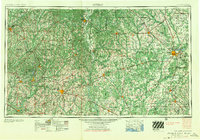 1955 Dothan1955 Print · USGSSoutheast Alabama and Southwest Georgia are captured here in the mid-fifties, showing a landscape of river-port history and growing military bases. Researchers can trace rural life via the Andrew Jackson Monument, Bauxite mines, and the Central of Georgia RR.
 - 1955 Map of Phenix City, 1964 Print
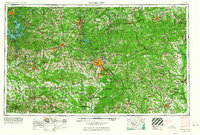 1955 Phenix City1964 Print · USGSPost-war Alabama and Georgia meet along the Chattahoochee River as industry and military installations expand. Trace the rail lines of the Central of Georgia through towns like Opelika, Tuskegee, and Alexander City.3 unique versions available
 - 1956 Map of Leslie, 1958 Print
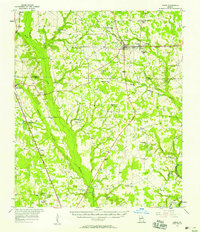 1956 Leslie1958 Print · USGSSumter and Lee Counties are shown here during the mid-fifties, when small rail towns and rural school districts shaped the local geography. Genealogists can trace family landmarks like Jordan Place, the Nunn Industrial Sch, and the riverside site of Starksville.2 unique versions available
 - 1957 Map of Phenix City
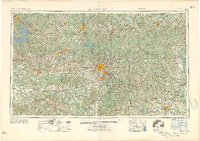 1957 Phenix City1957 Print · USGSThe Alabama-Georgia borderlands are captured here in the mid-fifties, centered on the bustling river crossing at Phenix City and Columbus. Researchers can trace the mid-century footprint of the Fort Benning Military Reservation or locate smaller textile and railroad towns like Langdale and Camp Hill.
 - 1957 Map of Macon
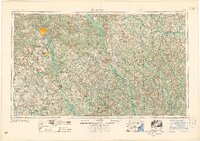 1957 Macon1957 Print · USGSMid-century Georgia comes into focus as the river-and-rail economy shifts toward a new era of aviation and highway travel. Trace family roots and vanished landmarks across the Ocmulgee River valley from Macon to the onion fields of Vidalia.
 - 1958 Map of Macon
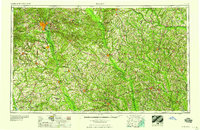 1958 Macon1958 Print · USGSMiddle Georgia during the late fifties shows the post-war expansion of Warner Robins alongside the deep-rooted rail hubs of the Central of Georgia line. Researchers can trace the river-bound boundaries of numerous counties and find local landmarks like Veterans Memorial Hospital and Robins AFB.
 - 1958 Map of Phenix City
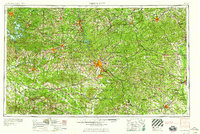 1958 Phenix City1958 Print · USGSThe Alabama-Georgia borderlands thrive during the late fifties, anchored by the river-driven industry of Columbus and Phenix City. Researchers can trace the mid-century footprints of Fort Benning, Auburn, and the textile towns of Fairfax and Lanett.
 - 1958 Map of Waycross
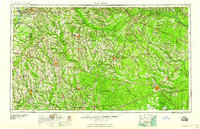 1958 Waycross1958 Print · USGSSoutheast Georgia in the late fifties remains a landscape of deep river basins and vital rail junctions. Genealogists and historians can trace family-named landmarks and rural hubs like Union Church, South Georgia College, and the sprawling Okefenokee Swamp.2 unique versions available
 - 1964 Map of Macon
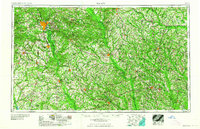 1964 Macon1964 Print · USGSCentral Georgia in the mid-sixties is defined by its major river valleys and a booming military presence. Genealogists and historians can trace the growth of Warner Robins near Robins AFB or locate smaller rural junctions like Allentown and Jeffersonville along the historic Southern railroad lines.2 unique versions available
 - 1972 Map of Drayton, 1974 Print
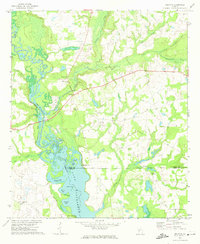 1972 Drayton1974 Print · USGSDooly County during the early seventies is mapped here as the Flint River expands into the backwaters of northern Lake Blackshear. Genealogists and local historians can locate rural landmarks like Macedonia Ch, Collier Cem, and the river crossing at Luther Storey Bridge.2 unique versions available
 - 1972 Map of Ellaville South, 1975 Print
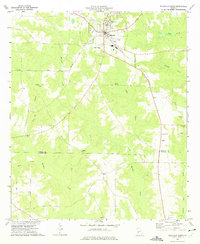 1972 Ellaville South1975 Print · USGSSchley County in the early seventies centers on the rail-and-creek economy of the Georgia coastal plain. Genealogists and local historians can trace rural congregations and family burial sites including Union Hill Ch, Ebenezer Cem, and Jerusalem Ch.
 - 1972 Map of Methvins, 1975 Print
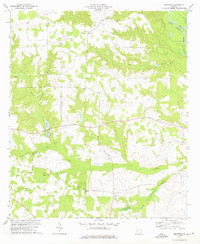 1972 Methvins1975 Print · USGSSumter County farmland and creek bottoms appear in detail in the early 1970s. Researchers can locate community anchors like Union Grove Ch and Bethel Ch, or trace the winding course of the Flint River near Methvins.2 unique versions available
 - 1972 Map of Andersonville, 1975 Print
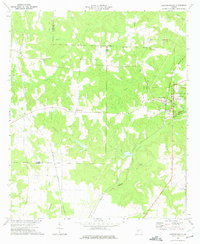 1972 Andersonville1975 Print · USGSAndersonville and the surrounding Georgia countryside are documented here in the early seventies, showing the landscape before modern development. Researchers can locate the Andersonville National Historic Site, Mt Olive Cem, and the tracks of the Central of Georgia railroad.
 - 1972 Map of Pennington, 1975 Print
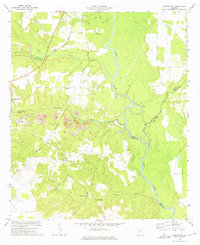 1972 Pennington1975 Print · USGSMacon and Sumter counties meet along the winding Flint River in the early 1970s, as industrial mining reshapes the rural landscape. Genealogists and historians can trace family sites like Tolen Cem or explore the grounds of Chamblis Mill and the Indian Mounds.
 - 1973 Map of Americus, 1975 Print
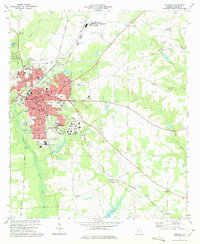 1973 Americus1975 Print · USGSAmericus was a thriving South Georgia center in the mid-1970s, defined by its historic college campus and a busy junction of multiple rail lines. Genealogists and historians can trace family roots through numerous sites like Mt Moriah Ch, Gatewood Cem, and Souther Field.2 unique versions available
 - 1973 Map of Plains, 1975 Print
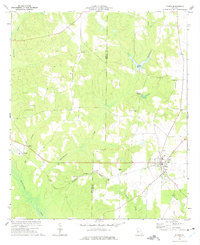 1973 Plains1975 Print · USGSThe rural agricultural landscape of Sumter County is captured here in the early seventies, centered on the community of Plains. Genealogists and historians can trace rail-side hamlets like Archery, old burial grounds like Lebanon Cem, and several local landmarks including Youngs Millpond.2 unique versions available
 - 1973 Map of Bottsford, 1975 Print
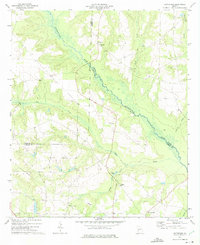 1973 Bottsford1975 Print · USGSWest Georgia's rural landscape at the start of the 1970s is captured here as the borders of three counties meet. Researchers can trace family sites and local history through numerous landmarks like Bottsford, Providence Cem, and Wallers Ch.
 - 1973 Map of Lake Collins, 1975 Print
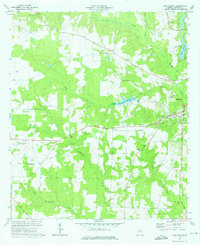 1973 Lake Collins1975 Print · USGSSumter County was a landscape of rail-linked hamlets and creekside farms in the early seventies. Genealogists and historians can trace the foundations of local life through the Antioch Ch Cem, Ebenezer Ch, and the crossroads at New Point.2 unique versions available
 - 1973 Map of Draneville, 1975 Print
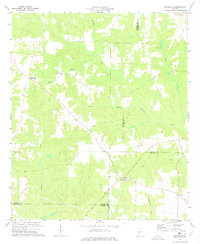 1973 Draneville1975 Print · USGSThe rural crossroads of Marion County are preserved here during the 1970s, showing a landscape of family farms and creek-bottom timber. Genealogists can trace local landmarks like Mt Carmel Ch, the Mt Carmel Cem, and the settlement at Friendship.
 - 1973 Map of Bronwood, 1975 Print
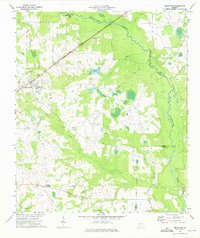 1973 Bronwood1975 Print · USGSBronwood and the Terrell County countryside are shown here in the early seventies, a landscape of family farms and rural churches. Genealogists can trace local landmarks like Bridges Crossroad, Greater Macedonia Ch, and the Old Church Cem.
 - 1973 Map of Leslie, 1975 Print
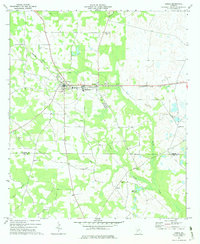 1973 Leslie1975 Print · USGSSumter and Lee Counties come into focus in the early 1970s, showcasing a community built on agriculture and rail transport. Genealogists can trace family roots through numerous local landmarks like Union High School, Jackson Grove Church, and Mt Zion Cemetery.
 - 1973 Map of Smithville West, 1976 Print
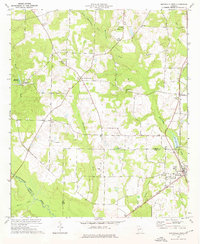 1973 Smithville West1976 Print · USGSThe agricultural plains of Sumter and Lee Counties are captured here in the early seventies, centered on the rail-side community of Smithville. Researchers can find numerous rural landmarks, from the Smithville Academy and Green Grove Sch to historic congregations at Hebron Ch and St Pauls Ch.
Showing maps 1-25 of 109
Top cities of Sumter County
Frequently asked questions
- What are the different types of historical maps available for Sumter County?
- What is the oldest map of Sumter County?
- Where can I purchase historical maps of Sumter County for my home or office?
- Where can I download high-res historical maps of Sumter County?
- Are there historical topographic maps available for Sumter County?
- Is there historical aerial imagery available for Sumter County?
- Where are historical maps of Sumter County sourced from?