Old Maps of Lawrence, Indianapolis
Explore 41 old maps of Lawrence, spanning from 1948 to today. These high-resolution historic maps reveal how streets, neighborhoods, landmarks, and natural features evolved over time — perfect for genealogy, metal detecting, research, and local history exploration.
What you can do with these maps:
- See how Lawrence changed over time: Compare historical maps to modern-day views to trace roads, homesites, rail lines & more.
- View detailed metadata: Each map includes creators, publishers, year, scale, and archive source.
- Overlay maps with satellite & LiDAR: Visualize the past alongside modern tools to explore terrain & human change.
- Trusted historical sources: Maps sourced from the USGS, Library of Congress, and other archives.
- Access maps your way: View online, download high-res files, or order prints for personal or research use.
Start exploring old maps of Lawrence to uncover forgotten places, hidden landmarks, and the deep history beneath your feet.
Lawrence, Indianapolis maps
(41)- 1948 Map of Indianapolis East
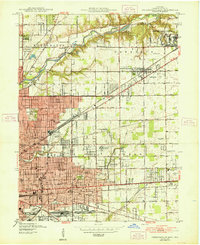 1948 Indianapolis East1948 Print · USGSNortheast Marion County is documented here during the post-war industrial boom, showing the expansion of Indianapolis toward Lawrence. Researchers can locate vanished landmarks like Brightwood Airport, the Naval Ordnance Plant, and numerous local sites like Browning Sch.2 unique versions available
 - 1952 Map of Cumberland, 1953 Print
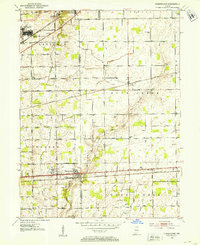 1952 Cumberland1953 Print · USGSThe rural borderlands of Marion and Hancock Counties are captured here in the early fifties, showing the footprint of Fort Benjamin Harrison alongside small farming hamlets. Researchers can locate numerous family burial sites like Snider Cem and Arnett Cem, or trace the path of the New York Central Railroad.
 - 1952 Map of Fishers, 1953 Print
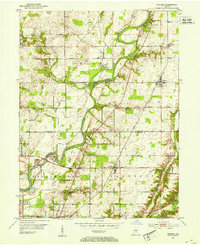 1952 Fishers1953 Print · USGSCentral Indiana in the early fifties shows a patchwork of fertile farmland and growing river towns along the White River. Genealogists and local historians can locate several family cemeteries like Eller Cem and early landmarks including White Chapel and the Township Sch.
 - 1952 Map of Mc Cordsville, 1953 Print
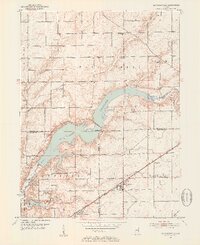 1952 Mc Cordsville1953 Print · USGSCentral Indiana in the early fifties shows the expansion of Geist Reservoir and the established rail lines. Genealogists can trace family landmarks and rural homesteads through McCordsville, Highland Cem, and Bethlehem Ch.2 unique versions available
 - 1953 Map of Cincinnati, 1965 Print
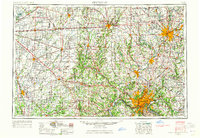 1953 Cincinnati1965 Print · USGSThe Ohio River valley and the industrial heartland of Indiana and Ohio are captured here during the mid-century peak of rail and river commerce. Genealogists and historians can trace connections between Cincinnati and outlying military sites like Camp Atterbury and Bakalar AFB.3 unique versions available
 - 1953 Map of Indianapolis, 1965 Print
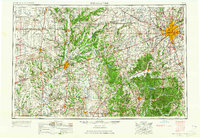 1953 Indianapolis1965 Print · USGSCentral Indiana and the Illinois borderlands are captured in the mid-sixties, showing the growth of Indianapolis and its industrial rail corridors. Genealogists and historians can trace the development of outlying towns like Zionsville or Beech Grove and find landmarks such as Atterbury AAF and Turkey Run State Park.4 unique versions available
 - 1956 Map of Indianapolis
 1956 Indianapolis1956 Print · USGSCentral Indiana in the mid-fifties is captured during a period of industrial growth and military presence. Genealogists and historians can trace the rail networks of the New York Central or locate regional landmarks like Fort Benjamin Harrison and Camp Atterbury.
 - 1957 Map of Indianapolis
 1957 Indianapolis1957 Print · USGSCentral Indiana in the mid-fifties is captured here as a crossroads of major rail lines and nascent federal highways. Genealogists and historians can trace family-named ridges like Poplar Ridge or locate strategic sites like Camp Atterbury and Speedway.2 unique versions available
 - 1957 Map of Cincinnati
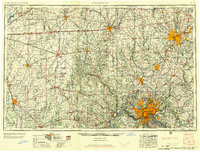 1957 Cincinnati1957 Print · USGSThe Ohio River valley and its surrounding highlands thrived during the mid-fifties industrial peak, centered on the bustling Cincinnati and Dayton metropolitan hubs. Researchers can trace the extensive rail networks and military sites like Wright-Patterson AFB and Camp Atterbury.
 - 1959 Map of Fishers, 1960 Print
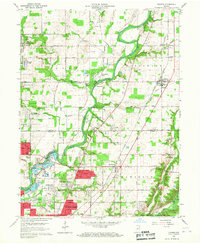 1959 Fishers1960 Print · USGSSuburban Indianapolis and rural Hamilton County meet here in the late fifties as residential growth begins to reshape the landscape. Genealogists and historians can trace the foundations of Fishers and New Britton or locate old burial grounds like Heady Cem.2 unique versions available
 - 1959 Map of Indianapolis East, 1961 Print
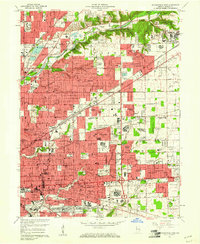 1959 Indianapolis East1961 Print · USGSThe eastern suburbs of Indianapolis were rapidly expanding in the late fifties as residential neighborhoods grew around established military and industrial hubs. Researchers can trace local heritage through numerous parochial sites like Holy Spirit Sch & Ch and major landmarks including the Fort Benjamin Harrison Military Reservation.
 - 1962 Map of Indianapolis
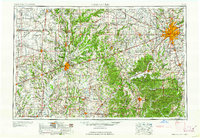 1962 Indianapolis1962 Print · USGSCentral Indiana and the Illinois borderlands are captured here in the early sixties, showing the region's dense rail networks and growing urban centers. Genealogists and historians can locate family-named landmarks and institutions like Crown Hill Cem, Indiana University, and the Indianapolis Motor Speedway.
 - 1962 Map of Mc Cordsville, 1963 Print
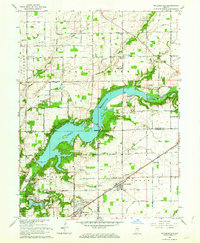 1962 Mc Cordsville1963 Print · USGSThe Geist Reservoir area undergoes a mid-century transformation where rural crossroads meet new lakeside developments. Researchers can trace ancestral sites at Arnett Cem or the rail history of McCordsville along the New York Central line.3 unique versions available
 - 1962 Map of Cumberland, 1964 Print
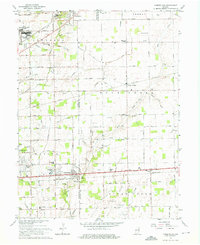 1962 Cumberland1964 Print · USGSCumberland and the eastern fringes of Indianapolis are shown here during a period of significant mid-century expansion. Researchers can trace family history through dozens of named burial grounds like Eastes Cem or locate defunct landmarks such as the Drive-in Theater and Fort Benjamin Harrison.5 unique versions available
 - 1967 Map of Fishers, 1969 Print
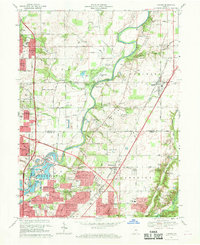 1967 Fishers1969 Print · USGSNortheast of Indianapolis in the late sixties, this area shows the early pulse of suburban expansion along the White River. Genealogists and local historians can trace the foundations of Fishers, locate the Farley Cem, and see the early layout of New Britton and Allisonville.5 unique versions available
 - 1967 Map of Indianapolis East, 1970 Print
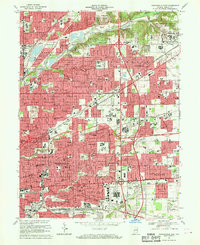 1967 Indianapolis East1970 Print · USGSMarion County's eastern neighborhoods and military grounds are captured here in the late sixties as suburban development expands toward the Lawrence area. Researchers can trace local genealogy through numerous institutions like Scecina High Sch or find industrial roots at the Hawthorne Yards.3 unique versions available
 - 1986 Map of Indianapolis
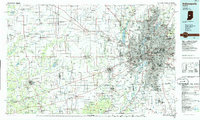 1986 Indianapolis1986 Print · USGSThe Indiana capital and its surrounding counties are captured here in the mid-1980s, showcasing the height of its orbital highway development and suburban growth. Researchers can trace the legacy of the Fort Benjamin Harrison Military Reservation, follow the Conrail lines, or locate family roots in Beech Grove, Greencastle, and Zionsville.2 unique versions available
 - 1986 Map of New Castle
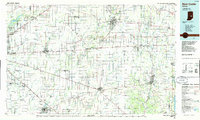 1986 New Castle1986 Print · USGSEast Central Indiana remains a patchwork of thriving county seats and rail-side hamlets in the mid-eighties. Genealogists and historians can locate family landmarks such as East Hill Cemetery, Little Blue River Church, and the transit lines of the CONRAIL railroad.2 unique versions available
 - 1998 Map of Fishers, 2000 Print
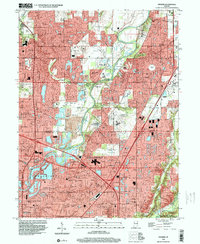 1998 Fishers2000 Print · USGSThe northern edge of the Indianapolis metro area is shown here in the late nineties as residential growth transforms the White River valley. Genealogists and local historians can locate legacy sites like New Britton, White Chapel, and the historic Heady Cem alongside modern landmarks.
 - 1998 Map of Indianapolis East, 2001 Print
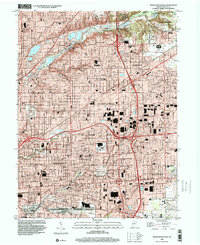 1998 Indianapolis East2001 Print · USGSMarion County’s eastern suburbs and urban neighborhoods are captured here in the late nineties as a fully realized landscape of industry and community. Researchers can locate dozens of parish schools and historic burial grounds like Fall Creek Cemetery or trace the sprawling U S Naval Reservation.
 - 1998 Map of Mc Cordsville, 2002 Print
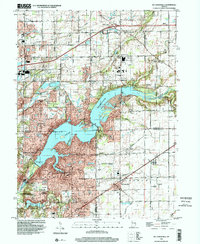 1998 Mc Cordsville2002 Print · USGSThe growing communities northeast of Indianapolis come into focus here during the late nineties as residential development meets rural heritage. Genealogists and local historians can trace family plots like Arnett Cem or explore the early layouts of Woodbury and McCordsville along the Conrail tracks.
 - 2010 Map of Cumberland, 2010 Print
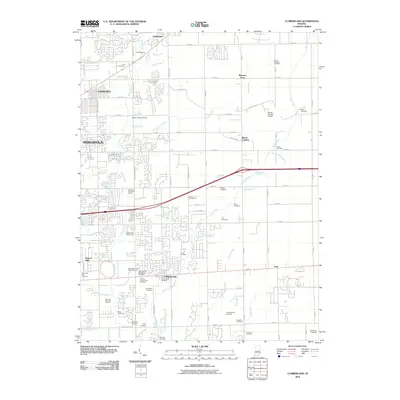 2010 Cumberland2010 Print · USGSThe eastern edges of Marion County and Hancock County are captured here during a period of suburban growth. Genealogists can trace a remarkable number of local burial sites, from Washington Park Cemetery East to the Huntington Cemetery and McNamee Cemetery.
 - 2010 Map of McCordsville, 2010 Print
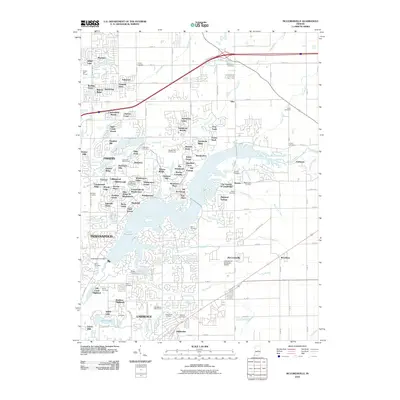 2010 McCordsville2010 Print · USGSThe suburbs of Indianapolis were expanding rapidly at the start of the millennium, centered around the sprawling waters of Geist Reservoir. Genealogists and local historians can trace historic sites like Bethlehem Cemetery and Helm Cemetery tucked between modern developments.
 - 2010 Map of Indianapolis East, 2010 Print
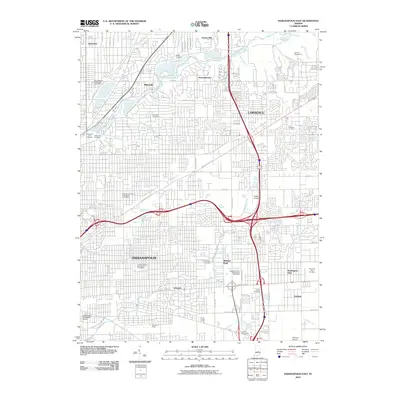 2010 Indianapolis East2010 Print · USGSThe eastern suburbs of Indianapolis are shown in high detail during the first decade of the 2000s, from the rail hubs to the winding creek beds. Researchers can locate family sites and landmarks like Negley Cemetery, Hawthorne Yards, and Hooks Airport.
 - 2010 Map of Fishers, 2010 Print
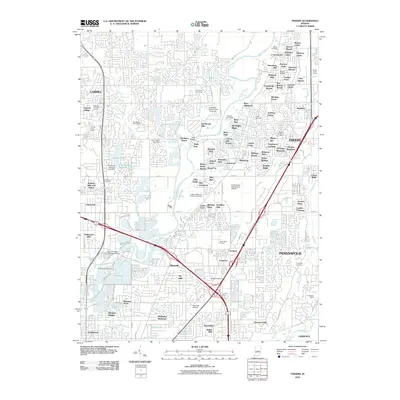 2010 Fishers2010 Print · USGSThe northern reaches of the Indianapolis metro area are seen here during the rapid residential expansion of the early twenty-first century. Genealogists and local historians can trace legacy sites like Oaklawn Memorial Gardens Cemetery and White Chapel Cemetery alongside infrastructure like the Indianapolis Metropolitan Airfield.
Showing maps 1-25 of 41
Top cities near Lawrence
- Indianapolis historical maps
- Carmel historical maps
- Fishers historical maps
- Noblesville historical maps
- Westfield historical maps
- Greenfield historical maps
See more
Top neighborhoods of Lawrence
- Rainbow Highlands historical maps
- Indian Lake historical maps
- Oaklandon historical maps
- Fall Creek Highland historical maps
- Trilobi Hills historical maps
Frequently asked questions
- What are the different types of historical maps available for Lawrence?
- What is the oldest map of Lawrence?
- Where can I purchase historical maps of Lawrence for my home or office?
- Where can I download high-res historical maps of Lawrence?
- Are there historical topographic maps available for Lawrence?
- Is there historical aerial imagery available for Lawrence?
- Where are historical maps of Lawrence sourced from?