Old Maps of Jefferson County, Iowa for Genealogy
Trace your family roots with 108 historic maps of Jefferson County. These high-res maps reveal old neighborhoods, homesites, landmarks, and streets — helping you uncover where your ancestors lived and how the area evolved over time.
- Explore historic neighborhoods: Identify where your relatives may have lived in the 1800s or 1900s.
- Compare maps over time: Trace the changes in streets, buildings, and landmarks for multi-generational research.
- Perfect for genealogy & ancestry research: Used by family historians and researchers to map out lineage and migration.
These maps are an incredible resource for exploring your personal connection to Jefferson County's past.
Jefferson County, IA maps
(108)- 1954 Map of Centerville, 1967 Print
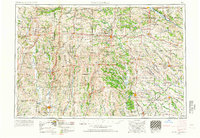 1954 Centerville1967 Print · USGSThe Iowa-Missouri borderlands at mid-century reveal a landscape shaped by river valleys and the height of the regional rail network. Genealogists and historians can trace the paths of the Wabash railroad and locate old townsites like Mystic, Moulton, and Greentop.3 unique versions available
 - 1954 Map of Des Moines, 1973 Print
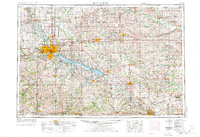 1954 Des Moines1973 Print · USGSCentral Iowa's evolving landscape is captured here in the early seventies, just as major reservoirs were reshaping the river valleys. Genealogists and historians can trace the rail corridors of the Burlington Northern or locate family roots near Pella, Indianola, and Knoxville.2 unique versions available
 - 1956 Map of Des Moines
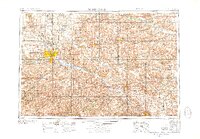 1956 Des Moines1956 Print · USGSCentral Iowa in the mid-fifties shows a landscape defined by bustling rail hubs and deep-rooted agricultural research. Genealogists and researchers can trace the growth of Des Moines and Ames, locate the Sac and Fox Indian Reservation, or study the paths of the Skunk River and South Skunk River.
 - 1957 Map of Des Moines
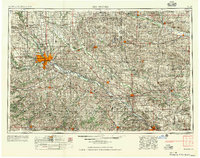 1957 Des Moines1957 Print · USGSCentral Iowa's post-war landscape is defined here by the converging rail lines and river valleys that shaped its earliest settlements. Genealogists and historians can trace the paths of the Rock Island Railroad and locate community landmarks in Des Moines, Ames, and Newton.
 - 1957 Map of Centerville
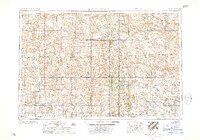 1957 Centerville1957 Print · USGSThe Iowa-Missouri borderlands in the mid-fifties reveal a landscape of river-valley agriculture and vital rail corridors. Genealogists and historians can trace family-named landmarks and small-town growth in Centerville, Kirksville, and along the Wabash railroad line.
 - 1958 Map of Centerville
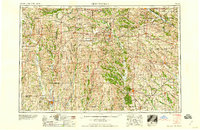 1958 Centerville1958 Print · USGSThe Iowa-Missouri borderlands come into focus during the mid-fifties, showing a landscape defined by river valleys and intersecting rail lines. Genealogists and local historians can trace family roots through dozens of rural hubs like Bloomfield, Unionville, and Corydon.
 - 1958 Map of Burlington, 1968 Print
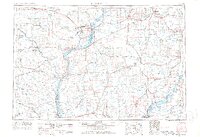 1958 Burlington1968 Print · USGSThe tri-state river country of Iowa, Illinois, and Missouri is captured here in the mid-fifties, dominated by the Mississippi River and major rail lines. Genealogists and historians can trace the development of river towns like Keokuk or locate the sprawling Iowa Army Ammunition Plant.4 unique versions available
 - 1958 Map of Davenport, 1968 Print
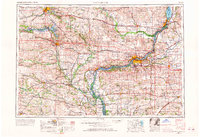 1958 Davenport1968 Print · USGSEastern Iowa and western Illinois thrive along the river during the late fifties, defined by the industrial Quad Cities and a robust rail network. Genealogists can trace family roots through settlements like Oasis and Stanwood or along the Cedar River.2 unique versions available
 - 1961 Map of Burlington
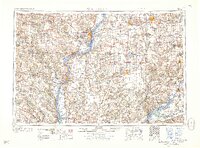 1961 Burlington1961 Print · USGSThe tri-state borderlands along the Mississippi River are captured here during the late fifties and early sixties, showing the vital river-and-rail economy of Iowa, Illinois, and Missouri. Genealogists and historians can trace the development of major hubs like Galesburg and Macomb alongside landmark sites such as the Iowa Ordnance Plant and the historic river town of Nauvoo.
 - 1961 Map of Davenport
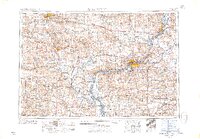 1961 Davenport1961 Print · USGSThe Quad Cities and the eastern Iowa riverlands are captured here in the early sixties, showing the region's transition into a modern industrial and transit hub. Genealogists and historians can trace the paths of major railroads and find river landmarks like Rock Island Arsenal, Huron Island, and the Coralville Reservoir.
 - 1962 Map of Davenport
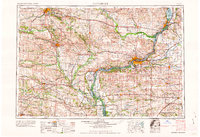 1962 Davenport1962 Print · USGSThe Quad Cities and the Mississippi River corridor are shown at their industrial peak just before the interstate era fully transformed the region. Researchers can trace the sprawling rail networks of the Chicago Rock Island and Pacific and find landmarks like the Rock Island Arsenal and Wild Cat Den State Park.
 - 1963 Map of Burlington
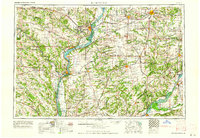 1963 Burlington1963 Print · USGSThe tri-state river country of the Mississippi and Illinois valleys comes alive in this mid-century survey. Genealogists and historians can trace the industrial and academic growth of the region, from the Iowa Ordnance Plant to campuses like Knox College and Western Illinois University.
 - 1965 Map of Eldon, 1966 Print
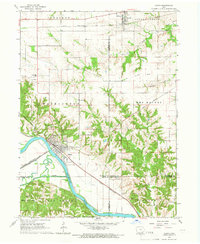 1965 Eldon1966 Print · USGSSoutheast Iowa in the mid-sixties reveals a landscape shaped by the Des Moines River and a complex network of rail lines. Researchers can locate family sites at Gontermand Cem, trace the Old Railroad Grade, or explore the riverfront at Eldon.
 - 1965 Map of Libertyville, 1966 Print
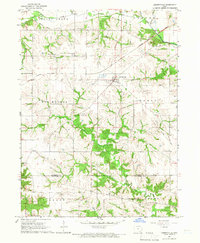 1965 Libertyville1966 Print · USGSLibertyville and the surrounding townships in the mid-sixties show a landscape shaped by the rail lines and winding creek branches. Researchers can locate family landmarks like Fell Cem, Mt Zion Ch, and the sprawling drainage of Lick Creek.
 - 1969 Map of Des Moines
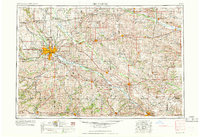 1969 Des Moines1969 Print · USGSCentral Iowa's fertile plains and growing capital are captured here during the late sixties, a time of major highway expansion and reservoir construction. Genealogists and researchers can trace rural township boundaries, local cemeteries, and rail lines serving towns like Pella, Grinnell, and Oskaloosa.
 - 1980 Map of Fairfield North, 1981 Print
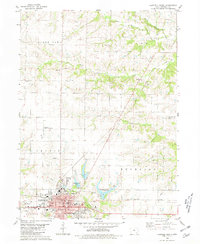 1980 Fairfield North1981 Print · USGSJefferson County in the early eighties reveals the growth of Fairfield alongside its academic and agricultural roots. Genealogists and historians can locate Evergreen Cem, trace the Old Railroad Grade, and explore the rural community of Perlee.
 - 1980 Map of Richland, 1981 Print
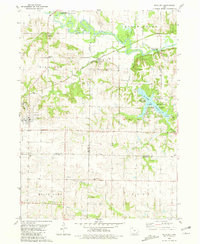 1980 Richland1981 Print · USGSSoutheast Iowa in the early 1980s reveals a landscape of quiet agricultural towns and significant state park land. Researchers can trace family history through several rural burial grounds like Evergreen Cem or follow the rails of the Chicago Milwaukee St Paul and Pacific.
 - 1980 Map of Brighton, 1981 Print
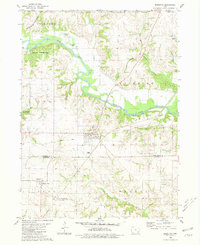 1980 Brighton1981 Print · USGSThe Skunk River valley at the start of the 1980s reveals a deeply rooted rural landscape straddling the Washington and Jefferson county line. Genealogists can trace family footprints through numerous local burial sites like Hillcrest Cem and Friends Cem or locate the Quarry and Old Railroad Grade that shaped the local economy.
 - 1980 Map of Fairfield South, 1981 Print
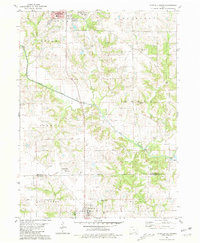 1980 Fairfield South1981 Print · USGSThe Jefferson and Van Buren county line comes to life in the late seventies as rural farmland meets the expanding edges of Fairfield. Genealogists can trace family names at Roth Cem and Smith Cem or locate community landmarks like the County Home.
 - 1980 Map of Lockridge West, 1981 Print
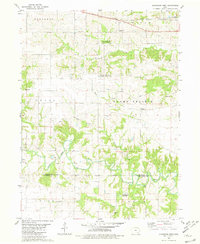 1980 Lockridge West1981 Print · USGSJefferson and Van Buren counties appear in the early eighties as a network of rural townships and winding creek bottoms. Researchers can locate numerous family burial sites like Bonnifield Cem or trace the Burlington Northern line near Lockridge.
 - 1980 Map of Ollie, 1981 Print
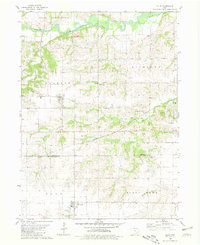 1980 Ollie1981 Print · USGSSoutheast Iowa's farming heartland and rail corridors are preserved here as they appeared in the early eighties. Genealogists and historians can trace family roots through the Ollie Cem, Summit Cem, and Altman Cem while following the Chicago Milwaukee St Paul and Pacific line.
 - 1980 Map of Brookville, 1981 Print
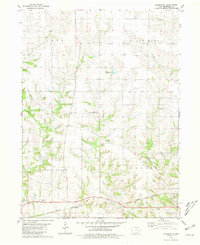 1980 Brookville1981 Print · USGSJefferson County farming communities and family legacies are preserved here in the early eighties. Genealogists can locate several burial grounds like Brooks Cem and Gantz Cem while tracing the Burlington Northern rail line.
 - 1980 Map of Pekin, 1981 Print
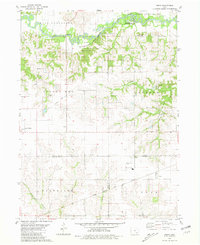 1980 Pekin1981 Print · USGSSoutheast Iowa farming communities thrive at the meeting point of Keokuk, Jefferson, and Wapello counties during the late twentieth century. Researchers can trace rural life through landmarks like Van Orsdall Cem, the Pekin Community Sch, and the Old Railroad Grade.
 - 1980 Map of Trenton, 1981 Print
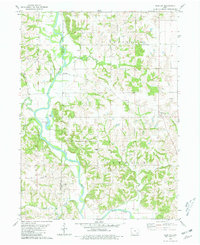 1980 Trenton1981 Print · USGSThe Skunk River valley comes into sharp focus during the mid-seventies, marking the boundary where Jefferson and Henry Counties meet. Genealogists and local historians can trace rural roots through Messer Cemetery, Trenton, and White Oak Church.
 - 1980 Map of Wayland, 1981 Print
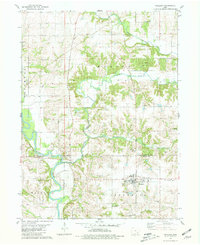 1980 Wayland1981 Print · USGSLife in the 1970s across the Washington and Henry county lines centered on the agricultural hubs of Wayland and Coppock during this era of field mapping. Researchers can trace family roots through several rural landmarks, including Schrock Cem, Eicher Emmanuel Ch, and the winding path of the Skunk River.
Showing maps 1-25 of 108
Top cities of Jefferson County
- Fairfield historical maps
- Batavia historical maps
- Maharishi Vedic City historical maps
- Libertyville historical maps
- Lockridge historical maps
- Packwood historical maps
See more
Frequently asked questions
- What are the different types of historical maps available for Jefferson County?
- What is the oldest map of Jefferson County?
- Where can I purchase historical maps of Jefferson County for my home or office?
- Where can I download high-res historical maps of Jefferson County?
- Are there historical topographic maps available for Jefferson County?
- Is there historical aerial imagery available for Jefferson County?
- Where are historical maps of Jefferson County sourced from?