1950s Maps of Edmonton, Kentucky
Explore 6 historic maps of Edmonton from the 1950s. These maps offer a rare glimpse into what life looked like during the 1950s — showing old roads, neighborhoods, homes, and landmarks that have changed or disappeared over time.
Whether you're researching your family's past, planning a metal detecting trip, or studying how Edmonton's landscape evolved across the 1950s, these high-resolution maps are a powerful tool for exploring the history of this region.
- Focus on a specific era: All maps on this page are from the 1950s, giving you a focused view of this time period.
- See what’s changed: Compare century-old streets, trails, and buildings to today's modern landscape using overlays and satellite layers.
- Research with precision: Use these maps for genealogy, historical research, land use analysis, or educational projects.
- View, download, or print: Maps are fully viewable online in high resolution, and can be downloaded or printed for your own records.
Start exploring Edmonton's history through authentic maps from the 1950s. This is your window into the past.
Edmonton, KY maps
(6)- 1953 Map of Edmonton, 1954 Print
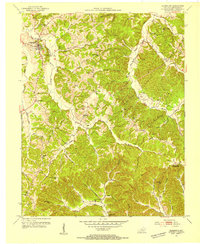 1953 Edmonton1954 Print · USGSThe rural Kentucky landscape around Edmonton comes to life in the early fifties, showing a region of tight-knit ridge communities and river-bottom farms. Researchers can trace ancestral locations through numerous burial sites and schools like Walnut Grove Sch, Winfrey Chapel, and the Moore Spring post office.2 unique versions available
 - 1953 Map of Summer Shade, 1955 Print
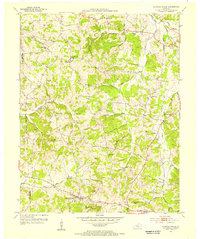 1953 Summer Shade1955 Print · USGSThe rural uplands of south-central Kentucky are shown here in the mid-fifties as a network of ridge-top settlements and creek-side farms. Researchers can trace ancestral locations like Randolph, Summer Shade, and Goodluck, alongside remote landmarks like Harvey Cave and Hickory College Ch.
 - 1953 Map of East Fork, 1955 Print
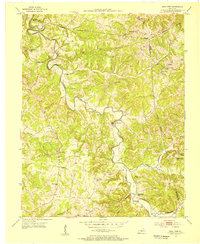 1953 East Fork1955 Print · USGSCentral Kentucky's rural landscape is captured here in the early 1950s, centered on the winding East Fork Little Barren River. Genealogists can trace family names through numerous landmarks like Ackee Cem, Mud Slash Sch, and Union Chapel.2 unique versions available
 - 1956 Map of Corbin, 1966 Print
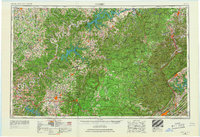 1956 Corbin1966 Print · USGSThe Kentucky and Tennessee borderlands are captured here in the mid-fifties, showing the region's shift toward modern interstate travel and reservoir development. Genealogists and historians can trace old community lines near Albany and Monticello or locate early rail junctions along the Southern and Tennessee Central lines.3 unique versions available
 - 1957 Map of Winchester, 1968 Print
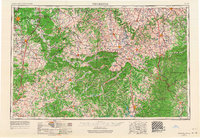 1957 Winchester1968 Print · USGSCentral Kentucky's landscape in the mid-twentieth century features the sprawling Fort Knox and the early parkway system. Genealogists and historians can trace rail lines like the Southern Railway and find landmarks from Bernheim Forest to Pilot Knob.3 unique versions available
 - 1958 Map of Corbin
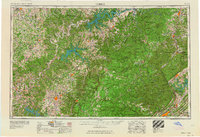 1958 Corbin1958 Print · USGSThe Upper Cumberland borderlands appear in the late 1950s as massive reservoirs and early atomic-era growth reshape the region. Trace family roots and vanished landmarks near Lake Cumberland, Oak Ridge, and the Cumberland National Forest.
End of results
Showing maps 1-6 of 6
Frequently asked questions
- What are the different types of historical maps available for Edmonton?
- What is the oldest map of Edmonton?
- Where can I purchase historical maps of Edmonton for my home or office?
- Where can I download high-res historical maps of Edmonton?
- Are there historical topographic maps available for Edmonton?
- Is there historical aerial imagery available for Edmonton?
- Where are historical maps of Edmonton sourced from?