Old Maps of Weld Corner, Weld
Explore 16 old maps of Weld Corner, spanning from 1926 to today. These high-resolution historic maps reveal how streets, neighborhoods, landmarks, and natural features evolved over time — perfect for genealogy, metal detecting, research, and local history exploration.
What you can do with these maps:
- See how Weld Corner changed over time: Compare historical maps to modern-day views to trace roads, homesites, rail lines & more.
- View detailed metadata: Each map includes creators, publishers, year, scale, and archive source.
- Overlay maps with satellite & LiDAR: Visualize the past alongside modern tools to explore terrain & human change.
- Trusted historical sources: Maps sourced from the USGS, Library of Congress, and other archives.
- Access maps your way: View online, download high-res files, or order prints for personal or research use.
Start exploring old maps of Weld Corner to uncover forgotten places, hidden landmarks, and the deep history beneath your feet.
Weld Corner, Weld maps
(16)- 1926 Map of Dixfield, 1953 Print
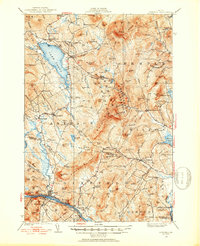 1926 Dixfield1953 Print · USGSWestern Maine's river valleys and highlands are captured here in the mid-twenties, showcasing the region's rail and timber economy. Genealogists can trace family schoolhouses like Maple Grove Sch or locate old mill sites such as Hildreths Mill near Lake Webb.2 unique versions available
 - 1929 Map of Dixfield
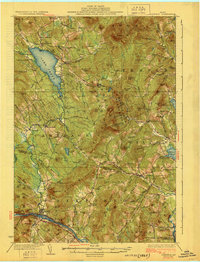 1929 Dixfield1929 Print · USGSFranklin and Oxford Counties are captured here in the late twenties, showing the transition from mountain peaks to river valley commerce. Genealogists and historians can trace district schools and old farmstead locations from Weld Corner Sch. down to the Maine Central rail lines at Dixfield.5 unique versions available
 - 1950 Map of Lewiston
 1950 Lewiston1950 Print · USGSThe Maine and New Hampshire borderlands come alive in this post-war survey of the White Mountains and Androscoggin valley. Genealogists and historians can trace rail lines like the Maine Central Railroad and find high-altitude landmarks from Mount Washington to Bretton Woods.2 unique versions available
 - 1956 Map of Dixfield, 1958 Print
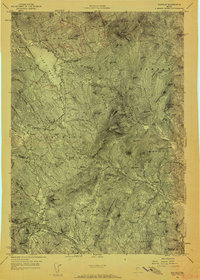 1956 Dixfield1958 Print · USGSIn the mid-1950s, the western Maine landscape centered on the bustling river town of Dixfield and the expanses of Mt Blue State Park. Genealogists and historians can trace family cemeteries like Birchland Cem and old industrial sites like Hildreths Mill.5 unique versions available
 - 1956 Map of Lewiston, 1975 Print
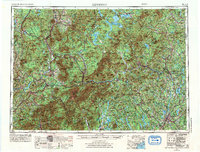 1956 Lewiston1975 Print · USGSThe Northern New England interior is documented here in the mid-fifties, from the industrial Androscoggin River to the high peaks of the White Mountains. Trace the Grand Trunk Railway through mountain passes or locate family landmarks near Sabbathday Lake and Bretton Woods.
 - 1961 Map of Lewiston
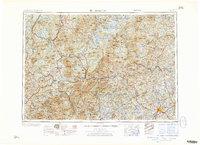 1961 Lewiston1961 Print · USGSWestern Maine and the White Mountains appear here during the early sixties, showing the industrial river towns and vast timberlands before the modern interstate era. Genealogists and historians can trace the Grand Trunk RR through Berlin or locate landmarks like Old Speck Mountain and Elephant Mountain.
 - 1962 Map of Lewiston
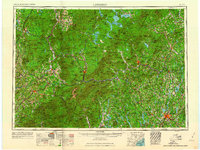 1962 Lewiston1962 Print · USGSThe industrial river valleys and high peaks of Maine and New Hampshire define the region in the early sixties. Trace the rail-and-river network from Lewiston to the White Mountains, passing through mill towns like Berlin and Rumford.
 - 1968 Map of Weld, 1970 Print
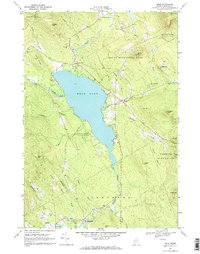 1968 Weld1970 Print · USGSIn the late sixties, the Highlands of Franklin County remained a landscape of mountain ridges and secluded lakefronts. Researchers can trace family sites at Mountain View Cemetery or follow the small-town roots of Berry Mills and Carthage along the Webb River.3 unique versions available
 - 1969 Map of Lewiston
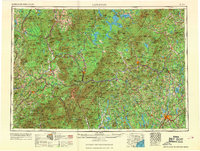 1969 Lewiston1969 Print · USGSThe northern New England highlands come into focus during the mid-fifties, showing the vital rail and river networks connecting industrial centers to the deep woods. Researchers can trace the path of the Grand Trunk RR or locate landmarks like Mt Washington and Rangeley Lake.
 - 1986 Map of Rumford
 1986 Rumford1986 Print · USGSWestern Maine in the mid-eighties shows a rugged landscape of industrial river towns and high-country timber plantations. Trace the rail-and-river economy through Rumford, Dixfield, and the Maine Central RR or locate the historic campus of Farmington State College.
 - 1994 Map of Rumford
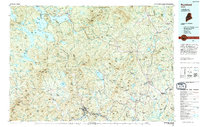 1994 Rumford1994 Print · USGSWestern Maine's mountains and glacial lakes are shown here in the mid-1990s, from the peaks of the Mahoosuc Range to the banks of the Androscoggin River. Trace the Maine Central RR through Dixfield or locate lakeside settlements like Oquossoc.
 - 2011 Map of Weld, 2011 Print
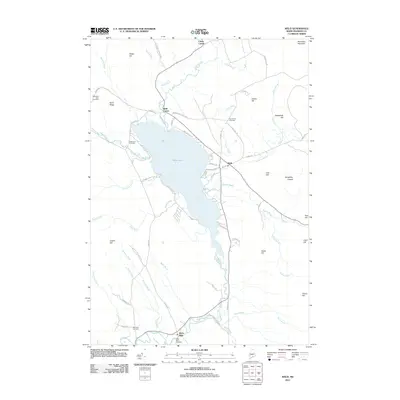 2011 Weld2011 Print · USGSFranklin County's lake-and-mountain landscape is captured here in the early twenty-first century, centered on the community of Weld. Researchers can trace local lineage through sites like Robertson Cemetery, Newman Cemetery, and the old crossroads at Chase Corner.
 - 2014 Map of Weld, 2014 Print
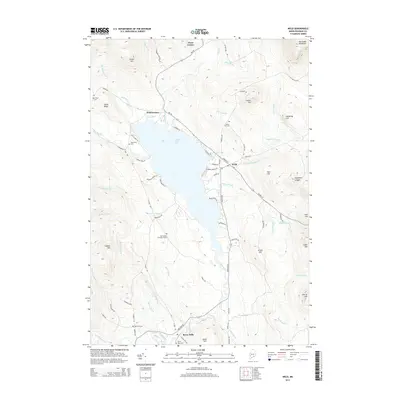 2014 Weld2014 Print · USGSFranklin County's high-country basin comes into focus during this 2014 survey of the area around Webb Lake. Genealogists and historians can trace family roots at the Old Tainter Burying Ground or locate the small settlements at Weld and Berry Mills.
 - 2018 Map of Weld, 2018 Print
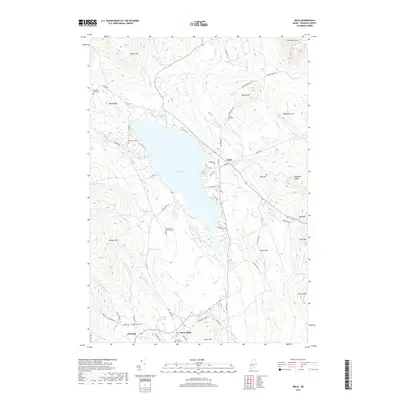 2018 Weld2018 Print · USGSFranklin County in the late 2010s reveals a landscape of high ridges and lakeside settlements centered on Webb Lake. Local historians can trace family roots through numerous sites like Old Tainter Burial Ground, Berry Mills Cem, and the village of Weld.
 - 2021 Map of Weld, 2021 Print
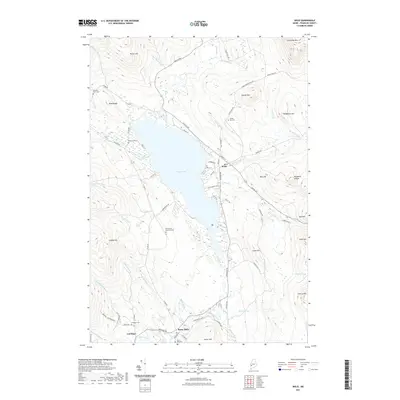 2021 Weld2021 Print · USGSFranklin County's lakeside and river valley communities are documented here as they appeared in the early 2020s. Researchers can locate family heritage sites like the Old Tainter Burial Ground, Berry Mills Cem, and the settlement at Weld.
 - 2024 Map of Weld, 2024 Print
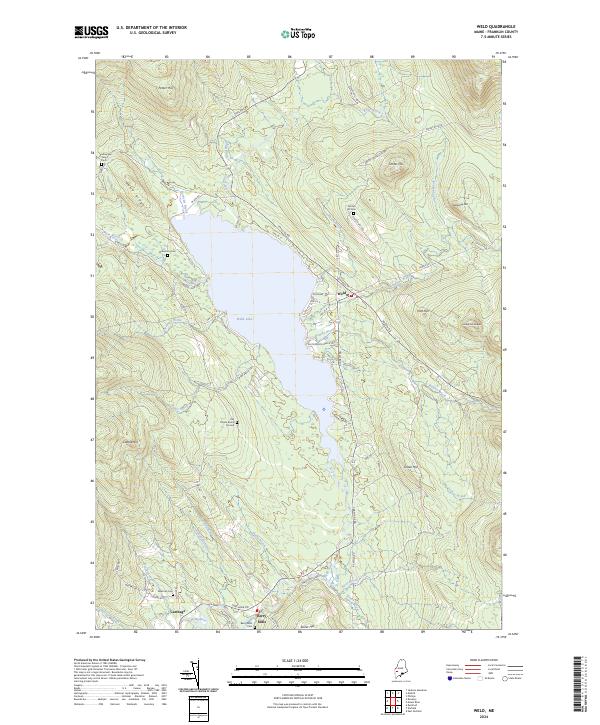 2024 Weld2024 Print · USGSFranklin County's highland lakes and small villages are captured here in the mid-2020s, centered on the waters of Webb Lake. Genealogists and historians can locate remote family sites like the Old Tainter Burial Ground or the Robertson Cem among the ridges of Cobble Hill.
End of results
Showing maps 1-16 of 16
Frequently asked questions
- What are the different types of historical maps available for Weld Corner?
- What is the oldest map of Weld Corner?
- Where can I purchase historical maps of Weld Corner for my home or office?
- Where can I download high-res historical maps of Weld Corner?
- Are there historical topographic maps available for Weld Corner?
- Is there historical aerial imagery available for Weld Corner?
- Where are historical maps of Weld Corner sourced from?