Old Maps of Lincolnville, Maine
Explore 44 old maps of Lincolnville, spanning from 1902 to today. These high-resolution historic maps reveal how streets, neighborhoods, landmarks, and natural features evolved over time — perfect for genealogy, metal detecting, research, and local history exploration.
What you can do with these maps:
- See how Lincolnville changed over time: Compare historical maps to modern-day views to trace roads, homesites, rail lines & more.
- View detailed metadata: Each map includes creators, publishers, year, scale, and archive source.
- Overlay maps with satellite & LiDAR: Visualize the past alongside modern tools to explore terrain & human change.
- Trusted historical sources: Maps sourced from the USGS, Library of Congress, and other archives.
- Access maps your way: View online, download high-res files, or order prints for personal or research use.
Start exploring old maps of Lincolnville to uncover forgotten places, hidden landmarks, and the deep history beneath your feet.
Lincolnville, ME maps
(44)- 1902 Map of Castine
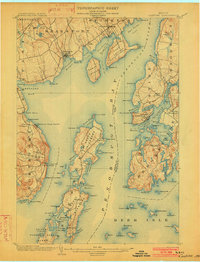 1902 Castine1902 Print · USGSPenobscot Bay at the dawn of the 1900s shows a thriving maritime landscape of island settlements and harbor towns. Genealogists and historians can trace old homesteads and coastal landmarks near Ft. George, Northport Camp Ground, and the various landings of Islesboro.
 - 1904 Map of Castine
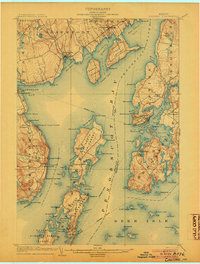 1904 Castine1904 Print · USGSPenobscot Bay at the turn of the century shows a maritime landscape of bustling ports and emerging summer colonies. Genealogists and historians can trace old coastal settlements like Castine, locate the grounds of Ft. George, and follow the Steamboat Routes that linked the mainland to Dark Harbor.7 unique versions available
 - 1904 Map of Rockland, 1961 Print
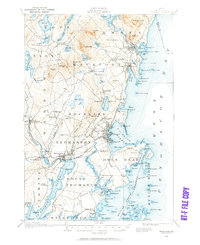 1904 Rockland1961 Print · USGSCoastal Knox County comes alive in this early twentieth-century survey of the harbor towns and the rocky Penobscot Bay shoreline. Trace the routes of the Maine Central RR and ELECTRIC lines to historic settlements like Blackinton Corners and Sharkeyville.
 - 1905 Map of Penobscot Bay
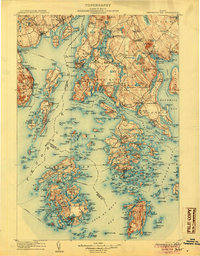 1905 Penobscot Bay1905 Print · USGSThe Maine coastline at the dawn of the twentieth century was a bustling network of maritime trade and summer retreats. Genealogists and historians can trace the foundations of coastal life through the STEAMBOAT ROUTE, the Northport Camp Ground, and settlements like Sargentville.3 unique versions available
 - 1906 Map of Rockland
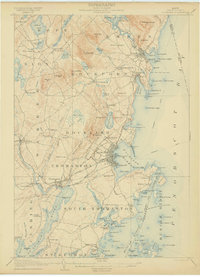 1906 Rockland1906 Print · USGSCoastal Knox County comes alive in the first decade of the century, showing a bustling network of harbors and early transit systems. Genealogists and historians can trace family roots through crossroads like Blackinton Corners or investigate the old Wattons Mill and the Electric RR lines.7 unique versions available
 - 1915 Map of Belfast, 1962 Print
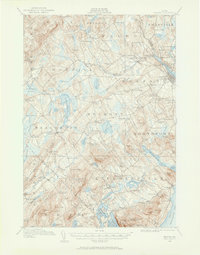 1915 Belfast1962 Print · USGSMid-coast Maine at the start of the twentieth century shows a landscape of busy harbor towns and high-altitude farms. Genealogists can trace family names across dozens of rural landmarks, from Holmes Mill and Simpsons Corner to the numerous remote schoolhouses like Bartlett School.
 - 1917 Map of Belfast
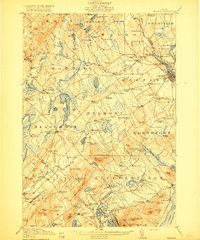 1917 Belfast1917 Print · USGSCoastal Waldo County hummed with maritime trade and small-scale milling during the years before the Great War. Researchers can trace ancestral property near Head of the Tide, locate district schoolhouses like Woods School, or follow the Maine Central Railroad into Belfast.6 unique versions available
 - 1941 Map of Belfast
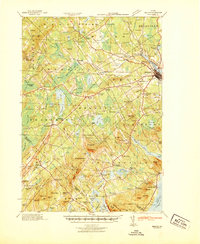 1941 Belfast1941 Print · USGSCoastal Waldo County at the start of the 1940s reveals a landscape of tidal rivers and bustling rural crossroads. Genealogists and historians can trace family locations through numerous landmarks like Allens Hall, Holmes Mill, and the Belfast & Moosehead Lake RR corridor.
 - 1941 Map of Rockland
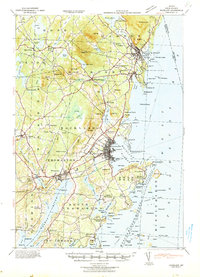 1941 Rockland1941 Print · USGSThe Knox County shoreline during the early 1940s features a detailed look at maritime life and coastal industry. Genealogists and historians can trace the foundations of Rockland, locate the Rockland Breakwater Lighthouse, and explore villages like South Thomaston and Wattons Mill.
 - 1941 Map of Castine, 1959 Print
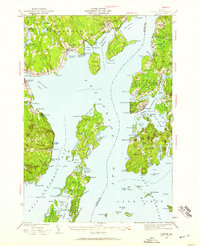 1941 Castine1959 Print · USGSPenobscot Bay and its storied coastal villages appear here in the early 1940s, showing the intersection of maritime trade and rural Maine life. Genealogists and historians can trace the rail terminals at Mack Pt, local schools like Park Sch, and the historical site of Fort George.4 unique versions available
 - 1943 Map of Castine
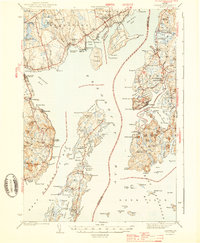 1943 Castine1943 Print · USGSMid-century Penobscot Bay life is charted here during the early 1940s, from the historic streets of the mainland to the isolated island harbors. Genealogists can trace family connections at Bethany Chapel or locate the old Farnham Sch and the rail depot at Searsport Sta.3 unique versions available
 - 1948 Map of Bangor
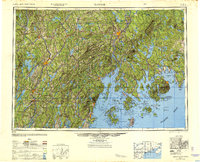 1948 Bangor1948 Print · USGSThe Maine coast and its industrial river valleys are captured here shortly after the war, showing the vital shipping and rail hubs of the late 1940s. Genealogists and historians can trace the tracks of the Maine Central RR connecting Bangor, Augusta, and Old Town.
 - 1950 Map of Belfast
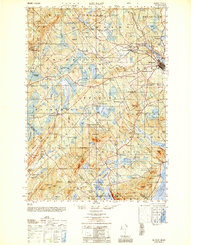 1950 Belfast1950 Print · USGSMid-century Waldo County comes to life as a network of crossroads hamlets and coastal industry before the modern highway era. Genealogists can trace family names across schoolhouses like Apple Sch and rural intersections such as Hayford Corner and Vickerys Corner.
 - 1955 Map of Camden, 1959 Print
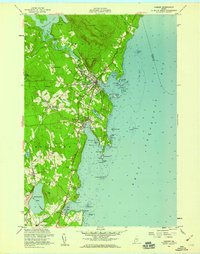 1955 Camden1959 Print · USGSCoastal Maine centers on the busy harbors of the mid-1950s, showing the early expansion of coastal villages into the surrounding hills. Genealogists and historians can trace family plots in Oak Hill Cem or locate the old Fish Hatchery and Drive-in Theater.5 unique versions available
 - 1956 Map of Bangor, 1966 Print
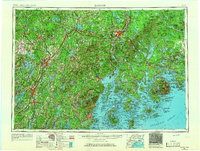 1956 Bangor1966 Print · USGSMid-century Maine comes alive in this survey of the rugged coast and river valleys during the 1950s. Genealogists and historians can trace the vital rail corridors of the Maine Central RR connecting timber towns like Old Town to the coast at Bar Harbor.3 unique versions available
 - 1960 Map of Bangor
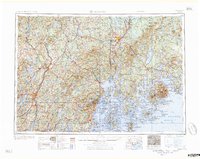 1960 Bangor1960 Print · USGSCentral Maine in the sixties reveals a landscape of river-powered industry and sprawling coastal island chains. Researchers can trace the rail corridors of the Maine Central or locate mid-century aviation landmarks like Dow Air Force Base.
 - 1960 Map of Lincolnville, 1962 Print
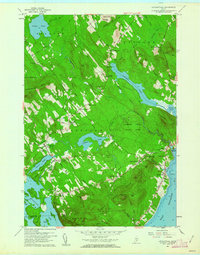 1960 Lincolnville1962 Print · USGSThe mid-coast Waldo County shoreline and hills appear here just as the post-war era transitioned into the 1960s. Genealogists and local historians can trace family locations through numerous rural corners and burial sites like Grange Corner, Slab City, and the South Belmont Cem.3 unique versions available
 - 1960 Map of Searsmont, 1962 Print
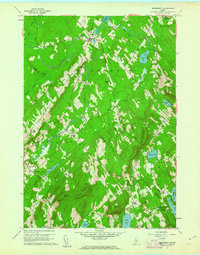 1960 Searsmont1962 Print · USGSCoastal Maine’s rural interior is captured here in the early sixties as a network of crossroad hamlets and ridges. Family historians can trace ancestral sites at Gushees Corner, Slab City, and numerous burial grounds like Oak Grove Cem.4 unique versions available
 - 1961 Map of Bangor
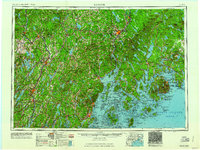 1961 Bangor1961 Print · USGSMid-century Maine comes alive through its busy river ports and rocky archipelagoes during a period of steady maritime and rail commerce. Researchers can trace the path of the Maine Central railroad and locate coastal landmarks from Acadia National Park to Vinalhaven Island.
 - 1973 Map of Islesboro, 1976 Print
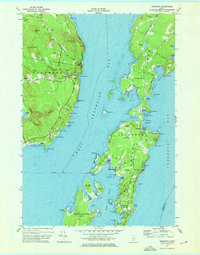 1973 Islesboro1976 Print · USGSThe islands of Penobscot Bay appear in the 1970s, showcasing the maritime connections of Islesboro and Dark Harbor. Trace local genealogy and landmarks across Seven Hundred Acre Island, the Saturday Cove Cem, and the Islesboro Ferry Toll.2 unique versions available
 - 1984 Map of Augusta
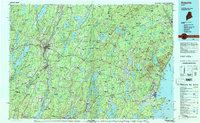 1984 Augusta1984 Print · USGSMid-coast and central Maine were undergoing steady change in the mid-eighties as traditional river and coastal industries met expanding recreation. You can trace the Maine Central RR through Augusta or explore the rugged shoreline from Rockland Harbor up to Mount Megunticook.
 - 1985 Map of Bar Harbor
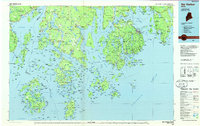 1985 Bar Harbor1985 Print · USGSCoastal Hancock County in the mid-eighties shows an intricate landscape of island communities and protected wilderness. Trace the boundaries of Acadia National Park or locate seafaring hubs like Stonington and Bar Harbor.2 unique versions available
 - 2000 Map of Camden, 2001 Print
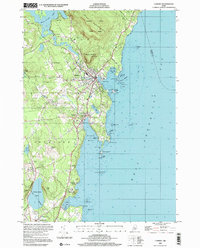 2000 Camden2001 Print · USGSThe Maine coast near Camden and Rockport is shown here at the start of the new millennium, balancing deep-water harbors with high granite peaks. Researchers can locate family plots at Oak Hill Cem or trace the early paths of the Spring Brook Trail and Mount Battie observatory.
 - 2000 Map of Lincolnville, 2001 Print
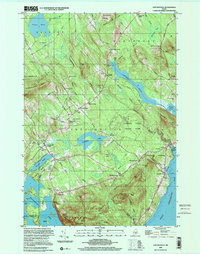 2000 Lincolnville2001 Print · USGSMid-coast Maine at the turn of the millennium retains its traditional network of crossroads settlements and coastal landmarks. Genealogists can locate family burial grounds like Union Cem and trace the area's rural development through points like Slab City and Grange Corner.
 - 2011 Map of Searsmont, 2011 Print
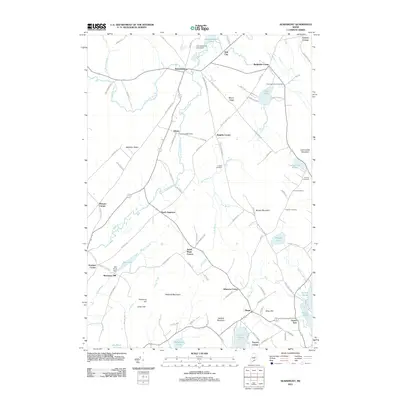 2011 Searsmont2011 Print · USGSCoastal Maine hill country in the early twenty-first century reveals a landscape shaped by waterpower and rural crossroads. Trace old mill sites and local history at Shermans Mill, Ghent, and burial grounds like East Searsmont Cemetery.
Showing maps 1-25 of 44
Top cities near Lincolnville
- Rockland historical maps
- Belfast historical maps
- Warren historical maps
- Camden historical maps
- Rockport historical maps
- Thomaston historical maps
See more
Top neighborhoods of Lincolnville
- Carvers Corner historical maps
- Clarks Corner historical maps
- Drake Corner historical maps
- Ducktrap historical maps
- Grange Corner historical maps
- Heals Corner historical maps
See more
Frequently asked questions
- What are the different types of historical maps available for Lincolnville?
- What is the oldest map of Lincolnville?
- Where can I purchase historical maps of Lincolnville for my home or office?
- Where can I download high-res historical maps of Lincolnville?
- Are there historical topographic maps available for Lincolnville?
- Is there historical aerial imagery available for Lincolnville?
- Where are historical maps of Lincolnville sourced from?