Old Maps of West Village, North Reading
Explore 21 old maps of West Village, spanning from 1886 to today. These high-resolution historic maps reveal how streets, neighborhoods, landmarks, and natural features evolved over time — perfect for genealogy, metal detecting, research, and local history exploration.
What you can do with these maps:
- See how West Village changed over time: Compare historical maps to modern-day views to trace roads, homesites, rail lines & more.
- View detailed metadata: Each map includes creators, publishers, year, scale, and archive source.
- Overlay maps with satellite & LiDAR: Visualize the past alongside modern tools to explore terrain & human change.
- Trusted historical sources: Maps sourced from the USGS, Library of Congress, and other archives.
- Access maps your way: View online, download high-res files, or order prints for personal or research use.
Start exploring old maps of West Village to uncover forgotten places, hidden landmarks, and the deep history beneath your feet.
West Village, North Reading maps
(21)- 1886 Map of Lawrence
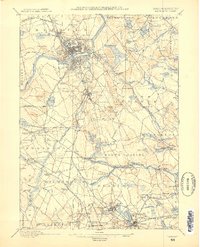 1886 Lawrence1886 Print · USGSThe Merrimack Valley at the close of the nineteenth century was a bustling hub of industry and transit. Researchers can trace ancestral roots through vanished hamlets like Frye Village, locate the original Andover Theological Seminary, and follow the old Salem and Lawrence Railroad line.
 - 1888 Map of Lawrence
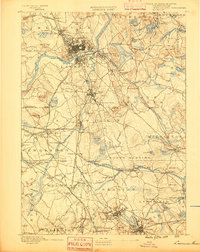 1888 Lawrence1888 Print · USGSThe Merrimack Valley industrial corridor is captured here in the late nineteenth century as a thriving rail and textile hub. Researchers can trace the footprints of the Andover Theological Seminary, locate the State Almshouse, and follow the iron tracks through Ballardvale.
 - 1893 Map of Lawrence
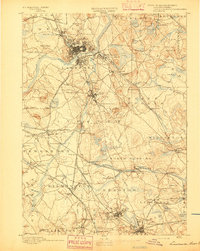 1893 Lawrence1893 Print · USGSThe Merrimac River valley and its surrounding textile and rail hubs are captured here at their industrial peak during the 1880s. Genealogists can trace family footprints through the State Almshouse, the Andover Theological Seminary, and vanished stops like Burtts Crossing Station.10 unique versions available
 - 1918 Map of Lawrence
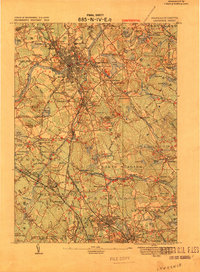 1918 Lawrence1918 Print · USGSGreater Lawrence and the Merrimac Valley are captured here during the late First World War era, showing a landscape defined by industrial rail and historic village centers. Researchers can trace the sprawling Boston and Maine Railroad network to specific sites like the State Almshouse or the Andover Theological Seminary.2 unique versions available
 - 1943 Map of Lowell
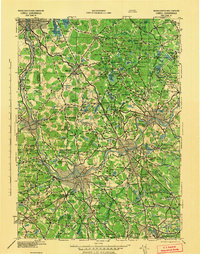 1943 Lowell1943 Print · USGSCentral New England industrial hubs and rural borderlands are mapped here during the early 1940s. Genealogists can trace family names across Mt Misery, Barrett Hill, and small settlements like Collinsville or North Pelham.
 - 1944 Map of Reading
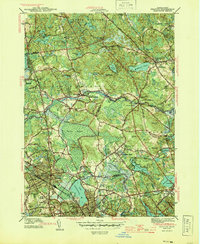 1944 Reading1944 Print · USGSReading and North Reading are shown here during the height of the Second World War as the region balanced its colonial roots with modern military needs. Researchers can locate the Military Police Camp, historic burial sites like Oakdale Cem, and the tracks of the Boston and Maine RR.2 unique versions available
 - 1948 Map of Boston
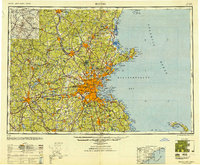 1948 Boston1948 Print · USGSEastern Massachusetts and southern New Hampshire appear at an industrial peak in the late 1940s, just as suburban growth began to accelerate. Genealogists and historians can trace rail lines like the Boston and Albany RR or locate coastal landmarks like Graves Lighthouse and Fort Devens.2 unique versions available
 - 1951 Map of Reading, 1952 Print
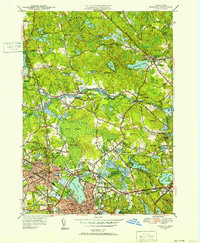 1951 Reading1952 Print · USGSNorth of Boston in the early fifties, the landscape around Reading and Wakefield shows a mix of growing residential centers and military training grounds. You can trace family roots at Lakeside Cem, locate the old Bachelder Sch, or explore the grounds of Camp Curtis Guild.3 unique versions available
 - 1956 Map of Boston, 1967 Print
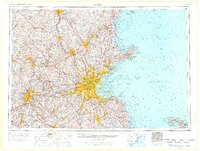 1956 Boston1967 Print · USGSThe Massachusetts coastline and industrial interior are seen here during the mid-century peak of suburban and highway expansion. Researchers can trace historic harbor defenses like Fort Revere, local landmarks such as Faneuil Hall, and the vast Parker River National Wildlife Refuge.6 unique versions available
 - 1958 Map of Boston
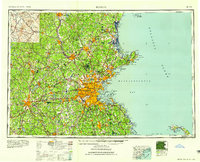 1958 Boston1958 Print · USGSEastern Massachusetts and southern New Hampshire are shown at the height of the industrial era, before the full expansion of the interstate system. Trace coastal defenses at Fort Warren, historic rail lines like the Boston and Maine, and the development of the Mass. 128 corridor.2 unique versions available
 - 1961 Map of Boston
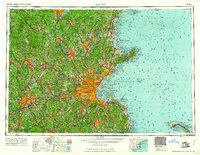 1961 Boston1961 Print · USGSThe Massachusetts coastline and its industrial interior are detailed here in the mid-twentieth century, from the Monadnock highlands to Cape Cod. Researchers can trace the rail routes of the Boston and Maine or locate landmarks like Fort Devens and the Wachusett Reservoir.2 unique versions available
 - 1966 Map of Reading, 1968 Print
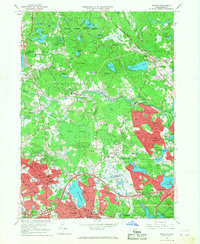 1966 Reading1968 Print · USGSMiddlesex and Essex counties are shown here in the mid-sixties, a period of notable suburban growth surrounding the historic towns of Reading and Wakefield. Researchers can trace family sites near Quannapowitt Lake, the Puritan Lawn Memorial Park, or the sprawling Harold Parker State Forest.2 unique versions available
 - 1977 Map of Reading, 1980 Print
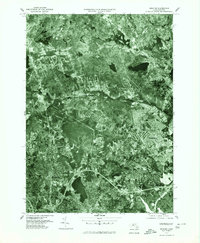 1977 Reading1980 Print · USGSNortheastern Massachusetts towns show their modern footprints in the late seventies as residential growth surrounds traditional river corridors. Trace the development of North Reading, Peabody, and Reading along the Ipswich River.
 - 1984 Map of Lowell
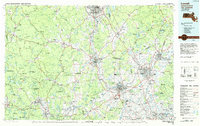 1984 Lowell1984 Print · USGSThe Merrimack Valley industrial corridor is captured here in the mid-eighties, showing the interconnected growth of Lowell, Nashua, and Lawrence. Genealogists and historians can trace the paths of the Boston and Maine railroad or locate institutional landmarks like Merrimack College and the Fort Devens Military Reservation.
 - 1987 Map of Reading
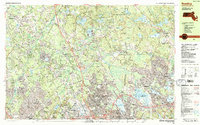 1987 Reading1987 Print · USGSReading and the surrounding North Shore suburbs are shown in the late 1980s as major highway networks and residential developments reached their modern form. Genealogists can trace old cemetery sites like the Old Fuller Burying Ground or explore landmarks like Lake Quannapowitt and the State Hospital.2 unique versions available
 - 1988 Map of Lowell
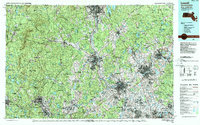 1988 Lowell1988 Print · USGSThe industrial corridor of the Merrimack Valley is captured in the late eighties as it transitioned into a modern technological and residential hub. Genealogists and researchers can trace the urban layouts of Lowell and Nashua alongside landmarks like Massabesic Lake and Miller State Park.2 unique versions available
 - 2012 Map of Reading, 2012 Print
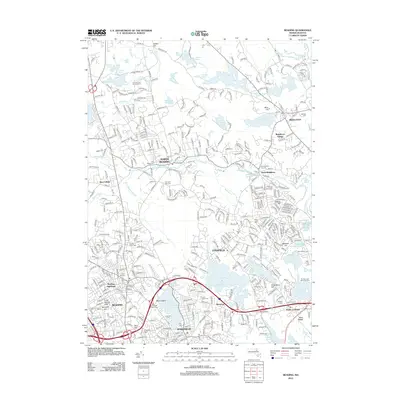 2012 Reading2012 Print · USGSGreater Boston's northern suburbs are shown in detail during a period of modern growth and conservation. Genealogists can locate legacy burial sites like the Flint Burying Ground while tracing water bodies from Lake Quannapowitt to Martins Pond.
 - 2015 Map of Reading, 2015 Print
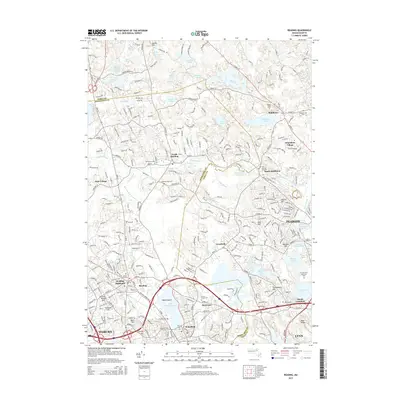 2015 Reading2015 Print · USGSThe North Shore suburban landscape at the start of the twenty-first century shows a complex network of established towns and water resources. Genealogists and local historians can trace burial sites from Temple Israel Cem to the Flint Burying Ground or locate landmarks like Monk Island and Brigadoon Village.
 - 2018 Map of Reading, 2018 Print
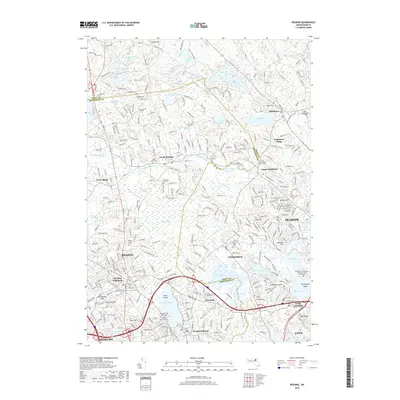 2018 Reading2018 Print · USGSThe northern suburbs of Boston show a complex mix of historic town centers and mid-century residential growth in the late 2010s. Local researchers can trace family plots at Puritan Lawn Memorial Park Cem and Crematory or explore the wetlands around Lake Quannapowitt and Cedar Swamp.
 - 2021 Map of Reading, 2021 Print
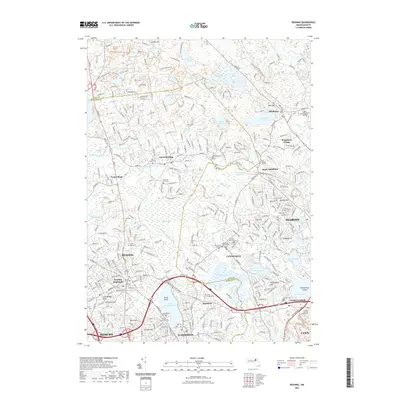 2021 Reading2021 Print · USGSThe northern suburbs of Boston are captured in this detailed modern survey of the Essex and Middlesex county line. Genealogists and local historians can trace numerous burial sites like Old Burying Ground Cem or follow the Essex Railroad Rail Trl through Lynnfield.
 - 2024 Map of Reading, 2024 Print
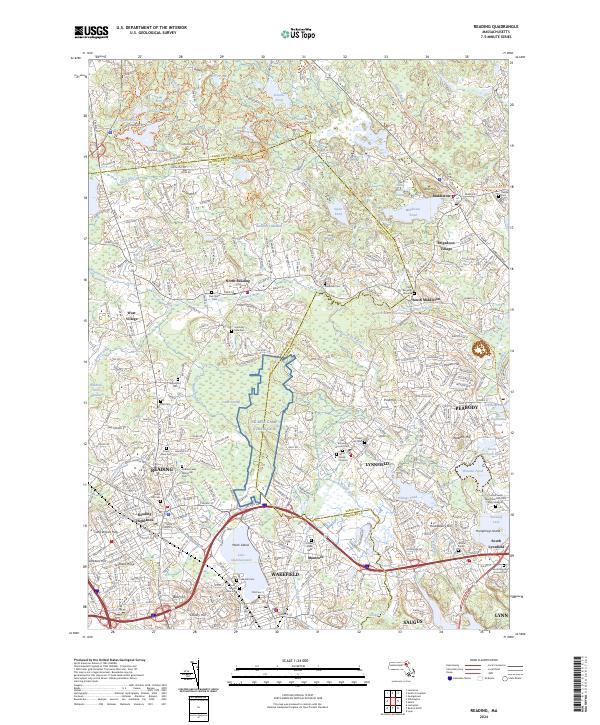 2024 Reading2024 Print · USGSThe North Shore interior and Ipswich River valley are shown here in recent years, documenting a landscape of historic towns and reclaimed rail corridors. Researchers can trace local lineage through several colonial-era sites like the Flint Burying Ground or locate the NG MTA Camp Curtis Guil military grounds.
End of results
Showing maps 1-21 of 21
Top cities near West Village
- Boston historical maps
- Lowell historical maps
- Cambridge historical maps
- Lynn historical maps
- Newton historical maps
- Lawrence historical maps
See more
Frequently asked questions
- What are the different types of historical maps available for West Village?
- What is the oldest map of West Village?
- Where can I purchase historical maps of West Village for my home or office?
- Where can I download high-res historical maps of West Village?
- Are there historical topographic maps available for West Village?
- Is there historical aerial imagery available for West Village?
- Where are historical maps of West Village sourced from?