Old Maps of Quincy, Massachusetts for Academic Research
Study the evolution of Quincy with 71 high-resolution historic maps. Whether you're teaching, researching, or modeling changes in land use, these maps provide essential visual documentation of urban, environmental, and geographic change.
- Analyze long-term change: Track patterns in development, transportation, and natural features.
- Ideal for environmental or urban studies: Support academic projects with primary historical map data.
- Use in the classroom or lab: Educators and researchers rely on these maps to bring historical context to life.
These maps are a powerful tool for teaching, research, and visualizing how Quincy has changed over the decades.
Quincy, MA maps
(71)- 1885 Map of Abington
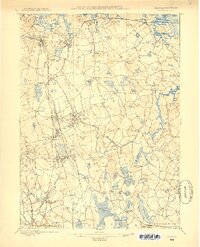 1885 Abington1885 Print · USGSCoastal Plymouth County villages and the early rail network are frozen in time just before the turn of the century. Genealogists can trace family footprints from the maritime hubs of Scituate Harbor to inland junctions like Queen Ann Corners and Weymouth Landing.
 - 1886 Map of Dedham
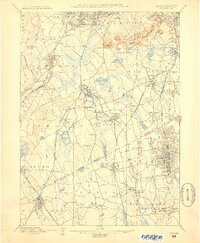 1886 Dedham1886 Print · USGSNorfolk County and its neighbors are captured here in the late nineteenth century as the rail networks expanded across eastern Massachusetts. Local historians can trace the routes of the Old Colony Railroad and find early village sites like Furnace Village and Sharon Heights.
 - 1888 Map of Abington
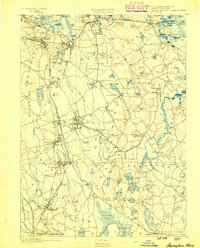 1888 Abington1888 Print · USGSCoastal Plymouth County thrives in the late 1880s as a hub of manufacturing and maritime trade connected by a dense rail network. Genealogists and historians can trace family-named sites like King Oak Hill or industrial landmarks such as the Iron Works and Old Spain.
 - 1892 Map of Boston Bay
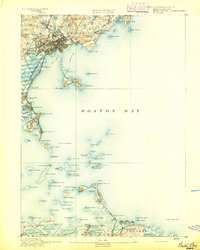 1892 Boston Bay1892 Print · USGSThe outer harbor and North Shore coastline are captured in the late Victorian era, before modern development reshaped the beaches and islands. Genealogists and maritime historians can trace the early rail lines to Revere Beach or locate historic defenses like Fort Warren and the iconic Boston Light.4 unique versions available
 - 1893 Map of Abington
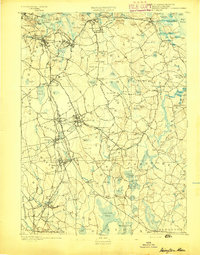 1893 Abington1893 Print · USGSCoastal and inland Massachusetts thrive at the peak of the rail era, where the Old Colony Railroad links maritime harbors to inland factory towns. You can trace 19th-century village life through local landmarks like Weymouth Landing, Queen Ann Corners, and the Old Oaken Bucket Homestead.9 unique versions available
 - 1893 Map of Boston
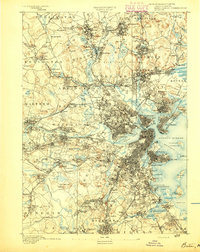 1893 Boston1893 Print · USGSGreater Boston and the Massachusetts coast are captured here in the late nineteenth century as streetcar suburbs and rail lines redefined the region. Trace family roots and local history across old neighborhoods like Washington Village, coastal landmarks like Fort Independence, and the sprawling Middlesex Fells.4 unique versions available
 - 1894 Map of Dedham
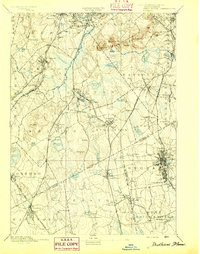 1894 Dedham1894 Print · USGSGreater Boston's southern suburbs emerge during the late nineteenth century as a dense network of railroad lines and water-powered industrial centers. Genealogists and historians can trace old neighborhoods from Readville and Endicott to the heights of Great Blue Hill.10 unique versions available
 - 1903 Map of Boston
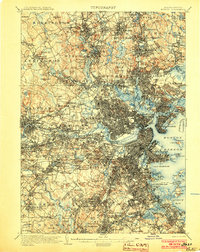 1903 Boston1903 Print · USGSThe Greater Boston area and its sprawling rail-and-river network are captured here at the turn of the century. Genealogists and historians can trace neighborhood blocks, the grounds of Tufts College, and military landmarks like Ft. Winthrop and Ft. Independence.13 unique versions available
 - 1903 Map of Boston Bay
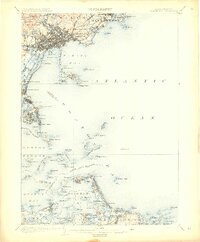 1903 Boston Bay1903 Print · USGSThe Massachusetts North and South Shores are seen here at the turn of the century as a hub of rail-connected maritime life. You can trace the path of old rail divisions to historic coastal landings at Point of Pines, Marblehead, and the naval defenses at Ft. Warren.9 unique versions available
 - 1919 Map of Dedham
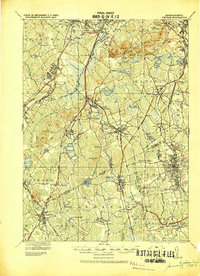 1919 Dedham1919 Print · USGSNorfolk County at the close of the Great War reveals a landscape defined by the Blue Hills Reservation and a dense network of industrial rail lines. Genealogists and historians can trace old neighborhood boundaries in Readville and Islington or locate lost trackside stops along the Old Colony RR.
 - 1920 Map of Abington
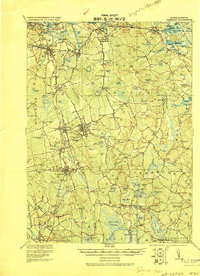 1920 Abington1920 Print · USGSThe South Shore was a bustling network of rail and industry at the end of the Great War. You can trace the path of the Hanover Branch and Old Colony RR, or find historic sites like the Old Oaken Bucket Homestead and Weymouth Landing.
 - 1936 Map of Weymouth
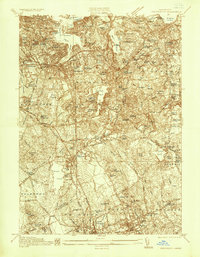 1936 Weymouth1936 Print · USGSThe South Shore's maritime and industrial landscape is on full display in the mid-1930s as the massive Fore River Shipyard dominates the waterfront. Genealogists can trace family roots through several local burial grounds like Highland Cem and landmark institutions including the Derby Academy.
 - 1936 Map of Blue Hills
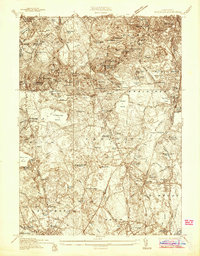 1936 Blue Hills1936 Print · USGSNorfolk County at the height of the Depression reveals a landscape of established academies, hilltop observatories, and early industrial sites. Genealogists and historians can trace family roots through the Blue Hills Cem, Milton Academy, and the American Fireworks Co of Mass.
 - 1941 Map of Weymouth
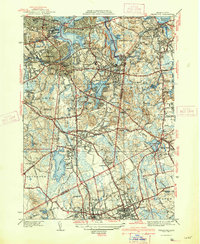 1941 Weymouth1941 Print · USGSThe South Shore and its bustling maritime industry are on full display in the years leading up to the second World War. Genealogists can locate family sites like the Old South Meeting House or trace industrial roots at the Fore River Shipyard and Plymouth Quarries.3 unique versions available
 - 1941 Map of Blue Hills
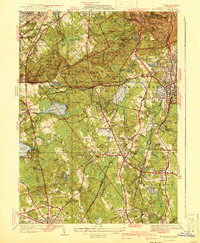 1941 Blue Hills1941 Print · USGSThe Blue Hills south of Boston are shown here at the edge of the pre-war era, before massive highway expansion reshaped Norfolk County. Genealogists and historians can trace the grounds of Thayer Academy, the Blue Hills Cem, and the industrial Fireworks site.4 unique versions available
 - 1943 Map of Boston
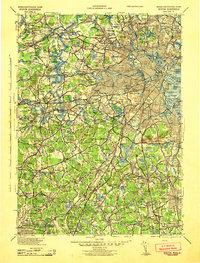 1943 Boston1943 Print · USGSGreater Boston and its southern suburbs appear here during the mobilization of the early 1940s. Genealogists and historians can trace the early footprints of Commonwealth Airport, military sites like Fort Winthrop, and local institutions such as Pondville State Hospital.
 - 1944 Map of Hull
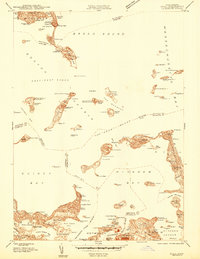 1944 Hull1944 Print · USGSCoastal Massachusetts at the height of the Second World War is captured here through the harbor's intricate islands and shorelines. Genealogists and maritime historians can trace residential roots in Houghs Neck or study military sites like Ft Andrews and Ft Duvall.
 - 1944 Map of Boston South
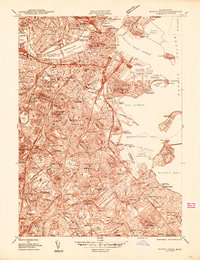 1944 Boston South1944 Print · USGSBoston and its southern neighbors show a dense mid-century network of colleges and coastlines during the 1940s. Trace local roots at Forest Hills Cem, find early campus layouts for Harvard University, or explore the maritime bustle at South Boston and the US Naval Reservation.
 - 1946 Map of Hull
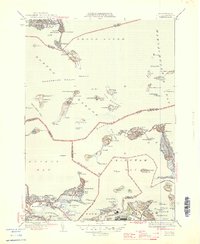 1946 Hull1946 Print · USGSBoston Harbor and the Hull peninsula appear here in the 1940s, revealing a landscape defined by coastal fortifications and seaside neighborhoods. Researchers can trace the military history of Ft Warren and Ft Dawes or find local landmarks like the Long Island Hospital and Boston Light.4 unique versions available
 - 1946 Map of Boston South
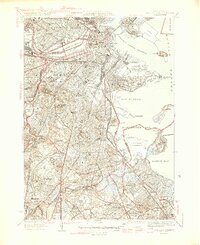 1946 Boston South1946 Print · USGSGreater Boston at the end of the Second World War shows a dense urban landscape of world-class universities and bustling coastal defense. Researchers can trace family sites near Forest Hills Cem or explore institutional history at Fenway Park and Ft Winthrop.3 unique versions available
 - 1946 Map of Blue Hills, 1958 Print
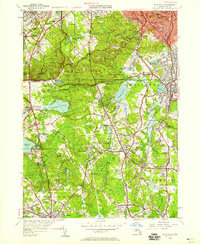 1946 Blue Hills1958 Print · USGSThe Blue Hills and surrounding South Shore towns are shown here in the mid-1940s as suburban growth began to surround the reservation. Researchers can locate family sites and landmarks like the Blue Hill Observatory, Thayer Academy, and St Marys Cem.
 - 1947 Map of Weymouth, 1958 Print
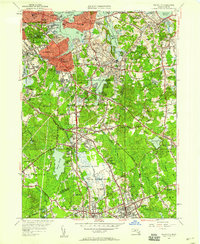 1947 Weymouth1958 Print · USGSThe South Shore of Massachusetts appears here just after the war, showing the industrial and civic heart of Norfolk and Plymouth counties. Researchers can trace family sites at Old North Cem, locate the Plymouth Quarries, or find the historic Old South Meeting House.
 - 1948 Map of Boston
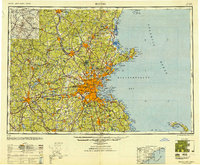 1948 Boston1948 Print · USGSEastern Massachusetts and southern New Hampshire appear at an industrial peak in the late 1940s, just as suburban growth began to accelerate. Genealogists and historians can trace rail lines like the Boston and Albany RR or locate coastal landmarks like Graves Lighthouse and Fort Devens.2 unique versions available
 - 1948 Map of Hull
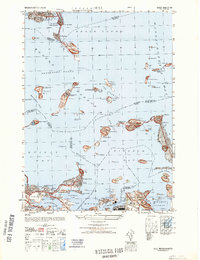 1948 Hull1948 Print · USGSCoastal life and military defenses along the Massachusetts shoreline come into focus in the late 1940s. Genealogists and local historians can locate specific landmarks from the House of Correction to Ft Warren and the residential streets of Houghs Neck.
 - 1949 Map of Hull, 1958 Print
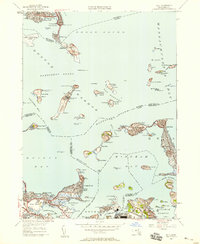 1949 Hull1958 Print · USGSThe islands and peninsulas of Boston Harbor are captured here at mid-century, just as the region transitioned toward modern aviation and utility infrastructure. Genealogists and historians can trace the foundations of Logan International Airport and coastal defenses like Ft Warren and Ft Duvall.
Showing maps 1-25 of 71
Top cities near Quincy
- Boston historical maps
- Cambridge historical maps
- Brockton historical maps
- Lynn historical maps
- Newton historical maps
- Somerville historical maps
See more
Top neighborhoods of Quincy
- North Commons historical maps
- Quincy Point historical maps
- Merrymount historical maps
- Post Island historical maps
- Old Boat Point historical maps
- Germantown historical maps
See more
Frequently asked questions
- What are the different types of historical maps available for Quincy?
- What is the oldest map of Quincy?
- Where can I purchase historical maps of Quincy for my home or office?
- Where can I download high-res historical maps of Quincy?
- Are there historical topographic maps available for Quincy?
- Is there historical aerial imagery available for Quincy?
- Where are historical maps of Quincy sourced from?