Old Maps of Financial District, Boston
Explore 22 old maps of Financial District, spanning from 1893 to today. These high-resolution historic maps reveal how streets, neighborhoods, landmarks, and natural features evolved over time — perfect for genealogy, metal detecting, research, and local history exploration.
What you can do with these maps:
- See how Financial District changed over time: Compare historical maps to modern-day views to trace roads, homesites, rail lines & more.
- View detailed metadata: Each map includes creators, publishers, year, scale, and archive source.
- Overlay maps with satellite & LiDAR: Visualize the past alongside modern tools to explore terrain & human change.
- Trusted historical sources: Maps sourced from the USGS, Library of Congress, and other archives.
- Access maps your way: View online, download high-res files, or order prints for personal or research use.
Start exploring old maps of Financial District to uncover forgotten places, hidden landmarks, and the deep history beneath your feet.
Financial District, Boston maps
(22)- 1893 Map of Boston
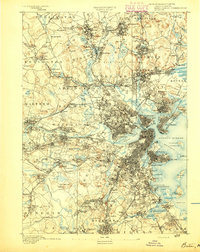 1893 Boston1893 Print · USGSGreater Boston and the Massachusetts coast are captured here in the late nineteenth century as streetcar suburbs and rail lines redefined the region. Trace family roots and local history across old neighborhoods like Washington Village, coastal landmarks like Fort Independence, and the sprawling Middlesex Fells.4 unique versions available
 - 1903 Map of Boston
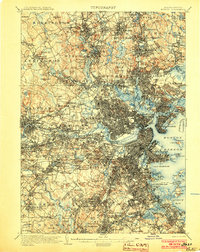 1903 Boston1903 Print · USGSThe Greater Boston area and its sprawling rail-and-river network are captured here at the turn of the century. Genealogists and historians can trace neighborhood blocks, the grounds of Tufts College, and military landmarks like Ft. Winthrop and Ft. Independence.13 unique versions available
 - 1943 Map of Boston
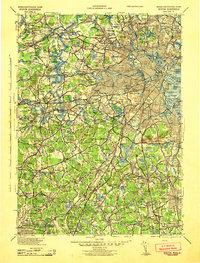 1943 Boston1943 Print · USGSGreater Boston and its southern suburbs appear here during the mobilization of the early 1940s. Genealogists and historians can trace the early footprints of Commonwealth Airport, military sites like Fort Winthrop, and local institutions such as Pondville State Hospital.
 - 1944 Map of Boston South
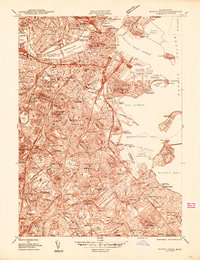 1944 Boston South1944 Print · USGSBoston and its southern neighbors show a dense mid-century network of colleges and coastlines during the 1940s. Trace local roots at Forest Hills Cem, find early campus layouts for Harvard University, or explore the maritime bustle at South Boston and the US Naval Reservation.
 - 1946 Map of Boston South
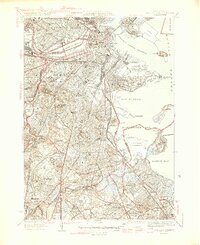 1946 Boston South1946 Print · USGSGreater Boston at the end of the Second World War shows a dense urban landscape of world-class universities and bustling coastal defense. Researchers can trace family sites near Forest Hills Cem or explore institutional history at Fenway Park and Ft Winthrop.3 unique versions available
 - 1948 Map of Boston
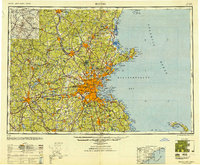 1948 Boston1948 Print · USGSEastern Massachusetts and southern New Hampshire appear at an industrial peak in the late 1940s, just as suburban growth began to accelerate. Genealogists and historians can trace rail lines like the Boston and Albany RR or locate coastal landmarks like Graves Lighthouse and Fort Devens.2 unique versions available
 - 1954 Map of Boston South
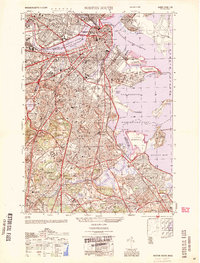 1954 Boston South1954 Print · USGSGreater Boston's mid-century urban core and harbor are captured here just as the modern airport and highway systems were transforming the shoreline. Genealogists and historians can trace family locations through dense neighborhoods like Roxbury Crossing or locate ancestral plots in the Cedar Grove Cem and Mount Hope Cem.
 - 1956 Map of Boston South, 1958 Print
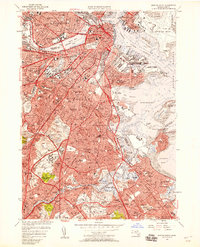 1956 Boston South1958 Print · USGSPost-war Boston and its southern neighborhoods are shown in detail, from the university banks of the Charles to the shores of Quincy Bay. Trace family roots and old neighborhoods in Roxbury, Jamaica Plain, or Dorchester at a time of significant urban change.3 unique versions available
 - 1956 Map of Boston, 1967 Print
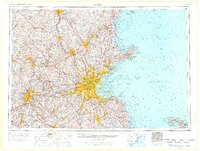 1956 Boston1967 Print · USGSThe Massachusetts coastline and industrial interior are seen here during the mid-century peak of suburban and highway expansion. Researchers can trace historic harbor defenses like Fort Revere, local landmarks such as Faneuil Hall, and the vast Parker River National Wildlife Refuge.6 unique versions available
 - 1958 Map of Boston
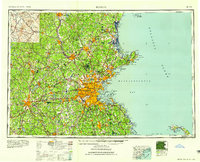 1958 Boston1958 Print · USGSEastern Massachusetts and southern New Hampshire are shown at the height of the industrial era, before the full expansion of the interstate system. Trace coastal defenses at Fort Warren, historic rail lines like the Boston and Maine, and the development of the Mass. 128 corridor.2 unique versions available
 - 1961 Map of Boston
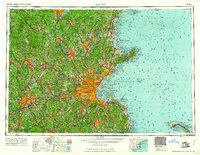 1961 Boston1961 Print · USGSThe Massachusetts coastline and its industrial interior are detailed here in the mid-twentieth century, from the Monadnock highlands to Cape Cod. Researchers can trace the rail routes of the Boston and Maine or locate landmarks like Fort Devens and the Wachusett Reservoir.2 unique versions available
 - 1970 Map of Boston South, 1973 Print
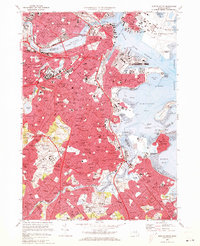 1970 Boston South1973 Print · USGSBoston and its southern neighborhoods are shown at a peak of urban development in the early seventies. Genealogists and historians can trace family roots through the dense streets of Dorchester or locate ancestral plots in Cedar Grove Cem and New Calvary Cem.2 unique versions available
 - 1977 Map of Boston South, 1980 Print
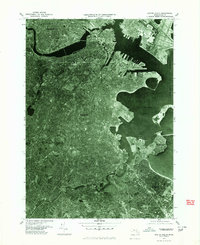 1977 Boston South1980 Print · USGSThe Boston metropolitan area is captured in the late seventies through detailed aerial photography, showing the city's dense urban layout and harbor. Trace the industrial waterfront of Boston Harbor or follow the Neponset River as it winds toward Squantum.
 - 1985 Map of Boston, 1986 Print
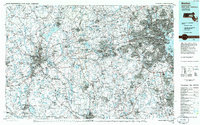 1985 Boston1986 Print · USGSThe Massachusetts urban core and its expanding suburbs are captured in the mid-eighties, showing the reach of the Mass Turnpike and Route 128. Genealogists and historians can trace the evolution of towns from Lexington to Waltham, locating landmarks like Harvard University and Minute Man National Historical Park.
 - 1987 Map of Boston South
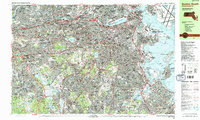 1987 Boston South1987 Print · USGSGreater Boston and its southern suburbs appear in high detail during the late 1980s, showcasing a landscape defined by academia, industry, and the sea. Researchers can trace historic family plots at Mt Auburn Cemetery or locate landmarks like Fort Independence and the Arnold Arboretum.2 unique versions available
 - 1989 Map of Boston
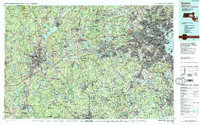 1989 Boston1989 Print · USGSGreater Boston and the central Massachusetts corridor appear here in the late eighties as suburban growth reshaped the region. Genealogists and historians can trace the transit networks between Boston, Worcester, and Quincy, while locating landmarks like Bunker Hill Monument and Wachusett Reservoir.2 unique versions available
 - 2012 Map of Boston South, 2012 Print
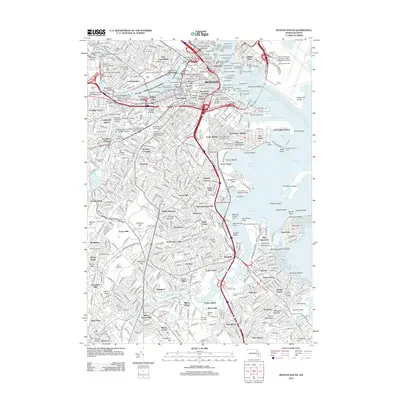 2012 Boston South2012 Print · USGSGreater Boston and the South Shore neighborhoods are shown at the start of the 2010s, detailing a deeply historical landscape. Genealogists and historians can trace cemetery sites like Saint Augustine Burying Ground or locate landmarks such as Fort Independence and the Old Burying Ground.
 - 2015 Map of Boston South, 2015 Print
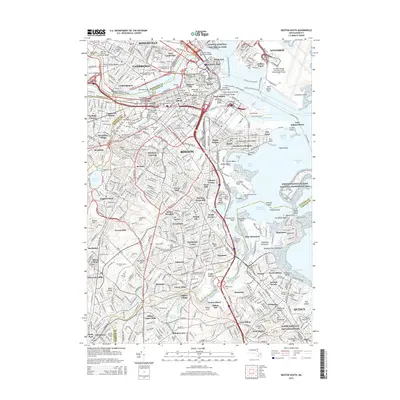 2015 Boston South2015 Print · USGSGreater Boston and its southern neighborhoods are captured here in the mid-2010s, showing a densely populated landscape of historic districts and academic centers. Genealogists can locate family plots in Mount Hope Cem or Hebrew Cem, while historians trace landmarks from Fort Independence to the monument at Dorchester Heights.
 - 2018 Map of Boston South, 2018 Print
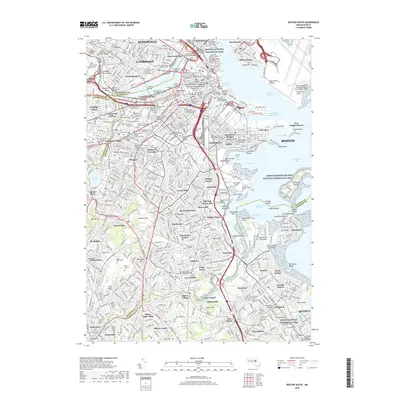 2018 Boston South2018 Print · USGSGreater Boston and the South Shore neighborhoods are shown here in the late 2010s. Researchers can trace ancestral sites at Granary Burying Ground, explore the industrial history of Lower Mills, or locate landmarks like Fort Independence.
 - 2021 Map of Boston South, 2021 Print
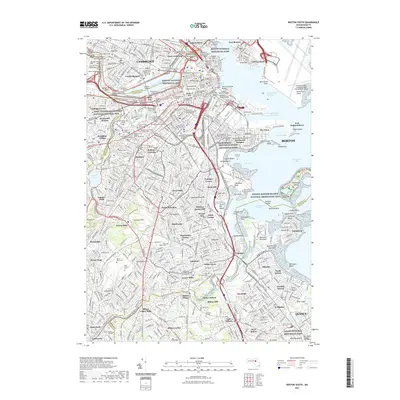 2021 Boston South2021 Print · USGSThe Boston harbor and its storied neighborhoods appear here in the 2020s, showcasing the modern urban grid from Cambridge to Dorchester. Trace historic landmarks like Fort Independence or search for family records at Saint Mary's Cem and Granary Burying Ground.
 - 2023 Map of Boston South, 2023 Print
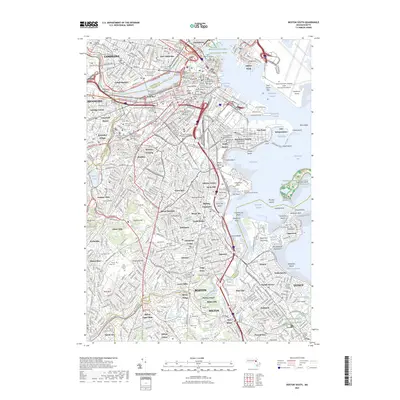 2023 Boston South2023 Print · USGSGreater Boston and its southern suburbs are shown here in detail during the early 2020s. Researchers can locate family plots in the Granary Burying Ground or trace the shoreline from Castle Island to the Squantum Peninsula.
 - 2024 Map of Boston South, 2024 Print
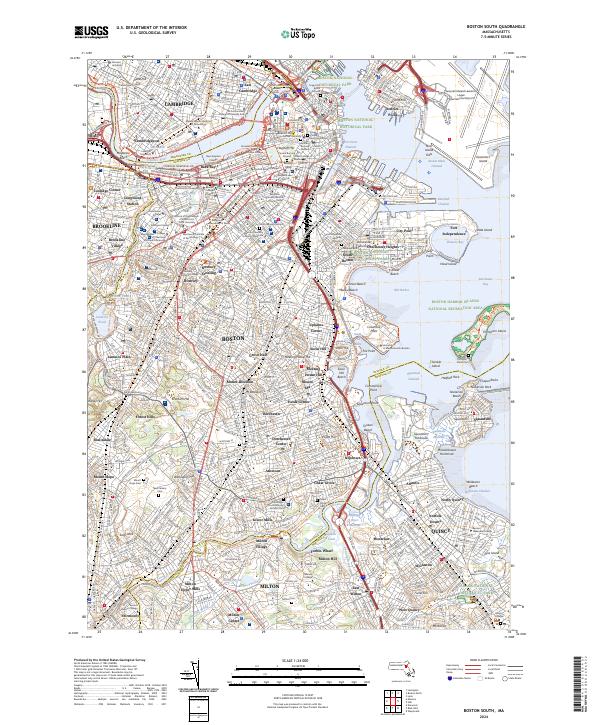 2024 Boston South2024 Print · USGSGreater Boston's urban landscape is revealed in this modern survey, from the historic cemeteries of Beacon Hill to the busy waterfronts of Dorchester Bay. Genealogists can locate family plots in Copps Hill Burial Ground or trace neighborhoods like Ashmont, Jamaica Plain, and Lower Mills.
End of results
Showing maps 1-22 of 22
Frequently asked questions
- What are the different types of historical maps available for Financial District?
- What is the oldest map of Financial District?
- Where can I purchase historical maps of Financial District for my home or office?
- Where can I download high-res historical maps of Financial District?
- Are there historical topographic maps available for Financial District?
- Is there historical aerial imagery available for Financial District?
- Where are historical maps of Financial District sourced from?