Old Maps of Arnold, Michigan
Explore 14 old maps of Arnold, spanning from 1932 to today. These high-resolution historic maps reveal how streets, neighborhoods, landmarks, and natural features evolved over time — perfect for genealogy, metal detecting, research, and local history exploration.
What you can do with these maps:
- See how Arnold changed over time: Compare historical maps to modern-day views to trace roads, homesites, rail lines & more.
- View detailed metadata: Each map includes creators, publishers, year, scale, and archive source.
- Overlay maps with satellite & LiDAR: Visualize the past alongside modern tools to explore terrain & human change.
- Trusted historical sources: Maps sourced from the USGS, Library of Congress, and other archives.
- Access maps your way: View online, download high-res files, or order prints for personal or research use.
Start exploring old maps of Arnold to uncover forgotten places, hidden landmarks, and the deep history beneath your feet.
Arnold, MI maps
(14)- 1932 Map of Helena SW
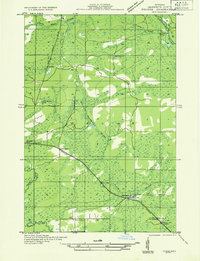 1932 Helena SW1932 Print · USGSMarquette County’s timber country comes into focus in the early 1930s, showing the railroad and logging camps that drove the regional economy. Researchers can locate vanished sites like John Bruce Camp, the Finnish Sch, and the Arnold PO along the Escanaba and Lake Superior line.
 - 1951 Map of Helena SW
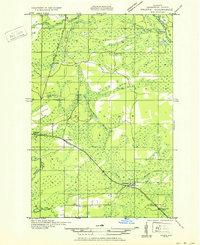 1951 Helena SW1951 Print · USGSMarquette County's logging and rail corridor is captured here in the early 1950s, showing the intersection of timber camps and rural school life. Researchers can trace the Escanaba and Lake Superior line to Watson, the Arnold PO, and the Finnish Sch.
 - 1958 Map of Marquette, 1968 Print
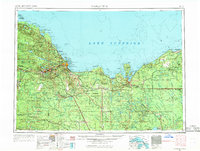 1958 Marquette1968 Print · USGSThe Upper Peninsula’s central corridor is captured here in the mid-twentieth century as mining and timber industries thrived alongside new military installations. Genealogists and historians can trace the rail lines of the Soo Line Railroad through settlements like Gwinn, Turin, and Chatham.2 unique versions available
 - 1960 Map of Marquette
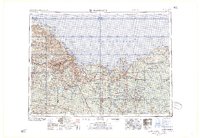 1960 Marquette1960 Print · USGSUpper Peninsula mining and maritime commerce reach their peak in the late fifties across the Lake Superior shoreline. Genealogists and historians can locate remote settlements like Big Bay and Dukes, while tracing the Cyr Mine and the active rail lines of the Lake Superior and Ishpeming railroad.
 - 1961 Map of Marquette
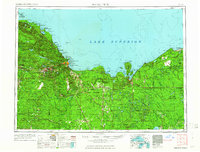 1961 Marquette1961 Print · USGSUpper Peninsula life in the early sixties centered on the iron docks and timber stands of the Lake Superior shore. Genealogists and historians can trace rail-to-port connections via the Lake Superior and Ishpeming Railroad and locate active sites like Republic Mine or the K.I. Sawyer Air Force Base.
 - 1963 Map of Watson, 1964 Print
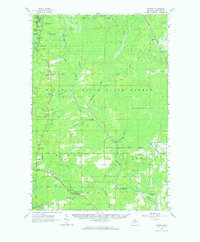 1963 Watson1964 Print · USGSUpper Peninsula timber and rail country come into focus during the early sixties, showing the remote settlements of Watson and Arnold. Genealogists and researchers can locate the Forest Home Cem, the Gardner Mine, and the historic Arnold Lookout Tower.
 - 1968 Map of Marquette, 1977 Print
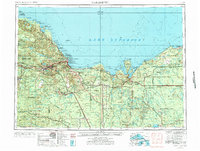 1968 Marquette1977 Print · USGSThe Upper Peninsula iron range and Lake Superior coastline are captured here in the late sixties. Genealogists and historians can trace the rail-to-port infrastructure and the Cold War presence of K I Sawyer Air Force Base alongside towns like Ishpeming and Munising.
 - 1983 Map of Gwinn
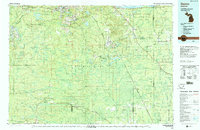 1983 Gwinn1983 Print · USGSThe heart of Michigan's Marquette Iron Range is captured here during the 1980s, when mining and military operations defined the local landscape. Genealogists and industrial historians can trace the tracks of the Chicago and North Western to the National Mine or the airman's life at K I Sawyer Air Force Base.2 unique versions available
 - 1989 Map of Arnold
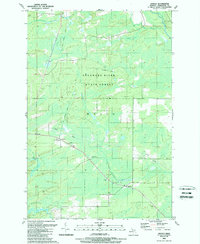 1989 Arnold1989 Print · USGSMarquette County's timber and rail heritage is on full display in the late eighties, showing the quiet township of Wells. You can trace the Old Railroad Grade and locate family landmarks like Forest Home Cem and the Twp School.
 - 2011 Map of Arnold, 2011 Print
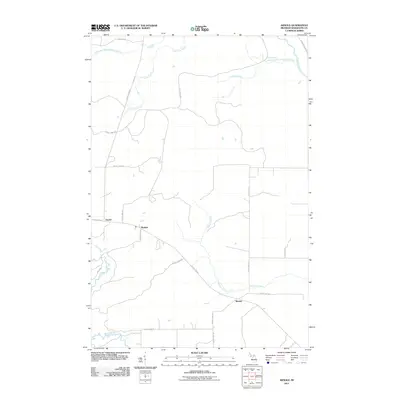 2011 Arnold2011 Print · USGSMarquette County’s southern timberlands and river basins are captured here at the start of the 2010s. Genealogists and outdoorsmen can trace the rural hubs of Arnold, Mashek, and Watson alongside the waters of the Ford River and Hunters Brook.
 - 2014 Map of Arnold, 2014 Print
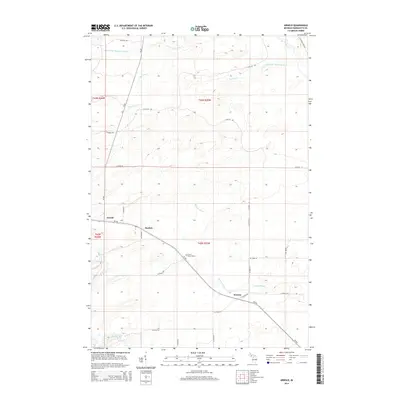 2014 Arnold2014 Print · USGSMarquette County's remote timberlands and river systems are documented here in the early twenty-first century. Researchers can locate the Forest Home Cem and trace the small settlements of Arnold, Mashek, and Watson along the CR-426 corridor.
 - 2017 Map of Arnold, 2017 Print
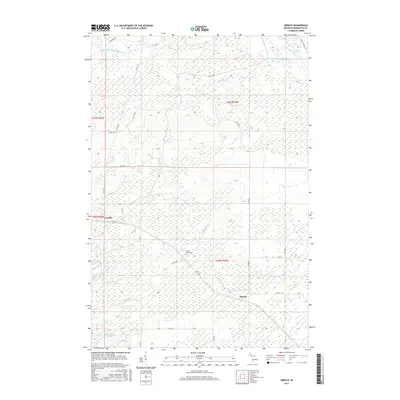 2017 Arnold2017 Print · USGSMarquette County's rural interior is captured here during the late twenty-teens, showing the intersection of vital Upper Peninsula waterways. Researchers can trace family history at Forest Home Cem or follow the early road network connecting Arnold and Watson.
 - 2019 Map of Arnold, 2019 Print
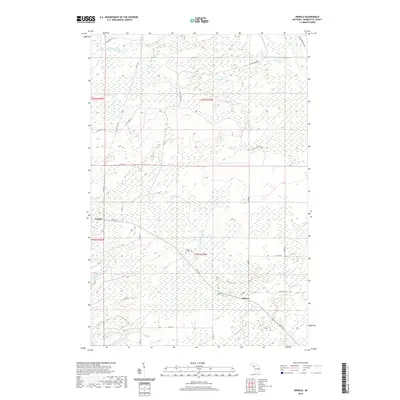 2019 Arnold2019 Print · USGSMarquette County in the late 2010s reveals a landscape of dense wetlands and forest surrounding the settlements of Arnold and Watson. Researchers can trace old family roots at Forest Home Cem or map the waterways of the Ford River and Hunters Brook.
 - 2023 Map of Arnold, 2023 Print
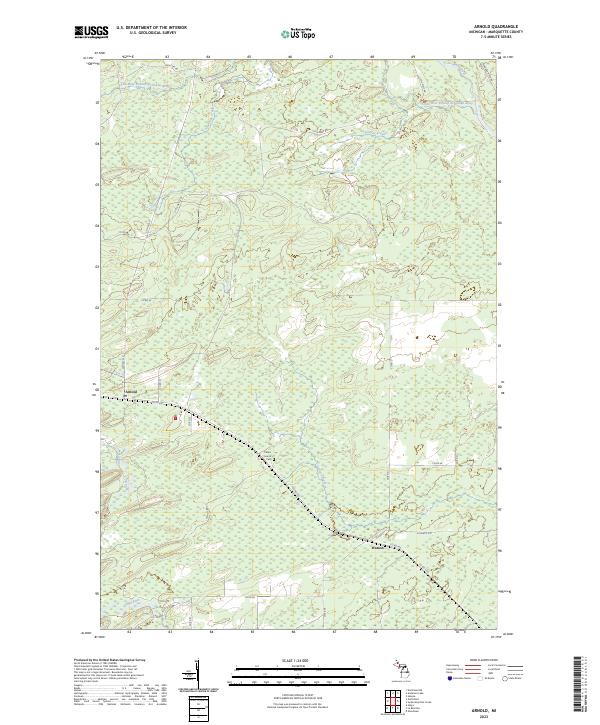 2023 Arnold2023 Print · USGSMarquette County's southern interior is documented here in recent years, showing the quiet transition of old timber and river settlements. Genealogists and local historians can locate the Forest Home Cem and the small rural hubs of Arnold and Watson.
End of results
Showing maps 1-14 of 14
Frequently asked questions
- What are the different types of historical maps available for Arnold?
- What is the oldest map of Arnold?
- Where can I purchase historical maps of Arnold for my home or office?
- Where can I download high-res historical maps of Arnold?
- Are there historical topographic maps available for Arnold?
- Is there historical aerial imagery available for Arnold?
- Where are historical maps of Arnold sourced from?