Old Maps of Ozark, Missouri
Explore 35 old maps of Ozark, spanning from 1884 to today. These high-resolution historic maps reveal how streets, neighborhoods, landmarks, and natural features evolved over time — perfect for genealogy, metal detecting, research, and local history exploration.
What you can do with these maps:
- See how Ozark changed over time: Compare historical maps to modern-day views to trace roads, homesites, rail lines & more.
- View detailed metadata: Each map includes creators, publishers, year, scale, and archive source.
- Overlay maps with satellite & LiDAR: Visualize the past alongside modern tools to explore terrain & human change.
- Trusted historical sources: Maps sourced from the USGS, Library of Congress, and other archives.
- Access maps your way: View online, download high-res files, or order prints for personal or research use.
Start exploring old maps of Ozark to uncover forgotten places, hidden landmarks, and the deep history beneath your feet.
Ozark, MO maps
(35)- 1884 Map of Springfield
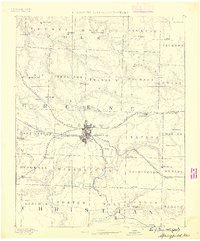 1884 Springfield1884 Print · USGSSpringfield emerged as a critical railroad junction in Southwest Missouri during the 1880s. Local researchers can trace the early layouts of Springfield, Willard, and Republic as they developed along the St. Louis and San Francisco Railroad.
 - 1886 Map of Springfield, 1896 Print
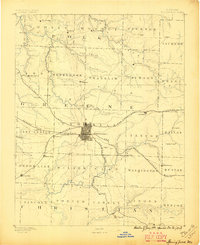 1886 Springfield1896 Print · USGSSouthwest Missouri thrived as a regional rail hub in the 1880s, centering on the growth of Greene and Christian counties. Researchers can trace early rural settlements and rail stops like Springfield, Fair Grove, and Republic before the turn of the century.5 unique versions available
 - 1907 Map of Forsyth
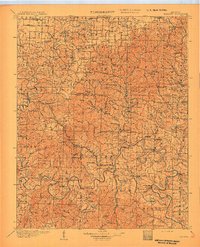 1907 Forsyth1907 Print · USGSThe White River country of southwest Missouri is seen here in the early nineteen-hundreds, prior to the region's major dam projects. Genealogists can trace family homesteads near landmarks like Marble Cave, numerous riverside crossings such as Mabry Ferry, and local landmarks like Loafers Glory School.3 unique versions available
 - 1937 Map of Ozark
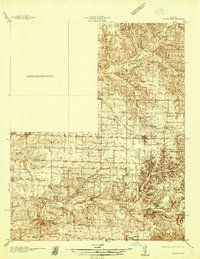 1937 Ozark1937 Print · USGSChristian and Greene Counties are captured here in the mid-1930s, showing a landscape of river-valley farms and small railroad towns. Genealogists can trace family names through dozens of rural landmarks like Roller Cemetery, Riverside Inn, and the Whiteoak Church.
 - 1943 Map of Ozark, 1968 Print
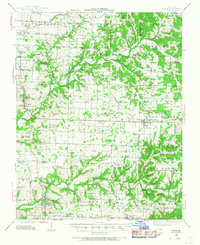 1943 Ozark1968 Print · USGSThe James River valley south of Springfield comes alive in the 1940s, showing a landscape defined by small settlements and the St Louis - San Francisco line. Genealogists can trace family roots at Holland Cem or locate old school sites like Blue Star Sch and Plummer Sch.
 - 1945 Map of Harrison
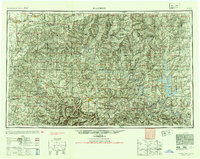 1945 Harrison1945 Print · USGSThe Ozark and Boston Mountains straddle the Missouri-Arkansas border during the mid-forties, showing a landscape of forest ridges and river valleys. Genealogists and historians can trace rail-connected towns like Monett and West Plains or early lake developments at Bull Shoals Res and Norfork Lake.
 - 1945 Map of Ozark
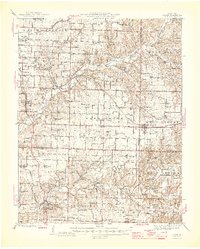 1945 Ozark1945 Print · USGSSouth of Springfield in the mid-1940s, this area shows a landscape transitioning from rural farmsteads to modern aviation hubs. Genealogists can trace family names at Holland Cem, Riverside Inn, and numerous school sites like Pedelo Sch.2 unique versions available
 - 1949 Map of Harrison
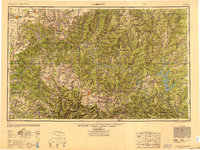 1949 Harrison1949 Print · USGSThe Ozark highlands of northern Arkansas and southern Missouri are shown just after the war, when the White River still followed its original course. Genealogists and historians can trace rail lines like the Missouri & Arkansas RR and locate rural hubs like Harrison, Eureka Springs, and Mountain Home.
 - 1954 Map of Harrison
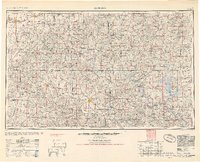 1954 Harrison1954 Print · USGSThe Ozarks and Boston Mountains meet during a period of massive river engineering in the mid-fifties. Researchers can trace the early shorelines of Bull Shoals Lake and Table Rock Reservoir or locate inland towns like Berryville and Harrison.
 - 1954 Map of Springfield
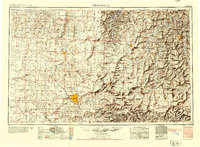 1954 Springfield1954 Print · USGSThe Missouri Ozarks are captured here during the post-war era, showing the expansion of Springfield and the surrounding river valleys. Genealogists and historians can trace local landmarks like Mount Comfort Cemetery and the Fort Leonard Wood military grounds.6 unique versions available
 - 1955 Map of Selmore, 1956 Print
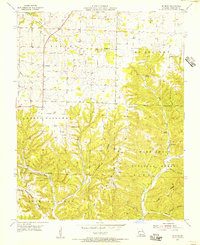 1955 Selmore1956 Print · USGSChristian County's rural character is preserved here in the mid-fifties, showing the rugged intersection of farm life and the Mark Twain National Forest. Genealogists can locate family landmarks like Adams Cem, Cobb Cem, and the small settlement of Selmore.2 unique versions available
 - 1958 Map of Springfield
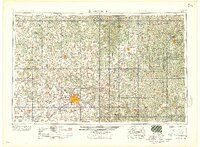 1958 Springfield1958 Print · USGSThe Missouri Ozarks are captured during the mid-century era of growth, centered on the bustling hub of Springfield. Genealogists and historians can trace family roots through numerous landmarks like Ebenezer Church, Stockton Cem, and the various county courthouses.
 - 1958 Map of Harrison, 1973 Print
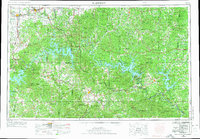 1958 Harrison1973 Print · USGSThe Ozark and Boston Mountains appear in this mid-century survey as the great White River impoundments were reshaping the region. Researchers can trace the rail lines of the St Louis-San Francisco Ry and locate early settlements like Berryville and Gainesville.
 - 1959 Map of Springfield
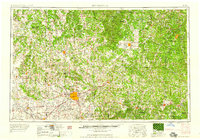 1959 Springfield1959 Print · USGSThe Missouri Ozarks are captured here during a decade of postwar growth and increasing highway connectivity. Researchers can trace the legacy of the St Louis-San Francisco RR and locate early sites in Springfield, Lebanon, and Mountain Grove.
 - 1960 Map of Nixa, 1961 Print
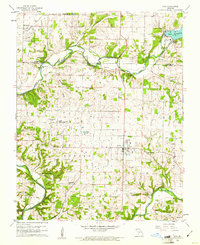 1960 Nixa1961 Print · USGSThe Ozark foothills south of Springfield appear here in the early 1960s as a landscape of rural family cemeteries and creek-side settlements. Genealogists can trace local history through landmarks like Union Chapel, McConnell Cem, and the historic Frazier Bridge.5 unique versions available
 - 1964 Map of Harrison
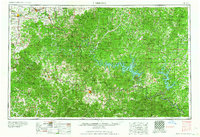 1964 Harrison1964 Print · USGSThe Ozark and Boston Mountains of Arkansas and Missouri are captured here in the mid-sixties, showing the rugged highlands before extensive modern development. Genealogists and historians can trace family-named peaks like Gaither Mountain and follow the St Louis-San Francisco RR through Monett and Purdy.
 - 1970 Map of Ozark, 1971 Print
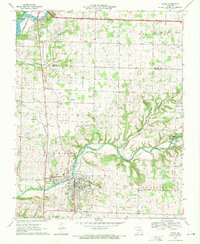 1970 Ozark1971 Print · USGSChristian County at the start of the seventies reveals a landscape where the river-and-rail economy of Ozark meets the karst terrain of the Missouri hills. Trace local family history through numerous burial grounds like Weaver Cem and Pembina Cem, or find landmarks like Smallin Cave and the Drag Strip.3 unique versions available
 - 1979 Map of Nixa, 1981 Print
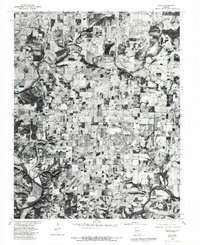 1979 Nixa1981 Print · USGSNixa and the Christian County countryside appear in this late-seventies orthophoto just as suburban growth began to meet traditional Missouri farmland. Genealogists and historians can trace old property lines and the early footprints of Nixa, Battlefield, and the water's edge at Lake Springfield.
 - 1979 Map of Ozark, 1981 Print
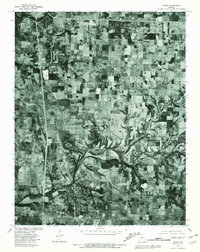 1979 Ozark1981 Print · USGSChristian County, Missouri, at the end of the seventies shows a landscape defined by traditional farming and the emerging growth of Ozark. Genealogists and local historians can trace the property lines and rural crossroads around Mentor, Cassidy, and the banks of Finley Creek.
 - 1982 Map of Springfield, 1983 Print
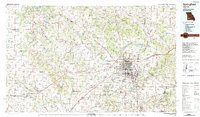 1982 Springfield1983 Print · USGSSpringfield and the surrounding Ozark plateau are captured in the early eighties as the region balanced urban growth with its agricultural roots. Genealogists and researchers can trace the locations of White Chapel, the State Sanatorium, and older rail stops like Brookline.
 - 1985 Map of Table Rock Lake
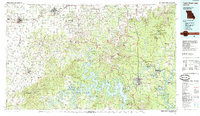 1985 Table Rock Lake1985 Print · USGSSouthwest Missouri in the mid-1980s shows a landscape transformed by the waters of the White River and its reservoirs. Genealogists and local historians can trace the intricate shorelines of Table Rock Lake, locate rural crossroads like Jenkins and Madry, and explore the grounds of Roaring River State Park.
 - 1985 Map of Harrison
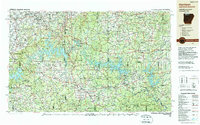 1985 Harrison1985 Print · USGSThe Ozark highlands and the White River valley are seen here in the mid-1980s, showcasing a region defined by its massive reservoirs and protected wilderness. You can trace the rugged corridors of the Missouri & North Arkansas RR or locate historic settlements like Eureka Springs and Jasper.
 - 2004 Map of Selmore, 2006 Print
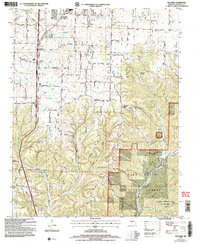 2004 Selmore2006 Print · USGSChristian County at the dawn of the millennium shows a landscape transitioning from rural farmsteads to managed forest land. Genealogists can trace family landmarks like King Cem and Mapes Cem, or locate the historic Alma Mine and Christian Center settlement.
 - 2011 Map of Nixa, 2011 Print
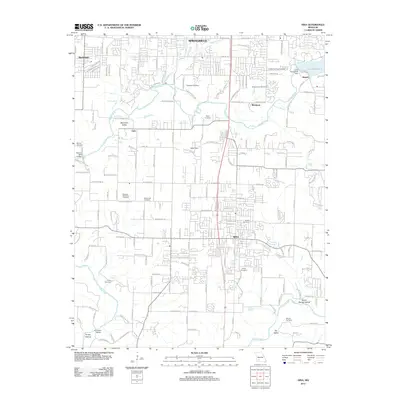 2011 Nixa2011 Print · USGSThe James River corridor south of Springfield is captured here at a moment of significant suburban expansion. Genealogists and historians can locate numerous family burial grounds like James Cemetery or Payne Cemetery, and trace old landmarks such as Nelson Mill Bridge.
 - 2011 Map of Ozark, 2011 Print
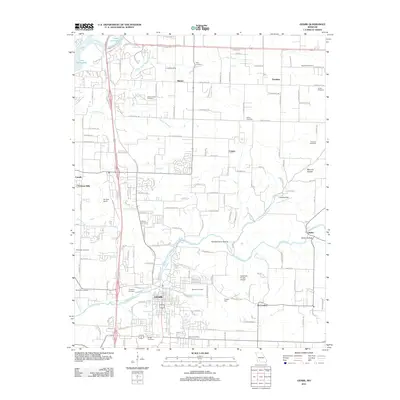 2011 Ozark2011 Print · USGSOzark and the surrounding Christian County countryside are shown here during a period of modern growth and suburban expansion. Genealogists can trace family heritage through a dense network of burial sites like Gibson-Porter Cemetery and Weaver Cemetery along the Finley Creek valley.
Showing maps 1-25 of 35
Top cities near Ozark
- Springfield historical maps
- Nixa historical maps
- Republic historical maps
- Battlefield historical maps
- Clever historical maps
- Sparta historical maps
See more
Frequently asked questions
- What are the different types of historical maps available for Ozark?
- What is the oldest map of Ozark?
- Where can I purchase historical maps of Ozark for my home or office?
- Where can I download high-res historical maps of Ozark?
- Are there historical topographic maps available for Ozark?
- Is there historical aerial imagery available for Ozark?
- Where are historical maps of Ozark sourced from?