Old Maps of Saint Charles, Missouri
Explore 35 old maps of Saint Charles, spanning from 1903 to today. These high-resolution historic maps reveal how streets, neighborhoods, landmarks, and natural features evolved over time — perfect for genealogy, metal detecting, research, and local history exploration.
What you can do with these maps:
- See how Saint Charles changed over time: Compare historical maps to modern-day views to trace roads, homesites, rail lines & more.
- View detailed metadata: Each map includes creators, publishers, year, scale, and archive source.
- Overlay maps with satellite & LiDAR: Visualize the past alongside modern tools to explore terrain & human change.
- Trusted historical sources: Maps sourced from the USGS, Library of Congress, and other archives.
- Access maps your way: View online, download high-res files, or order prints for personal or research use.
Start exploring old maps of Saint Charles to uncover forgotten places, hidden landmarks, and the deep history beneath your feet.
Saint Charles, MO maps
(35)- 1903 Map of O'Fallon
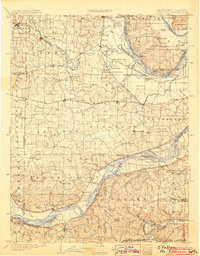 1903 O'Fallon1903 Print · USGSSt. Charles County at the turn of the century is a labyrinth of river islands and rail lines at the confluence of the Missouri and Mississippi. Researchers can trace old river landings like Cap Au Gris Landing and family-named settlements from Moscow Mills to New Melle.5 unique versions available
 - 1924 Map of Robertson
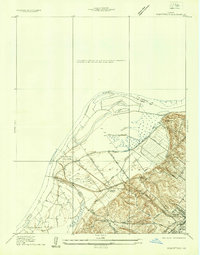 1924 Robertson1924 Print · USGSNorthwest St. Louis County emerges into the aviation age during the mid-thirties, bounded by the wide Missouri River. Genealogists and historians can locate the Lambert St Louis Landing Field, the National Guard Target Range, and schools like Garret.
 - 1927 Map of St. Charles, 1955 Print
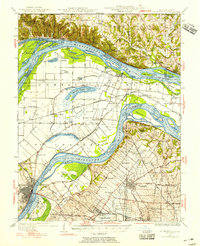 1927 St. Charles1955 Print · USGSThe Missouri and Mississippi rivers meet in this mid-century survey, showcasing a landscape of fertile bottomlands and early aviation hubs. Genealogists can trace family footprints through dozens of rural landmarks like St Stanislaus Seminary, Orchard Farm, and Cul de Sac Sch.2 unique versions available
 - 1931 Map of Brussels
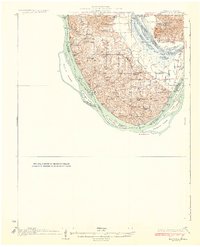 1931 Brussels1931 Print · USGSThe peninsula between the Illinois and Mississippi Rivers is captured here in the early 1930s, showcasing a network of river landings and ridge-top settlements. Genealogists can trace family roots through numerous local landmarks like Golden Eagle, Point Pleasant, and Nichols Sch.2 unique versions available
 - 1932 Map of Manchester NE
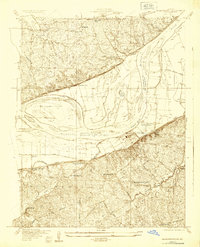 1932 Manchester NE1932 Print · USGSThe Missouri River floodplain and the rising bluffs of St. Louis County are captured here in the early 1930s. Genealogists and local historians can trace the foundations of Chesterfield and Bellefontaine alongside sites like Zion Sch and the St Louis City Water Works.
 - 1933 Map of Saint Charles
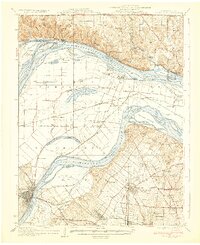 1933 Saint Charles1933 Print · USGSThe confluence of the Missouri and Mississippi rivers in the early thirties reveals a landscape of fertile river bottoms and emerging suburban rail towns. Genealogists and researchers can trace old school districts like Cul de Sac Sch and historic sites such as St Stanislaus Seminary.3 unique versions available
 - 1939 Map of Brussels, 1955 Print
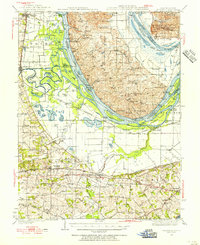 1939 Brussels1955 Print · USGSThe confluence of the Illinois and Mississippi rivers defines this pre-war era, where river landings and ferries still anchored local life. Genealogists can trace family footprints at Old Rock Ch, numerous rural schools like Black Jack Sch, and the West Point Ferry.
 - 1943 Map of Brussels
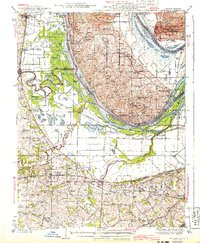 1943 Brussels1943 Print · USGSThe river bottomlands near the Missouri and Illinois border come alive in the 1940s, showing a network of ferries, landings, and rail lines. Trace family history through local landmarks like Lone Tree Indian Mound, Boones Lick Road, and St Peters.2 unique versions available
 - 1947 Map of Chesterfield
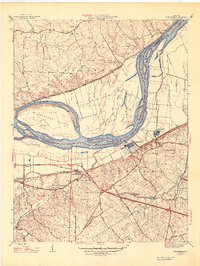 1947 Chesterfield1947 Print · USGSMid-century St. Louis County remains a landscape of river bottoms and rising bluffs as suburban expansion begins to reach westward. Genealogists can trace family footprints through rural sites like Gumbo, the Bellefontaine Sch, and Beeffee Ch.2 unique versions available
 - 1949 Map of Saint Louis
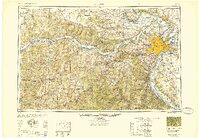 1949 Saint Louis1949 Print · USGSGreater St. Louis and its surrounding river valleys are captured here just after the war, showing the metropolitan core and the rural Ozark fringe. Researchers can trace the sprawling rail network of the Wabash RR or locate landmarks like Meramec Caverns Airport and Scott Air Force Base.2 unique versions available
 - 1954 Map of Kampville, 1959 Print
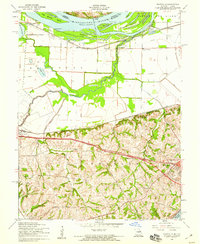 1954 Kampville1959 Print · USGSMid-century St. Charles County reveals a riverfront landscape defined by the convergence of the Mississippi and Missouri rivers. Researchers can trace historic river landings and family landmarks like Kampville Sch, the Golden Eagle Ferry, and the Methodist Cem.4 unique versions available
 - 1954 Map of St. Charles, 1959 Print
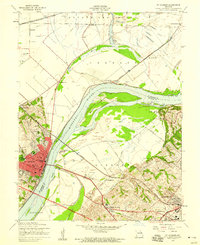 1954 St. Charles1959 Print · USGSSt. Charles and the Missouri River floodplain come into sharp focus in the mid-1950s as suburban growth begins to reach the western riverbanks. Genealogists and local historians can locate Lindenwood College, several family cemeteries like Borromeo Cem, and vanished landmarks such as Kratz Airport.5 unique versions available
 - 1954 Map of Chesterfield, 1959 Print
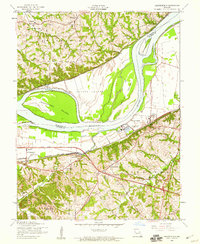 1954 Chesterfield1959 Print · USGSIn the mid-fifties, the Missouri River bluffs supported a mix of riverside industry and historic rural centers. Genealogists and local historians can trace the footprint of Gumbo, Chesterfield, and Bellefontaine before the modern expansion, locating landmarks like St Thomas Ch and the Chicago and Pacific rail line.5 unique versions available
 - 1954 Map of Brussels, 1960 Print
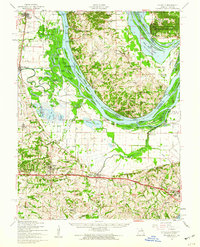 1954 Brussels1960 Print · USGSThe confluence of the Mississippi and Illinois Rivers comes alive in the mid-1950s, showing a landscape shaped by river transport and rail. Trace the routes of the Wabash Railroad or find family history at All Saints Village and Dardenne Cem.2 unique versions available
 - 1954 Map of St. Charles, 1960 Print
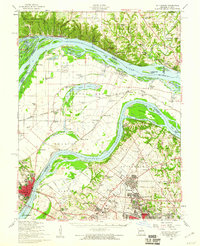 1954 St. Charles1960 Print · USGSThe river confluence near St. Louis during the mid-fifties reveals a landscape balancing traditional river life with rapid suburban and aviation growth. Genealogists and historians can trace family roots through sites like St Stanislaus Seminary Cem, Portage Des Sioux, and the campus of Principia College.2 unique versions available
 - 1962 Map of St. Louis
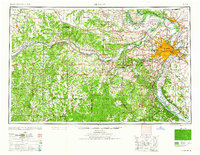 1962 St. Louis1962 Print · USGSThe mid-century gateway to the west shows the metropolitan expansion of St Louis alongside its critical river confluences. Genealogists and historians can trace the rail corridors of the Missouri Pacific RR and settlements from Fulton to De Soto.
 - 1963 Map of St. Louis, 1970 Print
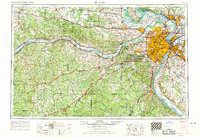 1963 St. Louis1970 Print · USGSSt. Louis and its surrounding river valleys are captured here during the peak of mid-century suburban expansion and industrial activity. Trace the historic rail routes of the Norfolk and Western Ry or locate the St Louis Ordnance Plant and early stretches of US Highway 66.4 unique versions available
 - 1966 Map of St. Louis
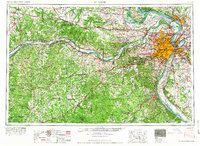 1966 St. Louis1966 Print · USGSThe St. Louis metropolitan area and its surrounding river valleys are captured here during the mid-sixties era of suburban growth and industrial strength. Genealogists and historians can trace the foundations of local communities through sites like Old Pioneer Cem, Parks College, and the Jefferson Barracks Military Reservation.
 - 1979 Map of Chesterfield, 1981 Print
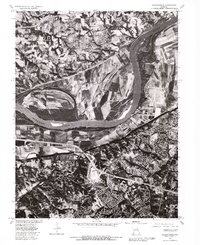 1979 Chesterfield1981 Print · USGSSt. Louis County and St. Charles County are captured during a period of suburban transition in the late seventies. Researchers can trace the development of Chesterfield and Bellefontaine or study the agricultural bottomlands near Howell.
 - 1985 Map of St Louis
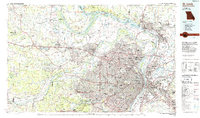 1985 St Louis1985 Print · USGSThe St. Louis metropolitan area and its river confluences are captured here during a period of significant suburban expansion in the 1980s. Genealogists and historians can trace the development of older neighborhoods and landmarks like Jefferson Barracks, Cahokia Mounds State Park, and Washington University.3 unique versions available
 - 1994 Map of St. Charles, 1995 Print
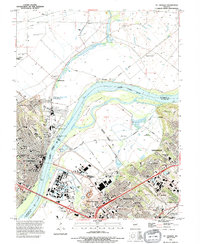 1994 St. Charles1995 Print · USGSSt. Charles and the neighboring St. Louis County suburbs are shown in high detail during the mid-nineties. Researchers can locate long-standing institutions like Lindenwood College, trace the Katy Trail, and identify local sites like Emmaus Cem and Earth City.
 - 1994 Map of Chesterfield, 1995 Print
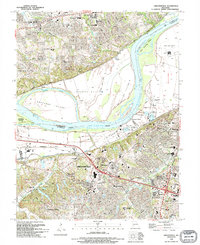 1994 Chesterfield1995 Print · USGSMid-1990s St. Louis County shows a landscape in transition as suburban development reaches the Missouri River bluffs. Researchers can trace the layout of Chesterfield, find the Gumbo Cem, or locate landmarks like Maryville University.
 - 1994 Map of Kampville, 1995 Print
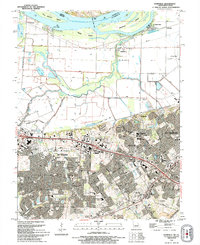 1994 Kampville1995 Print · USGSThe Missouri riverfront near St. Charles shows a landscape of agricultural levees and rapid suburban growth in the mid-1990s. Trace old river landings like McCann Landing, the route of the Katy Trail State Park, and the Golden Eagle Ferry.
 - 2012 Map of Chesterfield, 2012 Print
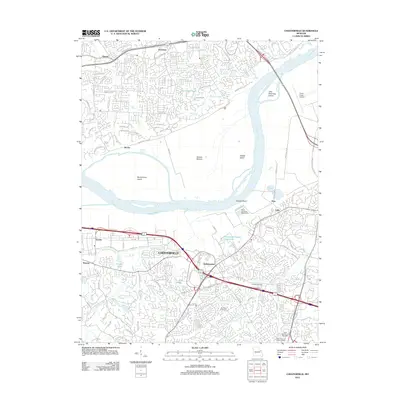 2012 Chesterfield2012 Print · USGSChesterfield and the Missouri River bottoms are captured here in the early twenty-first century as suburban growth meets the river's edge. Researchers can trace local heritage at Conway Cemetery or explore established centers like Gumbo and Bellefontaine.
 - 2012 Map of Saint Charles, 2012 Print
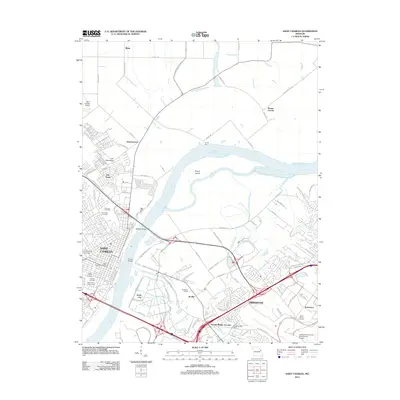 2012 Saint Charles2012 Print · USGSSaint Charles and Bridgeton flank the Missouri River in this early twenty-first-century survey of a bustling riverfront corridor. Genealogists can locate several burial sites including Emmaus Cemetery and Saint Marys Cemetery near Lindenwood University.
Showing maps 1-25 of 35
Top cities near Saint Charles
- O'Fallon historical maps
- Saint Peters historical maps
- Florissant historical maps
- Chesterfield historical maps
- Wildwood historical maps
- University City historical maps
See more
Top neighborhoods of Saint Charles
Frequently asked questions
- What are the different types of historical maps available for Saint Charles?
- What is the oldest map of Saint Charles?
- Where can I purchase historical maps of Saint Charles for my home or office?
- Where can I download high-res historical maps of Saint Charles?
- Are there historical topographic maps available for Saint Charles?
- Is there historical aerial imagery available for Saint Charles?
- Where are historical maps of Saint Charles sourced from?