1900s (20th Century) Maps of Fort Smith, Montana
Explore 6 historic maps of Fort Smith from the 1900s (20th Century). These maps offer a rare glimpse into what life looked like during the 1900s — showing old roads, neighborhoods, homes, and landmarks that have changed or disappeared over time.
Whether you're researching your family's past, planning a metal detecting trip, or studying how Fort Smith's landscape evolved across the 1900s, these high-resolution maps are a powerful tool for exploring the history of this region.
- Focus on a specific era: All maps on this page are from the 1900s, giving you a focused view of this time period.
- See what’s changed: Compare century-old streets, trails, and buildings to today's modern landscape using overlays and satellite layers.
- Research with precision: Use these maps for genealogy, historical research, land use analysis, or educational projects.
- View, download, or print: Maps are fully viewable online in high resolution, and can be downloaded or printed for your own records.
Start exploring Fort Smith's history through authentic maps from the 1900s. This is your window into the past.
Fort Smith, MT maps
(6)- 1901 Map of St. Xavier
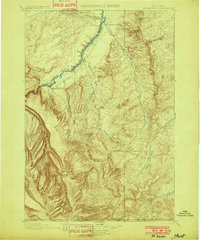 1901 St. Xavier1901 Print · USGSBig Horn County at the turn of the century shows a frontier landscape shaped by military history and the early years of the Crow Reservation. Researchers can trace the path of the Old Bozeman Military Road past the Site of Old Fort C. F. Smith and the St. Xavier Mission.4 unique versions available
 - 1954 Map of Hardin, 1964 Print
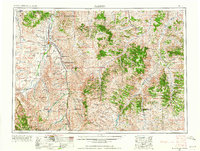 1954 Hardin1964 Print · USGSSoutheastern Montana is documented here during the mid-fifties, showing the vast tribal lands and historic battle sites before modern highway expansion. Researchers can trace the Chicago Burlington and Quincy rail line through Hardin or locate the Custer National Cemetery and Museum.2 unique versions available
 - 1957 Map of Hardin
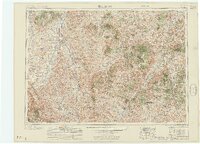 1957 Hardin1957 Print · USGSSoutheastern Montana in the mid-fifties reveals a landscape shaped by tribal lands and the historic Bighorn river valleys. Researchers can trace the Chicago Burlington and Quincy RR through Hardin and locate the National Cemetery and Custer Battlefield Monument.
 - 1958 Map of Hardin
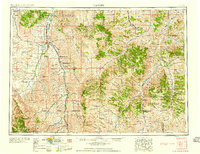 1958 Hardin1958 Print · USGSSoutheastern Montana in the mid-fifties presents a landscape defined by significant tribal lands and national monuments. Researchers can trace the geography of the Little Bighorn at Custer Battlefield National Monument and locate settlements like Lame Deer and Birney.
 - 1964 Map of Yellowtail Dam, 1967 Print
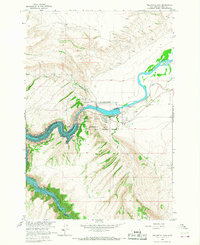 1964 Yellowtail Dam1967 Print · USGSBig Horn County was undergoing a major industrial shift in the mid-sixties as the newly completed dam reshaped the canyon floor. Researchers can locate the Fort Smith Ruins, trace the Big Horn Canal, and see the early footprint of Fort Smith.2 unique versions available
 - 1980 Map of Lodge Grass, 1981 Print
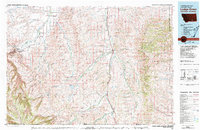 1980 Lodge Grass1981 Print · USGSThe Crow Indian Reservation and the Montana-Wyoming borderlands are captured here in the early eighties. Researchers can trace the Burlington Northern rail line through valley settlements like Lodge Grass, Wyola, and Aberdeen.2 unique versions available
End of results
Showing maps 1-6 of 6
Frequently asked questions
- What are the different types of historical maps available for Fort Smith?
- What is the oldest map of Fort Smith?
- Where can I purchase historical maps of Fort Smith for my home or office?
- Where can I download high-res historical maps of Fort Smith?
- Are there historical topographic maps available for Fort Smith?
- Is there historical aerial imagery available for Fort Smith?
- Where are historical maps of Fort Smith sourced from?