1900s (20th Century) Maps of Sugar Hill, New Hampshire
Explore 24 historic maps of Sugar Hill from the 1900s (20th Century). These maps offer a rare glimpse into what life looked like during the 1900s — showing old roads, neighborhoods, homes, and landmarks that have changed or disappeared over time.
Whether you're researching your family's past, planning a metal detecting trip, or studying how Sugar Hill's landscape evolved across the 1900s, these high-resolution maps are a powerful tool for exploring the history of this region.
- Focus on a specific era: All maps on this page are from the 1900s, giving you a focused view of this time period.
- See what’s changed: Compare century-old streets, trails, and buildings to today's modern landscape using overlays and satellite layers.
- Research with precision: Use these maps for genealogy, historical research, land use analysis, or educational projects.
- View, download, or print: Maps are fully viewable online in high resolution, and can be downloaded or printed for your own records.
Start exploring Sugar Hill's history through authentic maps from the 1900s. This is your window into the past.
Sugar Hill, NH maps
(24)- 1900 Map of Whitefield
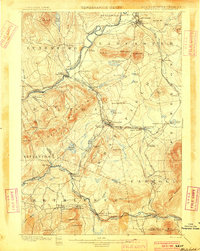 1900 Whitefield1900 Print · USGSWhite Mountains rail and tourism reached a peak at the turn of the century, as seen in this 1897 survey. Trace the old junctions and grand hotels of the era, from the Mount View House to the busy tracks at Whitefield Junction and Wing Road.5 unique versions available
 - 1929 Map of Moosilauke, 1959 Print
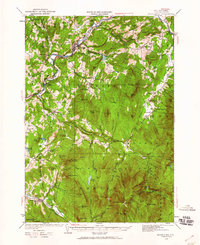 1929 Moosilauke1959 Print · USGSGrafton County's upland townships and the White Mountain National Forest are shown here in the late twenties during a period of mountain transition. Locate family landmarks and vanished crossroads like Oliverian Sta, Swiftwater, and several rural schools including Brier Hill Sch.
 - 1929 Map of Franconia, 1963 Print
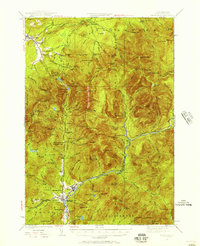 1929 Franconia1963 Print · USGSThe White Mountains come alive in the late 1920s, showing the early infrastructure of logging and tourism before modern highway expansions. Trace the Boston and Maine RR into Lincoln, or locate local landmarks like The Profile and the Profile Golf Club.2 unique versions available
 - 1931 Map of Littleton
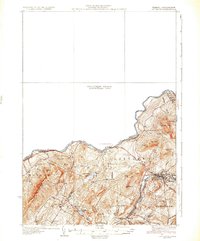 1931 Littleton1931 Print · USGSUpper Connecticut River Valley life is recorded here in the early thirties, just as aerial photography began to modernize topographic surveying. Genealogists can locate family-named hills and district schools like the Walker Hill Sch and Gilmanton Sch.2 unique versions available
 - 1932 Map of Franconia
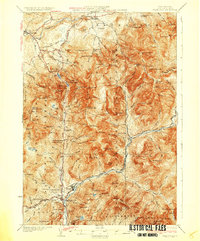 1932 Franconia1932 Print · USGSThe White Mountains in the early 1930s reveal a landscape caught between industrial timbering and the rise of mountain tourism. Researchers can trace the path of the Logging RR or locate family landmarks like the Russell Farm and Fairview.5 unique versions available
 - 1932 Map of Littleton
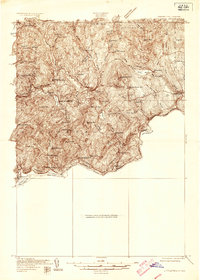 1932 Littleton1932 Print · USGSThe Upper Connecticut River valley and the hills of Vermont's Northeast Kingdom appear here in the early thirties. Trace family connections through numerous rural schoolhouses like Sugar Hill Sch or locate the old Kirby Mtn Quarries and the original path of the Maine Central Railroad.3 unique versions available
 - 1932 Map of Moosilauke
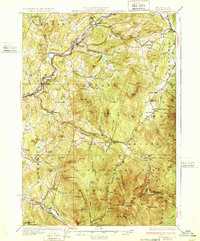 1932 Moosilauke1932 Print · USGSGrafton County is captured in the early thirties as a hub of mountain recreation and rail transport within the White Mountain National Forest. Genealogists and hikers can trace early routes of the Appalachian Trail and locate family landmarks like Moulton Hill Cemetery or Pettyboro Sch.5 unique versions available
 - 1935 Map of Littleton
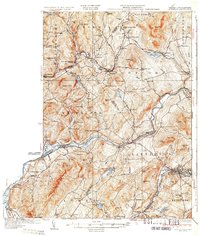 1935 Littleton1935 Print · USGSThe Upper Connecticut River Valley comes alive in the mid-1930s, showing the borderlands of Vermont and New Hampshire during a period of hydroelectric and rail expansion. Researchers can trace the legacy of local education and industry through sites like the Kirby Mtn Quarries, the Frank D. Comerford Hydro-Electric Plant, and the Slate Ledge Sch.4 unique versions available
 - 1935 Map of Whitefield
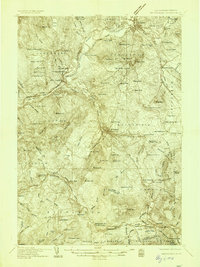 1935 Whitefield1935 Print · USGSThe White Mountains region in the mid-1930s shows a landscape of busy rail junctions and early aviation fields. Trace old family plots at Baptist Hill Cem or locate vanished structures near Mill Village and Quebec Junction.4 unique versions available
 - 1938 Map of Whitefield
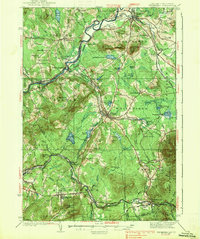 1938 Whitefield1938 Print · USGSCoos County at the end of the Great Depression was a landscape of mountain rail junctions and valley farms. Trace the vanished railroad stops at Quebec Junction, locate family homesteads near Baptist Hill Sch, or find the CCC Camp at Pierce Bridge.3 unique versions available
 - 1950 Map of Lewiston
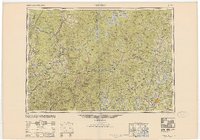 1950 Lewiston1950 Print · USGSThe Maine and New Hampshire borderlands come alive in this post-war survey of the White Mountains and Androscoggin valley. Genealogists and historians can trace rail lines like the Maine Central Railroad and find high-altitude landmarks from Mount Washington to Bretton Woods.2 unique versions available
 - 1956 Map of Lewiston, 1975 Print
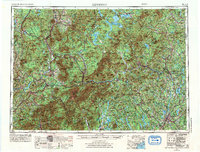 1956 Lewiston1975 Print · USGSThe Northern New England interior is documented here in the mid-fifties, from the industrial Androscoggin River to the high peaks of the White Mountains. Trace the Grand Trunk Railway through mountain passes or locate family landmarks near Sabbathday Lake and Bretton Woods.
 - 1961 Map of Lewiston
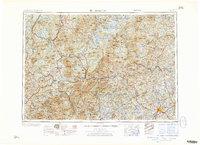 1961 Lewiston1961 Print · USGSWestern Maine and the White Mountains appear here during the early sixties, showing the industrial river towns and vast timberlands before the modern interstate era. Genealogists and historians can trace the Grand Trunk RR through Berlin or locate landmarks like Old Speck Mountain and Elephant Mountain.
 - 1962 Map of Lewiston
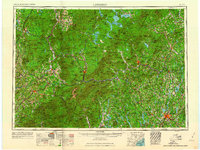 1962 Lewiston1962 Print · USGSThe industrial river valleys and high peaks of Maine and New Hampshire define the region in the early sixties. Trace the rail-and-river network from Lewiston to the White Mountains, passing through mill towns like Berlin and Rumford.
 - 1967 Map of Franconia, 1973 Print
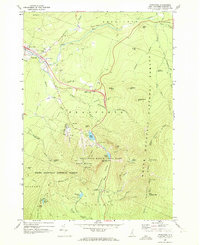 1967 Franconia1973 Print · USGSGrafton County is shown during a period of high-mountain recreation and road development in the late sixties. Researchers can trace the legendary Old Man of the Mountain, find Franconia College, and locate the historic Elmwood Cem.3 unique versions available
 - 1967 Map of Sugar Hill, 1973 Print
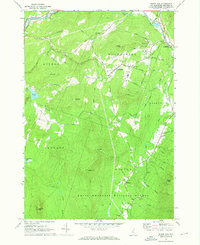 1967 Sugar Hill1973 Print · USGSGrafton County's upland terrain is documented here in the mid-1960s, showing the intersection of mountain life and the White Mountain National Forest. Researchers can locate family plots at Sunnyside Cem, trace the Boston and Maine rail line, or explore the village of Sugar Hill.3 unique versions available
 - 1969 Map of Lewiston
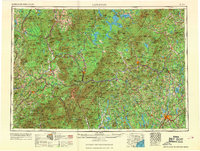 1969 Lewiston1969 Print · USGSThe northern New England highlands come into focus during the mid-fifties, showing the vital rail and river networks connecting industrial centers to the deep woods. Researchers can trace the path of the Grand Trunk RR or locate landmarks like Mt Washington and Rangeley Lake.
 - 1971 Map of Littleton, 1973 Print
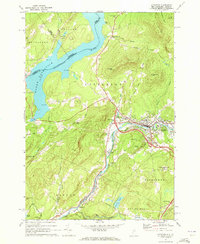 1971 Littleton1973 Print · USGSLittleton and the Ammonoosuc River valley appear here in the early 1970s as modern interstates began to intersect with older rail and river economies. Researchers can trace family sites at North Littleton Cemetery or follow the Boston and Maine line through Barrett.3 unique versions available
 - 1982 Map of Bethlehem, 1983 Print
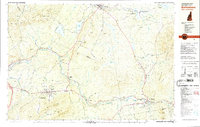 1982 Bethlehem1983 Print · USGSUpper Grafton and Coos County are shown in the early eighties as the mountain rail corridors still shaped local life. Genealogists and hikers can trace old family burial sites like Burns Cem, follow the Boston and Maine Railroad, or locate the Twin Mountain Fish Hatchery.
 - 1986 Map of Mount Washington
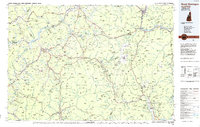 1986 Mount Washington1986 Print · USGSThe northern New England highlands are shown here in the mid-eighties, centered on the high peaks and river valleys of the New Hampshire borderlands. Researchers can trace historic transportation lines like the Mount Washington Cog Railway and the Maine Central Railroad near Gorham and Lancaster.
 - 1988 Map of Mount Washington, 1989 Print
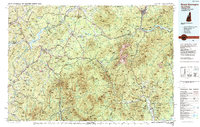 1988 Mount Washington1989 Print · USGSThe New Hampshire high country in the late 1980s is defined by its iconic peaks and the legacy of mountain tourism. Trace the routes of the historic Mount Washington Cog Railway and the Maine Central RR through the gaps of Crawford Notch State Park.
 - 1995 Map of Sugar Hill, 2000 Print
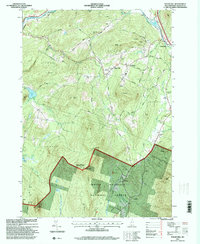 1995 Sugar Hill2000 Print · USGSThe hills of Grafton County are captured here in the mid-1990s, showing the transition from the White Mountain National Forest to the settlements of Sugar Hill and Franconia. Local history researchers can trace family landmarks and burial grounds at Sunnyside Cemetery or Willow Cemetery, alongside infrastructure like the Franconia Airport.
 - 1995 Map of Franconia, 2000 Print
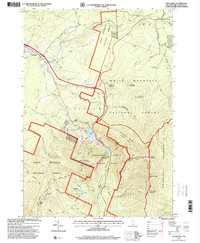 1995 Franconia2000 Print · USGSGrafton County's mountain passes and alpine trails are captured here during the 1990s, showcasing a landscape of high-altitude recreation and conservation. Trace the path of the Appalachian Trail past the Old Man of the Mountain and the historic Greenleaf Hut.
 - 1995 Map of Bethlehem, 2000 Print
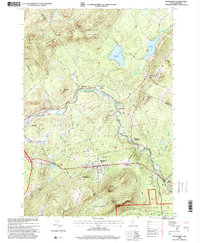 1995 Bethlehem2000 Print · USGSThe Ammonoosuc River valley in the mid-nineties shows a landscape of mountain forests and historic resort-era settlements. Researchers can locate family plots at Maple Street Cemetery and trace the path of the Boston and Maine rail line through Wing Road and Pierce Bridge.
End of results
Showing maps 1-24 of 24
Top cities near Sugar Hill
- Saint Johnsbury historical maps
- Littleton historical maps
- Haverhill historical maps
- Lancaster historical maps
- Thornton historical maps
- Whitefield historical maps
See more
Frequently asked questions
- What are the different types of historical maps available for Sugar Hill?
- What is the oldest map of Sugar Hill?
- Where can I purchase historical maps of Sugar Hill for my home or office?
- Where can I download high-res historical maps of Sugar Hill?
- Are there historical topographic maps available for Sugar Hill?
- Is there historical aerial imagery available for Sugar Hill?
- Where are historical maps of Sugar Hill sourced from?