Old Maps of Franklin Township, New Jersey
Explore 60 old maps of Franklin Township, spanning from 1890 to today. These high-resolution historic maps reveal how streets, neighborhoods, landmarks, and natural features evolved over time — perfect for genealogy, metal detecting, research, and local history exploration.
What you can do with these maps:
- See how Franklin Township changed over time: Compare historical maps to modern-day views to trace roads, homesites, rail lines & more.
- View detailed metadata: Each map includes creators, publishers, year, scale, and archive source.
- Overlay maps with satellite & LiDAR: Visualize the past alongside modern tools to explore terrain & human change.
- Trusted historical sources: Maps sourced from the USGS, Library of Congress, and other archives.
- Access maps your way: View online, download high-res files, or order prints for personal or research use.
Start exploring old maps of Franklin Township to uncover forgotten places, hidden landmarks, and the deep history beneath your feet.
Franklin Township, NJ maps
(60)- 1890 Map of Hammonton
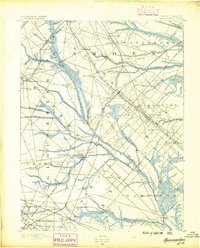 1890 Hammonton1890 Print · USGSThe South Jersey Pine Barrens emerge in the late nineteenth century as a complex network of rail lines and agrarian outposts. Genealogists and local historians can trace the foundations of Hammonton, Williamstown, and vanished stops like Banzard Station and New Germany.
 - 1890 Map of Glassboro
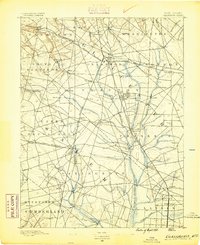 1890 Glassboro1890 Print · USGSSouth Jersey was a thriving network of rail-side towns and mills in the late nineteenth century. Genealogists and historians can trace family roots through settlements like Pitman Grove or locate long-standing industry at Ewan's Mills and Frie's Mill.2 unique versions available
 - 1894 Map of Hammonton
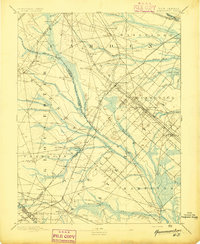 1894 Hammonton1894 Print · USGSHammonton and the surrounding Pine Barrens appear here in the late nineteenth century as a thriving agricultural and railroad crossroads. Genealogists and historians can trace early property hubs like the Fruit Growers Union, industrial sites such as Pancoast Mill, and the rail junctions at Winslow Junction.
 - 1898 Map of Glassboro
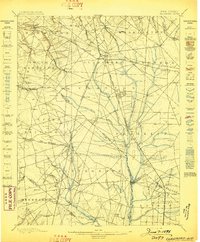 1898 Glassboro1898 Print · USGSSouthern New Jersey's rail-and-river network is frozen in time just before the turn of the century. Trace family roots and vanished depots through Glassboro, the crossroads at Elmer, and the winding Maurice River during this era of rapid growth.6 unique versions available
 - 1898 Map of Hammonton
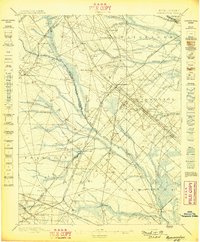 1898 Hammonton1898 Print · USGSAtlantic and Camden counties are captured here in the late nineteenth century as the Pine Barrens were transformed by fruit farming and a massive rail network. Researchers can trace the legacy of early industry and transport at Fruit Growers Union, Winslow Junction, and the historic Waterford Works.3 unique versions available
 - 1900 Map of Rancocas
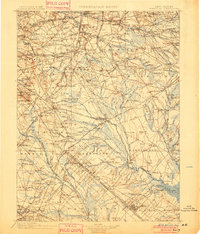 1900 Rancocas1900 Print · USGSSouthern New Jersey at the turn of the century reveals a land of timber, mills, and emerging rail junctions. Genealogists and historians can trace the locations of family-owned landmarks like Jennings Mill, Ballingers Mill, and early settlements such as Colemantown and Fellowship.2 unique versions available
 - 1901 Map of Camden
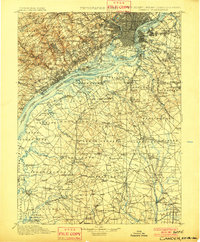 1901 Camden1901 Print · USGSThe Delaware River valley at the turn of the century shows a bustling corridor of early industrial growth and established mill towns. Researchers can trace the heritage of local industry at Sycamore Mills or locate early settlements like Penns Grove and Village Green.3 unique versions available
 - 1919 Map of Hammonton
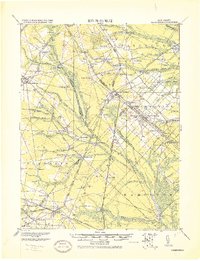 1919 Hammonton1919 Print · USGSThe Pine Barrens of the early twentieth century are defined here by a massive web of competing railroads and small mill settlements. Researchers can trace historic family landmarks and transit hubs like Winslow Junction, Iron Mills, and Pestletown during the region's peak agricultural era.
 - 1942 Map of Camden
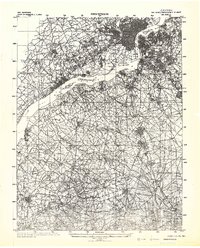 1942 Camden1942 Print · USGSThe Philadelphia and Camden metropolitan corridor is captured here at the height of the Second World War. Genealogists and historians can trace rail networks like the Reading R.R. and locate communities from Swedesboro to Merchantville.
 - 1942 Map of Hammonton
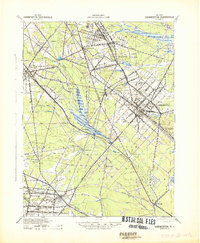 1942 Hammonton1942 Print · USGSAtlantic and Camden counties come alive in the early 1940s, showing the South Jersey Pinelands just as the modern highway system began to overlap the old rail networks. Trace historical property lines and local hubs like Winslow Junction, Blue Anchor, and the waters of Hammonton Lake.
 - 1946 Map of Wilmington, 1948 Print
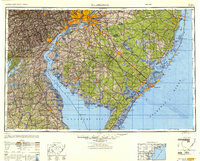 1946 Wilmington1948 Print · USGSThe Delaware Valley and Jersey Shore emerge in this mid-century portrait of a region defined by river commerce and seaside growth. Genealogists and historians can trace the rail networks of the Pennsylvania Railroad, locate early airfields like Dover Airpark, and find river defenses at Fort Delaware.2 unique versions available
 - 1948 Map of Glassboro
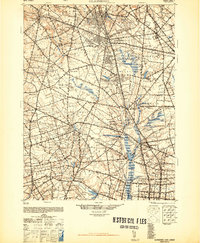 1948 Glassboro1948 Print · USGSSouth Jersey's agricultural heartland and transit corridors are captured here just after the war, showing the area's transition into a modern produce hub. Genealogists can trace family names and small settlements like Brotmanville, Husted Station, and Seabrook Farms.3 unique versions available
 - 1948 Map of Hammonton
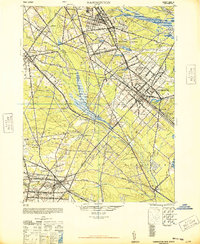 1948 Hammonton1948 Print · USGSPost-war South Jersey is defined here by the meeting of rail and road, as the White Horse Pike cuts through the Pinelands. Trace the development of communities like Hammonton and the critical rail hub at Winslow Junction.2 unique versions available
 - 1953 Map of Newfield, 1954 Print
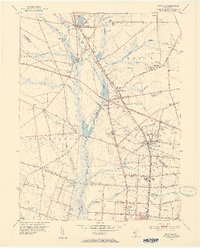 1953 Newfield1954 Print · USGSSouthern New Jersey's transition from agricultural hinterland to rail-connected boroughs is captured here in the early fifties. Genealogists and researchers can trace family roots through Alliance, Brotmanville, and landmarks like Rose Hill Cem and Zion Ch.7 unique versions available
 - 1953 Map of Pitman East, 1954 Print
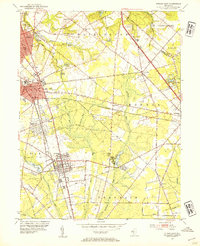 1953 Pitman East1954 Print · USGSGloucester County at mid-century shows a mix of growing college towns and rural crossroads connected by the Pennsylvania-Reading Seashore Lines. Local historians can trace the foundations of Glassboro and Pitman, or locate smaller landmarks like Fries Mill, Bunker Hill Ch, and the State Teachers College.2 unique versions available
 - 1953 Map of Pitman West, 1954 Print
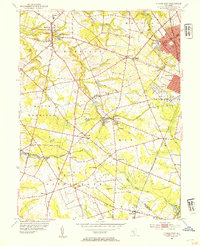 1953 Pitman West1954 Print · USGSSouth Jersey's farming heartland and growing boroughs are captured here in the early fifties. Genealogists can trace family roots through Mullica Hill, Aura, and Hardingville, or locate historic sites like Siloam Ch and Richwood Academy.2 unique versions available
 - 1953 Map of Elmer, 1954 Print
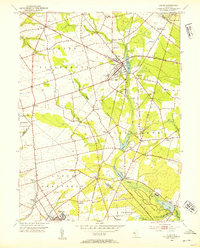 1953 Elmer1954 Print · USGSSalem County’s agricultural and rail-dependent heartland is captured in the early fifties during a peak of rural development. Researchers can trace family roots through the Monroeville Synagogue, Chestnut Grove Cem, and the specialized settlements at Seabrook and Deerfield Street.5 unique versions available
 - 1953 Map of Williamstown, 1954 Print
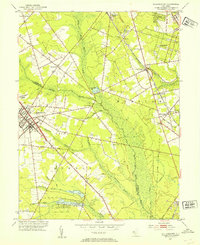 1953 Williamstown1954 Print · USGSThe Pine Barrens of South Jersey meet the growing hubs of Gloucester and Camden counties in the early fifties. Researchers can trace family sites at Hopewell Cem, follow the PENNSYLVANIA-READING SEASHORE LINES, or locate vanished rail infrastructure like Taggart Siding.
 - 1953 Map of Buena, 1954 Print
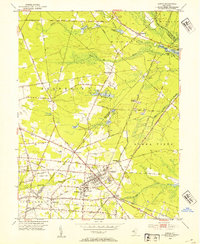 1953 Buena1954 Print · USGSIn the early fifties, South Jersey was a patchwork of small truck farms and rural crossroads centered around Landisville and Minotola. Trace local history through landmarks like St Marys Cemetery, the Downstown Airfield, and Folsom.4 unique versions available
 - 1955 Map of Wilmington
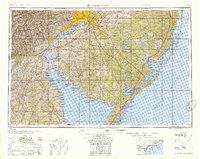 1955 Wilmington1955 Print · USGSThe Delaware Valley and Jersey Shore are seen here during the mid-fifties era of rapid suburban expansion and highway development. You can trace the path of the New Jersey Turnpike, locate the Fort Dix Military Reservation, or explore the rail networks of the Pennsylvania Railroad.
 - 1957 Map of Wilmington
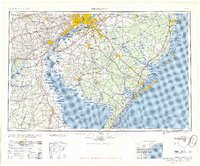 1957 Wilmington1957 Print · USGSThe mid-Atlantic coastal plain comes alive in the mid-fifties as the New Jersey Turnpike and Garden State Parkway redefine travel. Researchers can trace the rail-to-road transition and find landmarks like Ship John Shoal Light and the Fort Dix Military Reservation.2 unique versions available
 - 1959 Map of Wilmington
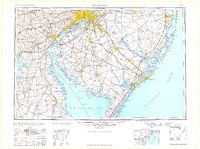 1959 Wilmington1959 Print · USGSThe Delaware Valley and Jersey Shore are seen here in the late fifties, during a period of massive suburban and highway expansion. Researchers can trace mid-century infrastructure like the N J Turnpike or locate coastal landmarks from Barnegat Bay to the Maurice River.3 unique versions available
 - 1966 Map of Williamstown, 1968 Print
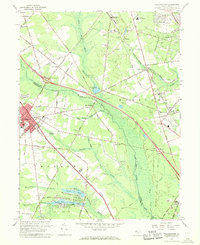 1966 Williamstown1968 Print · USGSSouth Jersey's shifting landscape is evident in the 1960s as major new arteries bisect traditional farming and rail communities. Genealogists and local historians can trace the footprint of Williamstown, Chesilhurst, and Sicklerville alongside landmarks like Hopewell Cem and St Johns Ch.3 unique versions available
 - 1966 Map of Pitman East, 1968 Print
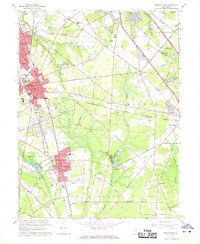 1966 Pitman East1968 Print · USGSMid-century Gloucester County comes into focus as the growth of Glassboro and its college meets the rural reaches of Monroe and Franklin. Researchers can trace the Pennsylvania-Reading Seashore Lines or locate family sites like Fries Mill and Hill Crest Memorial Park.3 unique versions available
 - 1966 Map of Wilmington, 1968 Print
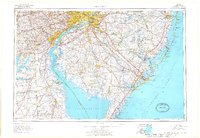 1966 Wilmington1968 Print · USGSThe Delaware Valley and Jersey Shore are seen here in the mid-1960s, documenting a landscape of dense industrial cities and emerging coastal resorts. Researchers can trace the sprawling rail networks of the Pennsylvania Railroad or locate landmarks like Fort Dix Military Reservation and Elk Neck State Park.4 unique versions available
Showing maps 1-25 of 60
Top cities near Franklin Township
- Vineland historical maps
- Washington Township historical maps
- Sicklerville historical maps
- Winslow Township historical maps
- Monroe Township historical maps
- Deptford Township historical maps
See more
Top neighborhoods of Franklin Township
- Franklinville historical maps
- Fries Mill historical maps
- Iona historical maps
- Janvier historical maps
- Malaga historical maps
- Piney Hollow historical maps
See more
Frequently asked questions
- What are the different types of historical maps available for Franklin Township?
- What is the oldest map of Franklin Township?
- Where can I purchase historical maps of Franklin Township for my home or office?
- Where can I download high-res historical maps of Franklin Township?
- Are there historical topographic maps available for Franklin Township?
- Is there historical aerial imagery available for Franklin Township?
- Where are historical maps of Franklin Township sourced from?