Old Maps of Fort Sumner, New Mexico
Explore 15 old maps of Fort Sumner, spanning from 1954 to today. These high-resolution historic maps reveal how streets, neighborhoods, landmarks, and natural features evolved over time — perfect for genealogy, metal detecting, research, and local history exploration.
What you can do with these maps:
- See how Fort Sumner changed over time: Compare historical maps to modern-day views to trace roads, homesites, rail lines & more.
- View detailed metadata: Each map includes creators, publishers, year, scale, and archive source.
- Overlay maps with satellite & LiDAR: Visualize the past alongside modern tools to explore terrain & human change.
- Trusted historical sources: Maps sourced from the USGS, Library of Congress, and other archives.
- Access maps your way: View online, download high-res files, or order prints for personal or research use.
Start exploring old maps of Fort Sumner to uncover forgotten places, hidden landmarks, and the deep history beneath your feet.
Fort Sumner, NM maps
(15)- 1954 Map of Fort Sumner, 1964 Print
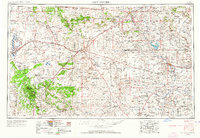 1954 Fort Sumner1964 Print · USGSEast-central New Mexico's ranching and rail heartland is captured here in the mid-1950s, centered on the strategic junctions of the high plains. Researchers can trace the development of early highway networks and rail towns like Vaughn, Fort Sumner, and the copper operations at Guadalupe Mine.3 unique versions available
 - 1958 Map of Fort Sumner
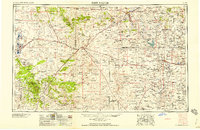 1958 Fort Sumner1958 Print · USGSEast-central New Mexico in the mid-fifties is captured here as a sprawling landscape of high mesas and cattle ranching. Researchers can trace the convergence of the Southern Pacific railroad at Vaughn and locate family landmarks like Borica School or Marquez Ranch.
 - 1965 Map of Fort Sumner West, 1968 Print
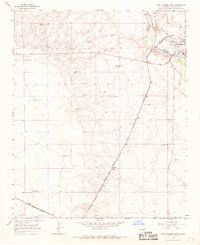 1965 Fort Sumner West1968 Print · USGSDe Baca County ranching and rail infrastructure are on full display in the mid-sixties as the Atchison Topeka and Santa Fe cuts across the plains. Genealogists and local historians can locate specific family outposts like Steele Ranch, Vaughn Ranch, and Jensen Well.2 unique versions available
 - 1968 Map of Fort Sumner East, 1971 Print
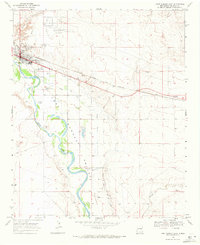 1968 Fort Sumner East1971 Print · USGSThe Pecos River valley in the late sixties shows a landscape of rail-and-river dependency in De Baca County. Genealogists and historians can trace the Atchison Topeka and Santa Fe line, local landmarks like Vaughn Ranch, and three separate burial sites including Old Ft Sumner Cem.2 unique versions available
 - 1979 Map of Fort Sumner
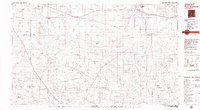 1979 Fort Sumner1979 Print · USGSThe Pecos River valley in the late seventies reveals a landscape shaped by irrigation and the rail lines of the Atchison Topeka and Santa Fe. Genealogists and historians can trace small communities like Taiban and Yeso alongside landmarks like The Caprock.
 - 2010 Map of Fort Sumner West, 2010 Print
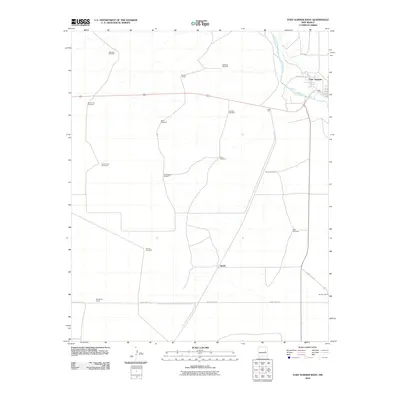 2010 Fort Sumner West2010 Print · USGSThe Pecos River valley at the turn of the millennium reveals a landscape of isolated ranching outposts and vital water infrastructure. Researchers can trace land ownership and development through named sites like Steele Ranch, McCollum Ranch, and the New Eclipse Windmill.
 - 2010 Map of Fort Sumner East, 2010 Print
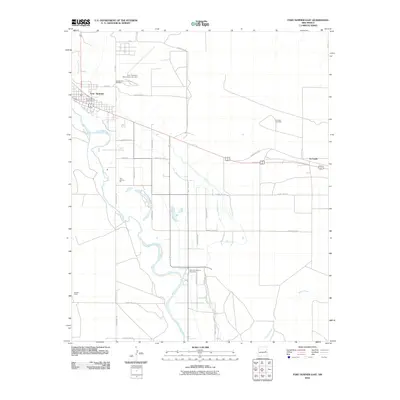 2010 Fort Sumner East2010 Print · USGSDe Baca County at the start of the twenty-first century reveals a landscape shaped by the Pecos River and frontier history. Researchers can locate significant burial sites like the Old Fort Sumner Cemetery or trace landmarks such as La Lande and Billy The Kid Rd.
 - 2013 Map of Fort Sumner West, 2013 Print
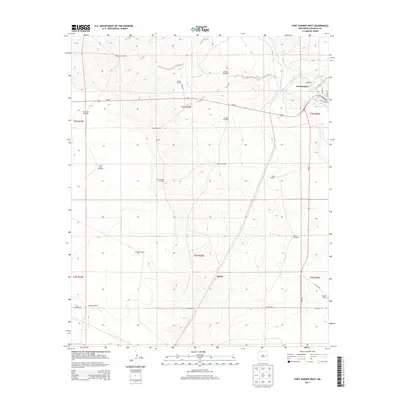 2013 Fort Sumner West2013 Print · USGSDe Baca County ranching and water management are front and center in this modern survey of the High Plains near Fort Sumner. Researchers can trace old family holdings and homesteads through a dense network of landmarks including Steele Ranch, Agudo, and the Martinez Windmill.
 - 2013 Map of Fort Sumner East, 2013 Print
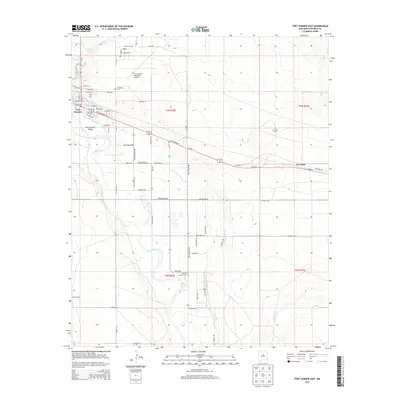 2013 Fort Sumner East2013 Print · USGSIrrigation and frontier history meet along the Pecos River valley in the early twenty-first century. Researchers can locate several burial grounds like Old Ft Sumner Cem and trace the vital waters of the Fort Sumner Main Canal past La Lande.
 - 2017 Map of Fort Sumner East, 2017 Print
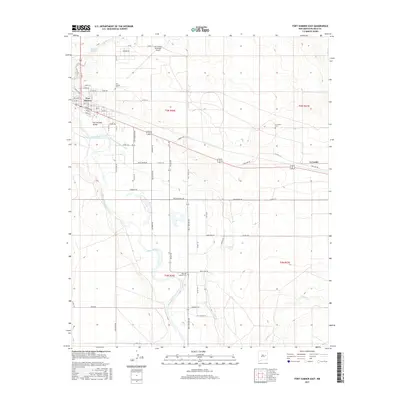 2017 Fort Sumner East2017 Print · USGSFort Sumner and the surrounding Pecos River valley are documented here in the early twenty-first century. Genealogists and historians can locate family burial sites at the Old Fort Sumner Cem or trace local landmarks along Billy the Kid Rd and the Pecos River.
 - 2017 Map of Fort Sumner West, 2017 Print
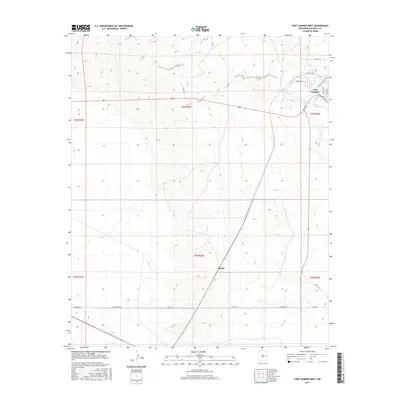 2017 Fort Sumner West2017 Print · USGSEastern New Mexico's river-valley landscape is captured here in the late twenty-tens, centered on the western edges of a famous cattle-country hub. Researchers can trace the intersection of water and transport along the Pecos River, identifying local landmarks like Agudo and Santa Fe Ave.
 - 2020 Map of Fort Sumner West, 2020 Print
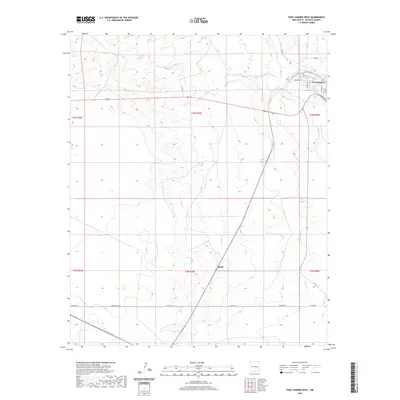 2020 Fort Sumner West2020 Print · USGSFort Sumner and the surrounding De Baca County plains are shown in detail during the early twenty-first century. Researchers can trace local landmarks like the Pecos River and Trujillo Creek, or follow the routes of Steel Rd and Ricardo Rd.
 - 2020 Map of Fort Sumner East, 2020 Print
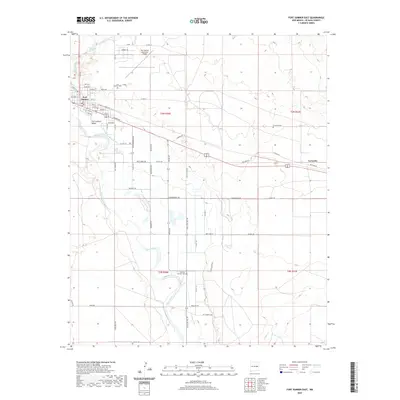 2020 Fort Sumner East2020 Print · USGSFort Sumner and the surrounding Pecos River valley are captured in this modern survey of De Baca County. Genealogists and historians can trace the local cemetery sites, including Old Fort Sumner Cem and La Lande Cem, or follow the path of Billy The Kid Dr.
 - 2023 Map of Fort Sumner East, 2023 Print
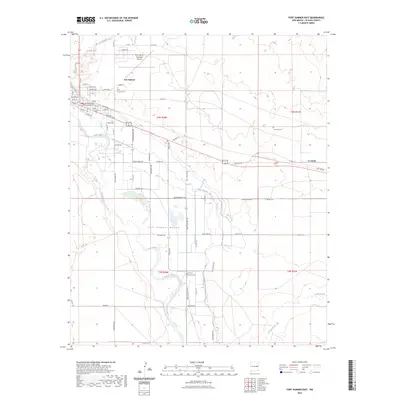 2023 Fort Sumner East2023 Print · USGSDe Baca County in the early twenty-first century remains defined by the legacy of the Pecos and the history of its namesake settlement. Researchers can locate specific burial sites at the Old Fort Sumner Cem or trace local landmarks like the De Baca County Courthouse and La Lande.
 - 2023 Map of Fort Sumner West, 2023 Print
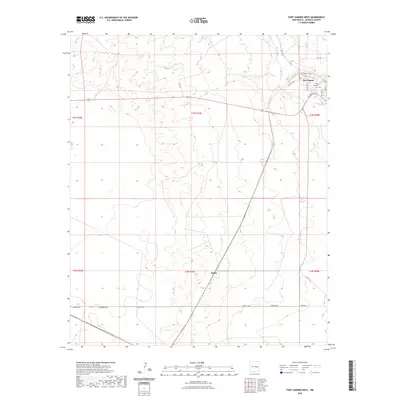 2023 Fort Sumner West2023 Print · USGSThe Pecos River valley and the western fringes of Fort Sumner are documented in this contemporary survey of the New Mexico plains. Researchers can trace local landmarks like Saint Anthony Cem or follow the rail-side settlement at Agudo and the path of Ricaedo Rd.
End of results
Showing maps 1-15 of 15
Frequently asked questions
- What are the different types of historical maps available for Fort Sumner?
- What is the oldest map of Fort Sumner?
- Where can I purchase historical maps of Fort Sumner for my home or office?
- Where can I download high-res historical maps of Fort Sumner?
- Are there historical topographic maps available for Fort Sumner?
- Is there historical aerial imagery available for Fort Sumner?
- Where are historical maps of Fort Sumner sourced from?