Old Maps of Orchard Park, New York
Explore 43 old maps of Orchard Park, spanning from 1894 to today. These high-resolution historic maps reveal how streets, neighborhoods, landmarks, and natural features evolved over time — perfect for genealogy, metal detecting, research, and local history exploration.
What you can do with these maps:
- See how Orchard Park changed over time: Compare historical maps to modern-day views to trace roads, homesites, rail lines & more.
- View detailed metadata: Each map includes creators, publishers, year, scale, and archive source.
- Overlay maps with satellite & LiDAR: Visualize the past alongside modern tools to explore terrain & human change.
- Trusted historical sources: Maps sourced from the USGS, Library of Congress, and other archives.
- Access maps your way: View online, download high-res files, or order prints for personal or research use.
Start exploring old maps of Orchard Park to uncover forgotten places, hidden landmarks, and the deep history beneath your feet.
Orchard Park, NY maps
(43)- 1894 Map of Buffalo
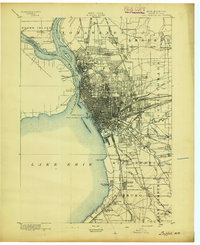 1894 Buffalo1894 Print · USGSBuffalo and its lakefront suburbs are captured at a peak of maritime and rail expansion in the 1890s. Genealogists and local historians can trace the early streets of Kenmore, the path of the Erie Canal, and landmarks like the Fort Erie (Ruins).2 unique versions available
 - 1901 Map of Buffalo
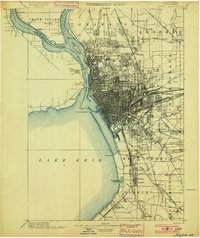 1901 Buffalo1901 Print · USGSBuffalo was a bustling transportation hub at the dawn of the century, where the Great Lakes met the canal and rail networks. Genealogists can trace family roots in early suburbs like Kenmore or locate ancestral sites near Pine Hill Cemetery and Harlem Station.12 unique versions available
 - 1905 Map of Depew
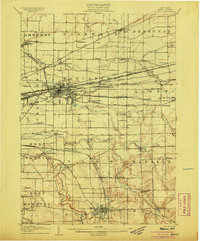 1905 Depew1905 Print · USGSEastern Erie County at the height of the steam era reveals a complex network of major rail lines and rural hamlets. Genealogists and historians can trace old property lines and rail stations like Looneyville, Grimesville, and the early development of Depew.6 unique versions available
 - 1905 Map of Eden, 1961 Print
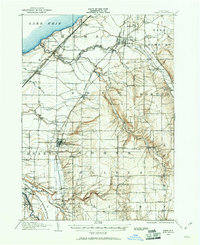 1905 Eden1961 Print · USGSWestern New York at the turn of the century reveals a landscape of growing rail towns and lakefront retreats. Genealogists can trace family roots in North Collins or follow the early tracks of the Lake Shore and Michigan Southern.
 - 1907 Map of Eden
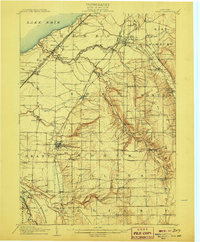 1907 Eden1907 Print · USGSSouthern Erie County at the turn of the century reveals a landscape of growing towns and busy rail lines carving through deep creek valleys. Genealogists and historians can trace family locations in North Collins, Eden Valley, and the Cattaraugus Indian Reservation.4 unique versions available
 - 1925 Map of Springville
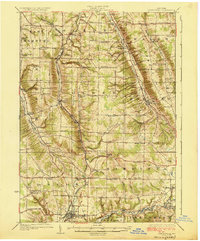 1925 Springville1925 Print · USGSSouthern Erie County in the mid-twenties shows a landscape of deep valleys and rail-connected villages before the expansion of modern highways. Genealogists can trace family footprints through dozens of district schools like Wheeler Hollow School and rural centers such as Sardinia and Griffins Mills.5 unique versions available
 - 1944 Map of Eden
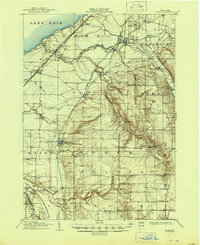 1944 Eden1944 Print · USGSCoastal Lake Erie and the inland valleys of Erie County are seen here during the mid-1940s. Genealogists can trace family footprints through the Cattaraugus Indian Reservation or old rail stops like Idlewood Sta and Lawton Sta.
 - 1944 Map of Hamburg
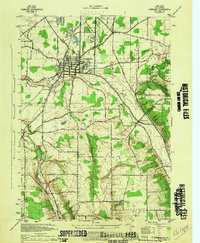 1944 Hamburg1944 Print · USGSHamburg and its surrounding valleys are captured here during the mid-1940s as the regional landscape balanced industry and recreation. Genealogists can trace family footprints near Eden Valley or explore the early layout of the Erie County Fairgrounds and Chestnut Ridge Park.
 - 1948 Map of Hamburg
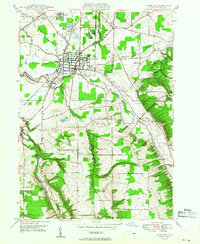 1948 Hamburg1948 Print · USGSSouthern Erie County was a mix of bustling rail hubs and rural dairy country just after the war. You can trace the path of the Erie RR through Hamburg, or locate family landmarks like the Erie County Fairgrounds and Chestnut Ridge Park.
 - 1948 Map of Depew, 1953 Print
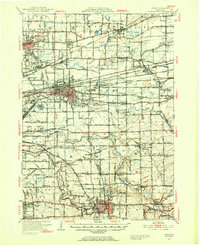 1948 Depew1953 Print · USGSErie County's industrial and civic heart comes into focus during this post-war era of rail and aviation expansion. Researchers can trace ancestral roots at Clarence Fillmore Cemetery or locate old schoolhouses like School No 1 and School No 8 across Harris Hill and Marilla.3 unique versions available
 - 1948 Map of Buffalo, 1958 Print
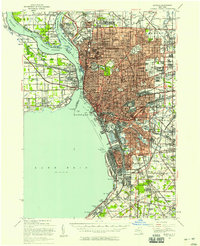 1948 Buffalo1958 Print · USGSThe Niagara Frontier during the post-war boom years shows the industrial might of the riverfront and the rapid growth of its suburbs. Genealogists and historians can trace neighborhood developments from Brighton Village to Orchard Park, locating landmarks like St Stanislaus Cem and the early Buffalo Airport.
 - 1948 Map of Buffalo SE, 1959 Print
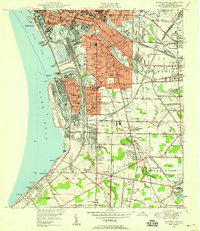 1948 Buffalo SE1959 Print · USGSThe Lake Erie shoreline and Buffalo's industrial southern frontier are captured here just after the war. Local historians can trace the rail-heavy landscape of Lackawanna or locate family sites near the Basilica Of Our Lady Of Victory and St Matthews Cem.
 - 1950 Map of Orchard Park
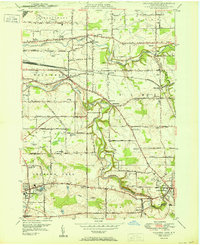 1950 Orchard Park1950 Print · USGSSoutheast of Buffalo in the early fifties, this region shows a landscape of small townships and emerging suburban hubs. Researchers can locate numerous local institutions like Michael Road School, trace the Pennsylvania RR, or find the historic Willink settlement.
 - 1950 Map of Buffalo SE
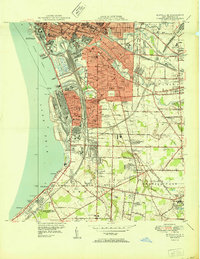 1950 Buffalo SE1950 Print · USGSLake Erie's industrial shoreline and the expanding suburbs of Erie County are captured here at mid-century. Researchers can trace the massive rail infrastructure and maritime landmarks like the South Buffalo Lighthouse or locate family sites at St Matthews Cem and the Basilica Of Our Lady Of Victory.
 - 1955 Map of Colden, 1957 Print
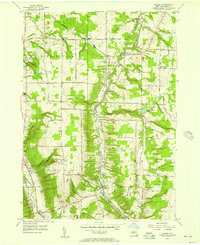 1955 Colden1957 Print · USGSErie County in the mid-fifties shows a landscape of deep creek valleys and rising ridges connected by the Baltimore and Ohio RR. Trace the footprints of West Falls, Colden, and Patchin, or locate family sites near Maple Wood Cem and St Martins Ch.4 unique versions available
 - 1960 Map of Buffalo
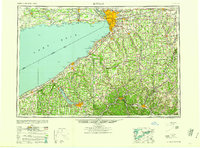 1960 Buffalo1960 Print · USGSWestern New York and the Niagara Peninsula thrive during the mid-twentieth century industrial peak. Genealogists and historians can trace family-named points and early settlements from Dunkirk Light to the Allegany Indian Reservation.
 - 1962 Map of Buffalo, 1980 Print
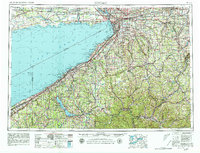 1962 Buffalo1980 Print · USGSThe Niagara Frontier and Western New York are captured here in the early sixties, showing the vital industrial and maritime nexus between the U.S. and Canada. Researchers can trace the path of the Welland Canal, locate the Allegany Indian Reservation, or find family sites near Chautauqua Lake.2 unique versions available
 - 1965 Map of Buffalo SE, 1967 Print
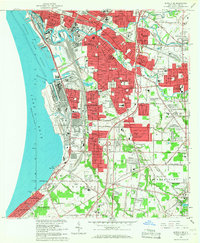 1965 Buffalo SE1967 Print · USGSThe southern suburbs of Buffalo come alive in the mid-sixties, from the industrial lakefront at Lackawanna to the growing reaches of Orchard Park. Genealogists and local historians can trace family roots through neighborhood landmarks like Holy Cross Cemetery and Immaculata Academy.
 - 1965 Map of Orchard Park, 1967 Print
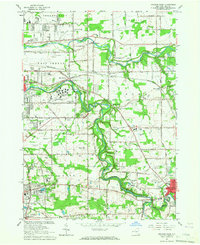 1965 Orchard Park1967 Print · USGSSuburban expansion meets established rural townships in 1960s Erie County as small hamlets began to coalesce. Genealogists can trace family footprints through numerous parish sites and settlements like Blossom, Duells Corner, and the West Seneca State School.4 unique versions available
 - 1965 Map of Hamburg, 1968 Print
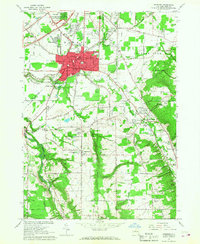 1965 Hamburg1968 Print · USGSErie County's southern suburbs were transitioning from rural townships to active residential communities in the mid-sixties. Genealogists and local historians can locate Hillcrest Cem, the Erie-Lackawanna rail line, and family landmarks like Schintzius Road.3 unique versions available
 - 1967 Map of Buffalo
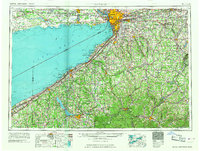 1967 Buffalo1967 Print · USGSWestern New York and the Lake Erie shoreline are shown here during the mid-1960s industrial peak. Researchers can trace the massive rail networks of the Erie Railroad, locate the Cattaraugus Indian Reservation, or find historic sites like Fort Erie.
 - 1973 Map of Buffalo
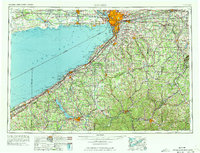 1973 Buffalo1973 Print · USGSWestern New York and Ontario's Golden Horseshoe meet in the early seventies, spanning from the industrial waterfronts of Buffalo to the hills of Allegany State Park. Trace the paths of the Welland Canal and Erie Lackawanna railroad through the lakefront towns of Dunkirk and Port Colborne.
 - 1984 Map of Buffalo, 1985 Print
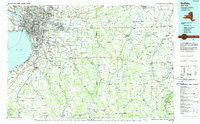 1984 Buffalo1985 Print · USGSWestern New York's industrial and transport hubs are in full view during the mid-eighties, from the Lake Erie waterfront to the Genesee Valley. Researchers can trace the legacy of the Erie Canal, find ancestral sites like Mount Calvary Cem, or locate the Attica Correctional Facility.2 unique versions available
 - 2010 Map of Orchard Park, 2010 Print
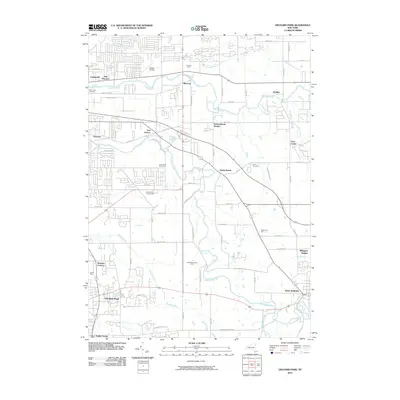 2010 Orchard Park2010 Print · USGSSoutheast of Buffalo in the early 2010s, this area shows a landscape defined by the winding Cazenovia Creek and growing suburban hamlets. Genealogists can trace family landmarks at Saint Johns Cemetery or explore the agricultural history of Peppermint Farms and Schrader Farm.
 - 2010 Map of Colden, 2010 Print
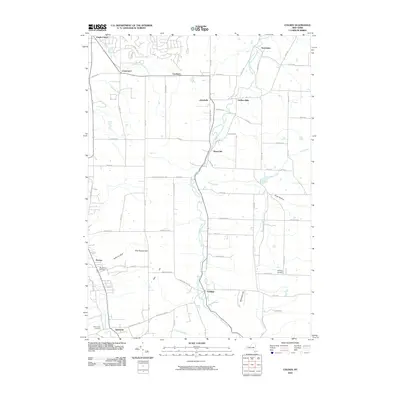 2010 Colden2010 Print · USGSSouthern Erie County hamlets thrive along the creek valleys and hillsides of the late two-thousands. Family historians can locate rural burial sites like Partridge Cemetery and trace the local geography of Colden, Griffins Mills, and the Anthony Gulf ravine.
Showing maps 1-25 of 43
Top cities near Orchard Park
- Buffalo historical maps
- Amherst historical maps
- Cheektowaga historical maps
- Tonawanda historical maps
- Hamburg historical maps
- West Seneca historical maps
See more
Top neighborhoods of Orchard Park
- Duells Corner historical maps
- Ellicott historical maps
- Webster Corners historical maps
- Loveland historical maps
- Windom historical maps
- Websters Corners historical maps
See more
Frequently asked questions
- What are the different types of historical maps available for Orchard Park?
- What is the oldest map of Orchard Park?
- Where can I purchase historical maps of Orchard Park for my home or office?
- Where can I download high-res historical maps of Orchard Park?
- Are there historical topographic maps available for Orchard Park?
- Is there historical aerial imagery available for Orchard Park?
- Where are historical maps of Orchard Park sourced from?