Old Maps of Dyker Heights, New York
Explore 60 old maps of Dyker Heights, spanning from 1889 to today. These high-resolution historic maps reveal how streets, neighborhoods, landmarks, and natural features evolved over time — perfect for genealogy, metal detecting, research, and local history exploration.
What you can do with these maps:
- See how Dyker Heights changed over time: Compare historical maps to modern-day views to trace roads, homesites, rail lines & more.
- View detailed metadata: Each map includes creators, publishers, year, scale, and archive source.
- Overlay maps with satellite & LiDAR: Visualize the past alongside modern tools to explore terrain & human change.
- Trusted historical sources: Maps sourced from the USGS, Library of Congress, and other archives.
- Access maps your way: View online, download high-res files, or order prints for personal or research use.
Start exploring old maps of Dyker Heights to uncover forgotten places, hidden landmarks, and the deep history beneath your feet.
Dyker Heights, New York maps
(60)- 1889 Map of Brooklyn
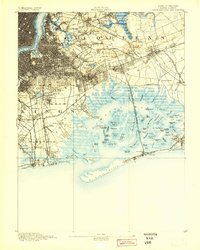 1889 Brooklyn1889 Print · USGSBrooklyn and Queens are shown here in the late nineteenth century as urban grids began to overtake the old farm townships. Genealogists and historians can trace defunct rail lines and early settlements like Winfield Junction, Hollis, and Canarsie Landing.
 - 1891 Map of Brooklyn
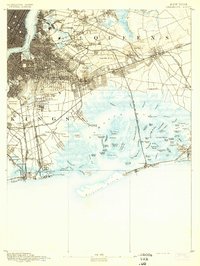 1891 Brooklyn1891 Print · USGSThe Brooklyn and Queens landscape of the early 1890s is captured here at a moment of intense rail-driven growth. Researchers can trace the original shoreline of Jamaica Bay and locate family history in the Navy Yard or at Evergreen Cemetery.
 - 1897 Map of Brooklyn, 1959 Print
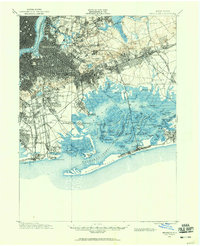 1897 Brooklyn1959 Print · USGSBrooklyn and Queens are captured in the late nineteenth century as rural townships began their rapid transformation into a dense urban landscape. Genealogists can locate family plots in Greenwood Cemetery or trace early neighborhood origins in New Utrecht and Flatbush.3 unique versions available
 - 1898 Map of Staten Island
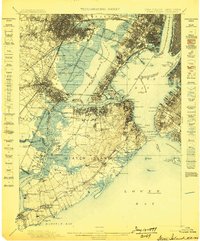 1898 Staten Island1898 Print · USGSGreater Staten Island and the industrial shores of New Jersey are captured during the peak of the Victorian maritime era. Genealogists can trace early neighborhood boundaries and landmarks like Moravian Cemetery, the Morris Canal, and the vanished industry of Linoleumville.
 - 1898 Map of Brooklyn
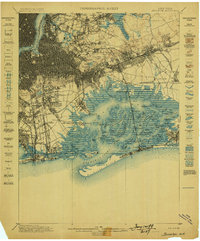 1898 Brooklyn1898 Print · USGSBrooklyn and Queens at the close of the nineteenth century reveal a landscape of growing commuter suburbs and vast, untouched tidal marshes. Genealogists and historians can trace old property boundaries near Greenwood Cemetery or follow the early rail lines through Winfield Junction and Jamaica.
 - 1900 Map of Passaic
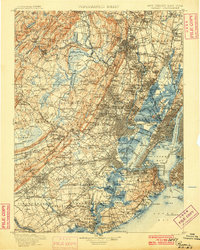 1900 Passaic1900 Print · USGSNorthern New Jersey and the New York Harbor are captured here at the close of the nineteenth century, showing a landscape defined by rail, river, and coastal defense. Researchers can trace the original path of the Morris Canal, locate Seton Hall College, and explore the batteries at Fort Wadsworth.
 - 1900 Map of Staten Island
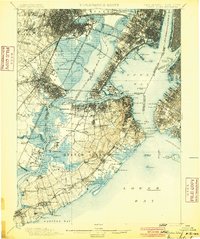 1900 Staten Island1900 Print · USGSThe New York and New Jersey harbor comes alive in the late Victorian era, showing Staten Island when small villages and defensive forts still defined the coastline. Trace family roots and vanished landmarks through Fort Wadsworth, the Morris Canal, and historic settlements like Rossville or Tottenville.10 unique versions available
 - 1900 Map of Brooklyn
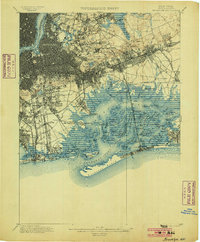 1900 Brooklyn1900 Print · USGSBrooklyn and Queens are shown here at the turn of the century as the urban grid begins to overtake rural villages and coastal marshes. Genealogists can locate family plots in Greenwood Cemetery or Evergreen Cemetery and trace early transit routes like the Electric R.R. and Kings Highway.11 unique versions available
 - 1905 Map of Passaic
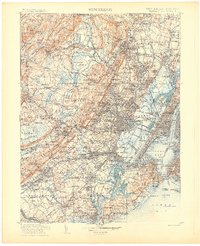 1905 Passaic1905 Print · USGSNorthern New Jersey and Staten Island appear here at a pivotal moment of early 20th-century growth and industrialization. Researchers can trace the development of transit hubs like Convent Sta. or locate legacy landmarks including Hillside Cemetery and the Moravian Cemetery.4 unique versions available
 - 1942 Map of Passaic
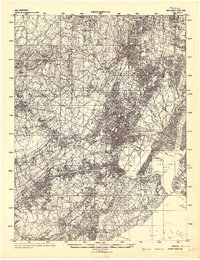 1942 Passaic1942 Print · USGSNorthern New Jersey and New York harbor appear in detail at the start of the war, showing a landscape of burgeoning suburbs and vital industry. Trace family roots and local history across the Passaic River valley, from Paterson to the Watchung Mountains.
 - 1944 Map of Newark, 1971 Print
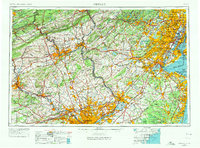 1944 Newark1971 Print · USGSThe industrial corridor from Philadelphia to New York was in a period of massive transition during the mid-forties. Genealogists and researchers can trace the rail lines of the Lehigh Valley RR, locate military installations like Picatinny Arsenal, and explore the early sprawl near Levittown.5 unique versions available
 - 1947 Map of Brooklyn
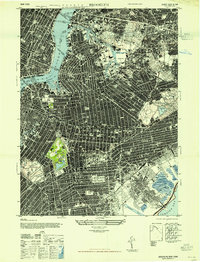 1947 Brooklyn1947 Print · USGSMid-century Brooklyn and Queens are documented here in incredible detail just after the war years. Local historians can locate the iconic Ebbets Field, trace the rail lines through the New Lots Classification Yards, or find ancestral sites at Holy Cross Cemetery.
 - 1947 Map of Jersey City
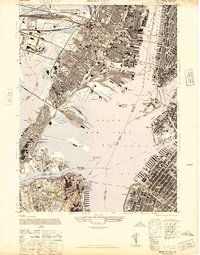 1947 Jersey City1947 Print · USGSThe harbor was a hive of industrial and maritime activity just after the war, featuring the intricate rail networks of the Lackawanna and Pennsylvania lines. Trace the early footprints of the Holland Vehicular Tunnels and landmarks like the Statue of Liberty.
 - 1947 Map of The Narrows
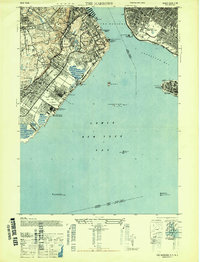 1947 The Narrows1947 Print · USGSThe eastern shore of Staten Island and the Brooklyn waterfront appear here in the years immediately following the war. Researchers can trace the Staten Island Rapid Transit line through neighborhoods like Grasmere and New Dorp, or locate family sites near Silver Lake Cem and Wagner College.2 unique versions available
 - 1947 Map of Coney Island
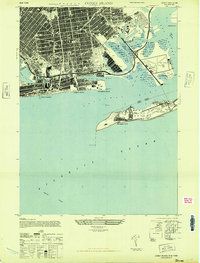 1947 Coney Island1947 Print · USGSCoastal Brooklyn and Jamaica Bay are captured just after the war as the city's southern shoreline reached its modern peak of density and recreation. Researchers can trace the layout of the Boardwalk, locate the historic Floyd Bennett Airport, or find family sites near Washington Cemetery and Bergen Beach.
 - 1949 Map of Newark
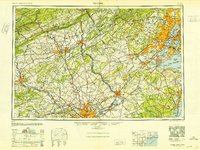 1949 Newark1949 Print · USGSThe industrial corridor between Philadelphia and New York comes alive in this post-war survey. Genealogists and historians can trace the massive rail networks of the Reading Railroad and locate major installations like Fort Dix or Picatinny Arsenal.2 unique versions available
 - 1949 Map of New York, 1951 Print
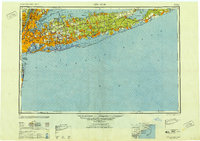 1949 New York1951 Print · USGSLong Island and its surrounding waters are documented here in the late 1940s, just as the postwar suburban boom began to transform the region. Genealogists and historians can trace the early layouts of Idlewild Airport, Mitchell Field, and the established routes of the Long Island RR.
 - 1954 Map of New York
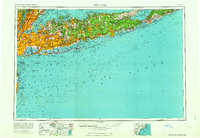 1954 New York1954 Print · USGSLong Island and the New York metropolitan area are shown during the height of post-war suburbanization. Genealogists and historians can trace the growth of Levittown, the infrastructure of the Long Island Rail Road, and landmarks like Mitchel Afb.2 unique versions available
 - 1955 Map of Coney Island, 1957 Print
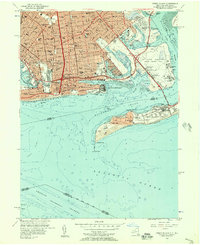 1955 Coney Island1957 Print · USGSSouthern Brooklyn and the Rockaways appear here in the mid-fifties, during a peak era of coastal defense and residential growth. Genealogists and local historians can trace street-level details near Washington Cemetery, Brighton Beach, and the sprawling Floyd Bennett Field.
 - 1955 Map of The Narrows, 1957 Print
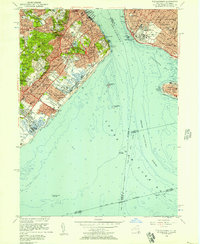 1955 The Narrows1957 Print · USGSStaten Island and Brooklyn face each other across the water in the mid-1950s, a period of significant suburban growth and established maritime defense. Researchers can trace the Staten Island Rapid Transit line or locate local landmarks like Wagner Memorial College and the Old Austen House.2 unique versions available
 - 1955 Map of Jersey City, 1958 Print
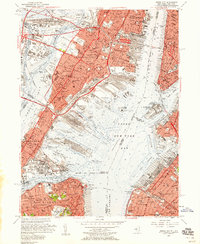 1955 Jersey City1958 Print · USGSMid-century Jersey City and the New York Harbor waterfront appear at their industrial peak, showcasing a landscape of massive rail yards and active piers. Researchers can trace the sprawling Greenville Yards, the Naval Reservation Bayonne Supply Depot, and local landmarks like Roosevelt Stadium.2 unique versions available
 - 1956 Map of Newark
 1956 Newark1956 Print · USGSThe industrial heart of the Mid-Atlantic is captured here at the dawn of the highway era, tracing the dense corridors between Newark and Philadelphia. Genealogists and local historians can map the rail networks of the Reading RR or locate mid-century military life at Fort Dix Military Reservation.2 unique versions available
 - 1956 Map of Brooklyn, 1958 Print
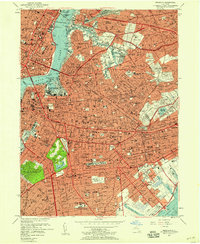 1956 Brooklyn1958 Print · USGSMid-century Brooklyn and Queens are shown at a peak of urban density, before the full impact of modern highway expansion. Genealogists can locate family landmarks among dozens of sites like Erasmus Hall High Sch, Holy Cross Ch, and Greenwood Cemetery.2 unique versions available
 - 1957 Map of Newark
 1957 Newark1957 Print · USGSThe industrial and military heart of the Mid-Atlantic is mapped during its post-war suburban boom. Genealogists and historians can trace the intricate rail corridors of the Reading Railroad and locate key landmarks from Princeton University to Fort Hancock.
 - 1957 Map of New York, 1975 Print
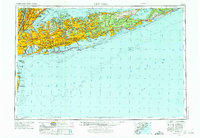 1957 New York1975 Print · USGSLong Island and the New York metropolitan area are shown in this mid-century survey during a period of massive suburban growth and industrial expansion. Researchers can trace the Long Island RR network and locate landmarks like Fort Tilden or the Brookhaven National Laboratory.
Showing maps 1-25 of 60
Frequently asked questions
- What are the different types of historical maps available for Dyker Heights?
- What is the oldest map of Dyker Heights?
- Where can I purchase historical maps of Dyker Heights for my home or office?
- Where can I download high-res historical maps of Dyker Heights?
- Are there historical topographic maps available for Dyker Heights?
- Is there historical aerial imagery available for Dyker Heights?
- Where are historical maps of Dyker Heights sourced from?