Old Maps of Lincoln Park, Ulster for Hiking & Exploration
Hike through history with 34 historic maps of Lincoln Park. Explore old trails, ghost towns, and forgotten backroads — perfect for outdoor adventurers and local explorers.
- Rediscover forgotten places: Map out old mining camps, roads, and footpaths that no longer exist on modern maps.
- Layer with modern tools: Combine with LiDAR or satellite views to plan hikes through historical terrain.
- Made for exploration: Popular among hikers, overlanders, and local history lovers.
Use these maps to find adventure and explore the hidden past of Lincoln Park.
Lincoln Park, Ulster maps
(34)- 1898 Map of Rhinebeck
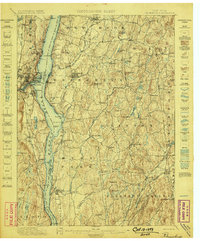 1898 Rhinebeck1898 Print · USGSThe Hudson River valley at the close of the nineteenth century was a bustling network of rail lines and river landings. Genealogists and historians can trace the foundations of Hyde Park, find the riverside Esopus Light, or locate rail junctions like Rhinecliff.9 unique versions available
 - 1901 Map of Rosendale, 1961 Print
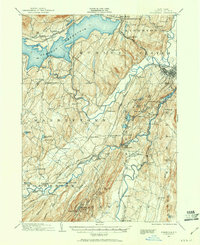 1901 Rosendale1961 Print · USGSUlster County at the dawn of the century shows a landscape in transition as the Ashokan Reservoir reshaped the valley. Genealogists and historians can trace defunct rail stops and early hamlets from Kripplebush and Whiteport to the busy docks at Wilbur.
 - 1903 Map of Rosendale
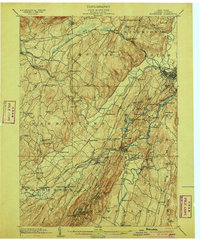 1903 Rosendale1903 Print · USGSUlster County was a hub of canal and rail transport at the turn of the century, centered on the Delaware and Hudson Canal. Genealogists can trace family footprints through historic settlements like Browns Station, Kripplebush, and Lomontville.11 unique versions available
 - 1934 Map of Rhinebeck
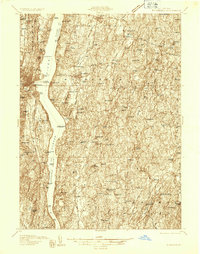 1934 Rhinebeck1934 Print · USGSDutchess and Ulster Counties meet along the Hudson River during the mid-1930s as the rail and river economy persists. Researchers can locate river landmarks like the Astor Tunnel and Kingston Point, or trace local roots at the Quaker Meeting House and Stone Church.2 unique versions available
 - 1939 Map of Rhinebeck
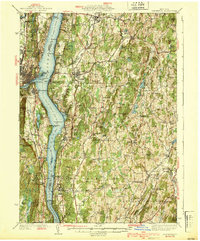 1939 Rhinebeck1939 Print · USGSDutchess and Ulster Counties flank the Hudson River in the late 1930s, revealing a landscape defined by riverside rail travel and rural hamlets. Genealogists can locate numerous local landmarks including Clinton Corners, Washington Hollow, and the Kingston Point Lighthouse.3 unique versions available
 - 1942 Map of Kingston West, 1950 Print
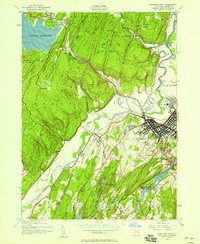 1942 Kingston West1950 Print · USGSThe area around Kingston during the early 1940s reveals a landscape shaped by the rail lines of the New York Central and the waters of the Ashokan Reservoir. Genealogists and historians can locate specific community centers like St Johns Ch, West Hurley RR Station, and the Lower Sawkill School.
 - 1943 Map of Kingston West
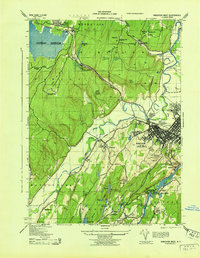 1943 Kingston West1943 Print · USGSMid-century Ulster County comes into focus as the Ashokan Reservoir and the New York Central railroad shape the valley corridor. Genealogists can trace family names at the Boice Brothers Dairy or locate old schoolhouses like the Stony Hollow School and Sawkill School.
 - 1947 Map of Hartford, 1955 Print
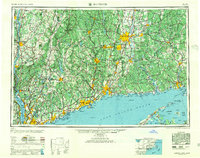 1947 Hartford1955 Print · USGSSouthern New England and the Hudson Valley are shown in detail during the post-war expansion era. Genealogists and researchers can trace local landmarks from the State Capitol and Yale University to the Stratford Lighthouse and Woodlawn Cem.2 unique versions available
 - 1948 Map of Hartford
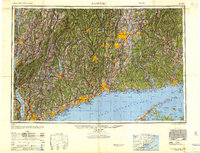 1948 Hartford1948 Print · USGSSouthern New England is captured here in the late 1940s, showcasing a landscape of thriving industrial cities and developing parkways. Genealogists and historians can trace the rail networks of the New York New Haven and Hartford RR or locate coastal defense sites like Fort Terry and Camp Shanks.2 unique versions available
 - 1950 Map of Scranton, 1952 Print
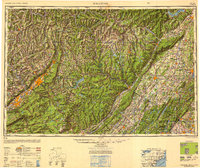 1950 Scranton1952 Print · USGSMid-century Northeast Pennsylvania and the Hudson Valley come alive in this survey of the tri-state region. Genealogists and historians can trace the dense rail networks of the Erie RR and DL&W RR between industrial hubs like Scranton and Wilkes-Barre.
 - 1953 Map of Scranton
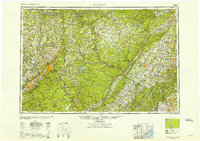 1953 Scranton1953 Print · USGSNortheastern Pennsylvania and the Catskills are shown in great detail during the early fifties, a time when rail lines and river valleys dictated the region's growth. Genealogists and historians can trace the industrial hearts of Scranton and Wilkes-Barre or locate remote landmarks like High Point and Lake Wallenpaupack.
 - 1959 Map of Scranton
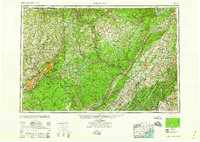 1959 Scranton1959 Print · USGSThe northern coalfields and the Hudson Valley meet in this mid-century survey of the Pennsylvania and New York borderlands. Genealogists and historians can trace the intricate rail networks of the Erie Railroad and the vast waters of Lake Wallenpaupack.2 unique versions available
 - 1961 Map of Hartford
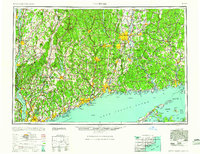 1961 Hartford1961 Print · USGSSouthern New England and the Hudson Valley are shown here in the mid-fifties, capturing a landscape of booming coastal cities and interior hill towns. Researchers can trace the legacy of the New York New Haven and Hartford rail corridor and find strategic sites like Camp Shanks and Fort Michie.
 - 1962 Map of Hartford, 1971 Print
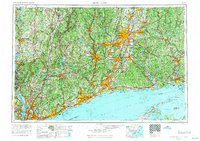 1962 Hartford1971 Print · USGSSouthern New England and the Hudson Valley are shown in the early sixties, as suburban growth reached into the foothills. Trace the path of the New York New Haven & Hartford RR and find landmarks like Camp Nathan Hale and Gillette Castle State Park.3 unique versions available
 - 1962 Map of Scranton, 1977 Print
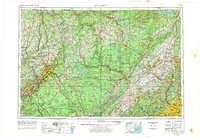 1962 Scranton1977 Print · USGSThe industrial heart of eastern Pennsylvania and the New York Catskills are captured here in the early sixties. Genealogists and historians can trace the dense valley settlements from Scranton to Wilkes-Barre and the rail lines of the Erie Lackawanna Railroad.2 unique versions available
 - 1963 Map of Kingston East, 1965 Print
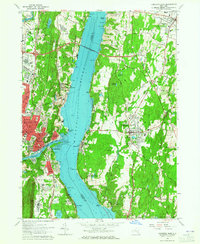 1963 Kingston East1965 Print · USGSMid-century life along the Hudson River is captured here just as the Kingston-Rhinecliff Bridge transformed local travel. Genealogists can trace family names at St Marys Cemetery or locate schools like the Cardinal Farley Military Academy and Wygant Sch.5 unique versions available
 - 1964 Map of Kingston West, 1966 Print
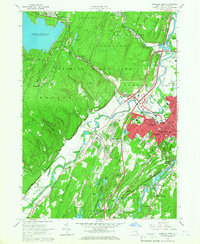 1964 Kingston West1966 Print · USGSMid-century Ulster County shows a landscape defined by the Esopus valley and the growing city of KINGSTON. Genealogists and historians can trace family plots in Old Dutch Cem or locate former schoolhouse sites like West Hurley District Sch No 8.4 unique versions available
 - 1965 Map of Scranton
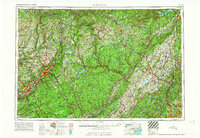 1965 Scranton1965 Print · USGSThe tri-state highlands of Pennsylvania, New York, and New Jersey come alive in the mid-sixties as industry and recreation converge. Trace the intricate rail lines of the Erie Lackawanna RR or locate landmarks like the U S Military Academy.2 unique versions available
 - 1965 Map of Hartford
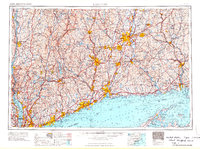 1965 Hartford1965 Print · USGSSouthern New England and the Hudson Valley are shown here during the mid-sixties expansion of the Interstate era. Trace the path of the New York New Haven & Hartford RR or locate historic landmarks like West Point Military Reservation and the Merritt Parkway.2 unique versions available
 - 1980 Map of Kingston West, 1981 Print
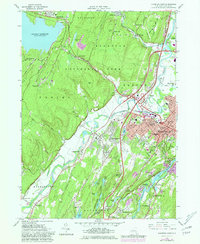 1980 Kingston West1981 Print · USGSKingston and the Esopus Creek valley are shown here in the 1980s as the region balanced its colonial roots with modern infrastructure. Researchers can trace family sites at the Old Dutch Ch Cem, the old West Hurley District Sch No 8, or along the CONRAIL line.
 - 1985 Map of Waterbury, 1986 Print
 1985 Waterbury1986 Print · USGSThe Western Connecticut highlands and the Hudson Valley are captured in the mid-1980s, showing a landscape of deep forests and industrial river towns. Genealogists can trace family connections from Waterbury up through Litchfield and Torrington, while exploring the vast Barkhamsted Reservoir and Candlewood Lake basins.
 - 1986 Map of Monticello
 1986 Monticello1986 Print · USGSThe Catskills and Shawangunk Ridge meet in the mid-eighties, showing a landscape defined by massive reservoirs and valley towns. Genealogists and researchers can trace the growth of Monticello, Ellenville, and New Paltz alongside landmarks like Mohonk Preserve and Stewart Airport.2 unique versions available
 - 1993 Map of Waterbury
 1993 Waterbury1993 Print · USGSWestern Connecticut and the Hudson Valley appear in the early nineties as a landscape of established industrial cities and deep forest preserves. Researchers can trace the rail corridors of the Metro-North Railroad or locate family sites near the Taft School and Riverside Cemetery.
 - 1997 Map of Kingston West, 2000 Print
 1997 Kingston West2000 Print · USGSThe Hudson Valley hills of Ulster County meet the eastern Catskills in the late 1990s, centered on the urban core of Kingston. Genealogists and historians can trace long-established sites like Old Dutch Church, Wiltwyck Cemetery, and the West Hurley District School.
 - 2010 Map of Kingston West, 2010 Print
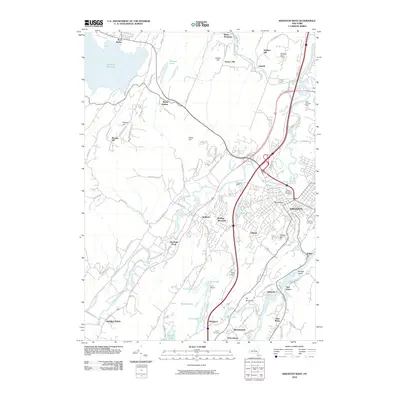 2010 Kingston West2010 Print · USGSThe western outskirts of Kingston and the Esopus Creek valley are captured here at the start of the 2010s. Genealogists and local historians can trace family-named sites like Suydam Farm, search for records at Wiltwyck Cemetery, or locate the historic bounds of Stony Hollow and Eddyville.
Showing maps 1-25 of 34
Top cities near Lincoln Park
- Poughkeepsie historical maps
- Kingston historical maps
- Hyde Park historical maps
- Saugerties historical maps
- New Paltz historical maps
- Ulster historical maps
See more
Frequently asked questions
- What are the different types of historical maps available for Lincoln Park?
- What is the oldest map of Lincoln Park?
- Where can I purchase historical maps of Lincoln Park for my home or office?
- Where can I download high-res historical maps of Lincoln Park?
- Are there historical topographic maps available for Lincoln Park?
- Is there historical aerial imagery available for Lincoln Park?
- Where are historical maps of Lincoln Park sourced from?