Old Maps of Orangeville, New York
Explore 40 old maps of Orangeville, spanning from 1904 to today. These high-resolution historic maps reveal how streets, neighborhoods, landmarks, and natural features evolved over time — perfect for genealogy, metal detecting, research, and local history exploration.
What you can do with these maps:
- See how Orangeville changed over time: Compare historical maps to modern-day views to trace roads, homesites, rail lines & more.
- View detailed metadata: Each map includes creators, publishers, year, scale, and archive source.
- Overlay maps with satellite & LiDAR: Visualize the past alongside modern tools to explore terrain & human change.
- Trusted historical sources: Maps sourced from the USGS, Library of Congress, and other archives.
- Access maps your way: View online, download high-res files, or order prints for personal or research use.
Start exploring old maps of Orangeville to uncover forgotten places, hidden landmarks, and the deep history beneath your feet.
Orangeville, NY maps
(40)- 1904 Map of Batavia
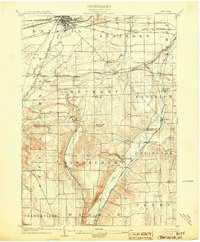 1904 Batavia1904 Print · USGSWestern New York at the turn of the century shows a landscape dominated by competing railroad interests and agricultural hamlets. Genealogists can trace family connections between Pearl Creek, Attica Center, and Stafford while following the routes of the Lehigh Valley and Erie R. R. through the valleys.7 unique versions available
 - 1905 Map of Attica
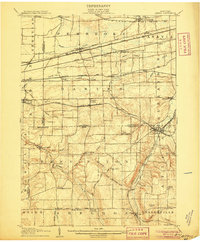 1905 Attica1905 Print · USGSWestern New York at the turn of the century shows a landscape dominated by a massive web of competing railroads. Genealogists can trace family names and small hamlets like Folsomdale, Darien Center, and the industrial hub at Attica.5 unique versions available
 - 1905 Map of Portage
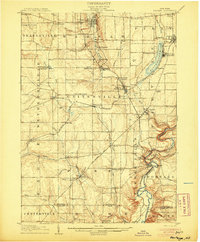 1905 Portage1905 Print · USGSWyoming County at the turn of the century shows a landscape defined by the deep gorge of the Genesee River and a busy rail network. Genealogists can trace family names at Halls Corners, explore the Silver Lake Assembly, or locate the mills and stations at Rock Glen and Portageville.6 unique versions available
 - 1923 Map of Arcade, 1957 Print
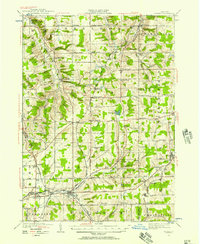 1923 Arcade1957 Print · USGSWyoming County is captured in the early 1920s, showing a landscape defined by dairy farming and the vital rail connections of the Arcade and Attica. Genealogists can trace family names at Hicks Corners and Toziers Corners, or locate rural landmarks like Klein School and Java Lake.2 unique versions available
 - 1925 Map of Arcade
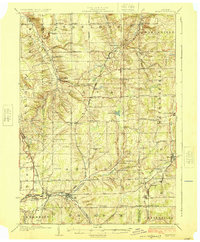 1925 Arcade1925 Print · USGSWestern New York’s rural landscape is captured here in the mid-1920s, a time when one-room schoolhouses and family-named crossroads still defined the countryside. Genealogists can trace property vicinities near Java Village, locate the elusive Cheery Tavern, or follow the path of the Arcade and Attica railroad.4 unique versions available
 - 1943 Map of Warsaw, 1959 Print
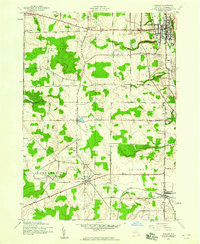 1943 Warsaw1959 Print · USGSWyoming County agricultural life and rail infrastructure are captured here during the mid-century. Researchers can trace historic property locations near the crossroads of Halls Corners or along the lines of the Erie and Baltimore and Ohio railroads.
 - 1944 Map of Warsaw
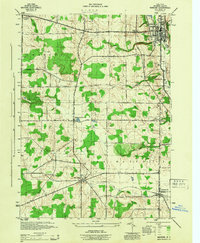 1944 Warsaw1944 Print · USGSWyoming County is captured in the mid-1940s, centered on the valley village of Warsaw as it sits between the high plateaus of Wethersfield and Gainesville. Researchers can trace the rail paths of the Erie and Baltimore Ohio or locate rural hamlets like Hermitage and Wethersfield Springs.
 - 1949 Map of Attica, 1953 Print
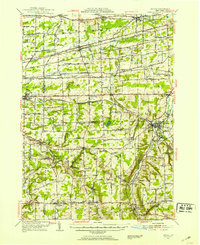 1949 Attica1953 Print · USGSWestern New York at mid-century reveals a dense network of major railroads and rural hamlets across Genesee and Wyoming counties. Genealogists and historians can trace family locations through numerous numbered schools, named crossroads like Brick House Corners, and landmarks such as the Attica State Prison.
 - 1949 Map of Attica, 1969 Print
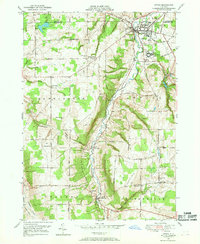 1949 Attica1969 Print · USGSWestern New York’s rural landscape is captured here in the late 1940s, centered on the rail hub of Attica. Researchers can trace the dual rail lines of the Erie RR and Attica and Arcade RR or locate family sites near Varysburg and East Bennington.2 unique versions available
 - 1949 Map of Dale, 1974 Print
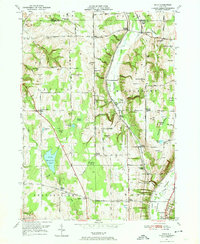 1949 Dale1974 Print · USGSMid-century Wyoming County is defined by the winding Erie Railroad and a network of rural hamlets. Local historians can trace family-named crossroads and burial sites like Sickleys Corners, Vernal Corners Cem, and Dutton Hill.3 unique versions available
 - 1950 Map of Batavia
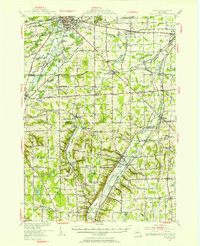 1950 Batavia1950 Print · USGSWestern New York at the mid-century shows a bustling landscape of rail hubs and rural crossroads. Researchers can trace the heritage of Batavia and Wyoming while locating local landmarks like the Pioneer Salt Well, Bethany Ch, and the Fairgrounds.
 - 1951 Map of Dale
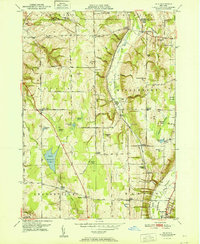 1951 Dale1951 Print · USGSMid-century Wyoming County life is centered on the deep ravines and rail lines carved by Tonawanda Creek. Genealogists can trace early rural neighborhoods through family-named landmarks like Williams Corners, Brainard Cem, and School No 4.
 - 1951 Map of Attica
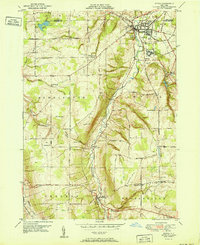 1951 Attica1951 Print · USGSWestern New York's Wyoming County is surveyed here in the early postwar years, centered on the vital rail hub of Attica. Genealogists and historians can trace the rural landscape through family-named sites and landmarks like Danley Corners, St Vincent Cem, and the County Home.
 - 1960 Map of Buffalo
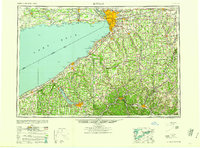 1960 Buffalo1960 Print · USGSWestern New York and the Niagara Peninsula thrive during the mid-twentieth century industrial peak. Genealogists and historians can trace family-named points and early settlements from Dunkirk Light to the Allegany Indian Reservation.
 - 1962 Map of Buffalo, 1980 Print
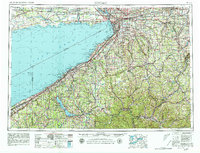 1962 Buffalo1980 Print · USGSThe Niagara Frontier and Western New York are captured here in the early sixties, showing the vital industrial and maritime nexus between the U.S. and Canada. Researchers can trace the path of the Welland Canal, locate the Allegany Indian Reservation, or find family sites near Chautauqua Lake.2 unique versions available
 - 1966 Map of Johnsonburg, 1968 Print
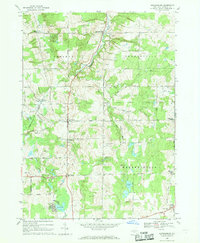 1966 Johnsonburg1968 Print · USGSWyoming County's rural character is preserved here in the mid-sixties, from the rail corridor in Johnsonburg to the waters of Java Lake. Genealogists can trace family landmarks like St Nicholas Cem, Southburg, and the remote Torrey Hill Cem.
 - 1967 Map of Buffalo
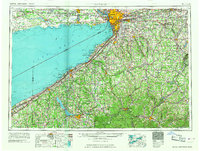 1967 Buffalo1967 Print · USGSWestern New York and the Lake Erie shoreline are shown here during the mid-1960s industrial peak. Researchers can trace the massive rail networks of the Erie Railroad, locate the Cattaraugus Indian Reservation, or find historic sites like Fort Erie.
 - 1972 Map of Warsaw, 1974 Print
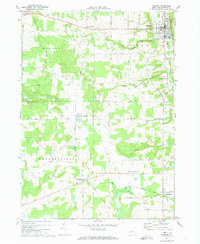 1972 Warsaw1974 Print · USGSCentral Wyoming County in the early seventies maintains its deep agricultural roots and rail-centered commerce. Researchers can trace historic family lineages through the Quaker Settlement Cem, find old schools, and follow the Erie-Lackawanna rail lines.2 unique versions available
 - 1973 Map of Buffalo
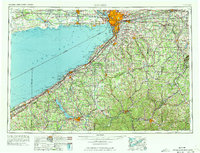 1973 Buffalo1973 Print · USGSWestern New York and Ontario's Golden Horseshoe meet in the early seventies, spanning from the industrial waterfronts of Buffalo to the hills of Allegany State Park. Trace the paths of the Welland Canal and Erie Lackawanna railroad through the lakefront towns of Dunkirk and Port Colborne.
 - 1984 Map of Buffalo, 1985 Print
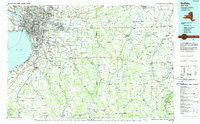 1984 Buffalo1985 Print · USGSWestern New York's industrial and transport hubs are in full view during the mid-eighties, from the Lake Erie waterfront to the Genesee Valley. Researchers can trace the legacy of the Erie Canal, find ancestral sites like Mount Calvary Cem, or locate the Attica Correctional Facility.2 unique versions available
 - 2010 Map of Johnsonburg, 2010 Print
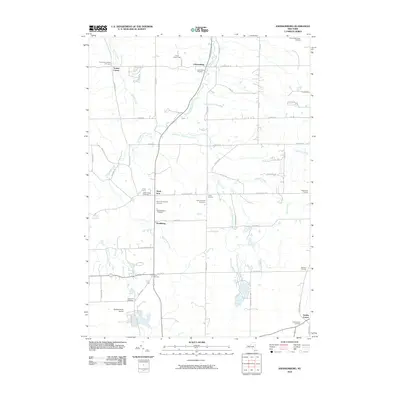 2010 Johnsonburg2010 Print · USGSWestern New York's rural crossroads and creek valleys are documented here during the early twenty-first century. Genealogists and historians can trace numerous family burial sites, including the North Java Pioneer Cemetery and Torrey Hill Cemetery.
 - 2010 Map of Warsaw, 2010 Print
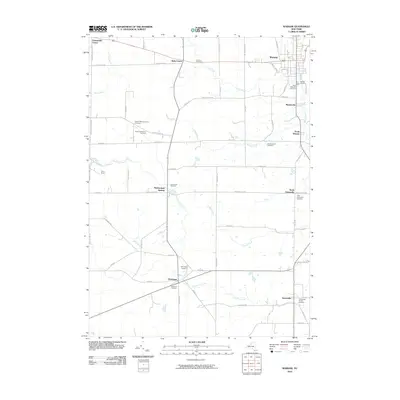 2010 Warsaw2010 Print · USGSWyoming County at the dawn of the twenty-first century reveals a landscape of enduring hamlets and rural crossings. Genealogists can locate family sites at the Quaker Settlement Cemetery or trace the settlements of Wethersfield Springs and Hermitage.
 - 2010 Map of Dale, 2010 Print
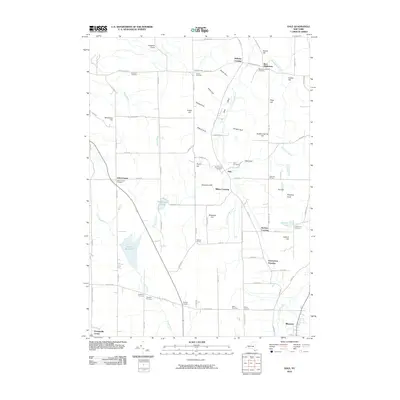 2010 Dale2010 Print · USGSWyoming County is captured in a detailed state of rural development during the early twenty-first century. Genealogists and historians can trace numerous burial grounds and small settlements, such as Dale Cemetery, Williams Corners, and the historic Attica Center.
 - 2010 Map of Attica, 2010 Print
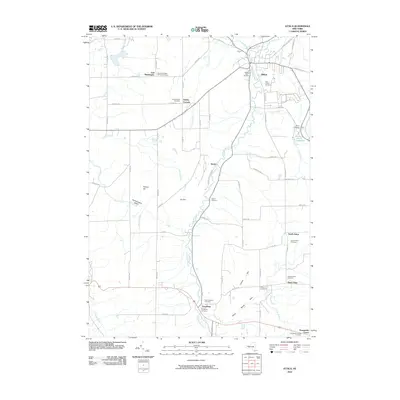 2010 Attica2010 Print · USGSThe village of Attica and the surrounding Wyoming County hills appear here in the early twenty-first century as a landscape defined by creeks and country roads. Researchers can locate numerous burial sites like Saint Joseph's Cemetery and the East Bennington German Cemetery.
 - 2013 Map of Johnsonburg, 2013 Print
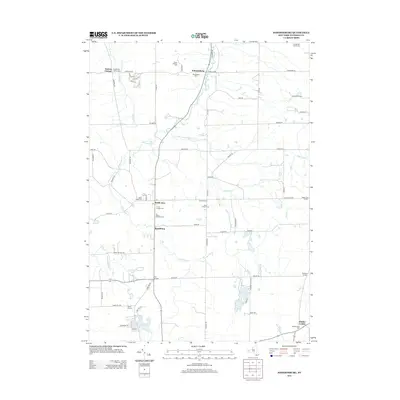 2013 Johnsonburg2013 Print · USGSWyoming County's rural character and long-standing settlements are captured here in the early twenty-first century. Genealogists and historians can trace family ties through numerous burial grounds like Johnsonburg Cemetery and explore old hamlet centers such as North Java and Southburg.
Showing maps 1-25 of 40
Top cities near Orangeville
- Alden historical maps
- Newstead historical maps
- LeRoy historical maps
- Batavia historical maps
- Perry historical maps
- Attica historical maps
See more
Top neighborhoods of Orangeville
Frequently asked questions
- What are the different types of historical maps available for Orangeville?
- What is the oldest map of Orangeville?
- Where can I purchase historical maps of Orangeville for my home or office?
- Where can I download high-res historical maps of Orangeville?
- Are there historical topographic maps available for Orangeville?
- Is there historical aerial imagery available for Orangeville?
- Where are historical maps of Orangeville sourced from?