Old Maps of Randolph, Oregon
Explore 15 old maps of Randolph, spanning from 1896 to today. These high-resolution historic maps reveal how streets, neighborhoods, landmarks, and natural features evolved over time — perfect for genealogy, metal detecting, research, and local history exploration.
What you can do with these maps:
- See how Randolph changed over time: Compare historical maps to modern-day views to trace roads, homesites, rail lines & more.
- View detailed metadata: Each map includes creators, publishers, year, scale, and archive source.
- Overlay maps with satellite & LiDAR: Visualize the past alongside modern tools to explore terrain & human change.
- Trusted historical sources: Maps sourced from the USGS, Library of Congress, and other archives.
- Access maps your way: View online, download high-res files, or order prints for personal or research use.
Start exploring old maps of Randolph to uncover forgotten places, hidden landmarks, and the deep history beneath your feet.
Randolph, OR maps
(15)- 1896 Map of Coos Bay
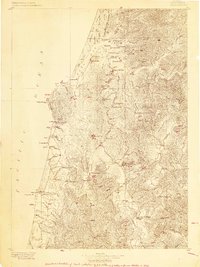 1896 Coos Bay1896 Print · USGSCoastal Oregon at the turn of the century was a world defined by its waterways and timber ports. Trace the early layout of Marshfield, locate coal-era sites like Beaver Hill and Coaledo, or find riverfront landings at Prosper and Parkersburg along the Coquille River.
 - 1898 Map of Coos Bay
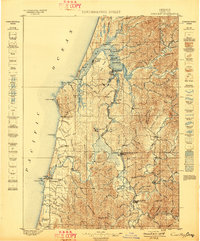 1898 Coos Bay1898 Print · USGSThe Oregon coast at the end of the nineteenth century is defined here by the bustling maritime hubs of Coos Bay and the Coquille River. Genealogists and historians can trace early port towns like Marshfield, Empire, and Bandon alongside the timber-and-coal infrastructure of Beaver Hill.
 - 1900 Map of Coos Bay
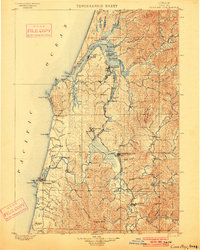 1900 Coos Bay1900 Print · USGSThe Oregon coast at the turn of the century was a landscape of tide-water towns and river commerce centered on the massive Coos Bay inlet. Genealogists and local historians can trace early settlements like Marshfield, follow the Randolph Trail, and locate forgotten landings along Isthmus Slough.7 unique versions available
 - 1943 Map of Bandon, 1955 Print
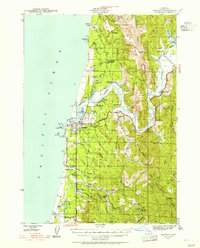 1943 Bandon1955 Print · USGSThe Oregon coast at Bandon and along the Coquille River appears here during the early years of the war. Researchers can locate coastal landmarks like the Coquille River LH or trace inland history through the Seven Devils Mine and Parkersburg Sch.3 unique versions available
 - 1944 Map of Bandon
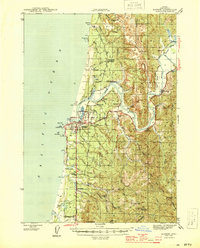 1944 Bandon1944 Print · USGSCoastal Coos County is captured here during the mid-1940s, as the river-based economy of the Coquille valley supported small timber and mining hamlets. Genealogists and researchers can trace family holdings like Doyle Ranch or locate vanished sites like Seven Devils Mine and the old Parkersburg Sch.2 unique versions available
 - 1954 Map of Coos Bay
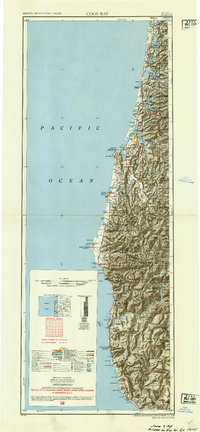 1954 Coos Bay1954 Print · USGSCoastal Oregon at mid-century shows a landscape of timber and tides, from the river ports to the edge of the Pacific. Researchers can trace family roots through coastal schools like Beachview School or follow the Southern Pacific RR through Reedsport and Coos Bay.
 - 1958 Map of Coos Bay, 1974 Print
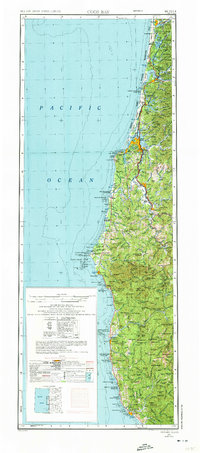 1958 Coos Bay1974 Print · USGSThe Southern Oregon coastline at mid-century reveals a bustling maritime and timber economy centered on Coos Bay and North Bend. Researchers can trace the legacy of coastal settlements from Bandon to Brookings, including rail lines of the Southern Pacific RR and the rugged reaches of the Siuslaw National Forest.
 - 1962 Map of Coos Bay
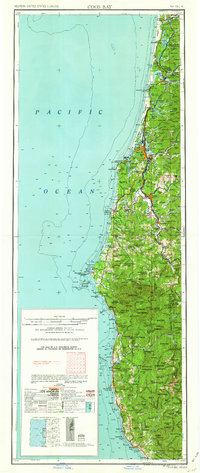 1962 Coos Bay1962 Print · USGSThe Oregon coast at the end of the fifties reveals a landscape of timber ports and fishing villages connected by U.S. Highway 101. Researchers can trace the rail infrastructure of the Southern Pacific RR and locate early settlements from Florence down to Brookings.2 unique versions available
 - 1971 Map of Riverton, 1973 Print
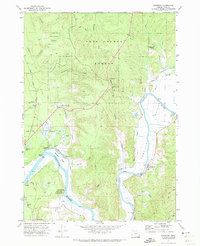 1971 Riverton1973 Print · USGSCoastal Coos County in the early seventies centered on the river-and-slough economy of the Coquille River. Researchers can trace old family burial sites at Hultin Cem or the Kronenberg Cem, and locate former settlements like Beaver Hill and Parkersburg.2 unique versions available
 - 1993 Map of Coos Bay
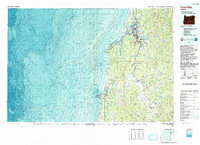 1993 Coos Bay1993 Print · USGSCoastal Oregon at the start of the nineties reveals a complex landscape of maritime trade, timber forests, and riverside hamlets. Researchers can trace the legacy of the Southern Pacific railroad and find localized landmarks like Parkersburg, Prosper, and Bunker Hill.
 - 2011 Map of Riverton, 2011 Print
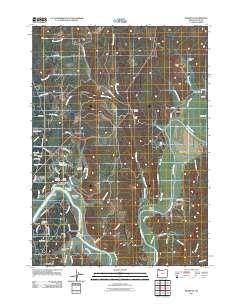 2011 Riverton2011 Print · USGSThe lower Coquille River basin is captured here in the early twenty-first century, showing a landscape defined by its waterways and timber-era settlements. Researchers can locate family sites and historical transit routes near Riverton, Randolph Cemetery, and the Old Railroad Grade Rd.
 - 2014 Map of Riverton, 2014 Print
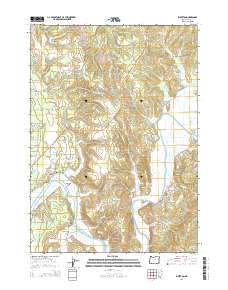 2014 Riverton2014 Print · USGSThe Coquille River valley in the early twenty-first century remains defined by its historic river settlements and complex slough systems. Researchers can trace family history through several local burial sites, including Randolph Cem and Kronenberg Cem, or locate the traces of an Old Railroad Grade Rd.
 - 2017 Map of Riverton, 2017 Print
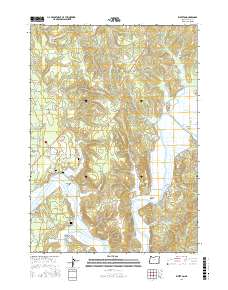 2017 Riverton2017 Print · USGSThe Coos County riverfront and valley lands are shown here in the mid-2010s, where the Coquille River meets the coastal hills. Researchers can trace family history at the Kronenberg Cem or locate old community centers like Riverton and Parkersburg.
 - 2020 Map of Riverton, 2020 Print
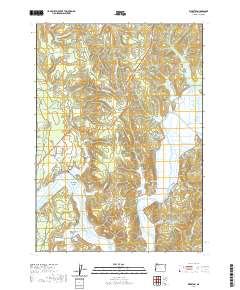 2020 Riverton2020 Print · USGSThe tidal Coquille River corridor and its surrounding valleys are captured here in the 2020s, showing a landscape of small river towns and family cemeteries. Researchers can trace the layout of Riverton, Randolph, and Parkersburg alongside features like Randolph Island and the Kronenberg Cem.
 - 2024 Map of Riverton, 2024 Print
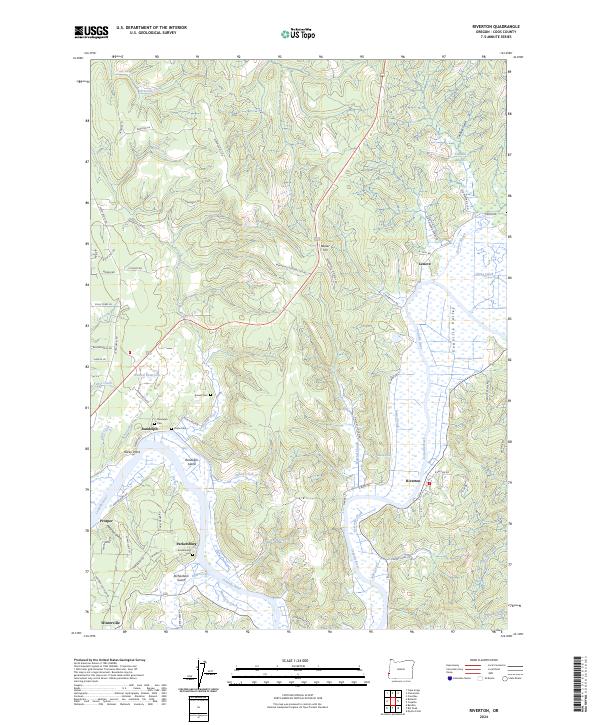 2024 Riverton2024 Print · USGSThe Coquille River valley in Coos County shows a landscape defined by tidewater sloughs and historic riverside settlements. Genealogists and local historians can trace family-named sites like Kronenberg Cem and the river-fronting communities of Riverton and Randolph.
End of results
Showing maps 1-15 of 15
Top cities near Randolph
- Coos Bay historical maps
- North Bend historical maps
- Coquille historical maps
- Bandon historical maps
- Myrtle Point historical maps
- Barview historical maps
See more
Frequently asked questions
- What are the different types of historical maps available for Randolph?
- What is the oldest map of Randolph?
- Where can I purchase historical maps of Randolph for my home or office?
- Where can I download high-res historical maps of Randolph?
- Are there historical topographic maps available for Randolph?
- Is there historical aerial imagery available for Randolph?
- Where are historical maps of Randolph sourced from?