Old Maps of Caln Township, Pennsylvania
Explore 55 old maps of Caln Township, spanning from 1901 to today. These high-resolution historic maps reveal how streets, neighborhoods, landmarks, and natural features evolved over time — perfect for genealogy, metal detecting, research, and local history exploration.
What you can do with these maps:
- See how Caln Township changed over time: Compare historical maps to modern-day views to trace roads, homesites, rail lines & more.
- View detailed metadata: Each map includes creators, publishers, year, scale, and archive source.
- Overlay maps with satellite & LiDAR: Visualize the past alongside modern tools to explore terrain & human change.
- Trusted historical sources: Maps sourced from the USGS, Library of Congress, and other archives.
- Access maps your way: View online, download high-res files, or order prints for personal or research use.
Start exploring old maps of Caln Township to uncover forgotten places, hidden landmarks, and the deep history beneath your feet.
Caln Township, PA maps
(55)- 1901 Map of West Chester, 1958 Print
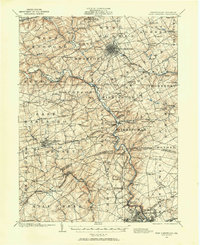 1901 West Chester1958 Print · USGSSettled hills and river valleys between Pennsylvania and Delaware are captured here in the early twentieth century. Trace the industrial landscape from West Chester down to Wilmington, finding landmarks like the Henry Clay Factory and Dutton Mill.
 - 1904 Map of West Chester
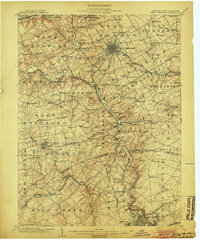 1904 West Chester1904 Print · USGSChester County at the dawn of the 1900s reveals a thriving network of rail-connected villages and early industrial sites along the Brandywine Creek. Researchers can trace old family lands near Dutton Mill, the House of Refuge, and the vanished stops of the West Chester Br. railroad.8 unique versions available
 - 1904 Map of Coatesville, 1960 Print
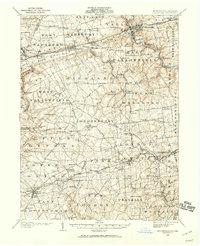 1904 Coatesville1960 Print · USGSChester County at the turn of the century shows a bustling corridor of industry and education nestled between the Valley Hills and Mine Ridge. Trace the early development of Lincoln University, the rail hubs at Coatesville, and rural landmarks like Faggs Manor Ch.
 - 1905 Map of Honey Brook, 1962 Print
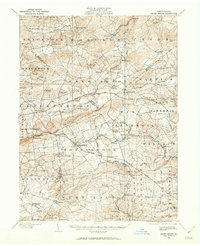 1905 Honey Brook1962 Print · USGSSoutheastern Pennsylvania at the start of the twentieth century shows a landscape shaped by iron furnaces and a dense rail network. Genealogists can trace family footprints at Joanna Furnace, Hummels Store, and numerous rural sites like Silver Hill School.
 - 1906 Map of Phoenixville
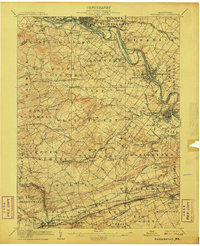 1906 Phoenixville1906 Print · USGSThe industrial corridor along the Schuylkill River thrives in the early 1900s as rail networks expand through Chester and Montgomery counties. Genealogists and historians can trace old community centers like Seven Stars, Limerick, and the Paoli Monument.8 unique versions available
 - 1906 Map of Coatesville
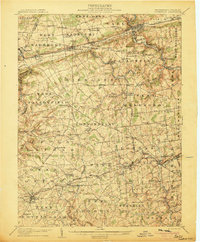 1906 Coatesville1906 Print · USGSChester County during the first decade of the 1900s reveals a landscape defined by industrial expansion and established rural hamlets. Researchers can trace the early footprint of Lincoln University and follow historic turnpikes through settlements like Faggs Manor, Parkesburg, and Ercildoun.8 unique versions available
 - 1907 Map of Honeybrook
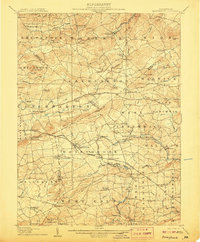 1907 Honeybrook1907 Print · USGSSoutheast Pennsylvania at the start of the twentieth century shows a landscape defined by small hamlets and early rail lines. Genealogists can trace family names and local hubs from Honeybrook and Churchtown to rural landmarks like Spoketown School and Harmony Church.7 unique versions available
 - 1918 Map of Coatesville, 1921 Print
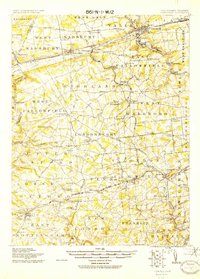 1918 Coatesville1921 Print · USGSChester County and the Lancaster border are captured in the late First World War era as industrial and academic centers thrived. Trace the early layout of Lincoln University, the busy Pennsylvania R.R. corridor, and old post offices like Springdell Derbydown PO.
 - 1941 Map of Honeybrook
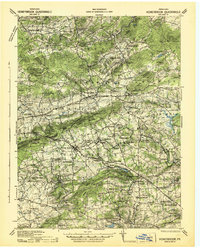 1941 Honeybrook1941 Print · USGSSoutheastern Pennsylvania at the onset of the Second World War shows a landscape of established farm communities and the newly cut path of the Pennsylvania Turnpike. Researchers can locate numerous local landmarks such as Silver Hill School, Stone Church, and the rail stops along the Reading Lines.
 - 1943 Map of Coatesville
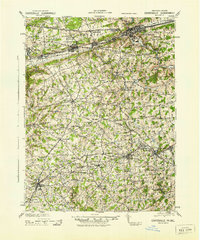 1943 Coatesville1943 Print · USGSChester County's industrial and rural landscape is shown in detail during the early 1940s, centered on the rail-driven growth of the Octoraro and Brandywine valleys. Family historians can trace ancestral roots through small hamlets and transit points like Derbydown PO, Doe Run Sta, and Sadsburyville.
 - 1943 Map of West Chester
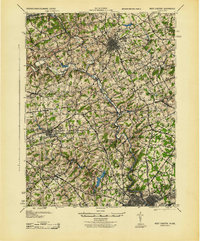 1943 West Chester1943 Print · USGSChester County during the early years of the war shows a landscape of established borough centers and winding creek valleys. Genealogists and historians can trace the rail-and-river network through West Chester, Brandywine Creek, and early industrial sites like Dutton Mill.
 - 1943 Map of Phoenixville
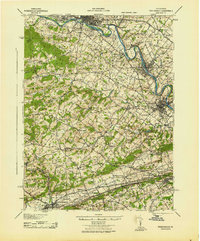 1943 Phoenixville1943 Print · USGSSoutheastern Pennsylvania during the early war years shows a landscape defined by the winding Schuylkill River and heavy rail traffic. Genealogists and historians can trace the early Pennsylvania Turnpike and explore historic locales like Fricks Lock and Nantmeal Village.
 - 1944 Map of Newark, 1971 Print
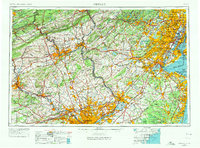 1944 Newark1971 Print · USGSThe industrial corridor from Philadelphia to New York was in a period of massive transition during the mid-forties. Genealogists and researchers can trace the rail lines of the Lehigh Valley RR, locate military installations like Picatinny Arsenal, and explore the early sprawl near Levittown.5 unique versions available
 - 1946 Map of Wilmington, 1948 Print
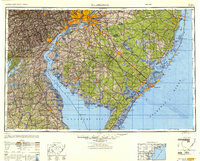 1946 Wilmington1948 Print · USGSThe Delaware Valley and Jersey Shore emerge in this mid-century portrait of a region defined by river commerce and seaside growth. Genealogists and historians can trace the rail networks of the Pennsylvania Railroad, locate early airfields like Dover Airpark, and find river defenses at Fort Delaware.2 unique versions available
 - 1949 Map of Newark
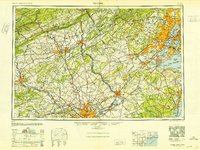 1949 Newark1949 Print · USGSThe industrial corridor between Philadelphia and New York comes alive in this post-war survey. Genealogists and historians can trace the massive rail networks of the Reading Railroad and locate major installations like Fort Dix or Picatinny Arsenal.2 unique versions available
 - 1953 Map of Unionville, 1954 Print
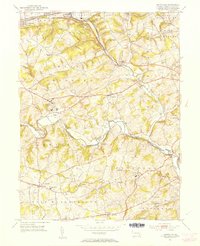 1953 Unionville1954 Print · USGSChester County's rural character remains prominent in the early fifties, where the winding East Branch Brandywine Creek meets historic villages. Researchers can trace family sites near Saverys Mill, find the Embreeville State Hospital, and locate old schoolhouses like Copeland Sch.4 unique versions available
 - 1953 Map of Coatesville, 1956 Print
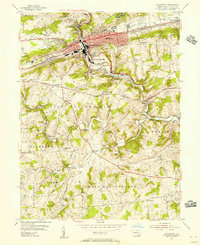 1953 Coatesville1956 Print · USGSChester County's industrial and rural crossroads are meticulously documented in the 1950s as the Lincoln Highway and major rail lines fueled the growth of Coatesville. Genealogists and local researchers can locate family-named landmarks and institutions like St Malachi Ch, the Rainbow Sch, and the U S Veterans Hospital.6 unique versions available
 - 1955 Map of Wilmington
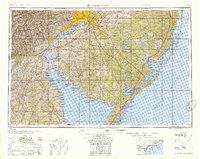 1955 Wilmington1955 Print · USGSThe Delaware Valley and Jersey Shore are seen here during the mid-fifties era of rapid suburban expansion and highway development. You can trace the path of the New Jersey Turnpike, locate the Fort Dix Military Reservation, or explore the rail networks of the Pennsylvania Railroad.
 - 1956 Map of Newark
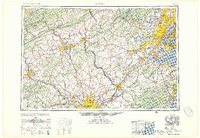 1956 Newark1956 Print · USGSThe industrial heart of the Mid-Atlantic is captured here at the dawn of the highway era, tracing the dense corridors between Newark and Philadelphia. Genealogists and local historians can map the rail networks of the Reading RR or locate mid-century military life at Fort Dix Military Reservation.2 unique versions available
 - 1956 Map of Wagontown, 1957 Print
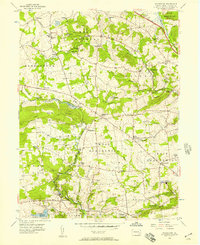 1956 Wagontown1957 Print · USGSChester County's rural townships are captured in the mid-fifties, showing a landscape of established villages and valley waterworks. Genealogists and local historians can locate the Beth Israel Cem, Cain Meeting House, and dozens of family-named settlements like Guthriesville and Wagontown.8 unique versions available
 - 1956 Map of Downingtown, 1957 Print
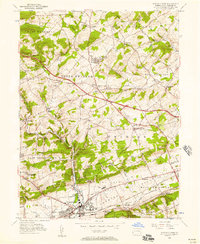 1956 Downingtown1957 Print · USGSChester County during the mid-fifties shows the transition from rural townships to a modern transportation hub. Researchers can trace family roots through Downingtown Industrial School and old parish sites like St Pauls Ch or Vincent Ch.5 unique versions available
 - 1957 Map of Wilmington
 1957 Wilmington1957 Print · USGSThe mid-Atlantic coastal plain comes alive in the mid-fifties as the New Jersey Turnpike and Garden State Parkway redefine travel. Researchers can trace the rail-to-road transition and find landmarks like Ship John Shoal Light and the Fort Dix Military Reservation.2 unique versions available
 - 1957 Map of Newark
 1957 Newark1957 Print · USGSThe industrial and military heart of the Mid-Atlantic is mapped during its post-war suburban boom. Genealogists and historians can trace the intricate rail corridors of the Reading Railroad and locate key landmarks from Princeton University to Fort Hancock.
 - 1959 Map of Wilmington
 1959 Wilmington1959 Print · USGSThe Delaware Valley and Jersey Shore are seen here in the late fifties, during a period of massive suburban and highway expansion. Researchers can trace mid-century infrastructure like the N J Turnpike or locate coastal landmarks from Barnegat Bay to the Maurice River.3 unique versions available
 - 1960 Map of Newark
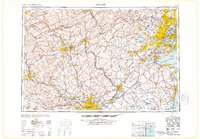 1960 Newark1960 Print · USGSThe industrial heart of the Mid-Atlantic is shown at mid-century, stretching from the dense urban centers of Newark and Philadelphia to the Blue Mountain ridges. Researchers can trace historic rail lines, coastal defenses at Fort Hancock, and the riverfront growth of Trenton and Easton.3 unique versions available
Showing maps 1-25 of 55
Top cities near Caln Township
- West Goshen Township historical maps
- West Chester historical maps
- Limerick Township historical maps
- Phoenixville historical maps
- Hockessin historical maps
- Coatesville historical maps
See more
Top neighborhoods of Caln Township
Frequently asked questions
- What are the different types of historical maps available for Caln Township?
- What is the oldest map of Caln Township?
- Where can I purchase historical maps of Caln Township for my home or office?
- Where can I download high-res historical maps of Caln Township?
- Are there historical topographic maps available for Caln Township?
- Is there historical aerial imagery available for Caln Township?
- Where are historical maps of Caln Township sourced from?