Old Maps of New Bethlehem, Pennsylvania
Explore 27 old maps of New Bethlehem, spanning from 1901 to today. These high-resolution historic maps reveal how streets, neighborhoods, landmarks, and natural features evolved over time — perfect for genealogy, metal detecting, research, and local history exploration.
What you can do with these maps:
- See how New Bethlehem changed over time: Compare historical maps to modern-day views to trace roads, homesites, rail lines & more.
- View detailed metadata: Each map includes creators, publishers, year, scale, and archive source.
- Overlay maps with satellite & LiDAR: Visualize the past alongside modern tools to explore terrain & human change.
- Trusted historical sources: Maps sourced from the USGS, Library of Congress, and other archives.
- Access maps your way: View online, download high-res files, or order prints for personal or research use.
Start exploring old maps of New Bethlehem to uncover forgotten places, hidden landmarks, and the deep history beneath your feet.
New Bethlehem, PA maps
(27)- 1901 Map of Rural Valley, 1957 Print
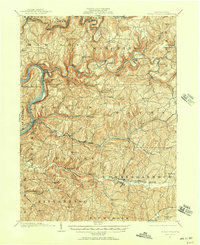 1901 Rural Valley1957 Print · USGSArmstrong County’s river valleys and iron-working hamlets are captured here at the start of the twentieth century. Researchers can trace the legacy of early industry at Mahoning Furnace or follow the path of the Pennsylvania R.R. through Templeton.2 unique versions available
 - 1903 Map of Rural Valley
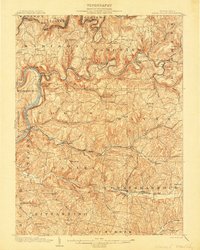 1903 Rural Valley1903 Print · USGSArmstrong County at the dawn of the twentieth century shows a landscape defined by iron furnaces and winding river valleys. Genealogists can trace family roots in early settlements like Templeton, Goheenville, and Putneyville or locate landmarks such as Mahoning Furnace and Stone House.6 unique versions available
 - 1906 Map of Clarion
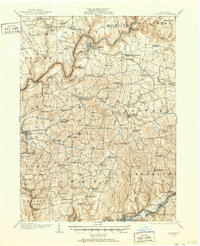 1906 Clarion1906 Print · USGSClarion County at the turn of the century is defined by its deep river valleys and a bustling network of narrow-gauge railroads and coal mines. Genealogists and historians can trace dozens of rural schoolhouses and churches, from Concord Church to the Burma (Five Points) School and the early mines of Rimersburg.2 unique versions available
 - 1907 Map of Clarion
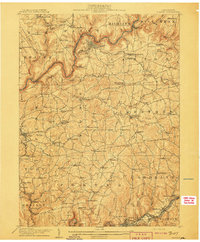 1907 Clarion1907 Print · USGSClarion County at the dawn of the twentieth century shows a landscape shaped by coal mining and a complex rail network. Genealogists can locate specific family landmarks like Acme Mines, Concord Church, and rural outposts such as Limestone P.O..5 unique versions available
 - 1953 Map of Pittsburgh
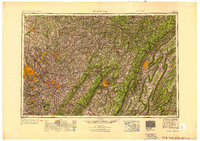 1953 Pittsburgh1953 Print · USGSWestern Pennsylvania's industrial landscape at the start of the fifties shows the steel and rail corridors between Pittsburgh and Altoona. Trace family roots in river towns like Tarentum or follow the Pennsylvania Turnpike across Laurel Hill.
 - 1954 Map of Pittsburgh
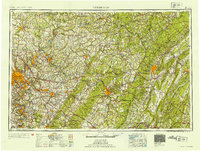 1954 Pittsburgh1954 Print · USGSWestern Pennsylvania in the early fifties remains a powerhouse of heavy industry and vital transit corridors. Genealogists and historians can trace the rail-and-river network connecting Pittsburgh, Johnstown, and Altoona via the Pennsylvania RR and the Lincoln Highway.2 unique versions available
 - 1957 Map of Warren, 1964 Print
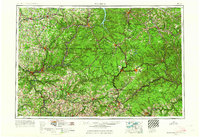 1957 Warren1964 Print · USGSThe northern Pennsylvania oil and timber country comes into focus in the mid-fifties, showing the region before modern highway expansions. Trace the industrial rail networks of the Pennsylvania RR and the early Allegheny River Reservoir near Warren and Oil City.4 unique versions available
 - 1958 Map of Pittsburgh
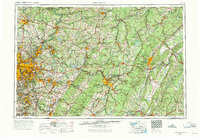 1958 Pittsburgh1958 Print · USGSWestern Pennsylvania in the late fifties shows an industrial heartland defined by the confluence of the Allegheny River and Monongahela River. Researchers can trace the sprawling rail networks of the Pennsylvania RR and find established towns like Butler, Latrobe, and Windber.5 unique versions available
 - 1958 Map of Warren
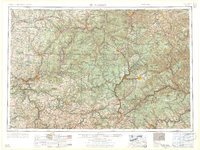 1958 Warren1958 Print · USGSNorthern Pennsylvania’s timber and oil country is captured here during the late fifties, showing the interplay of industrial valleys and vast state forests. Genealogists can trace family connections across the Cornplanter Indian Reservation or through rail hubs like Oil City and Saint Marys.
 - 1959 Map of Warren
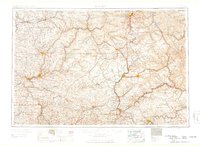 1959 Warren1959 Print · USGSNorthern Pennsylvania's oil and timber country comes alive in this late-fifties study of the forest-clad plateaus. Trace the historic Cornplanter (Indian Reservation), the sprawling Oil Field, and the rail lines of the Pennsylvania RR.2 unique versions available
 - 1959 Map of Pittsburgh
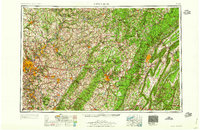 1959 Pittsburgh1959 Print · USGSWestern Pennsylvania in the late fifties is captured here at the height of its industrial era. Genealogists and historians can trace the riverfront growth of Pittsburgh, the rail works at Altoona, and the mountain gaps of Laurel Hill.
 - 1964 Map of Pittsburgh
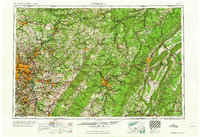 1964 Pittsburgh1964 Print · USGSWestern Pennsylvania in the late fifties and early sixties shows a landscape of powerful river industries and expanding highways. Genealogists and historians can trace the rail corridors of the Pennsylvania RR through industrial hubs like Johnstown, Altoona, and Nanty Glo.
 - 1969 Map of Distant, 1972 Print
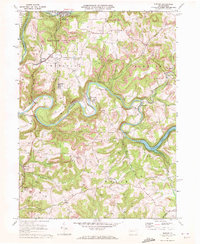 1969 Distant1972 Print · USGSArmstrong County is shaped by heavy industry and deep river valleys in the late sixties, just as the regional landscape was being transformed by resource extraction. Genealogists can trace family roots through sites like Oakland Cem or Jerusalem Ch while following the path of the Penn Central through South Bethlehem.3 unique versions available
 - 1969 Map of New Bethlehem, 1972 Print
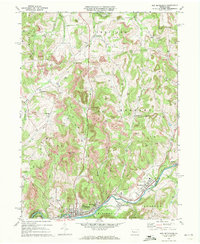 1969 New Bethlehem1972 Print · USGSThe Redbank Creek valley in the late 1960s was a bustling hub of rail and industry. Researchers can trace the legacy of the Gas Field and Strip Mine workings surrounding New Bethlehem, Hawthorn, and Fairmount City.2 unique versions available
 - 1971 Map of Warren
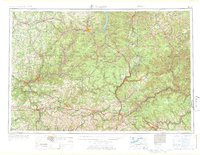 1971 Warren1971 Print · USGSNorth Central Pennsylvania is captured here in the early seventies, showing a landscape defined by industrial centers and massive state forests. Genealogists and historians can trace the rail lines of the Penn Central and Erie Lackawanna connecting towns like Warren, Kane, and Du Bois.
 - 1983 Map of Indiana
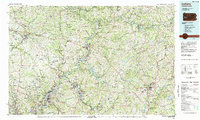 1983 Indiana1983 Print · USGSWestern Pennsylvania in the early eighties shows a landscape of industrial river towns and expanding university campuses. Genealogists can trace family roots through Lucernemines and Spring Church, or locate ancestors in Oakland Cemetery.
 - 1983 Map of Oil City, 1984 Print
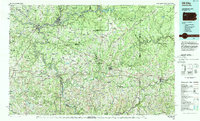 1983 Oil City1984 Print · USGSThe Allegheny and Clarion river valleys are shown in the early eighties as a hub of rail lines and conservation lands. Genealogists can trace family connections in Oil City and Franklin or locate rural sites like the Pennsylvania State Hospital and School and Coal City.
 - 2010 Map of Distant, 2010 Print
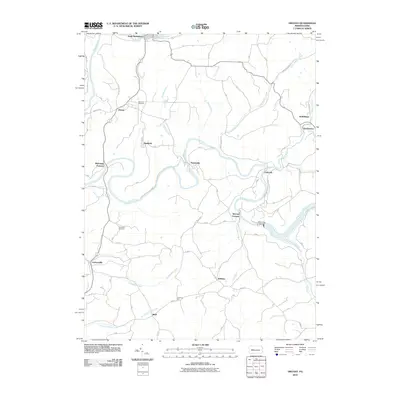 2010 Distant2010 Print · USGSThe creek valleys of Armstrong County appear in high detail during this contemporary study of the region's rural topography. Researchers can trace ancestral roots near Oakland Cemetery, locate the site of Mahoning Furnace, or explore the riverside layout of Putneyville.
 - 2010 Map of New Bethlehem, 2010 Print
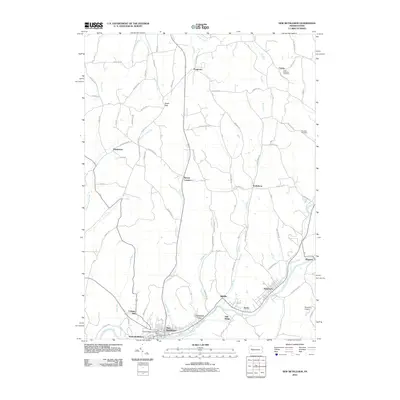 2010 New Bethlehem2010 Print · USGSThe Redbank Creek valley comes to life in this early 21st-century study of the river towns and rural uplands near the Clarion-Armstrong border. Genealogists and local historians can trace family sites at Saint Nicholas Cemetery or explore the corridors of New Bethlehem and Fairmont City.
 - 2013 Map of New Bethlehem, 2013 Print
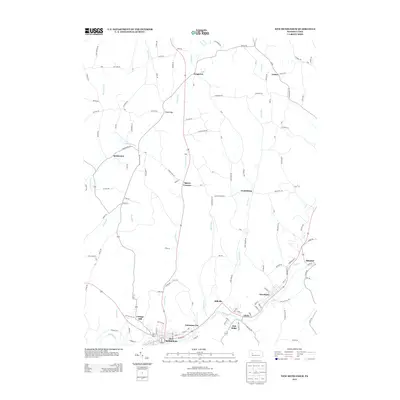 2013 New Bethlehem2013 Print · USGSThe Redbank Creek corridor thrives in this 2013 survey, showcasing the enduring layout of river-valley towns. Researchers can trace local history through settlements like New Bethlehem, Fairmont City, and the rural crossroads of Frogtown.
 - 2013 Map of Distant, 2013 Print
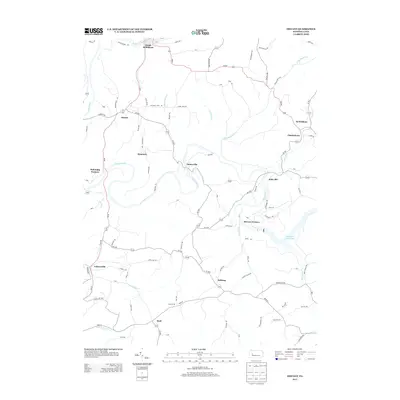 2013 Distant2013 Print · USGSArmstrong County's industrial and rural landscape is captured here in the early twenty-first century, centered on the historic furnace sites and river valleys. Researchers can trace the layout of legacy settlements like Putneyville, Distant, and the iron-working heritage of Mahoning Furnace.
 - 2016 Map of New Bethlehem, 2016 Print
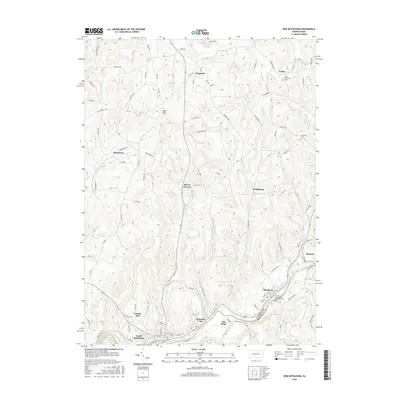 2016 New Bethlehem2016 Print · USGSClarion and Armstrong counties are shown here in the mid-2010s, centered on the communities lining the valley of Redbank Creek. Researchers can locate family sites and local history at Saint Nicholas Cem, Fairmont City, and Hawthorn.
 - 2016 Map of Distant, 2016 Print
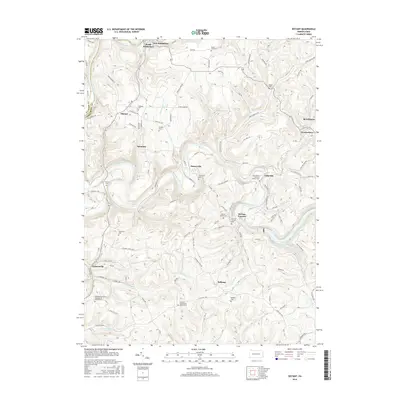 2016 Distant2016 Print · USGSArmstrong and Clarion County borders meet along the waters of Redbank Creek in this mid-2010s look at Western Pennsylvania. Local historians can trace family roots through the Milliron Family Cem or study sites like McCrea Furnace and Putneyville.
 - 2019 Map of Distant, 2019 Print
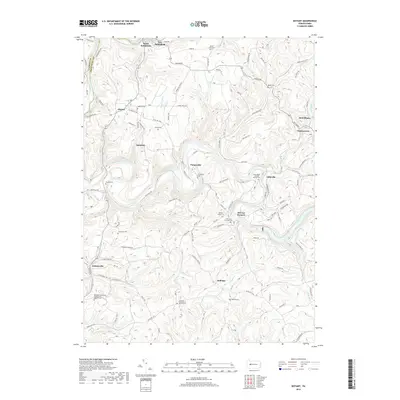 2019 Distant2019 Print · USGSArmstrong County's rural heartland is captured here in the years following the millennium, showing the enduring layout of valley settlements and upland farms. Genealogists can trace family locations near McCrea Furnace, Jerusalem Cem, and the Concord Presbyterian Church Cem.
 - 2019 Map of New Bethlehem, 2019 Print
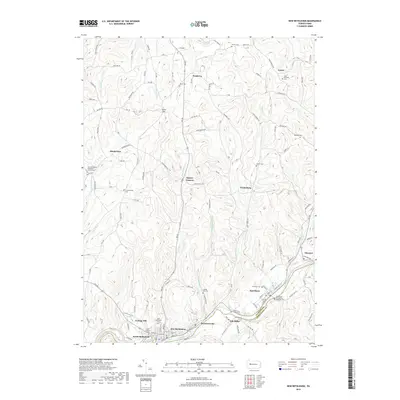 2019 New Bethlehem2019 Print · USGSClarion and Armstrong counties meet along the winding waters of the Redbank Creek valley in this recent 2010s survey. Researchers can trace family history through a high density of rural cemeteries and hilltop hamlets like Frogtown, Crates, and Fairmont City.
Showing maps 1-25 of 27
Frequently asked questions
- What are the different types of historical maps available for New Bethlehem?
- What is the oldest map of New Bethlehem?
- Where can I purchase historical maps of New Bethlehem for my home or office?
- Where can I download high-res historical maps of New Bethlehem?
- Are there historical topographic maps available for New Bethlehem?
- Is there historical aerial imagery available for New Bethlehem?
- Where are historical maps of New Bethlehem sourced from?