1940s Maps of Dauphin County, Pennsylvania
Explore 21 historic maps of Dauphin County from the 1940s. These maps offer a rare glimpse into what life looked like during the 1940s — showing old roads, neighborhoods, homes, and landmarks that have changed or disappeared over time.
Whether you're researching your family's past, planning a metal detecting trip, or studying how Dauphin County's landscape evolved across the 1940s, these high-resolution maps are a powerful tool for exploring the history of this region.
- Focus on a specific era: All maps on this page are from the 1940s, giving you a focused view of this time period.
- See what’s changed: Compare century-old streets, trails, and buildings to today's modern landscape using overlays and satellite layers.
- Research with precision: Use these maps for genealogy, historical research, land use analysis, or educational projects.
- View, download, or print: Maps are fully viewable online in high resolution, and can be downloaded or printed for your own records.
Start exploring Dauphin County's history through authentic maps from the 1940s. This is your window into the past.
Dauphin County, PA maps
(21)- 1943 Map of Millersburg
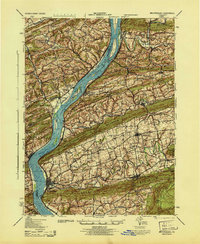 1943 Millersburg1943 Print · USGSDauphin and Northumberland counties appear here during the mid-1940s, defined by the river-and-rail economy along the Susquehanna River. Researchers can trace the heritage of small valley towns through landmarks like St Johns Church, Morning Glory School, and the Limestone Quarries.
 - 1943 Map of New Cumberland
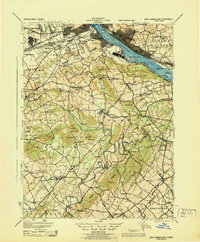 1943 New Cumberland1943 Print · USGSGreater Harrisburg and the lower Susquehanna valley appear here in the midst of the Second World War, showing a landscape of intense military and social transition. Researchers can trace family roots through numerous country landmarks like Eberlys Mill, the Methodist Orphanage, and Messiah Bible College.
 - 1943 Map of Lykens
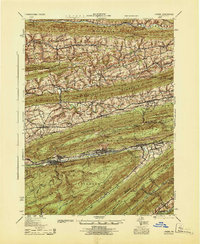 1943 Lykens1943 Print · USGSDauphin and Schuylkill counties are shown in the 1940s as a high-density corridor of anthracite coal production and valley farming. Genealogists and industrial historians can trace the Reading rail lines connecting Williamstown to an Abandoned Colliery and rural landmarks like Himmels Ch.
 - 1943 Map of Middletown
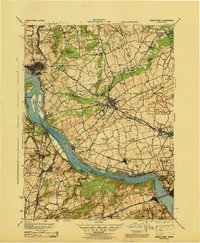 1943 Middletown1943 Print · USGSAs World War II mobilization reached its peak, this survey captures the Susquehanna River corridor as a vital industrial and rail artery. Genealogists and researchers can trace family landmarks like Donegal Springs Church, Codorus Furnace, and the early layout of Three Mile Island.
 - 1943 Map of Harrisburg
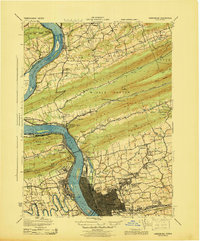 1943 Harrisburg1943 Print · USGSThe Pennsylvania capital and its surrounding Susquehanna riverfront are seen here during the war years. Researchers can trace the extensive rail networks and find local landmarks like Fort Hunter, Good Hope Mills, and Wenrichs Ch.3 unique versions available
 - 1943 Map of New Bloomfield
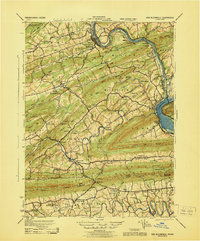 1943 New Bloomfield1943 Print · USGSPerry County's ridge-and-valley landscape is captured here during the Second World War as the rail-and-river corridor remained vital to the region. Genealogists can locate family landmarks like Hustons Mill, Mecks Corner, and the old Wila P O post office.
 - 1943 Map of Hummelstown
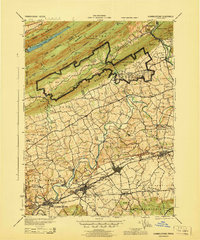 1943 Hummelstown1943 Print · USGSDauphin and Lebanon counties appear here during the Second World War as military and industrial growth transformed the countryside. Researchers can trace family landmarks and rural infrastructure, from Moonshine Ch and Union Deposit to the Hershey Zoo.
 - 1947 Map of Harrisburg West
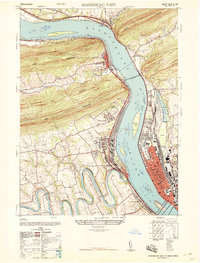 1947 Harrisburg West1947 Print · USGSThe Susquehanna River corridor near Harrisburg is captured here just after the war, showing the massive rail infrastructure and mountain gaps that define the region. Genealogists and local historians can locate the Enola yards, Good Hope Mills, and family burial sites like Chestnut Grove Cemetery.3 unique versions available
 - 1947 Map of Hummelstown
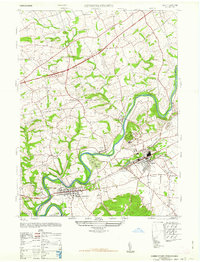 1947 Hummelstown1947 Print · USGSThe Pennsylvania countryside between Hummelstown and Hershey appears in the late 1940s as a mix of rural schools and corporate expansion. Trace the early layout of Hershey Zoo and Hershey Stadium alongside landmarks like Union Deposit and Stoverdale Station.2 unique versions available
 - 1947 Map of Elizabethville
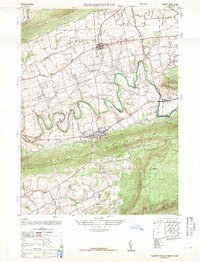 1947 Elizabethville1947 Print · USGSPost-war Dauphin County unfolds across the Lykens Valley in this mid-century survey of rural townships and mountain ridges. Genealogists can trace family roots through numerous local landmarks like Maple Grove Cem, Straw Church & Cem, and the Pennsylvania RR corridor.2 unique versions available
 - 1947 Map of Enders
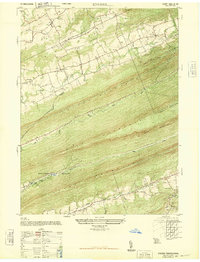 1947 Enders1947 Print · USGSDauphin County’s ridge-and-valley landscape is captured here in the years immediately following the war, showing the tight-knit rural communities between the mountains. Genealogists can locate specific landmarks like Bowermans Church, Carsonville School, and rail stops including Ellendale Forge Station.2 unique versions available
 - 1947 Map of Palmyra
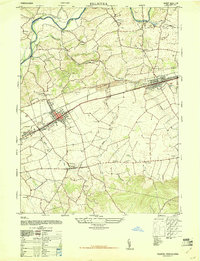 1947 Palmyra1947 Print · USGSLebanon County towns and rural school districts are captured here in the late 1940s as they grew along the Reading railroad. Researchers can trace ancestral locations through numerous named sites like Gravel Hill Church, Meyersville School, and Palmyra Cemetery.2 unique versions available
 - 1947 Map of Halifax
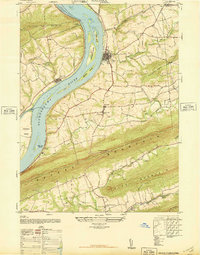 1947 Halifax1947 Print · USGSThe Susquehanna River valley emerges in the post-war era as a landscape of mountain ridges and fertile river islands. Genealogists can locate family landmarks like Jacobs Church, the Shamokin School, and old riverside settlements from New Buffalo to Speeceville.3 unique versions available
 - 1947 Map of Millersburg
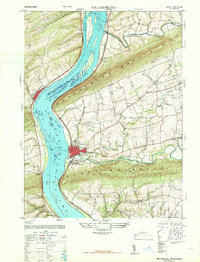 1947 Millersburg1947 Print · USGSThe Susquehanna River valley and the ridges of Central Pennsylvania are captured here just after the war. Local historians can trace family sites like Killinger School, navigate the Millersburg Ferry, and locate old river crossings such as Montgomery Ferry.2 unique versions available
 - 1947 Map of Harrisburg East
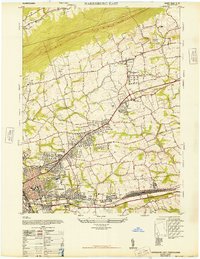 1947 Harrisburg East1947 Print · USGSDauphin County expansion is evident in the late 1940s as suburban communities like Progress and Paxtang grow alongside critical rail lines. Genealogists and historians can trace Prospect Hill Cemetery, the Abandoned Race Track, and early aviation at Penn-Harris Airport.4 unique versions available
 - 1947 Map of Klingerstown
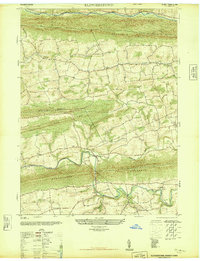 1947 Klingerstown1947 Print · USGSThe rural borderlands of Northumberland and Schuylkill counties are captured here just after the war. Genealogists can trace family names through landmarks like St Peters-Himmels Church, the Kissingers School, and the village of Rough and Ready.2 unique versions available
 - 1947 Map of Pillow
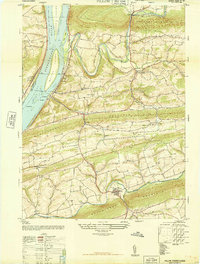 1947 Pillow1947 Print · USGSThe river and ridge country of Dauphin and Northumberland Counties comes alive in this post-war survey. Genealogists can trace family roots through numerous local landmarks like Withers School, St Pauls Church, and the riverfront at Port Trevorton.3 unique versions available
 - 1947 Map of Lykens
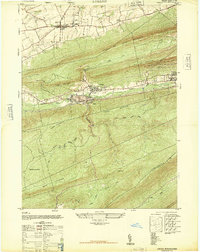 1947 Lykens1947 Print · USGSDauphin County’s northern coal valleys are captured here in the late 1940s, showing the industrial pulse of the region between massive mountain ridges. Researchers can trace the rail spurs of the Reading line and locate landmarks like the Anthracite Plant, Salladas School, and the County Fair Grounds.3 unique versions available
 - 1947 Map of Tower City
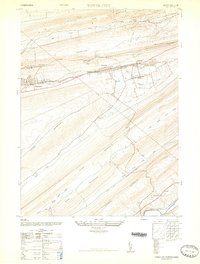 1947 Tower City1947 Print · USGSThe anthracite coal valleys of Schuylkill and Dauphin Counties are captured here in the late 1940s. Genealogists and historians can trace family locations in Tower City and Williamstown, or locate landmarks like the Porter Township High School and the Union Church.3 unique versions available
 - 1947 Map of Dalmatia
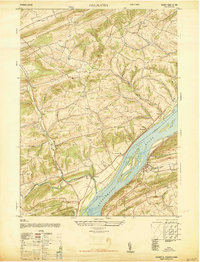 1947 Dalmatia1947 Print · USGSThe Susquehanna River corridor in the late 1940s serves as a vital artery for the Pennsylvania Railroad and the historic Susquehanna Trail. Genealogists and local historians can trace family roots through numerous rural landmarks like Aline School, Bot Schafts Church, and the riverfront village of Dalmatia.2 unique versions available
 - 1947 Map of Manada Gap
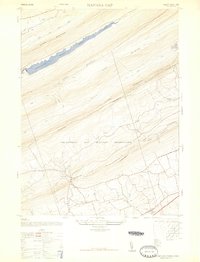 1947 Manada Gap1947 Print · USGSDauphin County’s mountainous ridges were still adjusting to a heavy military and industrial footprint just after the war. You can trace the legacy of the local iron industry at Manada Furnace or locate family roots at the Grantville School and Manada Furnace Church.3 unique versions available
End of results
Showing maps 1-21 of 21
Top cities of Dauphin County
- Harrisburg historical maps
- Middletown historical maps
- Steelton historical maps
- Hummelstown historical maps
- Highspire historical maps
- Lykens historical maps
See more
Frequently asked questions
- What are the different types of historical maps available for Dauphin County?
- What is the oldest map of Dauphin County?
- Where can I purchase historical maps of Dauphin County for my home or office?
- Where can I download high-res historical maps of Dauphin County?
- Are there historical topographic maps available for Dauphin County?
- Is there historical aerial imagery available for Dauphin County?
- Where are historical maps of Dauphin County sourced from?