Old Maps of Washington Township, Pennsylvania
Explore 33 old maps of Washington Township, spanning from 1891 to today. These high-resolution historic maps reveal how streets, neighborhoods, landmarks, and natural features evolved over time — perfect for genealogy, metal detecting, research, and local history exploration.
What you can do with these maps:
- See how Washington Township changed over time: Compare historical maps to modern-day views to trace roads, homesites, rail lines & more.
- View detailed metadata: Each map includes creators, publishers, year, scale, and archive source.
- Overlay maps with satellite & LiDAR: Visualize the past alongside modern tools to explore terrain & human change.
- Trusted historical sources: Maps sourced from the USGS, Library of Congress, and other archives.
- Access maps your way: View online, download high-res files, or order prints for personal or research use.
Start exploring old maps of Washington Township to uncover forgotten places, hidden landmarks, and the deep history beneath your feet.
Washington Township, PA maps
(33)- 1891 Map of Delaware Water Gap
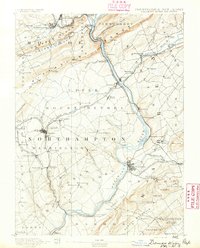 1891 Delaware Water Gap1891 Print · USGSThe Delaware River corridor was a bustling industrial and transport hub in the late nineteenth century. Genealogists and historians can trace the region's slate mining roots at the Old Bangor Slate Quarry or locate historic river crossings like Myeres Ferry and Hartzells Ferry.
 - 1893 Map of Delaware Water Gap
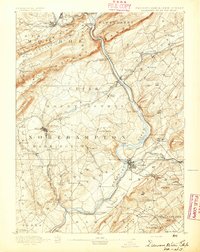 1893 Delaware Water Gap1893 Print · USGSThe Delaware River borderlands between Pennsylvania and New Jersey are captured here in the late nineteenth century as the slate industry and railroads transformed the valley. Researchers can locate the Old Bangor Slate Quarry, trace the river crossings at Myeres Ferry, and explore old stops like Stone Church P. O.12 unique versions available
 - 1936 Map of Delaware Water Gap
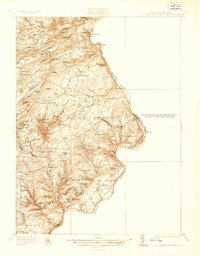 1936 Delaware Water Gap1936 Print · USGSThe Delaware River valley thrived in the mid-thirties as a critical junction for coal-hauling railroads and mountain tourism. Local historians can trace family roots through numerous rural landmarks like Spoke Factory Sch, Ross Cem, and Slateford Junction.4 unique versions available
 - 1941 Map of Delaware Water Gap
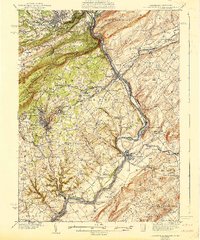 1941 Delaware Water Gap1941 Print · USGSThe Delaware River valley is captured here in the early 1940s, showing the borderlands of Pennsylvania and New Jersey. Genealogists can trace family names through dozens of rural landmarks like Three Church Hill, Brass Castle, and the Stone Church PO.
 - 1942 Map of Delaware Water Gap
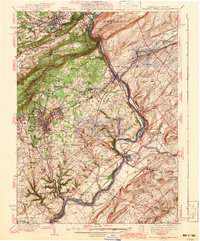 1942 Delaware Water Gap1942 Print · USGSThe Delaware River gorge and its surrounding ridges come into focus during the early war years, highlighting a critical rail and river junction. Trace local history through family-named landmarks like Miller Ch, rural Quaker Plain Sch, and the unique name of Manunka Chunk.3 unique versions available
 - 1943 Map of Bangor
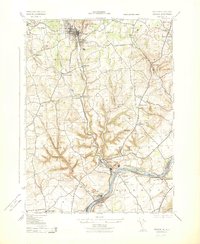 1943 Bangor1943 Print · USGSThe slate and cement industries of the Pennsylvania-New Jersey border are captured in high detail at the height of wartime production. Genealogists and industrial historians can trace rail spurs to the Old Bangor Slate Quarry, locate the Middaghs PO, and find rural landmarks like Three Church Hill.
 - 1943 Map of Bethlehem
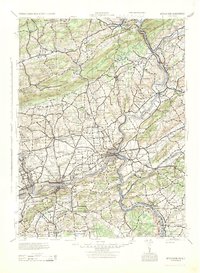 1943 Bethlehem1943 Print · USGSNorthampton and Lehigh counties hummed with industry and river commerce during the early war years. Researchers can trace the path of the Lehigh Valley RR, locate family-named landmarks like Chief Tatamy, and find rural schools such as Mexico School and Poplar Valley Sch.
 - 1943 Map of Stroudsburg, 1944 Print
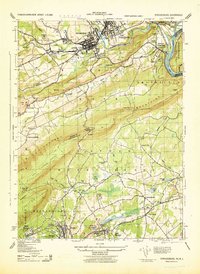 1943 Stroudsburg1944 Print · USGSThe Poconos and the Delaware Water Gap are captured here during the wartime era, showing a mix of industrial centers and mountain terrain. Researchers can trace the rail lines serving Slate Quarries or find local landmarks like Temple Israel and Mammoth Hosiery Mills.
 - 1944 Map of Newark, 1971 Print
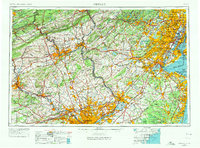 1944 Newark1971 Print · USGSThe industrial corridor from Philadelphia to New York was in a period of massive transition during the mid-forties. Genealogists and researchers can trace the rail lines of the Lehigh Valley RR, locate military installations like Picatinny Arsenal, and explore the early sprawl near Levittown.5 unique versions available
 - 1949 Map of Newark
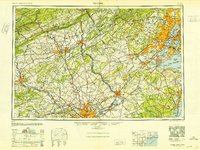 1949 Newark1949 Print · USGSThe industrial corridor between Philadelphia and New York comes alive in this post-war survey. Genealogists and historians can trace the massive rail networks of the Reading Railroad and locate major installations like Fort Dix or Picatinny Arsenal.2 unique versions available
 - 1953 Map of Bangor
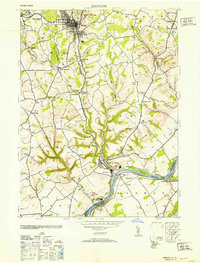 1953 Bangor1953 Print · USGSThe industrial heart of Northampton County is on full display here just after the war, where slate and cement production drive the local economy. Researchers can trace the extensive rail networks serving the Old Bangor Slate Quarry, the Alpha Cement Co, and the rural post office at Middaghs PO.
 - 1953 Map of Stroudsburg
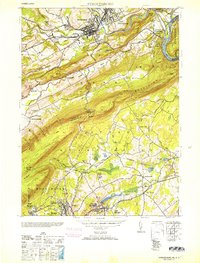 1953 Stroudsburg1953 Print · USGSThe Pocono foothills and Lehigh Valley slate belt come into sharp focus in this mid-century survey of Monroe and Northampton counties. Genealogists and historians can trace family roots through numerous rural landmarks like Wolf School No 2, White Gap Cemetery, and the industrial Slate Quarries of Bangor.2 unique versions available
 - 1955 Map of Stroudsburg, 1957 Print
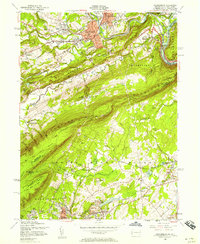 1955 Stroudsburg1957 Print · USGSIn the mid-1950s, the Delaware Water Gap remained a vital crossroads of commerce and conservation. Researchers can trace the path of the Appalachian Trail or locate family roots at Prospect Cem and schools like St Matthew Sch.7 unique versions available
 - 1956 Map of Newark
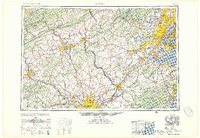 1956 Newark1956 Print · USGSThe industrial heart of the Mid-Atlantic is captured here at the dawn of the highway era, tracing the dense corridors between Newark and Philadelphia. Genealogists and local historians can map the rail networks of the Reading RR or locate mid-century military life at Fort Dix Military Reservation.2 unique versions available
 - 1956 Map of Bangor, 1958 Print
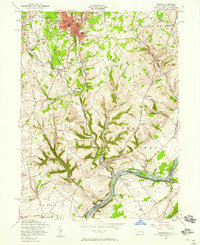 1956 Bangor1958 Print · USGSNorthampton County thrives in the mid-fifties as a center of quarrying and rail transport between the Slate Belt boroughs and the Delaware River. Genealogists and historians can trace family roots at Evergreen Cem, explore the early footprint of Bangor, and locate rural landmarks like Stone Church.6 unique versions available
 - 1957 Map of Newark
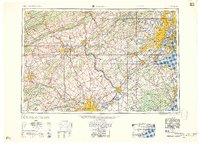 1957 Newark1957 Print · USGSThe industrial and military heart of the Mid-Atlantic is mapped during its post-war suburban boom. Genealogists and historians can trace the intricate rail corridors of the Reading Railroad and locate key landmarks from Princeton University to Fort Hancock.
 - 1960 Map of Newark
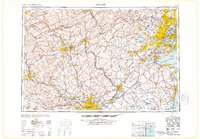 1960 Newark1960 Print · USGSThe industrial heart of the Mid-Atlantic is shown at mid-century, stretching from the dense urban centers of Newark and Philadelphia to the Blue Mountain ridges. Researchers can trace historic rail lines, coastal defenses at Fort Hancock, and the riverfront growth of Trenton and Easton.3 unique versions available
 - 1964 Map of Newark
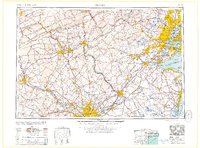 1964 Newark1964 Print · USGSGreater New Jersey and eastern Pennsylvania appear at the peak of their industrial and rail-centered development in the mid-sixties. Genealogists and historians can trace the paths of the Pennsylvania RR, identify mid-century landmarks like CAMP KILMER, or follow the Schuylkill River through READING.2 unique versions available
 - 1976 Map of Stroudsburg, 1978 Print
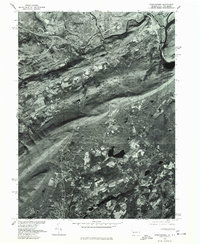 1976 Stroudsburg1978 Print · USGSThe Delaware Water Gap region comes into focus during the mid-1970s, showing the concentrated development of the river towns. Genealogists and local historians can trace the street patterns and rural boundaries around Stroudsburg, Roseto, and East Bangor.
 - 1984 Map of Allentown, 1985 Print
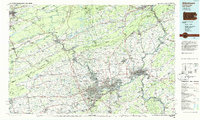 1984 Allentown1985 Print · USGSThe Lehigh Valley and southern Poconos are captured in the mid-eighties as industry and academic life converge along the river corridor. Trace the rail-and-water networks connecting Jim Thorpe and Bethlehem, or explore landmarks like Lehigh University and the Delaware Water Gap.3 unique versions available
 - 1992 Map of Stroudsburg, 1995 Print
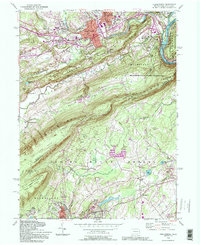 1992 Stroudsburg1995 Print · USGSStroudsburg and the Delaware Water Gap are shown in the early nineties, capturing the intersection of growing Pocono boroughs and protected parklands. Genealogists can locate family sites at Stroudsburg Cem or trace the routes of the Appalachian Trail through Cherry Valley.
 - 1997 Map of Bangor, 1999 Print
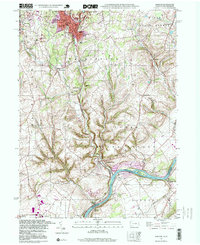 1997 Bangor1999 Print · USGSNorthampton County near the Delaware River shows its industrial roots and tight-knit boroughs in the late 1990s. Genealogists and local historians can trace school sites like Lincoln Sch, old cemeteries including Union Cem, and the rail infrastructure at Martins Creek Jct.
 - 1999 Map of Stroudsburg, 2001 Print
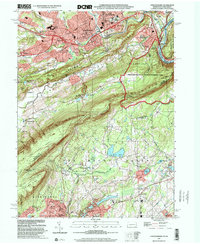 1999 Stroudsburg2001 Print · USGSThe Delaware Water Gap and the twin boroughs of the Poconos are seen here as they entered the twenty-first century. Genealogists and local historians can trace the many parishes and cemeteries of the slate belt, including St Pauls Ch and Mt Carmel Cem.
 - 2011 Map of Bangor, 2011 Print
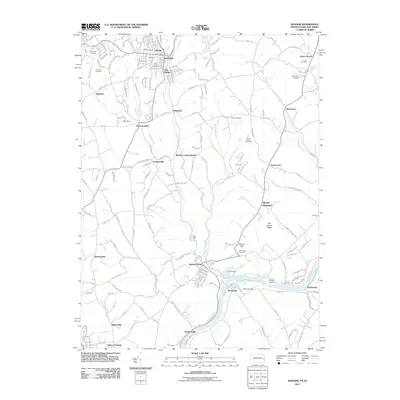 2011 Bangor2011 Print · USGSThe Pennsylvania-New Jersey border comes alive in the early twenty-first century as the Delaware River flows past Brainards and Hutchinson. Researchers can trace local lineage through several sites like Saint Johns Cemetery or explore small-town layouts in Bangor and Richmond.
 - 2011 Map of Stroudsburg, 2011 Print
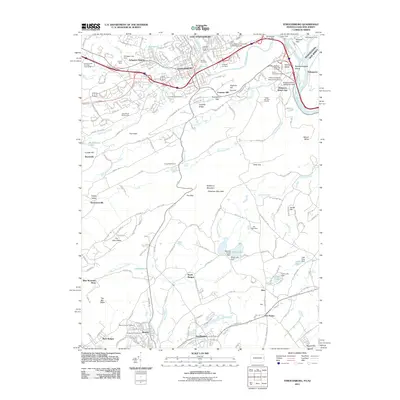 2011 Stroudsburg2011 Print · USGSThe Delaware River corridor and the Twin Cities area are captured in the early 21st century, showing the intersection of heavy transit and collegiate life. Genealogists and historians can locate Stroud Cemetery, Arlington Heights, and the grounds of East Stroudsburg University.
Showing maps 1-25 of 33
Top cities near Washington Township
- Bethlehem historical maps
- Easton historical maps
- Phillipsburg historical maps
- Lower Saucon Township historical maps
- Hanover Township historical maps
- East Stroudsburg historical maps
See more
Top neighborhoods of Washington Township
- Factoryville historical maps
- Martins Creek Junction historical maps
- Richmond historical maps
- Ackermanville historical maps
- West Bangor historical maps
- Flicksville historical maps
Frequently asked questions
- What are the different types of historical maps available for Washington Township?
- What is the oldest map of Washington Township?
- Where can I purchase historical maps of Washington Township for my home or office?
- Where can I download high-res historical maps of Washington Township?
- Are there historical topographic maps available for Washington Township?
- Is there historical aerial imagery available for Washington Township?
- Where are historical maps of Washington Township sourced from?