Old Maps of Indian Head Mills, South Carolina
Explore 28 old maps of Indian Head Mills, spanning from 1907 to today. These high-resolution historic maps reveal how streets, neighborhoods, landmarks, and natural features evolved over time — perfect for genealogy, metal detecting, research, and local history exploration.
What you can do with these maps:
- See how Indian Head Mills changed over time: Compare historical maps to modern-day views to trace roads, homesites, rail lines & more.
- View detailed metadata: Each map includes creators, publishers, year, scale, and archive source.
- Overlay maps with satellite & LiDAR: Visualize the past alongside modern tools to explore terrain & human change.
- Trusted historical sources: Maps sourced from the USGS, Library of Congress, and other archives.
- Access maps your way: View online, download high-res files, or order prints for personal or research use.
Start exploring old maps of Indian Head Mills to uncover forgotten places, hidden landmarks, and the deep history beneath your feet.
Indian Head Mills, SC maps
(28)- 1907 Map of Saluda
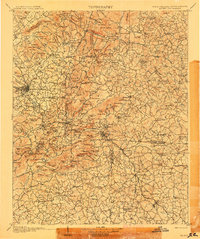 1907 Saluda1907 Print · USGSNorth Carolina's mountain frontier meets the South Carolina foothills in this 1900s survey of the Blue Ridge. Genealogists and researchers can trace the early rail network through Saluda and locate old landmarks like Rockcliff PO and Pleasant Grove Church.3 unique versions available
 - 1953 Map of Charlotte, 1968 Print
 1953 Charlotte1968 Print · USGSThe North Carolina Piedmont and South Carolina borderlands are shown in detail during a period of significant growth and reservoir development. Trace the rail corridors of the Southern Railway or find family roots in towns like China Grove, Misenheimer, and Lincolnton.3 unique versions available
 - 1954 Map of Charlotte
 1954 Charlotte1954 Print · USGSThe North Carolina Piedmont in the mid-1950s shows a region of rapid growth and industrial expansion centered around Charlotte. Trace the era's infrastructure through the Southern railroad lines and locate significant landmarks like the Charlotte Naval Ammunition Depot and Lake Norman.2 unique versions available
 - 1955 Map of Knoxville
 1955 Knoxville1955 Print · USGSThe Southern Appalachians and the Smoky Mountains are shown here at a peak of mid-century development and conservation. Genealogists and historians can trace the early road networks connecting Gatlinburg, Waynesville, and the Cherokee Indian Reservation across the high ridges.
 - 1957 Map of Knoxville, 1966 Print
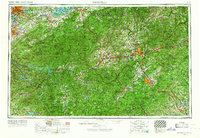 1957 Knoxville1966 Print · USGSThe Southern Appalachians of Tennessee and North Carolina are mapped here during the mid-twentieth century as new highways reached the high country. Genealogists and historians can trace the topography between Knoxville and Asheville, locating family landmarks near Fontana Lake or along the Blue Ridge Parkway.4 unique versions available
 - 1959 Map of Cowpens, 1961 Print
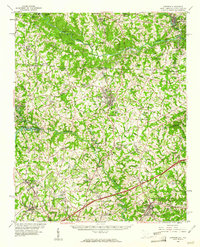 1959 Cowpens1961 Print · USGSThe borderlands of the Carolinas are shown here in the late fifties, featuring a mix of textile mill towns and rural farming communities. Researchers can trace family roots through numerous local landmarks like Cannons Camp Ground, Gaffney Chapel, and Cooley Springs.2 unique versions available
 - 1960 Map of Knoxville
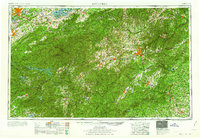 1960 Knoxville1960 Print · USGSThe Southern Appalachians come alive in the 1950s, showing the intersection of new national park tourism and deep-rooted mountain industry. Trace old rail lines like the Clinchfield RR and find high-altitude landmarks from Mt Le Conte to the Cherokee Indian Reservation.2 unique versions available
 - 1960 Map of Charlotte
 1960 Charlotte1960 Print · USGSMid-century North Carolina and South Carolina meet in this 1960 survey of the Piedmont's industrial and textile heartland. Trace the growth of Charlotte alongside historic landmarks like Kings Mountain National Military Park and the Charlotte Naval Ammunition Depot.2 unique versions available
 - 1961 Map of Inman, 1964 Print
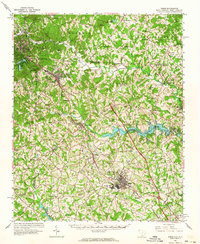 1961 Inman1964 Print · USGSUpper Spartanburg County and Polk County thrive in the early sixties as the textile industry and new reservoirs reshape the landscape. Genealogists can locate family names at Morgan Chapel Cem and Polk Memorial Gardens, or trace early industrial hubs like Inman Mills.
 - 1962 Map of Charlotte
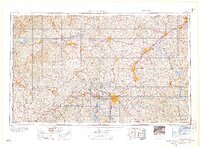 1962 Charlotte1962 Print · USGSThe North Carolina Piedmont in the early sixties showcases a landscape transformed by massive reservoirs and industrial growth. Researchers can trace the development of Lake Norman, locate the Charlotte Naval Ammunition Depot, or find family landmarks like Wesley Chapel and Brown & Norcott Mills.
 - 1964 Map of Knoxville
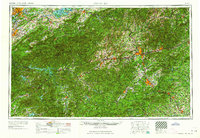 1964 Knoxville1964 Print · USGSThe Southern Appalachians and Great Smokies are captured here during the mid-sixties, showing the rugged borderlands of Tennessee and North Carolina. Researchers can trace historic mountain routes like U S 441, the expanse of Pisgah National Forest, and the growing footprints of Asheville and Knoxville.
 - 1975 Map of Cowpens NW, 1979 Print
 1975 Cowpens NW1979 Print · USGSThe South Carolina and North Carolina borderlands come into focus in the mid-1970s, showing the rural landscape along the Broad River. Genealogists and local historians can trace the roads and homesteads surrounding Cooley Springs, Harris, and Fingerville.
 - 1983 Map of Fingerville East
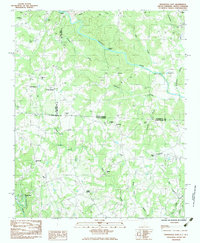 1983 Fingerville East1983 Print · USGSThe borderlands of the Carolinas in the early 1980s show a rural network of small crossroads and river crossings. Genealogists and local historians can trace family roots through numerous sites like Alverson Grove Ch, Brooklyn Cem, and the settlement of Fingerville.
 - 1983 Map of Fingerville West
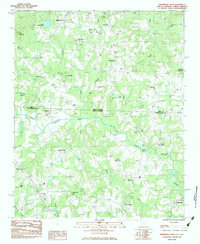 1983 Fingerville West1983 Print · USGSThe Carolina borderlands come alive in this early 1980s survey of the Spartanburg and Polk County area. Researchers can trace rural lineages through local landmarks like Little Africa, New Prospect, and historic congregations such as Melvin Hill Ch.
 - 1986 Map of Hendersonville
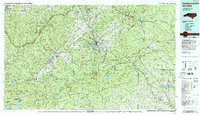 1986 Hendersonville1986 Print · USGSThe Blue Ridge foothills of North and South Carolina are documented here in the mid-eighties as modern highways began to reshape mountain travel. Local historians can trace the paths of the Southern Railway through Hendersonville or locate landmarks like Looking Glass Rock and Inman Mills.2 unique versions available
 - 1986 Map of Gastonia
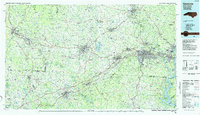 1986 Gastonia1986 Print · USGSThe Carolina Piedmont in the mid-eighties shows a landscape shaped by Revolutionary War history and the textile industry. Trace the footprints of early battles at Kings Mountain National Military Park and locate depots along the Southern Railway in Shelby and Gastonia.
 - 1991 Map of Gastonia
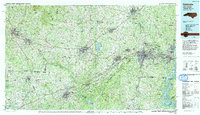 1991 Gastonia1991 Print · USGSThe Piedmont region along the North Carolina and South Carolina border shows a bustling industrial and transit corridor in the early nineties. Researchers can trace the sprawling footprints of Gastonia and Shelby or explore the grounds of Kings Mountain National Military Park and Lake Wylie.
 - 1993 Map of Fingerville East, 1996 Print
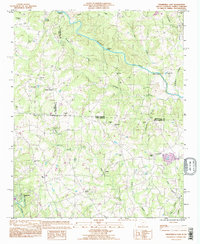 1993 Fingerville East1996 Print · USGSThe rural borderlands of South Carolina and North Carolina are captured here in the mid-nineties, showing a landscape defined by small creeks and country crossroads. Researchers can trace family roots through numerous local landmarks like Cedar Grove Ch, Cooley Springs, and McKinney Bridge.
 - 2011 Map of Fingerville West, 2011 Print
 2011 Fingerville West2011 Print · USGSThe rural Upstate South Carolina borderlands appear in detail in this early twenty-first-century survey. Genealogists and local historians can trace family land and small communities like Little Africa, New Prospect, and Collinsville.
 - 2011 Map of Fingerville East, 2011 Print
 2011 Fingerville East2011 Print · USGSThe South Carolina-North Carolina border country comes into focus in the early twenty-first century, showing the rural communities of Cooley Springs and Brooklyn. Genealogists can trace local roots through landmarks like the Gethsemane Cemetery and Robbins Cemetery.
 - 2014 Map of Fingerville East, 2014 Print
 2014 Fingerville East2014 Print · USGSThe Carolina borderlands come to life in this modern survey of the Piedmont, showcasing the rural landscapes where the Broad River divides North and South Carolina. Genealogists and local historians can trace family-named sites like McKinney Bridge and Gethsemane Cem, or explore old crossroads including Cooley Springs and Sandy Springs.
 - 2014 Map of Fingerville West, 2014 Print
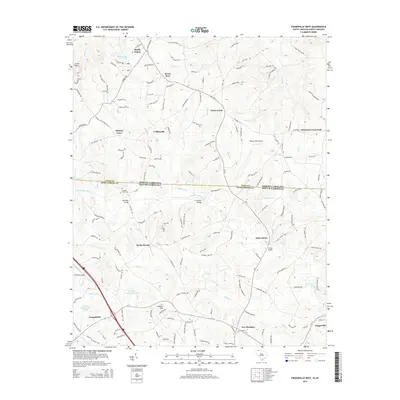 2014 Fingerville West2014 Print · USGSThe South Carolina and North Carolina borderlands come into focus in the mid-2010s, centered on the river-fed agricultural communities of Spartanburg County. Genealogists can trace family names at Jackson Grove Cem and find old routes near Little Africa and Collinsville.
 - 2017 Map of Fingerville East, 2017 Print
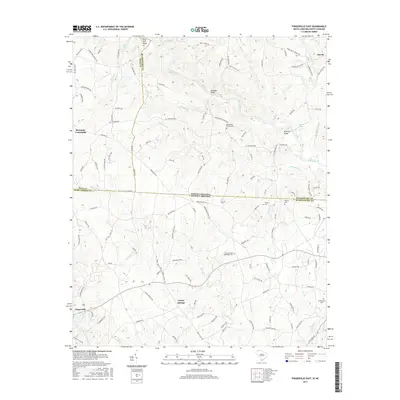 2017 Fingerville East2017 Print · USGSThe foothills along the Carolina state line come into focus in this mid-2010s survey of the Spartanburg and Rutherford county border. Researchers can trace rural lineages through sites like Cooley Springs, Broad River Church Cem, and the family-named Robbins Cem.
 - 2017 Map of Fingerville West, 2017 Print
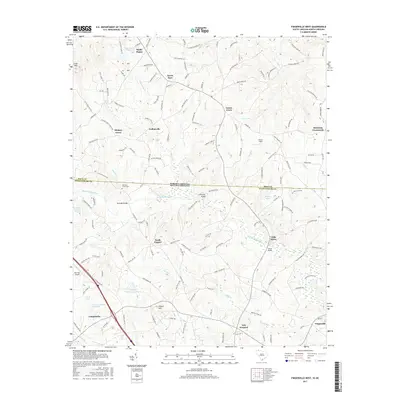 2017 Fingerville West2017 Print · USGSThe South Carolina and North Carolina borderlands come into focus in this detailed study of the area near Campobello and Fingerville. Researchers can trace family history through locations like Little Africa, Jackson Grove Cem, and the rural crossroads of Kross Keys.
 - 2020 Map of Fingerville West, 2020 Print
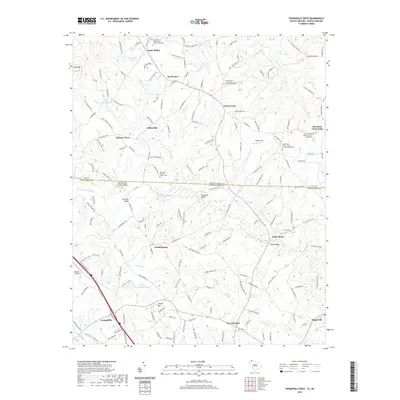 2020 Fingerville West2020 Print · USGSCrossing the state line between the Carolinas in the modern era, this map shows the rural communities of Spartanburg and Polk counties. Genealogists can trace family landmarks and local congregations at Melvin Hill Church of the Brethren and Sandy Plains.
Showing maps 1-25 of 28
Frequently asked questions
- What are the different types of historical maps available for Indian Head Mills?
- What is the oldest map of Indian Head Mills?
- Where can I purchase historical maps of Indian Head Mills for my home or office?
- Where can I download high-res historical maps of Indian Head Mills?
- Are there historical topographic maps available for Indian Head Mills?
- Is there historical aerial imagery available for Indian Head Mills?
- Where are historical maps of Indian Head Mills sourced from?