Old Maps of Brule County, South Dakota
Explore 148 old maps of Brule County, spanning from 1935 to today. These high-resolution historic maps reveal how streets, neighborhoods, landmarks, and natural features evolved over time — perfect for genealogy, metal detecting, research, and local history exploration.
What you can do with these maps:
- See how Brule County changed over time: Compare historical maps to modern-day views to trace roads, homesites, rail lines & more.
- View detailed metadata: Each map includes creators, publishers, year, scale, and archive source.
- Overlay maps with satellite & LiDAR: Visualize the past alongside modern tools to explore terrain & human change.
- Trusted historical sources: Maps sourced from the USGS, Library of Congress, and other archives.
- Access maps your way: View online, download high-res files, or order prints for personal or research use.
Start exploring old maps of Brule County to uncover forgotten places, hidden landmarks, and the deep history beneath your feet.
Brule County, SD maps
(148)- 1935 Map of Chamberlain, 1975 Print
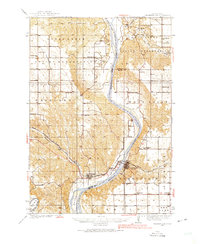 1935 Chamberlain1975 Print · USGSMid-century South Dakota river life centers on the Missouri crossing between Chamberlain and Oacoma during the mid-thirties. Genealogists can locate numerous country schools like Pleasant View Sch and historical sites such as the CCC Camp.
 - 1939 Map of Chamberlain
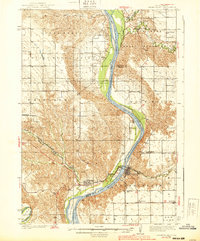 1939 Chamberlain1939 Print · USGSChamberlain and Oacoma face one another across the Missouri River in the late thirties, just as the region transitioned into the modern era. Genealogists and researchers can locate numerous country schools and churches, including St Albans Ch, Grace Mission Sch, and Riverview Cem.2 unique versions available
 - 1940 Map of Iona, 1958 Print
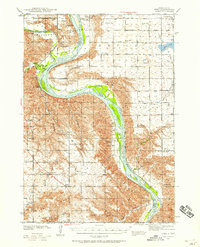 1940 Iona1958 Print · USGSIn the early 1940s, the Missouri and White Rivers shaped life across South Dakota's Lyman and Brule counties. Genealogists can trace nearly twenty rural schoolhouses and cemeteries like Iona Cem, alongside landmarks such as Twilight Butte and the settlement of Iona.
 - 1941 Map of Pukwana
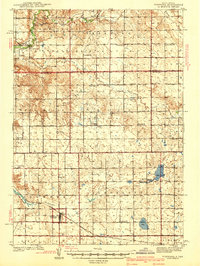 1941 Pukwana1941 Print · USGSBrule County farming and the Crow Creek Indian Reservation meet in this pre-war survey of central South Dakota. Researchers can locate nearly twenty individual schoolhouses, such as Victory Sch and Olson Sch, alongside the Vega Cem and Row Creek Cem.
 - 1941 Map of Kimball North
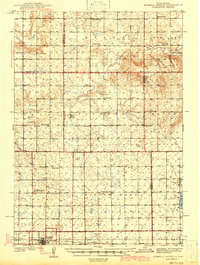 1941 Kimball North1941 Print · USGSBrule County's agricultural heartland is documented here on the eve of the Second World War, showing a landscape defined by rail and rural schools. Genealogists can trace family footprints near Kimball or locate specific country schools like Fagerhaug Sch and Brooks Sch.
 - 1944 Map of Iona
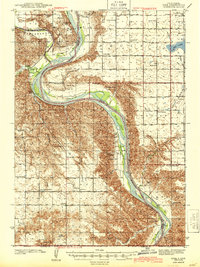 1944 Iona1944 Print · USGSLyman County in the early 1940s reveals a landscape of isolated homesteads and river-bottom farms along the Missouri River. Genealogists and local historians can trace family roots through numerous country schools like Cable Sch and markers such as Iona Cem and Peterson.2 unique versions available
 - 1951 Map of Pukwana, 1953 Print
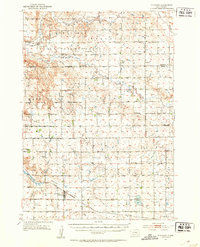 1951 Pukwana1953 Print · USGSBrule County in the early fifties is mapped here during a period of established rail transport and rural schoolhouse networks. Genealogists can locate family names and sites such as St Peters Mission, Coolidge Sch, and the town of Pukwana.
 - 1951 Map of Kimball North, 1953 Print
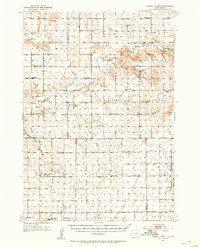 1951 Kimball North1953 Print · USGSBrule County and the surrounding prairie are captured here in the early fifties, showing a landscape defined by small-town life and rural school districts. Genealogists can locate family landmarks like Lyonville, Crow Lake Ch, and the Brooks Sch.
 - 1952 Map of Oacoma, 1954 Print
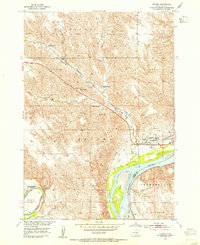 1952 Oacoma1954 Print · USGSLyman County ranching and river life are frozen in time just before the valley changed forever. Trace family roots at Oacoma Cem, locate the tracks of the Chicago Milwaukee St Paul and Pacific, or find the original sites of Sharp Ranch and Lindly Ranch.
 - 1952 Map of Iona NW, 1955 Print
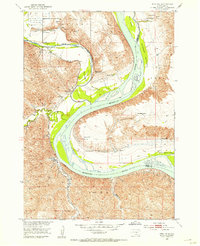 1952 Iona NW1955 Print · USGSThe Missouri River breaks across the Lyman and Brule county lines in the early fifties, just before the Fort Randall Reservoir began to reshape the valley. Genealogists can locate family holdings like Ellis Ranch or Krammer Ranch and trace the drainage of Bull Creek.2 unique versions available
 - 1955 Map of Mitchell, 1973 Print
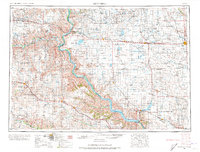 1955 Mitchell1973 Print · USGSThe Missouri River valley undergoes a massive transformation in the mid-1950s as the Fort Randall Dam creates Lake Francis Case. You can trace the rail lines of the Chicago Milwaukee St Paul and Pacific through Mitchell or locate local landmarks like Butler Town Hall.2 unique versions available
 - 1959 Map of Mitchell
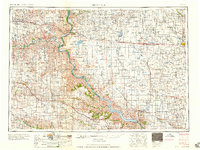 1959 Mitchell1959 Print · USGSSouth Dakota’s river and rail corridors come alive in the late fifties as the Missouri River valley undergoes dramatic change. Genealogists and historians can trace family roots through numerous small towns and schools such as Academy, Stickney, and Gregory.2 unique versions available
 - 1971 Map of Lucas NW, 1974 Print
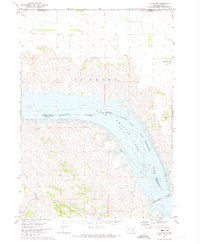 1971 Lucas NW1974 Print · USGSThe Missouri River breaks and the waters of Lake Francis Case define this South Dakota landscape in the early seventies. Genealogists and historians can locate Platte Colony and trace the original path of Rush Creek toward the Platte Winner Bridge.
 - 1971 Map of Academy, 1974 Print
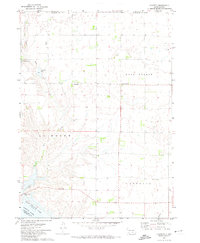 1971 Academy1974 Print · USGSThe South Dakota prairie meets the Missouri River in the early seventies, capturing the rural character of Charles Mix County. Genealogists and local historians can trace family roots through sites like Platte Colony, Academy, and the La Roche Cem.
 - 1971 Map of Dixon NE, 1974 Print
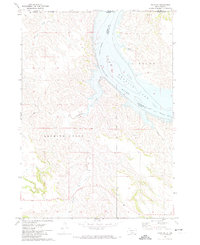 1971 Dixon NE1974 Print · USGSThe Missouri River breaks of Gregory and Lyman counties are captured here in the early seventies, detailing the newly formed Lake Francis Case. Researchers can trace the Rosebud Indian Reservation Boundary and locate landmarks like Berry Spring and Landing Creek.
 - 1974 Map of Bond Bottom, 1977 Print
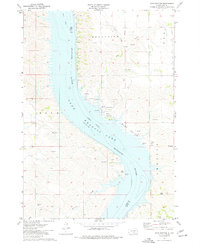 1974 Bond Bottom1977 Print · USGSThe Missouri River valley in Brule and Lyman counties was undergoing significant change in the mid-seventies following the creation of Lake Francis Case. You can trace the submerged contours of the old valley floor near Bond Bottom and locate early townships like Iona and America.
 - 1974 Map of Red Lake West, 1977 Print
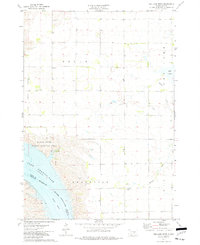 1974 Red Lake West1977 Print · USGSBrule and Lyman Counties are captured in the mid-seventies, showing the Missouri River's transformation into the massive Lake Francis Case. Researchers can locate family landmarks like Grandview Cem and trace the course of Reimer Creek toward the reservoir.
 - 1974 Map of Chamberlain, 1977 Print
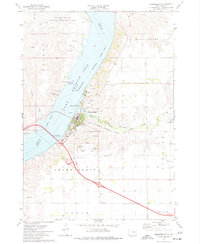 1974 Chamberlain1977 Print · USGSChamberlain occupies a strategic riverfront position in the 1970s, where rail and road infrastructure meets the Missouri. Researchers can locate long-standing landmarks like St Josephs Indian School, trace the Milwaukee Road railroad, and find the old Drive-in Theater.
 - 1974 Map of Bedashosha Lake, 1977 Print
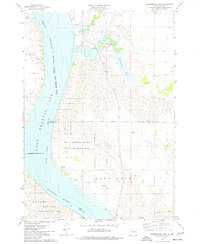 1974 Bedashosha Lake1977 Print · USGSThe Missouri River breaks of Buffalo and Brule Counties are captured here in the mid-seventies, showing a landscape shaped by tribal lands and recreation. Trace local history through landmarks like St Johns Ch and the public lands of Brule Bottom State Public Hunting Area.
 - 1979 Map of Bijou Hills NE, 1980 Print
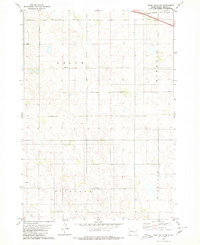 1979 Bijou Hills NE1980 Print · USGSBrule County's rural landscape is captured here during the late 1970s, showing a transition in the region's agricultural and social structure. Genealogists can locate specific landmarks like Richland Sch, Smith Sch, and the small community of Richland.
 - 1979 Map of Cedar Grove Colony, 1980 Print
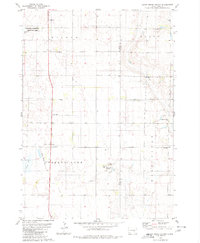 1979 Cedar Grove Colony1980 Print · USGSThe Brule County prairie during the late seventies shows a landscape of established farm colonies and rural parish life. Genealogists can trace family landmarks like Larson Cem and Bulls Cem or local centers like the Cedar Grove Colony and Torrey Lake Sch.
 - 1979 Map of Eagle, 1980 Print
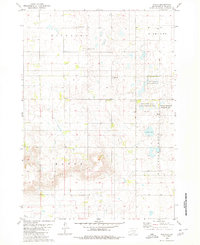 1979 Eagle1980 Print · USGSBrule County's upland prairies were still a landscape of tight-knit rural townships and homestead legacies in the late seventies. Researchers can trace family ties at the Bohemian Cem, Blessed Trinity Ch, and the local settlement of Eagle.
 - 1979 Map of Red Lake East, 1980 Print
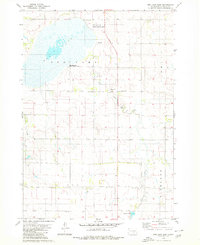 1979 Red Lake East1980 Print · USGSBrule County prairie life in the late 1970s is centered around the expansive waters of Red Lake. Genealogists and local historians can locate early landmarks like Ola Sch, the Lutheran Cem, and the St Procopius Ch Cem.
 - 1979 Map of Platte Lake, 1980 Print
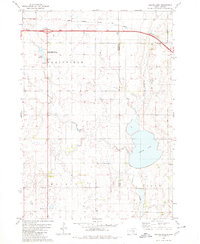 1979 Platte Lake1980 Print · USGSAcross the Brule and Aurora county line in the late seventies, this survey captures a landscape of prairie lakes and transition. Genealogists and historians can trace rural landmarks like the Wilbur Center Sch or the grounds of the Lake Sixteen State Public Shooting Area.
 - 1979 Map of Bijou Hills, 1980 Print
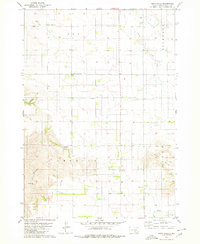 1979 Bijou Hills1980 Print · USGSThe uplands of Brule County are captured in the late seventies, showing a landscape of scattered prairie farmsteads and rural cemeteries. Genealogists can locate specific burial sites like the German Lutheran Cem or trace local landmarks such as America Sch and America Lake.
Showing maps 1-25 of 148
Frequently asked questions
- What are the different types of historical maps available for Brule County?
- What is the oldest map of Brule County?
- Where can I purchase historical maps of Brule County for my home or office?
- Where can I download high-res historical maps of Brule County?
- Are there historical topographic maps available for Brule County?
- Is there historical aerial imagery available for Brule County?
- Where are historical maps of Brule County sourced from?