1900s (20th Century) Maps of Melrose/Waverly Nashville TN, Tennessee
Explore 11 historic maps of Melrose/Waverly Nashville TN from the 1900s (20th Century). These maps offer a rare glimpse into what life looked like during the 1900s — showing old roads, neighborhoods, homes, and landmarks that have changed or disappeared over time.
Whether you're researching your family's past, planning a metal detecting trip, or studying how Melrose/Waverly Nashville TN's landscape evolved across the 1900s, these high-resolution maps are a powerful tool for exploring the history of this region.
- Focus on a specific era: All maps on this page are from the 1900s, giving you a focused view of this time period.
- See what’s changed: Compare century-old streets, trails, and buildings to today's modern landscape using overlays and satellite layers.
- Research with precision: Use these maps for genealogy, historical research, land use analysis, or educational projects.
- View, download, or print: Maps are fully viewable online in high resolution, and can be downloaded or printed for your own records.
Start exploring Melrose/Waverly Nashville TN's history through authentic maps from the 1900s. This is your window into the past.
Melrose/Waverly Nashville TN, TN maps
(11)- 1903 Map of Nashville
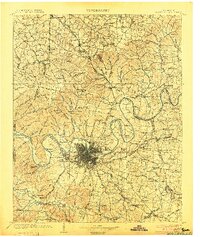 1903 Nashville1903 Print · USGSTennessee's capital region is captured at the dawn of the 1900s, when iron pikes and river locks dominated local commerce. Trace ancestral routes along Stewarts Ferry Pike, find rural landmarks like Curry Mill, or locate historical sites like The Hermitage.4 unique versions available
 - 1932 Map of Nashville
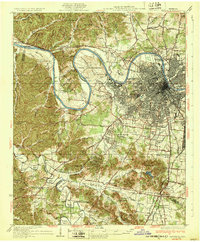 1932 Nashville1932 Print · USGSNashville and its river bends are captured here in the early thirties, showing a city expanding toward suburbs like Belle Meade and Glendale Park. Genealogists can locate family landmarks like Loves Ch, Brentwood Sta, and numerous rural schools from Gower Sch to Ash Grove Sch.2 unique versions available
 - 1952 Map of Nashville West, 1954 Print
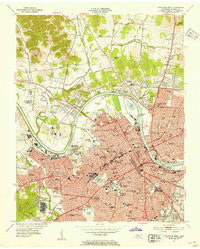 1952 Nashville West1954 Print · USGSNashville's western corridor and the winding Cumberland River are captured here in the early fifties during a period of significant institutional growth. Researchers can locate numerous historic campuses and civic sites, including Fisk University, the State Penitentiary, and Cumberland Airfield.2 unique versions available
 - 1953 Map of Oak Hill, 1954 Print
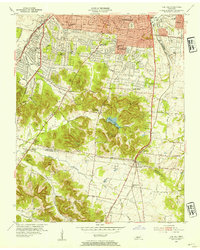 1953 Oak Hill1954 Print · USGSSouth of Nashville in the early fifties, this area shows a landscape of growing suburbs and institutional landmarks before the interstate era. Genealogists and historians can trace family locations near Woodlawn Cem, Robertson Academy, and Brentwood Sta.2 unique versions available
 - 1956 Map of Nashville, 1971 Print
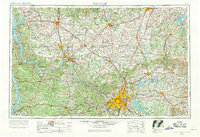 1956 Nashville1971 Print · USGSThe Tennessee-Kentucky borderlands come into focus in the mid-1960s as major reservoir projects transformed the Cumberland and Tennessee river valleys. Researchers can trace the rail networks of the Louisville and Nashville and visit sites like Fort Campbell and Fort Donelson National Military Park.2 unique versions available
 - 1959 Map of Nashville
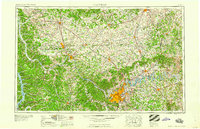 1959 Nashville1959 Print · USGSMiddle Tennessee and Southern Kentucky come into focus during the late fifties, showing the region's transition into a modern transportation and military hub. Researchers can trace the sprawling Fort Campbell Military Reservation or locate historic rail stops along the Tennessee Central Ry and Illinois Central RR.
 - 1968 Map of Oak Hill
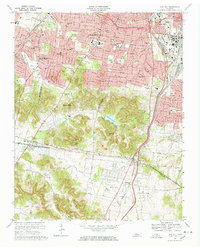 1968 Oak Hill1968 Print · USGSThe affluent suburbs and rugged ridges south of Nashville are captured here in the late sixties as residential growth moved toward the Williamson County line. Researchers can locate long-standing institutions like Harpeth Hall Sch, the Vanderbilt University Observatory, and historical routes like Granny White Pike.5 unique versions available
 - 1968 Map of Nashville West, 1971 Print
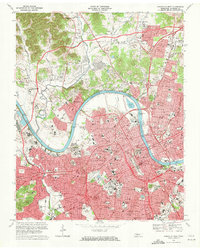 1968 Nashville West1971 Print · USGSNashville was undergoing rapid urban transformation in the late sixties as the interstate system carved through its historic districts. Researchers can trace the mid-century city layout of Fisk University, the State Capitol, and the Tennessee Central RR lines.4 unique versions available
 - 1984 Map of Nashville, 1985 Print
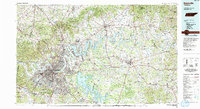 1984 Nashville1985 Print · USGSMiddle Tennessee in the mid-1980s reveals a region balancing urban expansion with its deep river-valley roots. Genealogists and historians can trace family locations near Old Hickory Lake, explore the grounds of Vanderbilt University, or locate ancestral sites like Greenwood Cem.
 - 1997 Map of Nashville West, 1999 Print
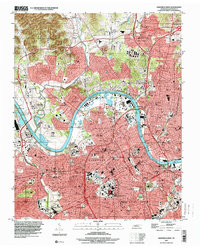 1997 Nashville West1999 Print · USGSNashville and the Cumberland River are shown in the late 1990s, capturing the city's academic core and expanding industrial infrastructure. Researchers can trace historic sites like Fisk University, the City Cem, and the State Penitentiary during a period of significant urban change.
 - 1997 Map of Oak Hill, 2002 Print
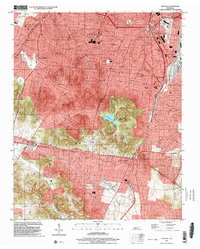 1997 Oak Hill2002 Print · USGSSouth of Nashville in the late nineties, these residential enclaves expanded toward the Williamson County line. Researchers can trace the development of Belle Meade and Oak Hill, or locate local landmarks like Radnor Lake and the Governors Mansion.
End of results
Showing maps 1-11 of 11
Frequently asked questions
- What are the different types of historical maps available for Melrose/Waverly Nashville TN?
- What is the oldest map of Melrose/Waverly Nashville TN?
- Where can I purchase historical maps of Melrose/Waverly Nashville TN for my home or office?
- Where can I download high-res historical maps of Melrose/Waverly Nashville TN?
- Are there historical topographic maps available for Melrose/Waverly Nashville TN?
- Is there historical aerial imagery available for Melrose/Waverly Nashville TN?
- Where are historical maps of Melrose/Waverly Nashville TN sourced from?