Old Maps of Camp Hanover, Virginia
Explore 15 old maps of Camp Hanover, spanning from 1920 to today. These high-resolution historic maps reveal how streets, neighborhoods, landmarks, and natural features evolved over time — perfect for genealogy, metal detecting, research, and local history exploration.
What you can do with these maps:
- See how Camp Hanover changed over time: Compare historical maps to modern-day views to trace roads, homesites, rail lines & more.
- View detailed metadata: Each map includes creators, publishers, year, scale, and archive source.
- Overlay maps with satellite & LiDAR: Visualize the past alongside modern tools to explore terrain & human change.
- Trusted historical sources: Maps sourced from the USGS, Library of Congress, and other archives.
- Access maps your way: View online, download high-res files, or order prints for personal or research use.
Start exploring old maps of Camp Hanover to uncover forgotten places, hidden landmarks, and the deep history beneath your feet.
Camp Hanover, VA maps
(15)- 1920 Map of King William
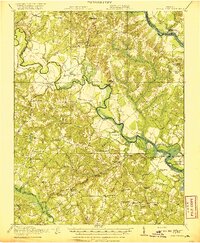 1920 King William1920 Print · USGSCoastal Virginia during the late teens and early twenties reveals a landscape of river-bend settlements and tidal swamps. Researchers can trace the Pamunkey Indian Reservation, early river crossings like Piping Tree Ferry, and rail depots at Tunstall.4 unique versions available
 - 1943 Map of Richmond, 1972 Print
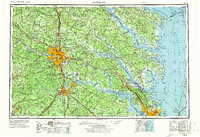 1943 Richmond1972 Print · USGSCoastal Virginia and the state capital are shown in detail during the mid-century era of infrastructure expansion. Genealogists and historians can trace the grounds of Richmond Nat Battlefield Park, locate the Yorktown Nat Cem, or follow the many rural routes through Amelia Court House and Tappahannock.
 - 1949 Map of Quinton
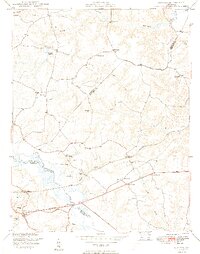 1949 Quinton1949 Print · USGSNew Kent County and the surrounding tri-county area are shown here just after the war, defined by the swampy headwaters of the Chickahominy River. Researchers can trace old crossroads at Blacks Store, local family milling sites like Parsleys Mill, and numerous country schools and churches.2 unique versions available
 - 1949 Map of Richmond, 1951 Print
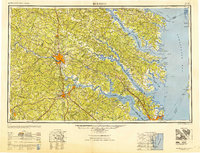 1949 Richmond1951 Print · USGSCoastal Virginia in the years following World War II remained a landscape of historic river towns and expanding military bases. Genealogists and historians can trace the rail lines of the Southern Ry and locate established landmarks from Camp Lee to the remote reaches of Dragon Swamp.
 - 1959 Map of Richmond
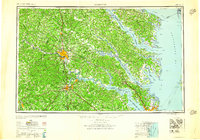 1959 Richmond1959 Print · USGSMid-century Virginia is captured here at its most vital rail and river junctions, from the capital city to the Chesapeake Bay. Genealogists and historians can trace the development of colonial settlements like Williamsburg and military landmarks including Fort Monroe and Camp Lee.
 - 1964 Map of Richmond
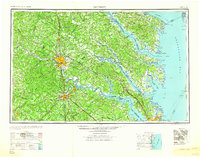 1964 Richmond1964 Print · USGSCoastal and central Virginia are mapped during the mid-twentieth century, showing the critical intersection of rail, river, and military life. Genealogists can trace family roots through rural county seats like Amelia or find vanished coastal neighborhoods near Phoebus and Hilton Village.
 - 1965 Map of Quinton, 1968 Print
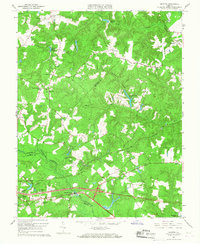 1965 Quinton1968 Print · USGSNew Kent and Hanover counties appear here in the mid-sixties, where the winding Chickahominy River meets a landscape of old millponds and emerging suburbs. Genealogists can trace family landmarks like Alexanders Corner or find records at Black Creek Ch and Tabernacle Cem.5 unique versions available
 - 1973 Map of Richmond, 1974 Print
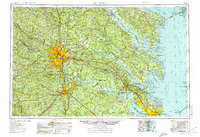 1973 Richmond1974 Print · USGSThe Virginia Tidewater and Piedmont come alive in the early seventies, showcasing a region defined by its great rivers and massive military installations. Researchers can trace the mid-century growth of Richmond or locate family sites near Amelia Court House and Highland Springs.2 unique versions available
 - 1974 Map of Quinton, 1977 Print
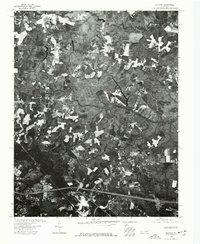 1974 Quinton1977 Print · USGSNew Kent County comes into sharp focus during the mid-1970s, documented through high-resolution aerial photography of its timbered tracts and farmsteads. Local historians can trace the early road network and land divisions surrounding the settlement of Quinton.
 - 1984 Map of Richmond, 1986 Print
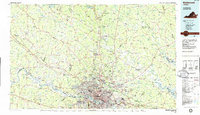 1984 Richmond1986 Print · USGSCentral Virginia during the mid-eighties shows a landscape of rapid suburban expansion centered on the state capital and its historic riverfront. Genealogists and historians can trace institutional sites like Randolph-Macon College, the grounds of Fort Lee, and small community landmarks like Hebron Ch.3 unique versions available
 - 2010 Map of Quinton, 2010 Print
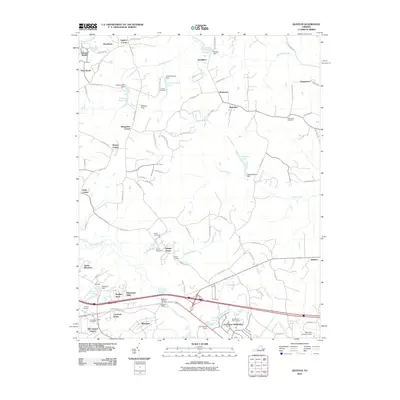 2010 Quinton2010 Print · USGSNew Kent and Hanover Counties are shown here during a period of suburban transition at the start of the 2010s. Researchers can locate historic rural junctions like Liggans Corner alongside family landmarks such as Wharton Field and Tabernacle Cemetery.
 - 2013 Map of Quinton, 2013 Print
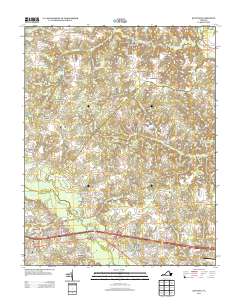 2013 Quinton2013 Print · USGSNew Kent County and the Chickahominy River basin appear in the early twenty-first century as a landscape of historic crossroads and modern growth. Researchers can trace the layout of family estates and newer developments like Orapax Farms, Woodview Hills, and the transition at Bottoms Bridge.
 - 2016 Map of Quinton, 2016 Print
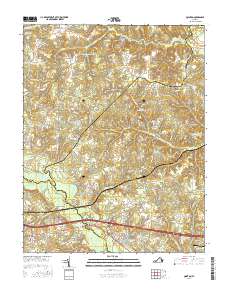 2016 Quinton2016 Print · USGSThe tri-county borderlands of Hanover, Henrico, and New Kent come alive in this 2010s survey. Researchers can locate family landmarks like Rock Hill Cem and Rising Mount Zion Cem or trace the riparian history of Beatles Millpond and the Chickahominy River.
 - 2019 Map of Quinton, 2019 Print
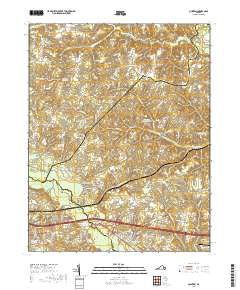 2019 Quinton2019 Print · USGSThe rural landscapes of New Kent and Hanover counties come into focus in the late 2010s. Genealogists and historians can trace family locations near Rising Mount Zion Baptist Church Cem, Beatties Millpond, and the settlement of Quinton.
 - 2022 Map of Quinton, 2022 Print
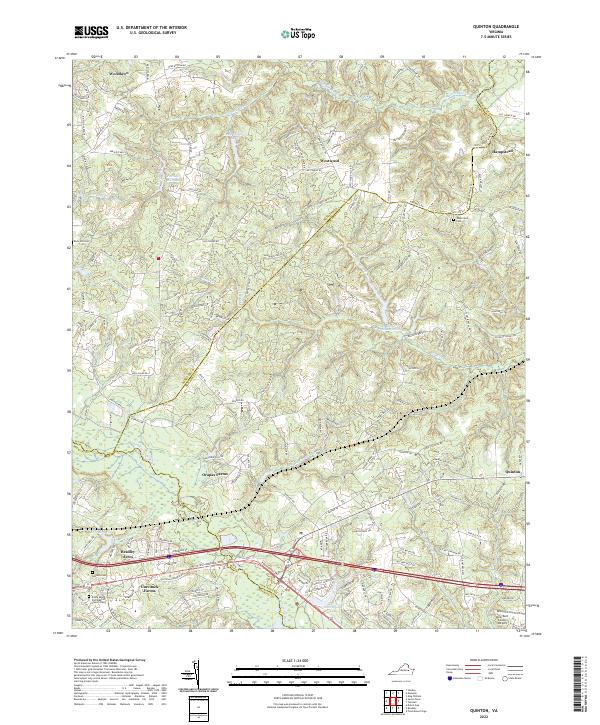 2022 Quinton2022 Print · USGSThe borderlands of New Kent and Henrico counties are captured in the early twenty-first century as suburban growth meets rural farmland. Researchers can locate family burial sites at Tabernacle Cem or trace the drainage of the Chickahominy River through Cattail Swamp.
End of results
Showing maps 1-15 of 15
Top cities near Camp Hanover
- Mechanicsville historical maps
- Highland Springs historical maps
- Montrose historical maps
- Central Garage historical maps
- King William historical maps
Frequently asked questions
- What are the different types of historical maps available for Camp Hanover?
- What is the oldest map of Camp Hanover?
- Where can I purchase historical maps of Camp Hanover for my home or office?
- Where can I download high-res historical maps of Camp Hanover?
- Are there historical topographic maps available for Camp Hanover?
- Is there historical aerial imagery available for Camp Hanover?
- Where are historical maps of Camp Hanover sourced from?