Old Maps of Isle of Wight County, Virginia
Explore 128 old maps of Isle of Wight County, spanning from 1907 to today. These high-resolution historic maps reveal how streets, neighborhoods, landmarks, and natural features evolved over time — perfect for genealogy, metal detecting, research, and local history exploration.
What you can do with these maps:
- See how Isle of Wight County changed over time: Compare historical maps to modern-day views to trace roads, homesites, rail lines & more.
- View detailed metadata: Each map includes creators, publishers, year, scale, and archive source.
- Overlay maps with satellite & LiDAR: Visualize the past alongside modern tools to explore terrain & human change.
- Trusted historical sources: Maps sourced from the USGS, Library of Congress, and other archives.
- Access maps your way: View online, download high-res files, or order prints for personal or research use.
Start exploring old maps of Isle of Wight County to uncover forgotten places, hidden landmarks, and the deep history beneath your feet.
Isle of Wight County, VA maps
(128)- 1907 Map of Norfolk
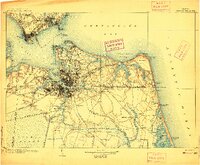 1907 Norfolk1907 Print · USGSCoastal Virginia is mapped here at the dawn of the twentieth century, during the bustle of the great Jamestown Exposition. Researchers can trace the early rail-and-canal economy through the Albemarle and Chesapeake Canal, the Navy Yard, and historic outposts like the Cape Henry Light.
 - 1907 Map of Yorktown
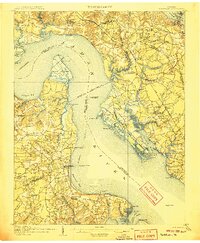 1907 Yorktown1907 Print · USGSThe Virginia Peninsula and the banks of the James River are shown here at the turn of the century, revealing a landscape defined by colonial roots and Civil War defenses. Genealogists can trace early twentieth-century life at Denbigh P O, Bacons Castle, and the National Cem.6 unique versions available
 - 1919 Map of Smithfield
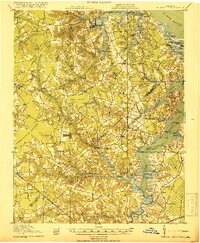 1919 Smithfield1919 Print · USGSCoastal Virginia during the late teens was a world of steamboat routes and swamp-edge settlements. Genealogists can trace family roots through numerous local landmarks like St Johns Church, Whitley Wharf, and the rural community of Chuckatuck.4 unique versions available
 - 1919 Map of Surry
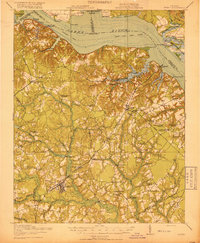 1919 Surry1919 Print · USGSSurry County and the James River tidewater are captured in the late teens, when timber and steamboats still drove the local economy. Researchers can locate vanished landmarks like Spratleys Mill, the Old Courthouse, and numerous schoolhouses including Rough School and Cypress School.3 unique versions available
 - 1920 Map of Holland
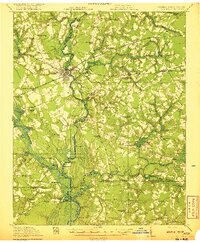 1920 Holland1920 Print · USGSCoastal plain life at the end of the Great War centers on the river-and-rail hubs of Franklin and Holland. Genealogists can trace family footprints across dozens of country schools like Holmes School and river crossings such as Joyners Bridge and Manning Ferry.2 unique versions available
 - 1920 Map of Ivor
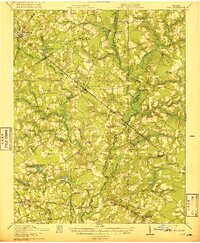 1920 Ivor1920 Print · USGSCoastal plain life in Southampton and Isle of Wight counties is captured here just after the Great War, when rail and river travel still shaped the landscape. Genealogists can locate family landmarks like Tucker Swamp Church, Crumplers School, and Millfield Millpond.2 unique versions available
 - 1921 Map of Newport News
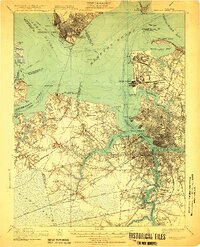 1921 Newport News1921 Print · USGSThe Virginia tidewater area comes alive in the early twentieth century, showing a landscape defined by maritime industry and massive military installations. Genealogists and historians can trace rail lines and early settlements from Camp Stuart down to Jolliff School and the Dismal Swamp.4 unique versions available
 - 1943 Map of Holland
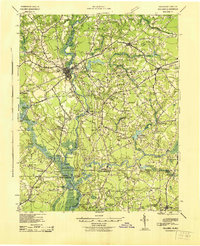 1943 Holland1943 Print · USGSThe Virginia and North Carolina borderlands come alive in this mid-century survey of the Chowan River basin. Local historians can trace a network of river landings and rural schools, from Manning Ferry to the community around Stony Branch Church.
 - 1943 Map of Yorktown
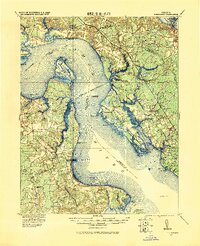 1943 Yorktown1943 Print · USGSThe Virginia Tidewater is captured here during the Second World War, showing the strategic riverfronts of the James and Warwick rivers. Researchers can locate colonial landmarks and defensive ruins like Old Fort Yorktown, Bacons Castle, and Warwick Courthouse.
 - 1943 Map of Richmond, 1972 Print
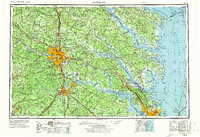 1943 Richmond1972 Print · USGSCoastal Virginia and the state capital are shown in detail during the mid-century era of infrastructure expansion. Genealogists and historians can trace the grounds of Richmond Nat Battlefield Park, locate the Yorktown Nat Cem, or follow the many rural routes through Amelia Court House and Tappahannock.
 - 1944 Map of Windsor
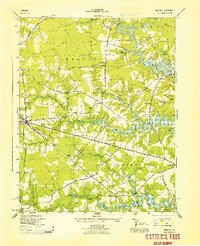 1944 Windsor1944 Print · USGSCoastal Virginia during the mid-forties reveals a rural landscape of timber, mills, and rail-dependent towns. Genealogists and historians can trace family locations near landmarks like the Shiloh Cem, Greshem School, and the junction at Five Forks.2 unique versions available
 - 1944 Map of Smithfield, 1961 Print
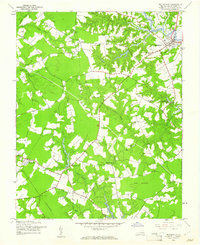 1944 Smithfield1961 Print · USGSCoastal Virginia during the mid-forties reveals a landscape of tidal rivers and rural crossroads. Genealogists and historians can trace old homesteads near Central Hill, numerous country chapels like Ebenezer Ch, and the defunct Old Railroad Grade.
 - 1944 Map of Sedley, 1961 Print
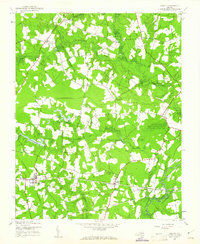 1944 Sedley1961 Print · USGSCoastal Virginia's farming and milling communities are captured here in the mid-1940s as the rail network shaped local growth. Researchers can locate the Rosenwald Sch, early mill sites like Johnson Millpond, and crossroads hamlets such as Pulleys Crossroads.
 - 1944 Map of Raynor, 1961 Print
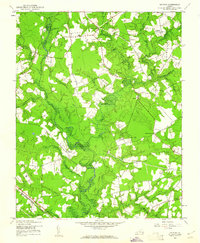 1944 Raynor1961 Print · USGSCoastal Virginia during the mid-1940s reveals a landscape defined by the winding Blackwater River and its vast marshlands. Genealogists and historians can locate rural crossroads like McClelland and study the sites of Godwin Sch or Mill Swamp Ch.
 - 1944 Map of Zuni, 1961 Print
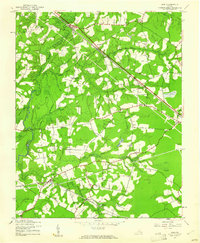 1944 Zuni1961 Print · USGSThe Virginia Coastal Plain along the Isle of Wight and Southampton border comes alive in this mid-1940s survey. Researchers can trace rural community life through numerous local landmarks, from Tucker Swamp Ch and Gay Sch to the wetlands of Burnt Mills Swamp.
 - 1945 Map of Zuni
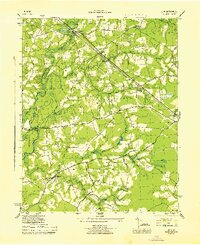 1945 Zuni1945 Print · USGSCoastal Virginia during the mid-1940s reveals a rural landscape defined by the Blackwater River and the competing Norfolk and Western and Virginian rail lines. Researchers can trace local heritage through landmarks like Antioch Ch and Cem and the crossroads at Zuni and Walters.
 - 1945 Map of Raynor
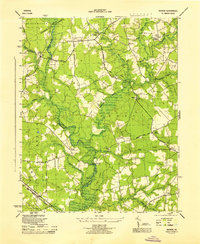 1945 Raynor1945 Print · USGSIsle of Wight County remains a landscape of deep timber and blackwater swamps at the close of World War II. Researchers can locate family landmarks like Mill Swamp Ch and Cem, McClelland Sch, and crossroads at Gwaltney Crossroads.
 - 1945 Map of Sedley
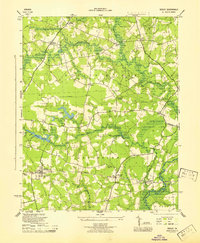 1945 Sedley1945 Print · USGSSouthampton County was a landscape of swamp-fed millponds and rural schoolhouses during the mid-forties. Researchers can trace the heritage of local settlements from Sedley to Berlin and locate specific sites like the Rosenwald Sch or Whitefields Millpond.
 - 1945 Map of Smithfield
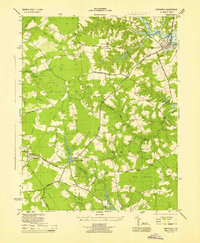 1945 Smithfield1945 Print · USGSCoastal Virginia during the mid-forties reveals a landscape of tidal rivers and rural townships centered around the Pagan River. Genealogists and historians can locate family landmarks such as Four Square, the Isle of Wight Courthouse, and the Trinity Sch.
 - 1948 Map of Bacons Castle, 1953 Print
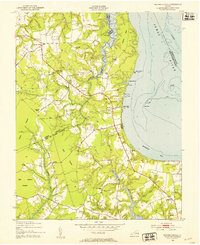 1948 Bacons Castle1953 Print · USGSCoastal Surry and Isle of Wight counties are captured in the late 1940s, showing a landscape of historic landings and rural parish life. Genealogists can locate family names at Lower Surry Cemetery or trace landmarks like Bacons Castle and the Lower Surry Ruins.
 - 1949 Map of Chuckatuck
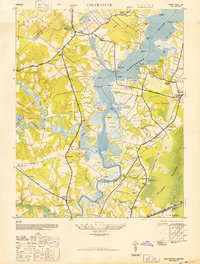 1949 Chuckatuck1949 Print · USGSCoastal Virginia in the late 1940s is shown here as a landscape of tidewater inlets and busy railroad corridors. Genealogists and local historians can trace family locations near the Rosenwald School, Canaan Cem, and rural churches like St Johns Ch or Little Bethel Ch.
 - 1949 Map of Richmond, 1951 Print
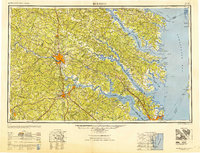 1949 Richmond1951 Print · USGSCoastal Virginia in the years following World War II remained a landscape of historic river towns and expanding military bases. Genealogists and historians can trace the rail lines of the Southern Ry and locate established landmarks from Camp Lee to the remote reaches of Dragon Swamp.
 - 1950 Map of Blackstone
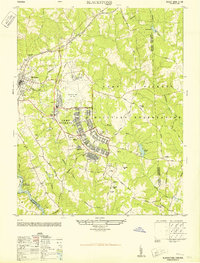 1950 Blackstone1950 Print · USGSMid-century Blackstone is captured here as a major military hub during the post-war era. Genealogists and historians can locate legacy sites like Nottoway Training School, the Cemetery, and the sprawling Camp Pickett complex.
 - 1950 Map of Mulberry Island, 1953 Print
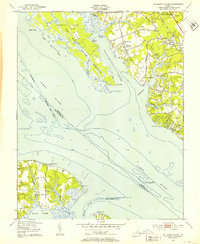 1950 Mulberry Island1953 Print · USGSMid-century coastal Virginia comes into focus as a complex mix of military installations and established local communities. Genealogists and historians can trace Mennonite Colony, find family-named churches like Denbigh Ch, and locate the Prison Farm near the Warwick River.
 - 1950 Map of Cobham Bay, 1953 Print
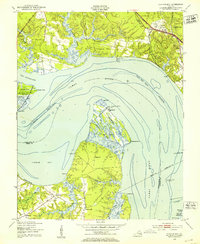 1950 Cobham Bay1953 Print · USGSThe James River waterfront is frozen in time at mid-century, showing the early boundaries of the Colonial National Historical Monument. Researchers can trace the rural landscape from Jamestown Island to the remote lighthouses at Homewood and Deepwater Shoals.
Showing maps 1-25 of 128
Top cities of Isle of Wight County
- Smithfield historical maps
- Carrollton historical maps
- Windsor historical maps
- Benns Church historical maps
- Rushmere historical maps
- Camptown historical maps
See more
Frequently asked questions
- What are the different types of historical maps available for Isle of Wight County?
- What is the oldest map of Isle of Wight County?
- Where can I purchase historical maps of Isle of Wight County for my home or office?
- Where can I download high-res historical maps of Isle of Wight County?
- Are there historical topographic maps available for Isle of Wight County?
- Is there historical aerial imagery available for Isle of Wight County?
- Where are historical maps of Isle of Wight County sourced from?