1900s (20th Century) Maps of Richmond County, Virginia
Explore 37 historic maps of Richmond County from the 1900s (20th Century). These maps offer a rare glimpse into what life looked like during the 1900s — showing old roads, neighborhoods, homes, and landmarks that have changed or disappeared over time.
Whether you're researching your family's past, planning a metal detecting trip, or studying how Richmond County's landscape evolved across the 1900s, these high-resolution maps are a powerful tool for exploring the history of this region.
- Focus on a specific era: All maps on this page are from the 1900s, giving you a focused view of this time period.
- See what’s changed: Compare century-old streets, trails, and buildings to today's modern landscape using overlays and satellite layers.
- Research with precision: Use these maps for genealogy, historical research, land use analysis, or educational projects.
- View, download, or print: Maps are fully viewable online in high resolution, and can be downloaded or printed for your own records.
Start exploring Richmond County's history through authentic maps from the 1900s. This is your window into the past.
Richmond County, VA maps
(37)- 1917 Map of Morattico
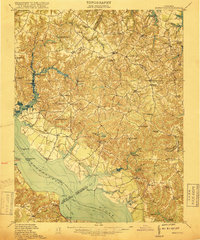 1917 Morattico1917 Print · USGSThe Northern Neck of Virginia is shown here in the years before the Great War, when the Rappahannock River was a busy Steamboat Route. Genealogists can locate family landmarks like Gordys Millpond, Lively, and the Marvin Grove Camp in this detailed look at early rural life.
 - 1918 Map of Tappahannock
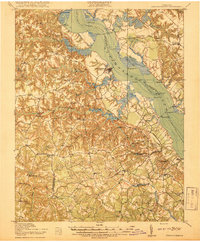 1918 Tappahannock1918 Print · USGSThe Tidewater region during the first World War comes alive on this sheet, centered on the historic river crossing at Tappahannock. Researchers can trace the active Steamboat Route, old river landings like Bowlers Wharf, and rural landmarks including St Pauls Church.2 unique versions available
 - 1918 Map of Morattico
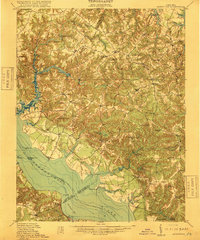 1918 Morattico1918 Print · USGSThe Northern Neck region relied heavily on the Rappahannock waterfront during the early twentieth century, when steamboats were still the primary connection to the outside world. Researchers can trace ancestral home sites and community centers from Lodge and Nuttsville to historic landmarks like Gibeon Church and Downings Mill.3 unique versions available
 - 1919 Map of Tappahannock, 1938 Print
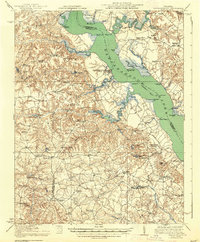 1919 Tappahannock1938 Print · USGSCoastal life along the Rappahannock River is meticulously charted here in the years following the Great War. Genealogists and historians can trace the foundations of Essex and Richmond counties through landmarks like Millers Tavern, the Rappahannock Industrial Academy, and Mt Airy Millpond.
 - 1926 Map of Morattico, 1943 Print
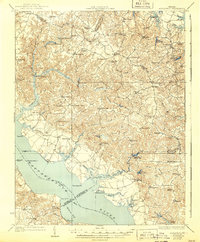 1926 Morattico1943 Print · USGSThe Rappahannock River and Northern Neck are captured in the mid-1920s, showing a landscape defined by tidewater commerce and rural tradition. Genealogists can trace family roots through numerous churches and schools like Totuskey Church, Folly School, and Sharps.
 - 1930 Map of Wakefield
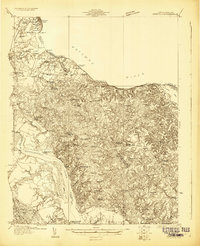 1930 Wakefield1930 Print · USGSWestmoreland County and the Northern Neck appear here in the early thirties, defined by a historic riverfront landscape and rural hamlets. Researchers can locate the Birthplace of Washington and Monroe Birthplace alongside old river ports like Leedstown and Steve Landing.
 - 1932 Map of Wakefield
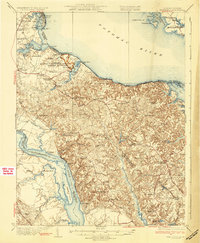 1932 Wakefield1932 Print · USGSWestmoreland County at the start of the 1930s shows a landscape defined by the great bends of the Potomac and Rappahannock Rivers. Researchers can trace ancestral locations near the George Washington Birthplace or find local landmarks like Potomac Mills and Monroe Hall.2 unique versions available
 - 1943 Map of Champlain
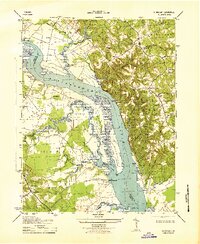 1943 Champlain1943 Print · USGSThe Rappahannock River defines this mid-century survey of the Essex and Westmoreland county border during the early 1940s. Genealogists and historians can trace family-named estates and landings like Malvale Farm, Farmers Hall, and Carters Whf.2 unique versions available
 - 1943 Map of Montross, 1961 Print
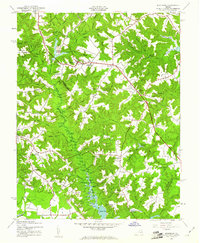 1943 Montross1961 Print · USGSMid-century Westmoreland and Richmond counties are captured here just as the road network was modernizing. Researchers can trace historic family landmarks and community hubs from Montross to Tallent Town, including St James Ch and Chandlers Millpond.
 - 1943 Map of Richmond, 1972 Print
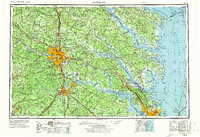 1943 Richmond1972 Print · USGSCoastal Virginia and the state capital are shown in detail during the mid-century era of infrastructure expansion. Genealogists and historians can trace the grounds of Richmond Nat Battlefield Park, locate the Yorktown Nat Cem, or follow the many rural routes through Amelia Court House and Tappahannock.
 - 1944 Map of Mount Landing
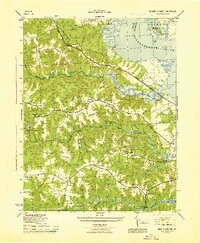 1944 Mount Landing1944 Print · USGSEssex County during the mid-forties reveals a rural landscape defined by marshy riverbanks and numerous creek-side mills. Genealogists can trace family footprints at Kino P O, Rexburg, and First Union Church near the Tidewater Trail.2 unique versions available
 - 1944 Map of Tappahannock
 1944 Tappahannock1944 Print · USGSThe Rappahannock River valley in the mid-1940s is shown here at the height of its river-landing era. Researchers can trace family estates and rural infrastructure like St Johns Ch, Mt Airy Millpond, and the historic waterfront at Wares Wharf.2 unique versions available
 - 1944 Map of Montross
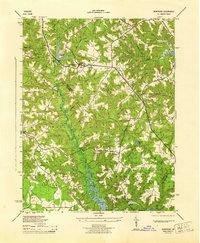 1944 Montross1944 Print · USGSThe Northern Neck of Virginia is captured here during the mid-forties, showing the rural crossroads of Westmoreland and Richmond Counties. Genealogists can trace family landmarks and community centers such as Tallent Town, Nomini Sch, and the Washington and Lee High School.
 - 1944 Map of Dunnsville
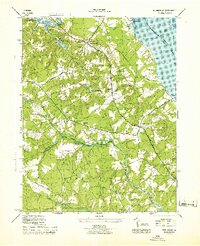 1944 Dunnsville1944 Print · USGSMid-century Essex County was a landscape of river wharves and wetland crossings along the Rappahannock. Genealogists can trace family roots through landmarks like Angel Visit Church, Rappahannock Industrial Academy, and the old Wares Wharf.2 unique versions available
 - 1944 Map of Morattico
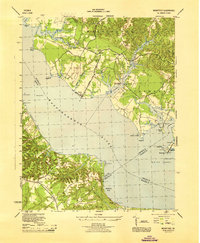 1944 Morattico1944 Print · USGSThe Rappahannock River divides the tidewater counties of Virginia during the mid-1940s, showing a landscape of maritime landings and small rural communities. Researchers can trace historic sites like True Reformers Hall, the Ebenezer Ch and Sch, and landings at Oakley Landing.2 unique versions available
 - 1944 Map of Lottsburg
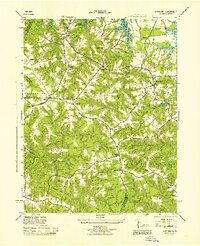 1944 Lottsburg1944 Print · USGSNorthumberland County in the mid-1940s was a network of tidal creeks and small crossroads settlements. Genealogists can trace family landmarks and rural infrastructure through Gordys Mill, Zion Church, and the E Branch Chapel School.2 unique versions available
 - 1947 Map of Haynesville
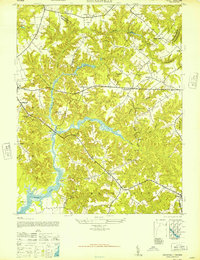 1947 Haynesville1947 Print · USGSThe Northern Neck of Virginia in the late 1940s remained a landscape of tidal creeks and quiet crossroads. Genealogists and local historians can trace family roots through numerous country landmarks like Lyells Chapel, Moores Mill, and the Mulberry Ch and Sch.
 - 1948 Map of Washington
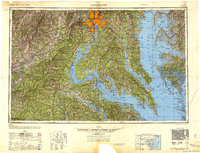 1948 Washington1948 Print · USGSThe Potomac and Chesapeake regions in the late 1940s reveal a landscape of expanding military reach and deep-rooted Tidewater settlements. Trace old rail corridors like the Richmond Fredericksburg & Potomac RR or locate landmarks like the Wakefield Washington Monument and St. Marys College.2 unique versions available
 - 1948 Map of Litwalton
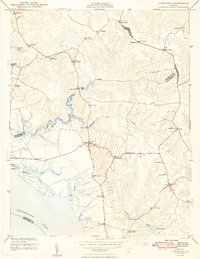 1948 Litwalton1948 Print · USGSCoastal Lancaster and Richmond counties appear in the late 1940s as a region of tidal creeks and quiet crossroads. Researchers can trace rural life through landmarks like Lively Sch, the waters at Chinns Pond, and Griffins Landing on the river.2 unique versions available
 - 1949 Map of Richmond, 1951 Print
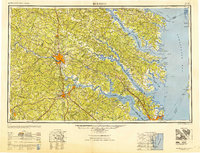 1949 Richmond1951 Print · USGSCoastal Virginia in the years following World War II remained a landscape of historic river towns and expanding military bases. Genealogists and historians can trace the rail lines of the Southern Ry and locate established landmarks from Camp Lee to the remote reaches of Dragon Swamp.
 - 1957 Map of Washington, 1966 Print
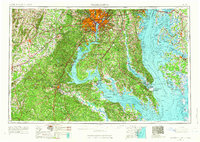 1957 Washington1966 Print · USGSThe mid-Atlantic region during the mid-fifties and early sixties reveals a landscape of growing suburbs and vital military outposts. Researchers can trace historic river towns and shorelines from Alexandria to the Hooper Islands and St Clements Island.5 unique versions available
 - 1959 Map of Richmond
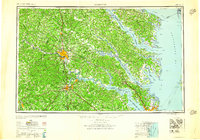 1959 Richmond1959 Print · USGSMid-century Virginia is captured here at its most vital rail and river junctions, from the capital city to the Chesapeake Bay. Genealogists and historians can trace the development of colonial settlements like Williamsburg and military landmarks including Fort Monroe and Camp Lee.
 - 1961 Map of Washington
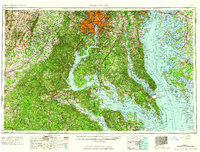 1961 Washington1961 Print · USGSThe mid-Atlantic region in the late fifties is presented in remarkable detail, from the Blue Ridge foothills to the Chesapeake Eastern Shore. Researchers can trace historic river landings and military sites like Mount Vernon, Fort Belvoir, and Point Lookout.2 unique versions available
 - 1964 Map of Richmond
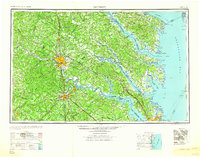 1964 Richmond1964 Print · USGSCoastal and central Virginia are mapped during the mid-twentieth century, showing the critical intersection of rail, river, and military life. Genealogists can trace family roots through rural county seats like Amelia or find vanished coastal neighborhoods near Phoebus and Hilton Village.
 - 1968 Map of Champlain, 1971 Print
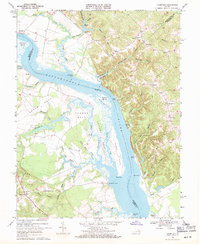 1968 Champlain1971 Print · USGSThe Rappahannock River defines this late-1960s Tidewater landscape at the meeting of Essex and Westmoreland Counties. Genealogists and historians can trace old riverfront hubs like Leedstown and Carters Wharf alongside rural landmarks such as Ephesus Ch.4 unique versions available
Showing maps 1-25 of 37
Top cities of Richmond County
Frequently asked questions
- What are the different types of historical maps available for Richmond County?
- What is the oldest map of Richmond County?
- Where can I purchase historical maps of Richmond County for my home or office?
- Where can I download high-res historical maps of Richmond County?
- Are there historical topographic maps available for Richmond County?
- Is there historical aerial imagery available for Richmond County?
- Where are historical maps of Richmond County sourced from?