1900s (20th Century) Maps of Roanoke, Virginia
Explore 28 historic maps of Roanoke from the 1900s (20th Century). These maps offer a rare glimpse into what life looked like during the 1900s — showing old roads, neighborhoods, homes, and landmarks that have changed or disappeared over time.
Whether you're researching your family's past, planning a metal detecting trip, or studying how Roanoke's landscape evolved across the 1900s, these high-resolution maps are a powerful tool for exploring the history of this region.
- Focus on a specific era: All maps on this page are from the 1900s, giving you a focused view of this time period.
- See what’s changed: Compare century-old streets, trails, and buildings to today's modern landscape using overlays and satellite layers.
- Research with precision: Use these maps for genealogy, historical research, land use analysis, or educational projects.
- View, download, or print: Maps are fully viewable online in high resolution, and can be downloaded or printed for your own records.
Start exploring Roanoke's history through authentic maps from the 1900s. This is your window into the past.
Roanoke, VA maps
(28)- 1929 Map of Roanoke
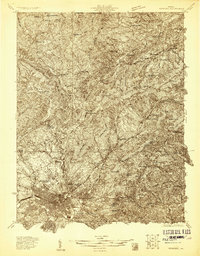 1929 Roanoke1929 Print · USGSThe Roanoke Valley is shown just before the Great Depression, documenting the area's transition from rural townships to a developing urban center. Genealogists can locate family landmarks such as Forest Chapel Sch, Coyner Springs, and the early neighborhoods of Riverdale.3 unique versions available
 - 1929 Map of Salem
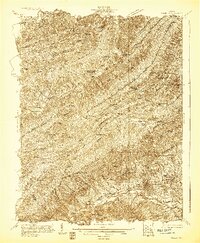 1929 Salem1929 Print · USGSThe Roanoke River valley and surrounding mountain ridges are captured here in the late 1920s as the railroad and highway networks expanded. Genealogists and researchers can trace local landmarks like Catawba Sanatorium, Webb Mill, and old schoolhouses including Rubles Sch.2 unique versions available
 - 1932 Map of Salem
 1932 Salem1932 Print · USGSThe Roanoke Valley and the high ridges of the Blue Ridge meet in this early 1930s survey of the Salem area. Genealogists can locate family landmarks like Webbs Mill, the Catawba Sanatorium, and numerous rural churches including New Hope Church.3 unique versions available
 - 1933 Map of Roanoke
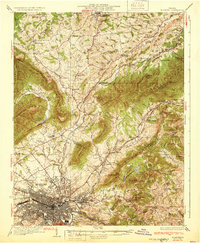 1933 Roanoke1933 Print · USGSThe Roanoke Valley in the early thirties shows a thriving rail-and-river hub surrounded by a landscape of small crossroads schools and churches. Genealogists can trace family names through landmarks like Hollins College, Gravel Hill Sch, and Trinity church.3 unique versions available
 - 1947 Map of Roanoke, 1948 Print
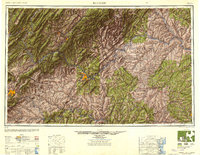 1947 Roanoke1948 Print · USGSCentral Virginia in the late 1940s reveals a region defined by its great mountain ridges and the powerful river-and-rail economy connecting Roanoke to Lynchburg. Researchers can trace the path of the Virginian RR and locate historic county seats like Charlotte Court House.2 unique versions available
 - 1950 Map of Elliston, 1952 Print
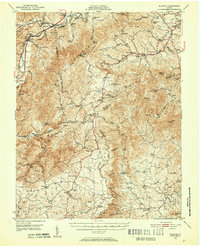 1950 Elliston1952 Print · USGSThe Roanoke River headwaters and Blue Ridge highlands are captured here in the early postwar era. Genealogists and historians can trace community roots through numerous country landmarks like Check High Sch, Dillons Mill, and Bend Union Ch.4 unique versions available
 - 1951 Map of Boones Mill, 1953 Print
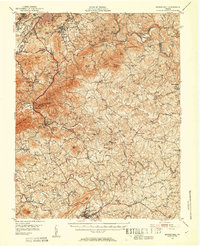 1951 Boones Mill1953 Print · USGSFranklin and Roanoke Counties are captured in the early fifties, showing the Blue Ridge foothills before modern development. Genealogists can locate family landmarks such as Oylers Cem, Piedmont Mill, and several rural churches like St Pauls Ch and Brook Hill Ch.3 unique versions available
 - 1955 Map of Bluefield
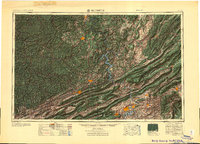 1955 Bluefield1955 Print · USGSThe Central Appalachian borderlands come alive in the mid-fifties, showing the coal and rail networks connecting Bluefield to Beckley. Researchers can trace the industrial landscape of the New River Ordnance Plant and the terrain of Burkes Garden.
 - 1957 Map of Bluefield, 1967 Print
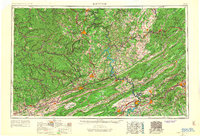 1957 Bluefield1967 Print · USGSThe heart of Central Appalachia in the mid-fifties is defined by the winding rail lines and river valleys of the coalfields. Researchers can trace the industrial footprints of towns like Welch and Princeton or locate landmarks such as the Bluestone Reservoir and Claytor Lake.2 unique versions available
 - 1959 Map of Roanoke
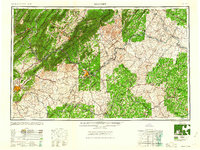 1959 Roanoke1959 Print · USGSCentral Virginia and the Blue Ridge appear in great detail during the late fifties, showcasing the transition from mountain industry to Piedmont farmland. Trace the path of the Norfolk and Western railroad or find old river towns like Appomattox and Amelia Court House.
 - 1961 Map of Bluefield
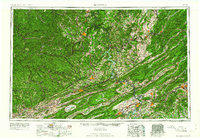 1961 Bluefield1961 Print · USGSThe coalfields and mountain ridges of southern West Virginia and southwest Virginia are captured in the early sixties. Genealogists can trace family ties through rail-linked towns like Princeton and Richlands or along the shores of Bluestone Reservoir.
 - 1962 Map of Roanoke
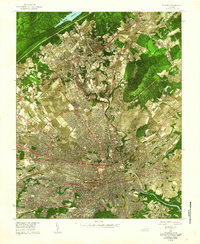 1962 Roanoke1962 Print · USGSMid-century Roanoke and its surrounding valley are captured in this unique experimental aerial mosaic. Genealogists and local historians can trace the early footprints of Vinton, Hollins, and Kingstown, or locate landmarks like Hollins College and the Municipal Airport.
 - 1963 Map of Roanoke
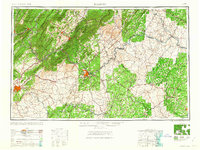 1963 Roanoke1963 Print · USGSCentral Virginia and the Blue Ridge front appear here in the early sixties, caught between their deep railroad roots and new postwar developments. Genealogists and historians can trace the rail lines of the Norfolk and Western through towns like Bedford and Altavista, or locate family landmarks near Smith Mountain Lake.
 - 1963 Map of Roanoke, 1965 Print
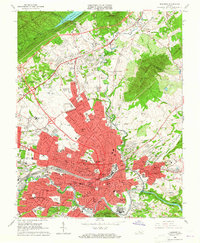 1963 Roanoke1965 Print · USGSRoanoke and its surrounding valley are caught in a moment of rapid suburban and industrial expansion in the early sixties. Researchers can find dozens of family landmarks and local institutions, from Evergreen Cemetery to the campus of Hollins College.6 unique versions available
 - 1963 Map of Garden City, 1965 Print
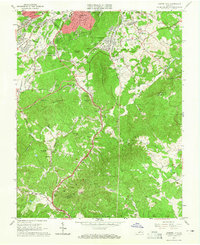 1963 Garden City1965 Print · USGSRoanoke and its southern environs were rapidly expanding into the Blue Ridge foothills in the early 1960s. Genealogists can trace family landmarks like Gearhart Cem and Plunkett Cem, or locate mid-century sites like the Roanoke Drag Strip and Roanoke Technical Institute.3 unique versions available
 - 1963 Map of Bent Mountain, 1965 Print
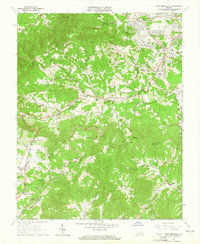 1963 Bent Mountain1965 Print · USGSThe Roanoke and Franklin County borderlands meet along the Blue Ridge in the early sixties as suburban growth begins to reach toward the mountains. Genealogists can trace family roots at Lawrence Memorial Ch, Poages Mill, and the Kittinger Cem.5 unique versions available
 - 1963 Map of Salem, 1965 Print
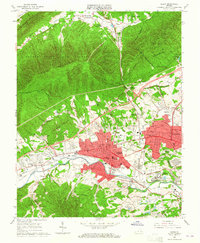 1963 Salem1965 Print · USGSSalem and the western edge of Roanoke are captured here in the early sixties, showing a period of significant suburban and industrial growth. Researchers can locate long-standing institutions like Roanoke College, the grounds of Lakeside Amusement Park, and the Veterans Administration Hospital.4 unique versions available
 - 1971 Map of Roanoke, 1977 Print
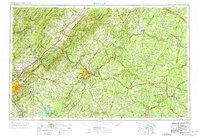 1971 Roanoke1977 Print · USGSThe Virginia Piedmont and Blue Ridge mountains meet in this early 1970s landscape of river valleys and rail hubs. Researchers can trace historic transportation routes and landmarks like the Appomattox Court House Nat Hist Pk, the Peaks of Otter, and Amelia Court House.2 unique versions available
 - 1977 Map of Bent Mountain, 1983 Print
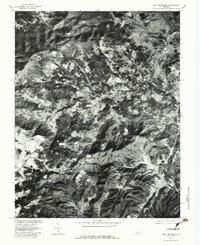 1977 Bent Mountain1983 Print · USGSThe Roanoke outskirts meet the high ridges of the Blue Ridge during the late seventies, showing the push of suburban development into the mountains. Trace old settlement patterns at Poages Mill and Naff or follow the headwaters of the Blackwater River.
 - 1977 Map of Roanoke, 1983 Print
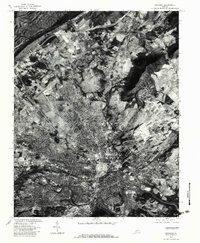 1977 Roanoke1983 Print · USGSThe Roanoke Valley in the late 1970s is captured in high-contrast detail, showing the city's growth against the valley floor. Researchers can trace the development of suburban Vinton and Hollins or follow the path of Tinker Creek through the landscape.
 - 1977 Map of Salem, 1983 Print
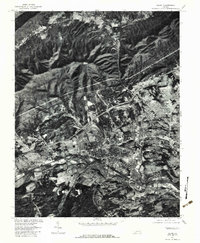 1977 Salem1983 Print · USGSThe Roanoke Valley in the late seventies reveals a landscape of rapid suburban growth nestled against the Appalachian ridges. Trace the development of Salem and Beverly Heights along the Roanoke River or the rural reaches of Mason Cove.
 - 1977 Map of Garden City, 1983 Print
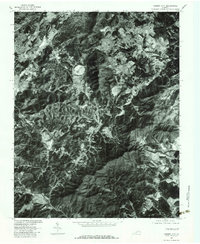 1977 Garden City1983 Print · USGSThe Roanoke valley and the southern Blue Ridge foothills are captured in detail during the late seventies. Researchers can trace the development of outlying communities like Garden City, Cave Spring, and Starkey against the backdrop of Buck Mountain.
 - 1982 Map of Radford, 1983 Print
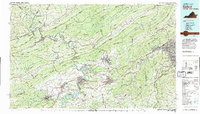 1982 Radford1983 Print · USGSThe New River Valley and surrounding highlands are shown during a period of significant regional growth in the early eighties. Genealogists and historians can trace the development of VPI, locate historic sites like Yellow Sulphur Springs, and follow the Norfolk and Western rail lines through the gaps.2 unique versions available
 - 1984 Map of Garden City
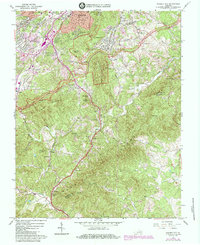 1984 Garden City1984 Print · USGSRoanoke and its southern suburbs are seen here in the mid-1980s as the city expanded toward the Blue Ridge. Genealogists and local historians can trace family plots like Oylers Cem or Plunkett Cem and locate community landmarks from Boones Chapel to the Drive-in Theater.
 - 1985 Map of Roanoke, 1986 Print
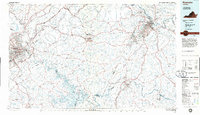 1985 Roanoke1986 Print · USGSMid-eighties Virginia comes into focus across the Blue Ridge and the upper Roanoke River valley during a period of steady regional growth. Genealogists and historians can trace family-named landmarks like Mt Moriah Ch, local hubs such as Cave Spring, and sites like the New London Airport (Drag Strip).2 unique versions available
Showing maps 1-25 of 28
Top cities of Roanoke
Frequently asked questions
- What are the different types of historical maps available for Roanoke?
- What is the oldest map of Roanoke?
- Where can I purchase historical maps of Roanoke for my home or office?
- Where can I download high-res historical maps of Roanoke?
- Are there historical topographic maps available for Roanoke?
- Is there historical aerial imagery available for Roanoke?
- Where are historical maps of Roanoke sourced from?