Old Maps of Calhoun County, West Virginia for Academic Research
Study the evolution of Calhoun County with 99 high-resolution historic maps. Whether you're teaching, researching, or modeling changes in land use, these maps provide essential visual documentation of urban, environmental, and geographic change.
- Analyze long-term change: Track patterns in development, transportation, and natural features.
- Ideal for environmental or urban studies: Support academic projects with primary historical map data.
- Use in the classroom or lab: Educators and researchers rely on these maps to bring historical context to life.
These maps are a powerful tool for teaching, research, and visualizing how Calhoun County has changed over the decades.
Calhoun County, WV maps
(99)- 1893 Map of Sutton
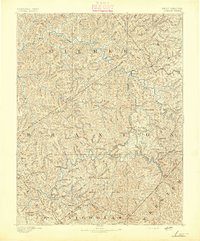 1893 Sutton1893 Print · USGSCentral West Virginia at the end of the nineteenth century was a world of river-bottom settlements and high mountain ridges. Genealogists can locate family-named landmarks like Bealls Mills, Hickory Knob, and the riverside town of Sutton.3 unique versions available
 - 1906 Map of Glenville
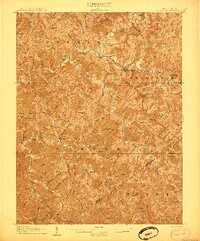 1906 Glenville1906 Print · USGSThe Little Kanawha River valley in the early 1900s was a landscape of remote hills and riverfront hamlets. Genealogists can trace family connections in vanished post offices and creek-side settlements like Stumptown, Lettergap, and Dekalb.2 unique versions available
 - 1906 Map of Otter, 1961 Print
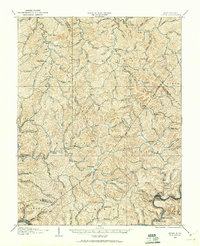 1906 Otter1961 Print · USGSCentral West Virginia at the start of the twentieth century shows a landscape of deep hollows and high ridges before modern highways. Researchers can trace early settlements and family homesteads near Ivydale, Newton, and the remote Redhouse Siding along the Elk River.
 - 1907 Map of Otter
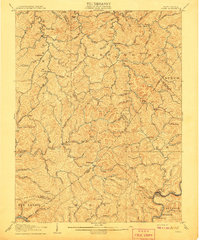 1907 Otter1907 Print · USGSCentral West Virginia at the turn of the century shows a landscape defined by its river valleys and new industrial rails. Genealogists can trace family homes near Newton, Linden, and Minnora, or follow the path of the Coal and Coke R R through Ivydale.3 unique versions available
 - 1907 Map of Harrisville
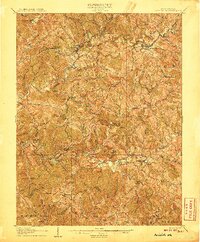 1907 Harrisville1907 Print · USGSRitchie County at the start of the twentieth century is centered on the rugged valleys of the North Fork and South Fork Hughes River. Researchers can trace the path of the Baltimore and Ohio RR and locate rural hubs like Silver Run Station and the Ritchie Mine.2 unique versions available
 - 1907 Map of Arnoldsburg
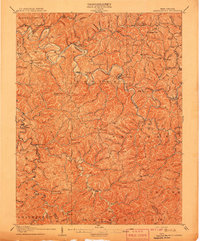 1907 Arnoldsburg1907 Print · USGSCalhoun County's rugged terrain and river life are preserved here in the first decade of the twentieth century. Researchers can trace ancestral home sites and rural post offices from Grantsville to Chestnut Grove Big Springs PO and Brooksville Big Bend PO.2 unique versions available
 - 1907 Map of Spencer
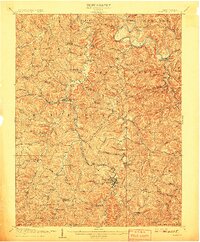 1907 Spencer1907 Print · USGSRoane County at the turn of the century is captured here as a landscape of isolated hollows connected by the Ravenswood and Spencer Turnpike. Researchers can locate dozens of vanished rural centers and local landmarks like Burning Springs, the Morning Star Schoolhouse, and Buffalo Church.2 unique versions available
 - 1908 Map of Gassaway
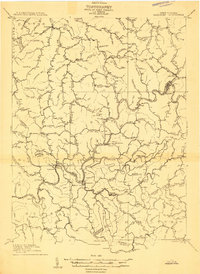 1908 Gassaway1908 Print · USGSCentral West Virginia at the height of the early rail era reveals a landscape of isolated hill settlements and river industry. Genealogists can trace early homesteads and rail stops like Gassaway, Strange Creek, and the many family-named peaks like Davis Knob.
 - 1910 Map of Gassaway
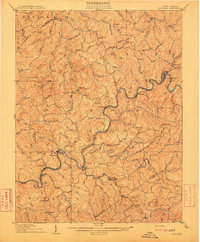 1910 Gassaway1910 Print · USGSBraxton County at the peak of its rail-and-river era is captured here, centered on the growing industrial hub of Gassaway. Genealogists and historians can trace early post offices and settlements like Villa Nova Duck PO, Strange Creek, and the Coal and Coke Ry corridor.3 unique versions available
 - 1924 Map of Harrisville, 1957 Print
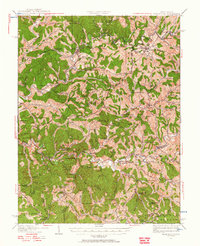 1924 Harrisville1957 Print · USGSRitchie County during the mid-1920s reveals a landscape of ridge-top schools and river-valley industry. Genealogists can trace family roots through numerous local landmarks like Silver Run Sta Donohue PO, Ritchie Mines, and Star Settlement.
 - 1925 Map of Glenville, 1962 Print
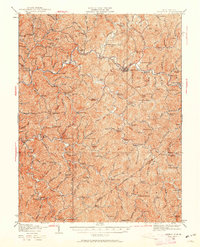 1925 Glenville1962 Print · USGSGilmer and Braxton Counties appear in the mid-1920s as a landscape of river-valley hamlets and dozens of one-room schoolhouses. Genealogists can trace family roots through specific landmarks like Otterbein Church, Stumptown, and the Lynch Run School.
 - 1925 Map of Arnoldsburg, 1964 Print
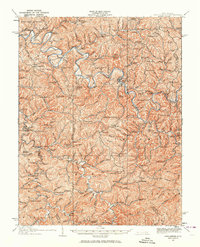 1925 Arnoldsburg1964 Print · USGSCalhoun County in the mid-twenties shows a landscape of winding river bends and hundreds of named rural landmarks. Genealogists can trace family names through dozens of community sites like Jackson School, Mt Vernon Church, and Annamoriah Flats.
 - 1926 Map of Harrisville
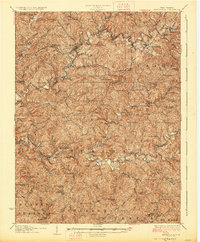 1926 Harrisville1926 Print · USGSRitchie County in the mid-twenties is a landscape of winding river valleys and bustling rail hubs like Cairo and Harrisville. Researchers can trace the heritage of remote hill communities through dozens of local landmarks like the Ritchie Mine, Donohue PO, and Star Settlement.
 - 1927 Map of Arnoldsburg
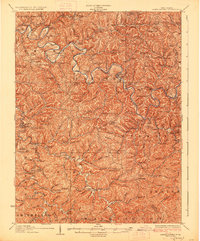 1927 Arnoldsburg1927 Print · USGSCalhoun County's winding river valleys and high ridges are captured here during the late twenties, showing a rural landscape of scattered hill farms and tiny schools. Genealogists can trace family footprints near Grantsville, Rocksdale, and Mt Zion.3 unique versions available
 - 1928 Map of Glenville
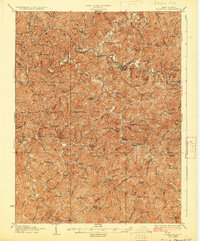 1928 Glenville1928 Print · USGSWest Virginia's central hills in the late twenties are captured here, centered on the Little Kanawha River and its upland communities. Genealogists can locate dozens of country schools and churches, including Peachtree School, Sugar Grove School, and Poplar Tree Church.2 unique versions available
 - 1928 Map of Spencer
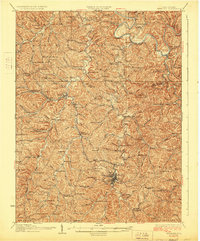 1928 Spencer1928 Print · USGSRoane and Wirt counties come alive in the late 1920s, showing a landscape defined by the Baltimore and Ohio railroad and winding creek valleys. Genealogists can locate dozens of country schools like Lone Star Sch and churches such as Mt Zion Ch or Triumph Ch.2 unique versions available
 - 1949 Map of Clarksburg
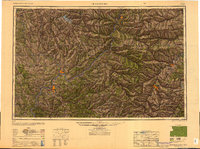 1949 Clarksburg1949 Print · USGSThe upper Ohio River valley and the industrial heart of West Virginia come into focus during this post-war period. Genealogists and researchers can trace the rail corridors of the Baltimore and Ohio and locate centers like Fairmont, Grafton, and Waynesburg.
 - 1954 Map of Charleston
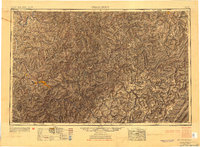 1954 Charleston1954 Print · USGSWest Virginia’s industrial heart and mountain highlands are captured here during the mid-fifties, centered on the capital city. Researchers can trace historic river-and-rail corridors along the Kanawha River and locate remote peaks within the Monongahela National Forest.
 - 1956 Map of Clarksburg, 1966 Print
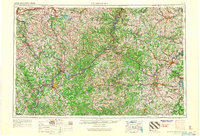 1956 Clarksburg1966 Print · USGSThe Ohio River valley and the industrial heart of West Virginia are seen here in the mid-1950s as rail and river commerce thrived. Researchers can trace historic transport lines like the Baltimore and Ohio RR and locate ancestral homes in Clarksburg, Moundsville, or Parkersburg.2 unique versions available
 - 1957 Map of Burning Springs, 1959 Print
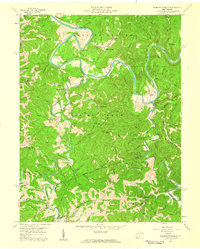 1957 Burning Springs1959 Print · USGSWirt County in the late fifties was a landscape of deep river bends and active mineral extraction. Genealogists can trace family names through the Rector Cem, find rural school sites like Hill Grove Sch, and locate numerous historical Oil Wells.2 unique versions available
 - 1957 Map of Charleston, 1966 Print
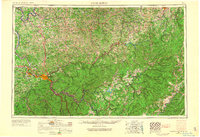 1957 Charleston1966 Print · USGSMid-century West Virginia unfolds along the industrial Kanawha River valley and into the high Allegheny Mountains. Genealogists and historians can trace the vital rail lines of the Chesapeake and Ohio and locate riverside settlements from Saint Albans to Buckhannon.3 unique versions available
 - 1958 Map of Charleston
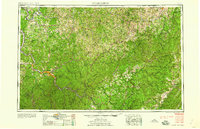 1958 Charleston1958 Print · USGSMid-century West Virginia is defined here by the industrial corridor of the Kanawha River and the high ridges of the Allegheny Mountains. Researchers can trace the rail networks of the New York Central or locate remote highland communities like Pickens and Hillsboro.
 - 1961 Map of Clarksburg
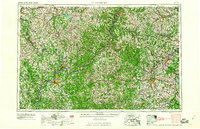 1961 Clarksburg1961 Print · USGSThe mid-century industrial and river landscapes of West Virginia and Ohio are detailed here, centered on the Ohio River. Researchers can trace the Baltimore and Ohio rail lines connecting towns like Parkersburg, Clarksburg, and Monongah.
 - 1961 Map of Charleston
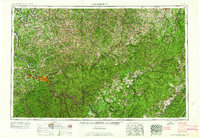 1961 Charleston1961 Print · USGSWest Virginia's capital region and the highlands to the east are shown in detail during the early sixties. Genealogists and historians can trace rail networks like the Baltimore and Ohio RR and find early state parks such as Watoga State Park.
 - 1964 Map of Macfarlan, 1966 Print
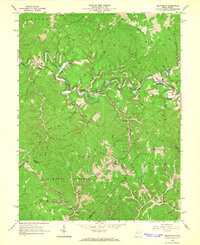 1964 Macfarlan1966 Print · USGSRitchie County’s winding river valleys were defined by timber and fuel extraction in the mid-1960s. Genealogists and researchers can trace local family lineages through remote landmarks like Hartley Sch, Nutter Cem, and the river community of Macfarlan.3 unique versions available
Showing maps 1-25 of 99
Top cities of Calhoun County
Frequently asked questions
- What are the different types of historical maps available for Calhoun County?
- What is the oldest map of Calhoun County?
- Where can I purchase historical maps of Calhoun County for my home or office?
- Where can I download high-res historical maps of Calhoun County?
- Are there historical topographic maps available for Calhoun County?
- Is there historical aerial imagery available for Calhoun County?
- Where are historical maps of Calhoun County sourced from?