Old Maps of Morgan County, West Virginia
Explore 98 old maps of Morgan County, spanning from 1894 to today. These high-resolution historic maps reveal how streets, neighborhoods, landmarks, and natural features evolved over time — perfect for genealogy, metal detecting, research, and local history exploration.
What you can do with these maps:
- See how Morgan County changed over time: Compare historical maps to modern-day views to trace roads, homesites, rail lines & more.
- View detailed metadata: Each map includes creators, publishers, year, scale, and archive source.
- Overlay maps with satellite & LiDAR: Visualize the past alongside modern tools to explore terrain & human change.
- Trusted historical sources: Maps sourced from the USGS, Library of Congress, and other archives.
- Access maps your way: View online, download high-res files, or order prints for personal or research use.
Start exploring old maps of Morgan County to uncover forgotten places, hidden landmarks, and the deep history beneath your feet.
Morgan County, WV maps
(98)- 1894 Map of Winchester, 1899 Print
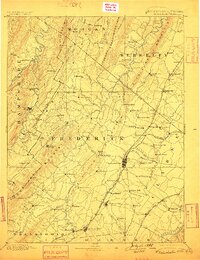 1894 Winchester1899 Print · USGSThe Virginia and West Virginia borderlands appear here in the late nineteenth century, showing a landscape defined by mountain ridges and bustling rail junctions. Researchers can trace early rural life through family-named sites like Unger Store and Fawcetts Gap or the resort history of Capon Springs.6 unique versions available
 - 1898 Map of Paw Paw, 1982 Print
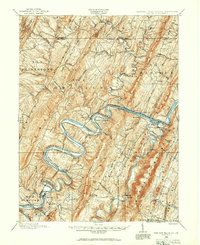 1898 Paw Paw1982 Print · USGSThe Potomac River meanders through the Appalachian ridges at the turn of the century, where Maryland, West Virginia, and Pennsylvania meet. Genealogists and historians can trace the early industrial corridor of the Chesapeake and Ohio Canal and find old rail stops like Magnolia and Doe Gully.
 - 1899 Map of Hancock, 1960 Print
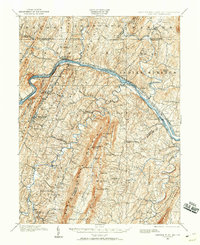 1899 Hancock1960 Print · USGSThe Potomac River valley at the turn of the century shows a bustling corridor of trade where Maryland, West Virginia, and Pennsylvania meet. Genealogy researchers can trace family landmarks like Stotlers Crossroads, Yeakle Mill, and the historic Fort Frederick.
 - 1900 Map of Pawpaw
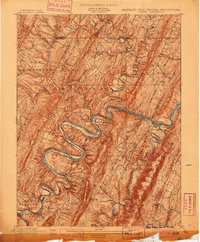 1900 Pawpaw1900 Print · USGSThe Potomac River's intricate meanders define this borderland at the close of the nineteenth century. Researchers can trace the parallel routes of the Chesapeake and Ohio Canal and the Baltimore and Ohio Railroad past Magnolia, Dam No. 6, and Fisher Ford.8 unique versions available
 - 1901 Map of Hancock
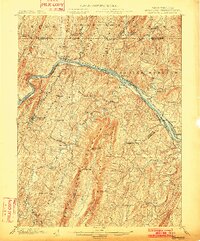 1901 Hancock1901 Print · USGSMaryland and West Virginia met at the turn of the century along a busy corridor of river transport and rail expansion. Genealogists can trace family roots through old landmarks like Yeakle Mill, Fairview Church, and early hamlets such as Stotlers Crossroads.8 unique versions available
 - 1910 Map of Paw Paw, 1959 Print
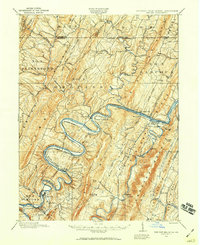 1910 Paw Paw1959 Print · USGSMaryland and West Virginia meet along the serpentine Potomac River in the early twentieth century as railroads and canals compete for the valley. Trace the industrial landscape from the Ohio and Chesapeake Canal to the river towns of Paw Paw and Little Orleans.
 - 1914 Map of Gerrardstown
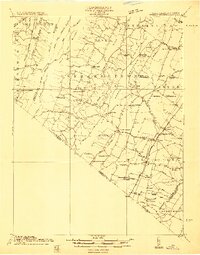 1914 Gerrardstown1914 Print · USGSBerkeley County was a landscape of mountain ridges and orchard valleys just before the Great War. Researchers can locate vanished landmarks like the Toll Gate at Darkesville or early rural institutions such as the Gerrardstown Colored School.
 - 1916 Map of Gerrardstown
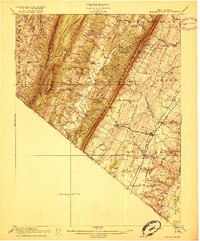 1916 Gerrardstown1916 Print · USGSThe West Virginia and Virginia borderlands come alive in this mid-1910s study of the ridgelines and valley roads. Genealogists can trace family roots at Salem Church and Tuscarora Church or locate vanished landmarks like the Tollgate and County Home.
 - 1916 Map of Capon Bridge
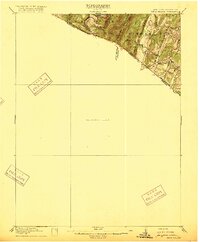 1916 Capon Bridge1916 Print · USGSThe northern Panhandle and Virginia borderlands are documented here just before the Great War. Genealogists and local historians can locate early educational landmarks like Timber Ridge School and Morton Grove School alongside the rural hub of Ungers Store.2 unique versions available
 - 1923 Map of Capon Bridge
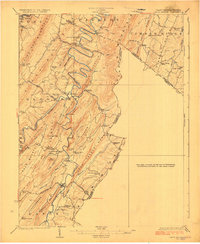 1923 Capon Bridge1923 Print · USGSHampshire County and the winding river valley come to life in this early-twentieth-century study of the borderlands. Researchers can trace ancestral property and community hubs from Capon Bridge to Island Hill Church and the Pike School.2 unique versions available
 - 1937 Map of Capon Bridge
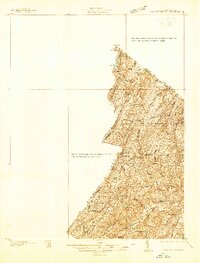 1937 Capon Bridge1937 Print · USGSCrossing the border of Virginia and West Virginia in the late 1930s, this area reveals a landscape of ridge-top schools and valley rail lines. Researchers can trace ancestral routes along the Northwestern Turnpike or locate family sites near Mt Hebron Ch and Reynolds Store.4 unique versions available
 - 1937 Map of Gerrardstown
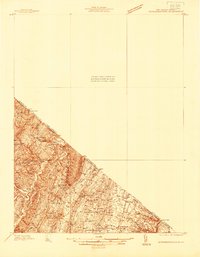 1937 Gerrardstown1937 Print · USGSSettlements and old wagon roads thread through the Shenandoah Valley in the late 1930s. Genealogists can trace family names and social hubs like Howards Chapel, the Hopewell Meeting House, and the historic Braddock Road.3 unique versions available
 - 1943 Map of Capon Bridge
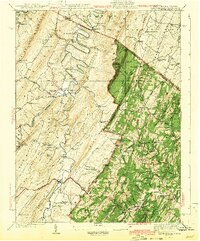 1943 Capon Bridge1943 Print · USGSHampshire and Frederick Counties appear in the early 1940s as a landscape of winding mountain rivers and quiet ridge-top settlements. Researchers can trace historic family landmarks and community hubs like Capon Chapel, the Northwestern Turnpike, and Forks of Cacapon.2 unique versions available
 - 1943 Map of Gerrardstown
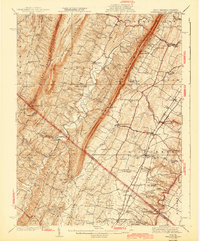 1943 Gerrardstown1943 Print · USGSBerkeley County and the West Virginia-Virginia borderlands are captured here during the mid-1940s as a thriving network of valley settlements and mountain gaps. Researchers can locate family landmarks like the Old Stone Ch, the County Home, and the old Tollgate at Inwood.
 - 1948 Map of Cumberland
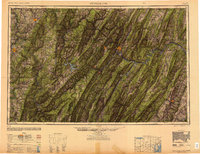 1948 Cumberland1948 Print · USGSMid-century Appalachia and the Shenandoah Valley are shown in detail, documenting the industrial and transportation hubs of the tri-state area. Genealogists can trace family roots through settlements like Double Tollgate and Bunker Hill or along the Baltimore & Ohio RR.3 unique versions available
 - 1950 Map of Artemas, 1960 Print
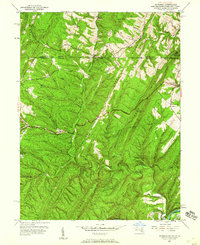 1950 Artemas1960 Print · USGSAllegany County and the Pennsylvania border are shown here in the mid-twentieth century as a landscape of deep hollows and narrow ridge farming. Researchers can trace the Mason and Dixon Line and find sites like White Sulphur Spring and St Patrick Ch.6 unique versions available
 - 1950 Map of Paw Paw, 1967 Print
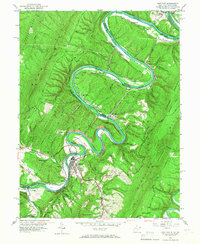 1950 Paw Paw1967 Print · USGSThe Potomac River oxbows at the West Virginia-Maryland border in the mid-century, where the rail-and-canal economy shaped the mountain landscape. Trace the historic route of the Baltimore and Ohio Railroad past Magnolia and find rural sites like Milo School and Sulphur Springs Ch.3 unique versions available
 - 1951 Map of Paw Paw
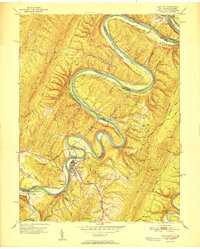 1951 Paw Paw1951 Print · USGSThe Potomac River's serpentine bends at the West Virginia-Maryland border define this mid-century landscape of heavy rail and mountain ridges. Genealogists and industrial historians can trace the Chesapeake and Ohio Canal and family sites like Cherry Orchard Cem or the Milo School.
 - 1951 Map of Artemas
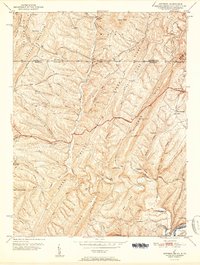 1951 Artemas1951 Print · USGSThe Western Maryland ridges and the Pennsylvania borderlands are shown here in the early fifties, following the heavy timber and rail eras. Genealogists can trace family landmarks along the Mason and Dixon Line and locate sites like St Patrick Ch and Piney Plains Sch.2 unique versions available
 - 1951 Map of Bellegrove, 1952 Print
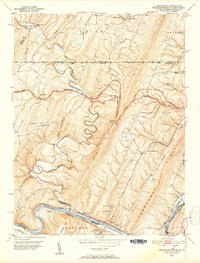 1951 Bellegrove1952 Print · USGSThe Maryland and Pennsylvania borderlands come alive in this mid-century survey of the ridges along the Potomac River. Genealogists and historians can trace family locations near Piney Plains Ch, the Woodmont Club, or the river landing at Pearre.7 unique versions available
 - 1951 Map of Cherry Run, 1953 Print
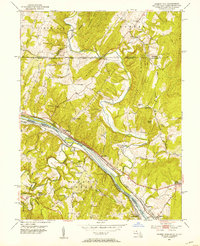 1951 Cherry Run1953 Print · USGSThe Potomac River valley and its rugged ridges are captured here during the early fifties as the region's transport network evolved. Genealogists and rail historians can trace the paths of the National Pike, the Baltimore and Ohio Railroad, and the Chesapeake and Ohio Canal (Abandoned).8 unique versions available
 - 1951 Map of Hancock, 1953 Print
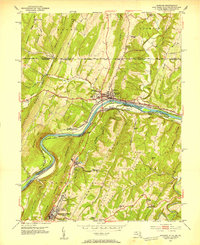 1951 Hancock1953 Print · USGSThe tri-state Potomac borderlands are captured here in the early fifties, showing the convergence of rail and river industry. Genealogists can trace family roots through Dogtown, Ridersville, and Johnsons Mill, or locate rural landmarks like the Westview Sch.4 unique versions available
 - 1952 Map of Cumberland
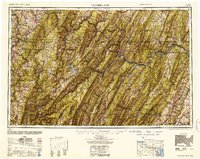 1952 Cumberland1952 Print · USGSThe Potomac Highlands and the Shenandoah Valley are revealed in this early 1950s survey of the Appalachian interior. Researchers can trace the river-and-rail corridors connecting Cumberland, Winchester, and the recreational waters of Deep Creek Lake.
 - 1956 Map of Cumberland, 1966 Print
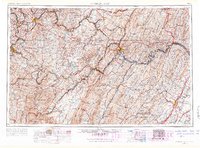 1956 Cumberland1966 Print · USGSThe tri-state Highlands in the mid-1950s show a landscape shaped by coal, timber, and the massive presence of the Baltimore & Ohio RR. Researchers can trace the industrial corridor from Cumberland through the Allegheny Mountains to mountain retreats like Deep Creek Lake.6 unique versions available
 - 1957 Map of Cumberland
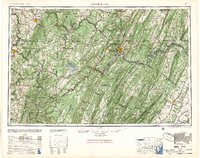 1957 Cumberland1957 Print · USGSThe Potomac River valley and the ridges of the Allegheny Front define this mid-century landscape at the intersection of Maryland, West Virginia, and Pennsylvania. Trace the steam-era rail lines of the Baltimore and Ohio RR or locate rural landmarks like St Stephens Church and Stony River Dam.
Showing maps 1-25 of 98
Top cities of Morgan County
Frequently asked questions
- What are the different types of historical maps available for Morgan County?
- What is the oldest map of Morgan County?
- Where can I purchase historical maps of Morgan County for my home or office?
- Where can I download high-res historical maps of Morgan County?
- Are there historical topographic maps available for Morgan County?
- Is there historical aerial imagery available for Morgan County?
- Where are historical maps of Morgan County sourced from?