Old Maps of Manitowoc County, Wisconsin
Explore 134 old maps of Manitowoc County, spanning from 1954 to today. These high-resolution historic maps reveal how streets, neighborhoods, landmarks, and natural features evolved over time — perfect for genealogy, metal detecting, research, and local history exploration.
What you can do with these maps:
- See how Manitowoc County changed over time: Compare historical maps to modern-day views to trace roads, homesites, rail lines & more.
- View detailed metadata: Each map includes creators, publishers, year, scale, and archive source.
- Overlay maps with satellite & LiDAR: Visualize the past alongside modern tools to explore terrain & human change.
- Trusted historical sources: Maps sourced from the USGS, Library of Congress, and other archives.
- Access maps your way: View online, download high-res files, or order prints for personal or research use.
Start exploring old maps of Manitowoc County to uncover forgotten places, hidden landmarks, and the deep history beneath your feet.
Manitowoc County, WI maps
(134)- 1954 Map of Kewaunee, 1956 Print
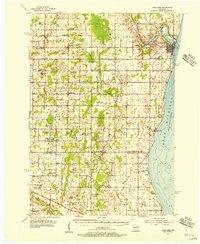 1954 Kewaunee1956 Print · USGSCoastal Kewaunee County and northern Manitowoc County appear here in the mid-fifties, dominated by small farm settlements and a dense network of rural schoolhouses. Genealogists can trace family roots through numerous sites like Chernesville Cem, St Peters Ch, and Tisch Mills.2 unique versions available
 - 1954 Map of School Hill, 1956 Print
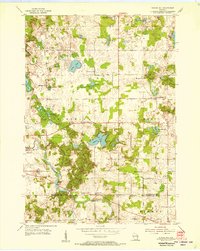 1954 School Hill1956 Print · USGSThe rolling dairy country of Manitowoc and Sheboygan counties is captured here in the mid-1950s. Genealogists and local historians can trace the many rural schools and churches of the era, from Bethlehem Ch to Pigeon River Sch and the Salvatorian Seminary.2 unique versions available
 - 1954 Map of Manitowoc, 1956 Print
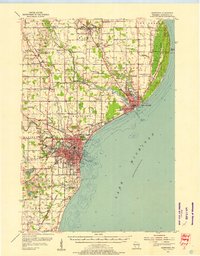 1954 Manitowoc1956 Print · USGSThe Lake Michigan shoreline of Manitowoc and Two Rivers is captured here in the mid-1950s, showing a landscape of maritime industry and rural school districts. Genealogists can locate family landmarks like the Holy Family Convent, Francis Creek National Cem, and the Salem Sch (Abandoned).2 unique versions available
 - 1954 Map of Cleveland, 1956 Print
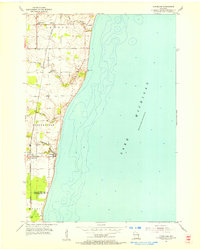 1954 Cleveland1956 Print · USGSMid-century life along the Lake Michigan shoreline comes into focus through this survey of the Manitowoc and Sheboygan county line. Genealogists and local historians can trace the rural landscape through family-linked sites like St John Cemetery, Hika, and the Point River School.3 unique versions available
 - 1954 Map of St. Wendel, 1956 Print
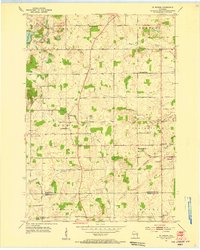 1954 St. Wendel1956 Print · USGSThe rural townships of Manitowoc and Sheboygan counties are captured here in the mid-1950s, a landscape defined by small crossroads settlements and dairy farms. Genealogists can trace family roots through local landmarks like Meeme Center Cem, St Fidelis Sch, and the village of Osman.3 unique versions available
 - 1954 Map of Sheboygan North, 1956 Print
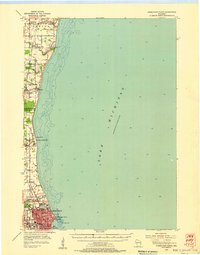 1954 Sheboygan North1956 Print · USGSThe Sheboygan lakeshore and the developing townships of Manitowoc and Sheboygan counties are documented here in the mid-fifties. Researchers can trace the rail corridor of the Chicago and North Western through early settlements like Hika, Haven, and the Camp Haven Military Reservation.
 - 1954 Map of Denmark, 1956 Print
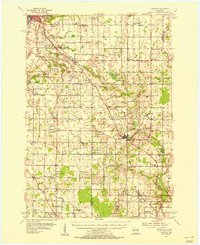 1954 Denmark1956 Print · USGSSoutheast of Green Bay in the mid-fifties, this area shows a dense network of rural schoolhouses and parish churches. Genealogists can trace family roots through sites like Little Irish Church Cem, Coppens Corner, and the East Wayside Sch (Abandoned).2 unique versions available
 - 1954 Map of Howards Grove, 1956 Print
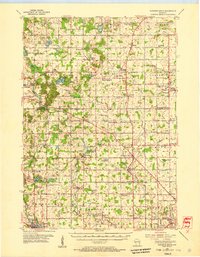 1954 Howards Grove1956 Print · USGSSheboygan and Manitowoc counties are captured here in the mid-1950s, a period defined by tight-knit rural townships and an economy rooted in local dairy and industry. Genealogists can locate family landmarks like Rocky Knoll Sanatorium, the St Paul-Friedhof Cem, and Mission House College.
 - 1954 Map of Chilton, 1956 Print
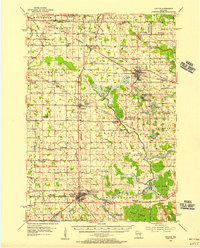 1954 Chilton1956 Print · USGSMid-century Calumet County is captured here during a period of transition for its rural school districts and thriving rail corridors. Genealogists can locate family landmarks such as St Lukes Church, Brillion Cem, and several schoolhouses like the Howe Sch.3 unique versions available
 - 1954 Map of Reedsville, 1956 Print
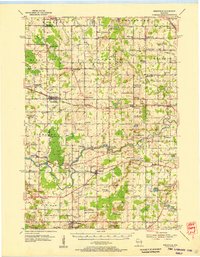 1954 Reedsville1956 Print · USGSManitowoc County's dairy heartland is captured in the mid-fifties, showing a landscape densely dotted with rural schoolhouses and family-named crossroads. Genealogists and historians can locate dozens of institutions like St Marys Cem, Cato Falls Sch, and the Maple Crest Sanatorium.2 unique versions available
 - 1954 Map of Manitowoc, 1956 Print
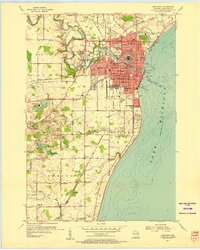 1954 Manitowoc1956 Print · USGSManitowoc's industrial shoreline and the surrounding dairy country are captured here at the peak of the postwar era. Local historians can trace the foundations of the lakefront economy at Manitowoc Harbor or find rural family landmarks like the Holy Family Convent and Whittier Sch.2 unique versions available
 - 1954 Map of Kiel, 1956 Print
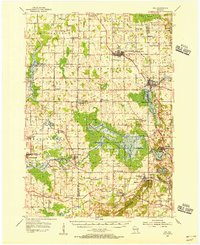 1954 Kiel1956 Print · USGSWisconsin's glacial landscape meets mid-century development in this survey of the four-county border region. Genealogists can trace family roots through numerous country churches like Holy Rosary Ch and schools including the Elder Grove Sch.2 unique versions available
 - 1954 Map of Milwaukee, 1967 Print
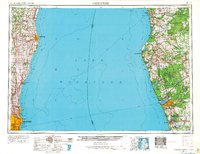 1954 Milwaukee1967 Print · USGSCoastal life and maritime commerce across Lake Michigan are seen here during the mid-fifties, bridging Wisconsin's industrial hubs and Michigan's timberlands. Genealogists and historians can trace the rail lines of the Grand Trunk Western and find long-established ports like Ludington, Port Washington, and Muskegon.3 unique versions available
 - 1954 Map of Manitowoc, 1968 Print
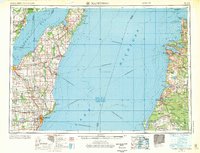 1954 Manitowoc1968 Print · USGSLake Michigan served as a vital transit corridor in the mid-fifties, with car and auto ferries linking the industrial ports of Wisconsin to the Michigan timberlands. Genealogists and maritime historians can trace active ferry routes like the Ann Arbor Railway Car and Auto Ferry and locate early settlements from Brussels to Algoma.2 unique versions available
 - 1955 Map of Green Bay, 1968 Print
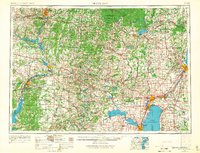 1955 Green Bay1968 Print · USGSCentral and Eastern Wisconsin are captured here in the mid-fifties, showing the industrial growth of the Fox Valley and Wisconsin River corridors. Genealogists and historians can trace rail lines like the Green Bay and Western through settlements like Weyauwega, Clintonville, and Pulaski.2 unique versions available
 - 1957 Map of Madison, 1967 Print
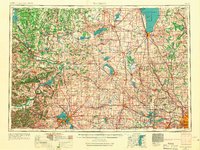 1957 Madison1967 Print · USGSSouth-central Wisconsin in the mid-fifties reveals a landscape of industrial hubs and glacial lakes linked by a dense rail and highway network. Genealogists and historians can trace the development of lakeside communities and find notable sites like Badger Ordnance Works and the Horicon National Wildlife Refuge.3 unique versions available
 - 1958 Map of Manitowoc
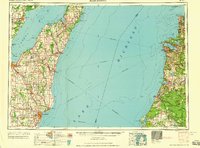 1958 Manitowoc1958 Print · USGSLake Michigan and its shorelines are shown in the late fifties when maritime transport defined the region. Researchers can trace the routes of the Ann Arbor Railroad Ferry or locate old settlements like St. Nazianz, Rostock, and Two Creeks.
 - 1958 Map of Milwaukee
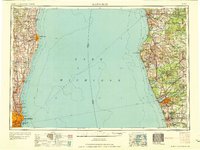 1958 Milwaukee1958 Print · USGSThe shorelines of Lake Michigan in the late fifties reveal a landscape of bustling ferry ports and growing industrial suburbs. Genealogists and historians can trace rail networks like the Chesapeake & Ohio and locate landmarks such as Little Sable Point and Holy Cross Church.
 - 1960 Map of Madison
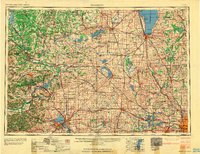 1960 Madison1960 Print · USGSCentral and Southern Wisconsin are captured in the late fifties, showing the region as its rail-and-river network matured. Trace the paths of the Soo Line RR or locate family roots near Lake Mendota and Horicon National Wildlife Refuge.2 unique versions available
 - 1974 Map of Kiel, 1977 Print
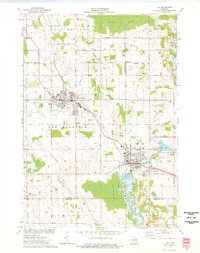 1974 Kiel1977 Print · USGSThe manufacturing corridor between Kiel and New Holstein comes into focus in the mid-seventies, highlighting a landscape shaped by rail and river. Genealogists and local historians can trace family-named roads and landmarks like Holy Rosary Cem, the SS Peter and Paul Cem, and the old Kilns.
 - 1974 Map of Brillion, 1977 Print
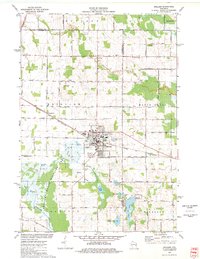 1974 Brillion1977 Print · USGSBrillion and its neighboring townships are captured in the mid-seventies during a period of steady industrial and agricultural activity. Researchers can trace family-named roads and rural burial grounds like Evergreen Cem, St Marys Cem, and the Chicago and North Western rail line.
 - 1974 Map of Potter, 1977 Print
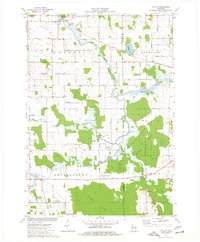 1974 Potter1977 Print · USGSCalumet and Manitowoc Counties are captured in the 1970s, showcasing a landscape of wetlands and rail corridors at the junction of four townships. Genealogists can trace family connections through sites like St Martin Ch, Rantoul Cem, and long-established homesteads along Schneider Road.
 - 1978 Map of Clarks Mills, 1979 Print
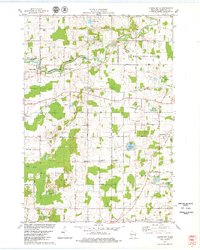 1978 Clarks Mills1979 Print · USGSManitowoc County's rural townships are captured here in the late seventies, showing a landscape defined by the winding river and the Soo Line rail. Genealogists can locate family landmarks like St Mary Cem, the Gjerpen Cem, and the old St Johns Sch.
 - 1978 Map of Denmark, 1979 Print
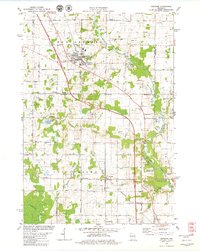 1978 Denmark1979 Print · USGSBrown County and Manitowoc County crossroads come alive in the late seventies, showing the transition from village centers to protected forest lands. Genealogists can locate family names at West Danish Cem or trace the early paths of Denmark and Maribel.
 - 1978 Map of Two Rivers, 1979 Print
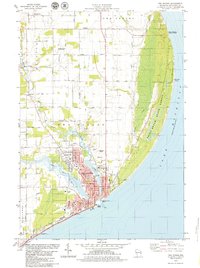 1978 Two Rivers1979 Print · USGSWisconsin's lakeside industry and rural heritage meet in the late seventies as the Twin Rivers join at the Lake Michigan shore. Genealogists and local historians can trace family-named sites like the Englebert Farms Landing Strip and several burial grounds, including Saxonburg Cem and Holy Cross Cem.
Showing maps 1-25 of 134
Top cities of Manitowoc County
- Manitowoc historical maps
- Two Rivers historical maps
- Kiel historical maps
- Newton historical maps
- Meeme historical maps
- Mishicot historical maps
See more
Frequently asked questions
- What are the different types of historical maps available for Manitowoc County?
- What is the oldest map of Manitowoc County?
- Where can I purchase historical maps of Manitowoc County for my home or office?
- Where can I download high-res historical maps of Manitowoc County?
- Are there historical topographic maps available for Manitowoc County?
- Is there historical aerial imagery available for Manitowoc County?
- Where are historical maps of Manitowoc County sourced from?