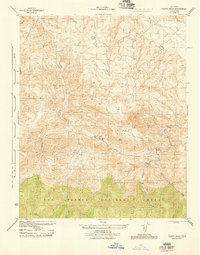
1944 Map of Pleito Hills
USGS Topo · Published 1944About this map
Harris Ranch and the open expanse of Neasons Flat sit at the heart of this mid-century survey, conducted by the U.S. Forest Service during the Second World War. The landscape is defined by the significant elevation of the Pleito Hills, rising toward the southern boundary where the Los Padres National Forest begins. This high-country terrain is deeply etched by a network of seasonal drainage systems, including Pleito Creek, Lost Canyon, and Black Bob Canyon. The mapping of remote landmarks like Antimony Pk and Richards reflects the wartime focus on identifying strategic resources and survey points in the California interior. The placement of small-scale ranching and homestead sites reveals how early 20th-century settlers utilized the few flat terraces and springs found among these steep canyons and ridges.
Find a feature on this map
11 named features on this map. Tap any name to fly to it.
Don’t see what you’re looking for? This feature index may not catch every label — zoom into the map to look around manually.
Map Details
Editions of this 1944 Pleito Hills Map
This is the sole edition of this map. No revisions or reprints were ever made.
Other maps of this area
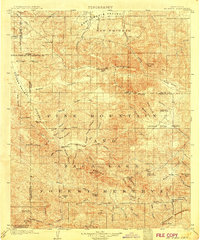
1903 · Mt. Pinos
USGS Topo · 1:125,000
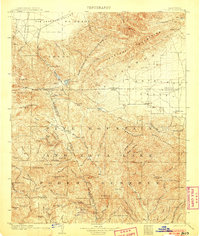
1903 · Tejon
USGS Topo · 1:125,000
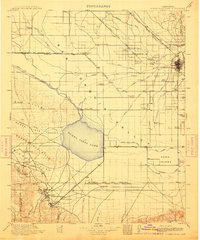
1910 · Buena Vista Lake
USGS Topo · 1:125,000
1912 · Buena Vista Lake
USGS Topo · 1:125,000
1914 · Caliente
USGS Topo · 1:125,000
1931 · West of Tejon Hills
USGS Topo · 1:31,680
1931 · Hayes Ranch
USGS Topo · 1:31,680
1933 · Hayes Ranch
USGS Topo · 1:31,680
1934 · West of Tejon Hills
USGS Topo · 1:31,680
1934 · Coal Oil Canyon
USGS Topo · 1:31,680