1900s (20th Century) Maps of El Fuego y Las Piedras, Cabo Rojo
Explore 6 historic maps of El Fuego y Las Piedras from the 1900s (20th Century). These maps offer a rare glimpse into what life looked like during the 1900s — showing old roads, neighborhoods, homes, and landmarks that have changed or disappeared over time.
Whether you're researching your family's past, planning a metal detecting trip, or studying how El Fuego y Las Piedras's landscape evolved across the 1900s, these high-resolution maps are a powerful tool for exploring the history of this region.
- Focus on a specific era: All maps on this page are from the 1900s, giving you a focused view of this time period.
- See what’s changed: Compare century-old streets, trails, and buildings to today's modern landscape using overlays and satellite layers.
- Research with precision: Use these maps for genealogy, historical research, land use analysis, or educational projects.
- View, download, or print: Maps are fully viewable online in high resolution, and can be downloaded or printed for your own records.
Start exploring El Fuego y Las Piedras's history through authentic maps from the 1900s. This is your window into the past.
El Fuego y Las Piedras, Cabo Rojo maps
(6)- 1935 Map of Puerto Real
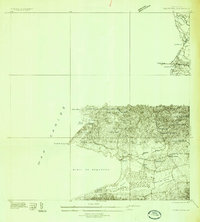 1935 Puerto Real1935 Print · USGSCoastal Cabo Rojo during the mid-1930s reveals a landscape of salt flats, emerging rail lines, and rural schools. Researchers can trace the path of the American RR of Puerto Rico and locate local landmarks like Las Salinas and Escuela Santiago Negroni.
 - 1937 Map of Puerto Real
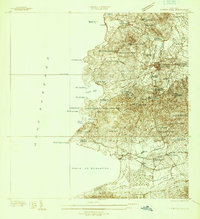 1937 Puerto Real1937 Print · USGSCoastal Cabo Rojo in the mid-1930s reveals a landscape of salt flats and growing settlements along the Mona Passage. Researchers can trace dozens of early rural schools like Escuela Garfield and find family landmarks near Boqueron and the Cemeterio Delicias.
 - 1941 Map of Puerto Real
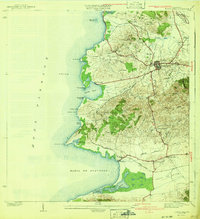 1941 Puerto Real1941 Print · USGSCoastal life in southwestern Puerto Rico centered on the harbor at Puerto Real and the rail line at Cabo Rojo during the late thirties and early forties. Local historians can trace the American Railroad corridor and locate old landmarks like Cementerio Delicias and the salt works at Las Salinas.4 unique versions available
 - 1949 Map of Puerto Real SE
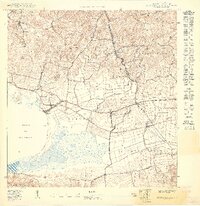 1949 Puerto Real SE1949 Print · USGSCabo Rojo’s southwestern coast is documented during the late 1940s, highlighting the rural barrios and coastal hydrology before modern development. Genealogists and historians can trace family locations near Cuatro Caminos, the salt flats of Salinas, and the shores of Laguna Rincón.
 - 1957 Map of Puerto Real, 1959 Print
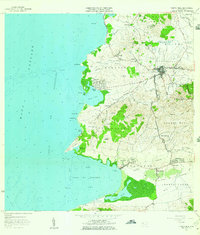 1957 Puerto Real1959 Print · USGSThe Cabo Rojo coastline in the late fifties showcases a landscape of thriving coastal villages and traditional agriculture. Trace the old rail lines of the Ferrocarril and locate family landmarks like the Iglesia de Carmen or the Cementerio Delicias.2 unique versions available
 - 1966 Map of Puerto Real, 1968 Print
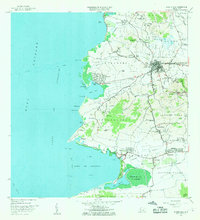 1966 Puerto Real1968 Print · USGSCabo Rojo and the southwestern coast of Puerto Rico come alive in the 1960s, showing a landscape of traditional haciendas and emerging coastal retreats. Researchers can trace the Ferrocarril del Oeste rail line or locate family landmarks like Hacienda La Ratina and Betances.3 unique versions available
End of results
Showing maps 1-6 of 6
Top cities near El Fuego y Las Piedras
- Mayagüez historical maps
- Hormigueros historical maps
- San Germán historical maps
- Sabana Grande historical maps
- Cabo Rojo historical maps
- Lajas historical maps
See more
Frequently asked questions
- What are the different types of historical maps available for El Fuego y Las Piedras?
- What is the oldest map of El Fuego y Las Piedras?
- Where can I purchase historical maps of El Fuego y Las Piedras for my home or office?
- Where can I download high-res historical maps of El Fuego y Las Piedras?
- Are there historical topographic maps available for El Fuego y Las Piedras?
- Is there historical aerial imagery available for El Fuego y Las Piedras?
- Where are historical maps of El Fuego y Las Piedras sourced from?