1900s (20th Century) Maps of Mata de Plátano, Luquillo
Explore 11 historic maps of Mata de Plátano from the 1900s (20th Century). These maps offer a rare glimpse into what life looked like during the 1900s — showing old roads, neighborhoods, homes, and landmarks that have changed or disappeared over time.
Whether you're researching your family's past, planning a metal detecting trip, or studying how Mata de Plátano's landscape evolved across the 1900s, these high-resolution maps are a powerful tool for exploring the history of this region.
- Focus on a specific era: All maps on this page are from the 1900s, giving you a focused view of this time period.
- See what’s changed: Compare century-old streets, trails, and buildings to today's modern landscape using overlays and satellite layers.
- Research with precision: Use these maps for genealogy, historical research, land use analysis, or educational projects.
- View, download, or print: Maps are fully viewable online in high resolution, and can be downloaded or printed for your own records.
Start exploring Mata de Plátano's history through authentic maps from the 1900s. This is your window into the past.
Mata de Plátano, Luquillo maps
(11)- 1945 Map of El Yunque
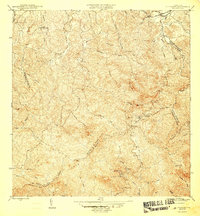 1945 El Yunque1945 Print · USGSThe peaks of the Luquillo range rise sharply in the mid-1940s, showing the interior of the Caribbean National Forest before modern expansion. Genealogists and historians can trace old community sites like Mameyes (Palmer), the Escuela Casiano Cepeda, and the localized activity at La Mina.
 - 1946 Map of El Yunque
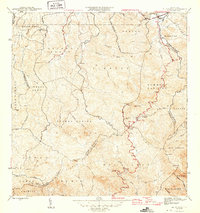 1946 El Yunque1946 Print · USGSNortheastern Puerto Rico is depicted here in the mid-1940s, showcasing the mountainous interior as it rises from the coast. Researchers can trace the trails and summits of the Luquillo National Forest or locate rural landmarks like Mameyes (Palmer) and the Escuela Casiano Cepeda.3 unique versions available
 - 1946 Map of Fajardo
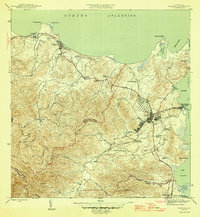 1946 Fajardo1946 Print · USGSNortheast Puerto Rico is shown just after the war, highlighting a landscape of sugar estates and coastal settlements. Genealogists and historians can trace family locations at Colonia Monserrate, Aldea Cintrón, and the port at Puerto Real.4 unique versions available
 - 1947 Map of El Yunque NE
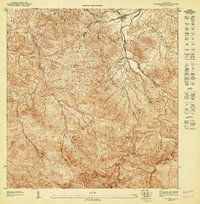 1947 El Yunque NE1947 Print · USGSThe foothills of the northeastern Luquillo Mountains come into sharp focus in the 1940s, showing the early boundaries of the Caribbean National Forest. Researchers can trace the path of the Río Mameyes and locate old settlements such as Mameyes (Palmer) and Mabi.
 - 1947 Map of Fajardo NO, 1948 Print
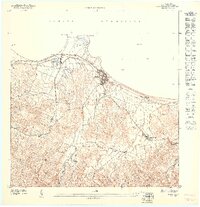 1947 Fajardo NO1948 Print · USGSCoastal Puerto Rico in the late 1940s reveals a landscape defined by the sugar industry and the sea. Genealogists and historians can trace the rail lines of the Fajardo Development Company and the agricultural estates at Colonia Monserrate and Casa Blanca.
 - 1952 Map of El Yunque, 1953 Print
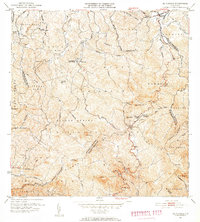 1952 El Yunque1953 Print · USGSThe peaks of the Sierra de Luquillo are mapped here in the early fifties during a period of expanding forest management and rural education. Researchers can locate early forest facilities like the Area Recreo de la Mina and local landmarks like Escuela Malpica.2 unique versions available
 - 1952 Map of Fajardo, 1953 Print
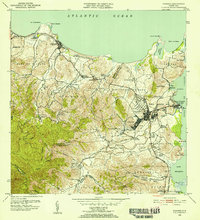 1952 Fajardo1953 Print · USGSNortheastern Puerto Rico in the early fifties reveals a landscape dominated by the sugar industry and coastal development. Genealogists and historians can locate numerous family-named estates like Colonia San Miguel or Colonia Josefa, and trace the path of the FAJARDO DEVELOPMENT railroad.2 unique versions available
 - 1958 Map of El Yunque, 1960 Print
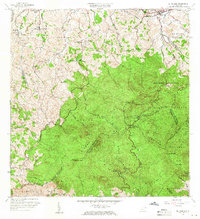 1958 El Yunque1960 Print · USGSThe rainforest peaks and coastal valleys of eastern Puerto Rico are captured here in the late fifties. Genealogists and researchers can trace rural life at Mameyes or locate local landmarks like the Escuela Malpica and the old Mina workings.
 - 1958 Map of Fajardo, 1960 Print
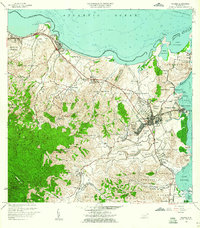 1958 Fajardo1960 Print · USGSThe northeastern coast of Puerto Rico in the late fifties shows a landscape of growing port towns and deep-rooted agricultural barrios. Researchers can trace family ties through Pueblo Norte, find coastal landmarks like Playa Sardinera, and locate the early boundaries of the Roosevelt Roads Naval Reservation.
 - 1962 Map of Fajardo, 1965 Print
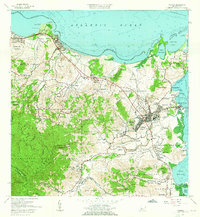 1962 Fajardo1965 Print · USGSCoastal Fajardo and Luquillo appear in the early 1960s as the region balanced its fishing and maritime heritage with growing federal and municipal infrastructure. Trace the early boundaries of Puerto Real, the Roosevelt Roads Naval Reservation, and local schools like Escuela Rio Chiquito.6 unique versions available
 - 1967 Map of El Yunque, 1969 Print
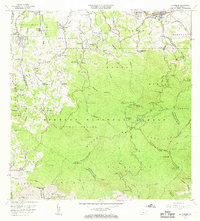 1967 El Yunque1969 Print · USGSThe Luquillo Mountains of Puerto Rico appear here in the late sixties as the island’s mountain interior and coastal barrios continued to develop. Researchers can trace rural school locations like Escuela Morovis and forest landmarks like Pico El Yunque.4 unique versions available
End of results
Showing maps 1-11 of 11
Frequently asked questions
- What are the different types of historical maps available for Mata de Plátano?
- What is the oldest map of Mata de Plátano?
- Where can I purchase historical maps of Mata de Plátano for my home or office?
- Where can I download high-res historical maps of Mata de Plátano?
- Are there historical topographic maps available for Mata de Plátano?
- Is there historical aerial imagery available for Mata de Plátano?
- Where are historical maps of Mata de Plátano sourced from?