Old Maps of Fultondale, Alabama for Hiking & Exploration
Hike through history with 37 historic maps of Fultondale. Explore old trails, ghost towns, and forgotten backroads — perfect for outdoor adventurers and local explorers.
- Rediscover forgotten places: Map out old mining camps, roads, and footpaths that no longer exist on modern maps.
- Layer with modern tools: Combine with LiDAR or satellite views to plan hikes through historical terrain.
- Made for exploration: Popular among hikers, overlanders, and local history lovers.
Use these maps to find adventure and explore the hidden past of Fultondale.
Fultondale, AL maps
(37)- 1889 Map of Birmingham
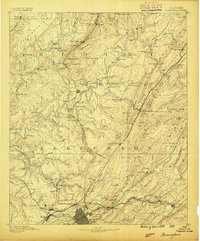 1889 Birmingham1889 Print · USGSIn the late nineteenth century, the Iron City was a growing urban core surrounded by intensive extraction sites and river crossings. Trace early industrial footprints at the Pratt Mines, Sloss Quarry, and the Old Irondale Furnace.
 - 1892 Map of Birmingham
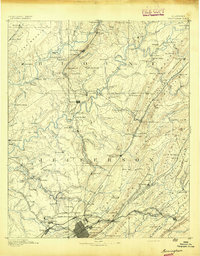 1892 Birmingham1892 Print · USGSBirmingham and the surrounding iron district emerge in the late nineteenth century as a hub of heavy industry and rail expansion. Trace the early footprints of the Sloss Mine, locate river crossings like Doss Ferry, and find family-named landmarks like Hanby Mill.
 - 1895 Map of Birmingham
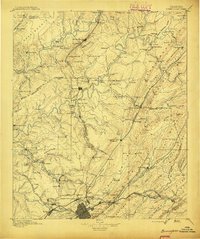 1895 Birmingham1895 Print · USGSBirmingham at the peak of its industrial boom is captured here as the city’s rail and mining networks spread through the surrounding valleys. Researchers can trace early iron production at Old Irondale Furnace or locate family roots at Doss Ferry and Pratt Mines.2 unique versions available
 - 1904 Map of Birmingham Coal District, 1967 Print
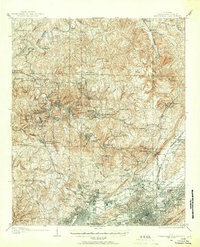 1904 Birmingham Coal District1967 Print · USGSJefferson County’s coal-mining heritage is captured here at the start of the twentieth century, showing a landscape defined by industry and iron. Genealogists can trace family roots through coal-camp settlements like Blossburg, Pratt City, and Ensley, or locate old landmarks like Orphans Chapel and Banner Mines.
 - 1905 Map of Leeds, 1956 Print
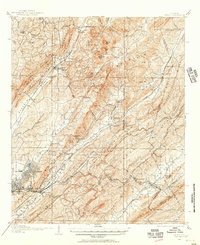 1905 Leeds1956 Print · USGSJefferson County industrial expansion meets early mountain settlements at the start of the century. You can trace the mineral economy through the Alfretta Mines and Lucy Duke Furnace, or locate family roots at Mount Pinson Pinson P.O. and Argo Station.
 - 1906 Map of Birmingham Special
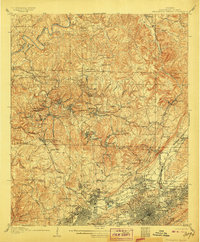 1906 Birmingham Special1906 Print · USGSJefferson County’s coal and rail boom is in full swing on this 1906 sheet, revealing the early industrial footprint of the Birmingham district. Trace the foundations of mining towns like Brookside, find family roots at Mt Olive Church, or locate vanished operations like Banner Mines and Ono PO.4 unique versions available
 - 1907 Map of Birmingham
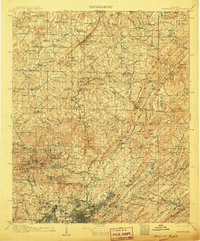 1907 Birmingham1907 Print · USGSJefferson and Blount counties are shown in the early twentieth century as the industrial heart of Alabama was taking shape. Genealogists can trace family roots through named landmarks like Box Schoolhouse, Watson PO, and the coal works at Watts Mines.5 unique versions available
 - 1907 Map of Leeds
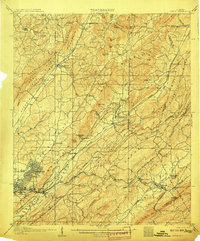 1907 Leeds1907 Print · USGSJefferson County was an industrial and rail hub in the early twentieth century as iron mining and agriculture shaped its valleys. Genealogists can trace family names and early community nodes like Mount Pinson Pinson PO, Alfretta Mines, and Oakgrove Church.3 unique versions available
 - 1953 Map of Birmingham, 1964 Print
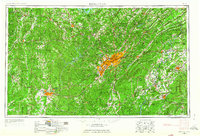 1953 Birmingham1964 Print · USGSCentral Alabama at mid-century shows a landscape defined by industrial expansion and the iron-rich ridges surrounding Birmingham. Researchers can trace the extensive rail networks of the L & N RR or locate historic federal sites like the Anniston Ordnance Depot.4 unique versions available
 - 1956 Map of Birmingham
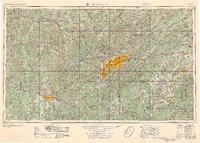 1956 Birmingham1956 Print · USGSCentral Alabama in the mid-fifties exhibits a landscape of growing cities and deep-rooted industrial corridors. Genealogists and historians can trace the development of suburban Mountain Brook or locate regional hubs like Sylacauga and Jasper.
 - 1957 Map of Birmingham
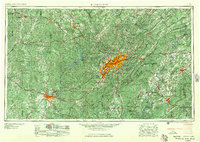 1957 Birmingham1957 Print · USGSNorth-Central Alabama in the mid-fifties is an industrial powerhouse centered on the steel valleys and sprawling iron ridges. Genealogists and historians can trace the rail-linked growth of Birmingham and Tuscaloosa, or locate rural landmarks like Talladega College and the Anniston Ordnance Depot.
 - 1959 Map of Pinson, 1960 Print
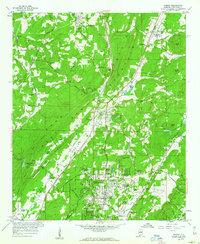 1959 Pinson1960 Print · USGSJefferson County in the late fifties shows the convergence of traditional mining and new suburban growth. Genealogists can trace family roots at Providence Church or Bradford, while collectors can map the LOUISVILLE AND NASHVILLE rail line and The Narrows.6 unique versions available
 - 1959 Map of Gardendale, 1960 Print
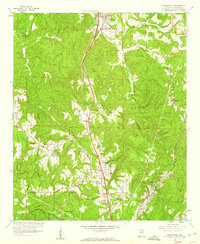 1959 Gardendale1960 Print · USGSJefferson County mining and rail corridors are captured in the late 1950s as settlements began to suburbanize. Researchers can locate family landmarks such as Moncrief Cem, Cluster Spring Ch, and the extensive operations of the Louisville and Nashville Railroad.4 unique versions available
 - 1959 Map of Birmingham North, 1961 Print
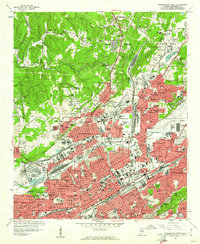 1959 Birmingham North1961 Print · USGSMid-century Birmingham thrives as a rail and industrial powerhouse in the late fifties. Researchers can trace family roots through dozens of neighborhoods like Tarrant City or locate historic landmarks such as Rickwood Field and the East Thomas Yards.6 unique versions available
 - 1975 Map of Pinson, 1977 Print
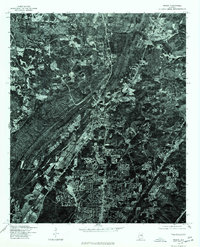 1975 Pinson1977 Print · USGSJefferson County enters a period of rapid suburban growth in the mid-1970s, as shown in this detailed aerial perspective. Researchers can trace development patterns and the early residential footprint of Palmerdale amid the wooded Alabama foothills.
 - 1975 Map of Birmingham North, 1977 Print
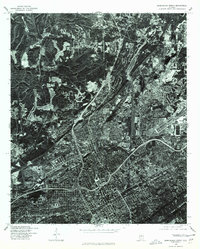 1975 Birmingham North1977 Print · USGSNorthern Alabama's urban and industrial core is captured in sharp detail during the mid-seventies. Trace the literal footprint of the city and its surrounding developments from Birmingham to the clearing and quarries of Fultondale.
 - 1975 Map of Gardendale, 1977 Print
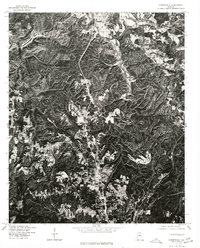 1975 Gardendale1977 Print · USGSJefferson County residential growth and Appalachian ridge terrain are clearly visible in the mid-1970s. Researchers can trace the development of Gardendale, the layout of Mt Olive, and the rural character surrounding Morris.
 - 1984 Map of Birmingham North, 1985 Print
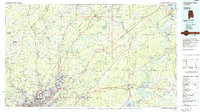 1984 Birmingham North1985 Print · USGSNorth Alabama in the mid-eighties shows the bustling intersection of the Appalachian foothills and the Deep South's industrial heart. Genealogists and historians can trace the paths of the Southern Railway and Seaboard System Railroad through towns like Oneonta, Leeds, and Springville.2 unique versions available
 - 1997 Map of Birmingham North, 2001 Print
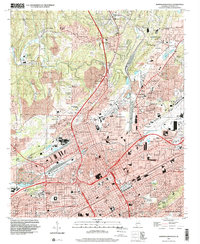 1997 Birmingham North2001 Print · USGSBirmingham and its northern industrial suburbs are captured here in the late nineties, showcasing a dense network of rail yards and neighborhoods. Researchers can trace historic sites like Rickwood Field, Oak Hill Cemetery, and the campus of Birmingham Southern College.
 - 2011 Map of Gardendale, 2011 Print
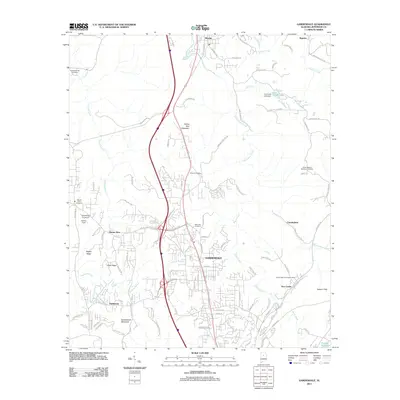 2011 Gardendale2011 Print · USGSJefferson County north of Birmingham comes into focus in this early 21st-century survey, detailing the suburban growth around Gardendale. Researchers can trace local landmarks like the Roto Wing Inc Airport and historic sites such as Moncrief Cemetery or the New Castle Community House.
 - 2011 Map of Pinson, 2011 Print
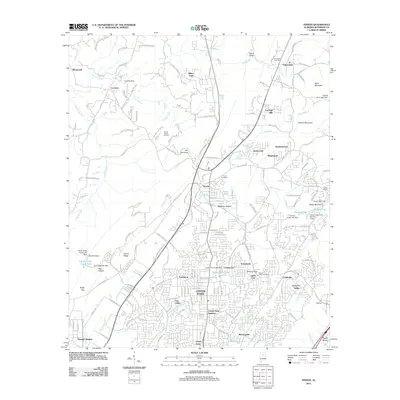 2011 Pinson2011 Print · USGSNortheast of Birmingham in the early 2010s, this area reveals a mix of established residential neighborhoods and industrial sites. Genealogists can locate family landmarks at Pinson Cemetery and Taylors Chapel Cemetery or trace the geography of Sweeney Hollow.
 - 2011 Map of Birmingham North, 2011 Print
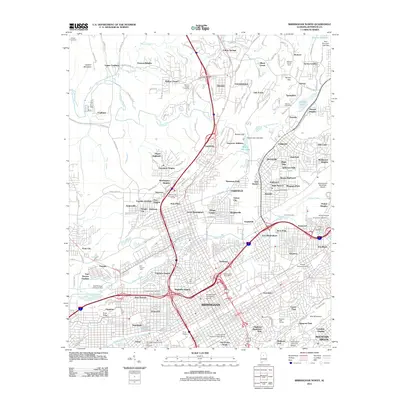 2011 Birmingham North2011 Print · USGSNorthern Birmingham at the start of the 2010s reveals a dense network of industrial history and residential growth. Genealogists can trace family sites near Oak Hill Cemetery, Walker Chapel, and the Arlington Historic House and Gardens.
 - 2014 Map of Gardendale, 2014 Print
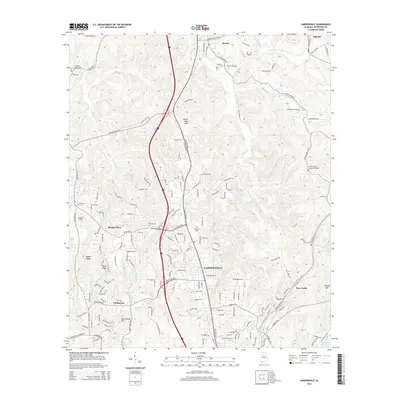 2014 Gardendale2014 Print · USGSJefferson County residential growth and natural ridges define this Alabama landscape in the mid-2010s. Researchers can locate several community landmarks including Parker Field and Moncrief Cem, or trace the winding waters of Cunningham Cr.
 - 2014 Map of Pinson, 2014 Print
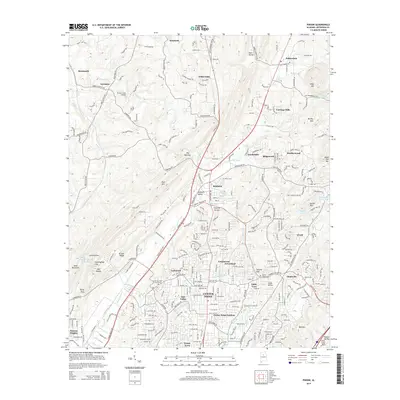 2014 Pinson2014 Print · USGSJefferson County’s northeastern corridor is captured here in the mid-2010s, showing the dense suburban development between major ridgelines. Trace the evolution of local communities from Pinson to Chalkville, and locate family sites like Pinson Cem or Taylors Chapel Cem.
 - 2014 Map of Birmingham North, 2014 Print
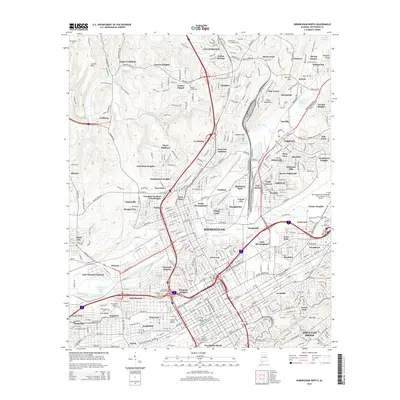 2014 Birmingham North2014 Print · USGSCovers Fultondale, including Birmingham, Mountain Brook, and other nearby areas
Showing maps 1-25 of 37
Top cities near Fultondale
- Birmingham historical maps
- Hoover historical maps
- Vestavia Hills historical maps
- Homewood historical maps
- Trussville historical maps
- Bessemer historical maps
See more
Top neighborhoods of Fultondale
- Frances Heights historical maps
- Fulton Springs historical maps
- Fultondale Estates historical maps
- Graysons Addition historical maps
- Walker Chapel historical maps
Frequently asked questions
- What are the different types of historical maps available for Fultondale?
- What is the oldest map of Fultondale?
- Where can I purchase historical maps of Fultondale for my home or office?
- Where can I download high-res historical maps of Fultondale?
- Are there historical topographic maps available for Fultondale?
- Is there historical aerial imagery available for Fultondale?
- Where are historical maps of Fultondale sourced from?