Old Maps of Morrow Acres, Guntersville for Academic Research
Study the evolution of Morrow Acres with 19 high-resolution historic maps. Whether you're teaching, researching, or modeling changes in land use, these maps provide essential visual documentation of urban, environmental, and geographic change.
- Analyze long-term change: Track patterns in development, transportation, and natural features.
- Ideal for environmental or urban studies: Support academic projects with primary historical map data.
- Use in the classroom or lab: Educators and researchers rely on these maps to bring historical context to life.
These maps are a powerful tool for teaching, research, and visualizing how Morrow Acres has changed over the decades.
Morrow Acres, Guntersville maps
(19)- 1885 Map of Gadsden
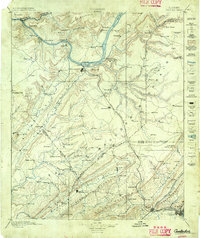 1885 Gadsden1885 Print · USGSNortheast Alabama in the mid-1880s was a landscape of river-side landings and emerging rail towns. Genealogists and historians can trace the early foundations of Guntersville and Gadsden while locating rural landmarks like Hillian Store, Cottonville, and Law Landing.
 - 1888 Map of Gadsden
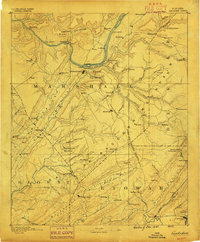 1888 Gadsden1888 Print · USGSNorth Alabama's river valleys and plateau lands are captured here in the late nineteenth century as the region transitioned from river landings to rail transport. Researchers can locate early post offices and commerce centers like Hillian's Store, Guntersville, and the ferry at Ft Deposit.
 - 1892 Map of Gadsden
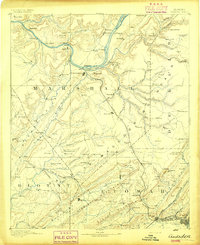 1892 Gadsden1892 Print · USGSNorth Alabama's river-and-rail economy is captured here in the late nineteenth century as Guntersville and Gadsden emerge as regional hubs. Genealogists and historians can trace the routes of the Birmingham Mineral R. R. or locate old community centers like Cottonville and Mt Zion.
 - 1895 Map of Gadsden
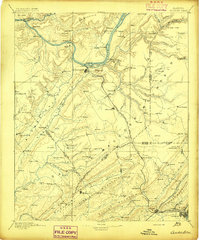 1895 Gadsden1895 Print · USGSNortheast Alabama at the close of the century was a landscape of river landings and mountain gaps where the Tennessee River met growing rail hubs. Genealogists can trace family holdings near Hillian Store, Cottonville, and the remote heights of Lookout Mountain.
 - 1903 Map of Gadsden
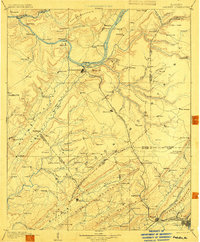 1903 Gadsden1903 Print · USGSNorthern Alabama in the late nineteenth century centers on the busy Tennessee River corridor and its surrounding ridges. Trace old family sites and transport hubs like Hillian Store, Lovelace Landing, and the Mt Zion church.4 unique versions available
 - 1936 Map of Guntersville
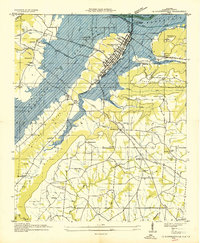 1936 Guntersville1936 Print · USGSGuntersville and the Tennessee River valley are shown here in the mid-thirties during the early stages of reservoir flooding. Researchers can trace the river's transformation near Smith Landing Field or locate rural landmarks like Lattiswood Sch and Warrenton Ch.
 - 1948 Map of Guntersville, 1969 Print
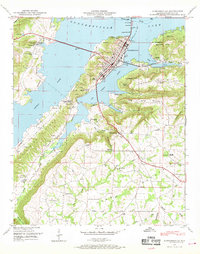 1948 Guntersville1969 Print · USGSMarshall County in the late 1940s reveals a region defined by the waters of Guntersville Lake and its busy river crossings. Genealogists can trace family names at Warrenton Cem or locate community hubs like Crossroads School and the N C & St L Ry Ferry.3 unique versions available
 - 1950 Map of Guntersville
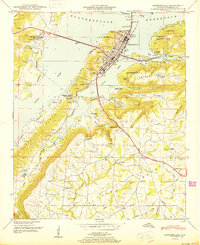 1950 Guntersville1950 Print · USGSMarshall County's river-and-rail hub is captured here at the mid-century mark, as the town adjusts to the recently created reservoir. Genealogists can trace family roots at Warrenton Cem, find rural clusters like Rabbit Town, or locate old landmarks like the Solitude School.
 - 1956 Map of Gadsden, 1966 Print
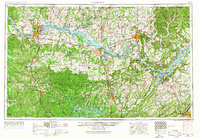 1956 Gadsden1966 Print · USGSNorth Alabama in the mid-1950s shows a region transformed by river engineering and federal industry. Genealogists and local historians can trace the development of the Tennessee Valley through the growth of Huntsville, the sprawling Redstone Arsenal, and the expansive Guntersville Lake.3 unique versions available
 - 1958 Map of Gadsden
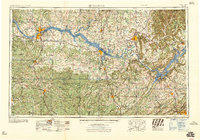 1958 Gadsden1958 Print · USGSNorth Alabama comes alive in the late 1950s as the Tennessee Valley Authority’s massive river projects and the rise of the space industry reshaped the landscape. Researchers can trace the mid-century footprints of Huntsville, Redstone Arsenal, and the riverside rail networks of the Southern railroad.
 - 1960 Map of Gadsden
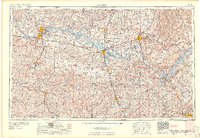 1960 Gadsden1960 Print · USGSNorthern Alabama in the mid-1950s is defined by the mighty Tennessee River and its massive reservoirs. Trace the development of Huntsville and Redstone Arsenal or explore the vast William B Bankhead National Forest.2 unique versions available
 - 1963 Map of Gadsden
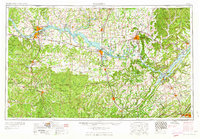 1963 Gadsden1963 Print · USGSNorthern Alabama underwent a dramatic mid-century transformation as the Tennessee Valley became a hub for defense and industry. Researchers can trace the development of the Redstone Arsenal, the route of the Natchez Trace Parkway, and long-standing rail lines like the Southern Railway.
 - 1984 Map of Guntersville, 1985 Print
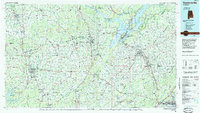 1984 Guntersville1985 Print · USGSNorthern Alabama at the start of the eighties shows a landscape shaped by massive TVA impoundments and a robust rail network. Genealogists and historians can trace family land across Brindley Mountain or near old rail stops on the Louisville and Nashville RR and Southern Ry.2 unique versions available
 - 2011 Map of Guntersville, 2011 Print
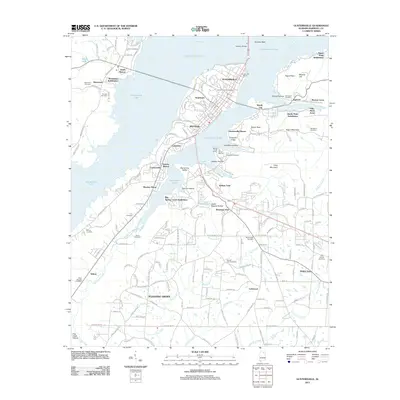 2011 Guntersville2011 Print · USGSMarshall County's riverfront landscape is documented here in the early twenty-first century as GUNTERSVILLE sits at the heart of the Tennessee River valley. Genealogists can locate numerous rural burial sites like Rehobeth Cemetery and Little Branch Cemetery or trace old neighborhoods from Mill Village to Rabbit Town.
 - 2014 Map of Guntersville, 2014 Print
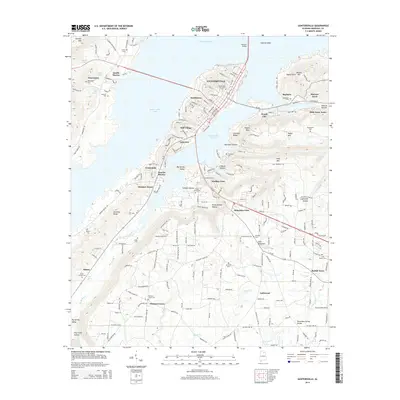 2014 Guntersville2014 Print · USGSMarshall County's lakeside landscape is captured here in the early twenty-first century, centered on the growing peninsula of GUNTERSVILLE. Researchers can trace local lineage through numerous sites like Guntersville City Cem or locate neighborhoods such as Mill Village and Wyeth City.
 - 2018 Map of Guntersville, 2018 Print
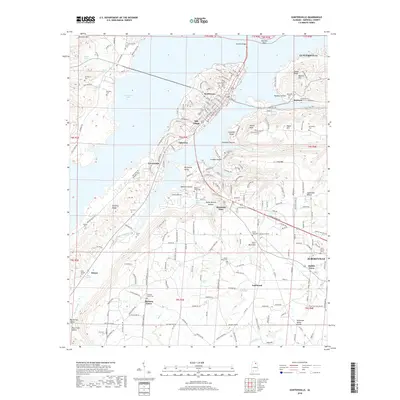 2018 Guntersville2018 Print · USGSMarshall County's lakeside and mountain terrain are captured here in the years following the modern expansion of Guntersville and Albertville. Researchers can locate numerous family burial grounds and community landmarks like Lowry Cem, Bethlehem Cem, and Brashers Chapel.
 - 2020 Map of Guntersville, 2020 Print
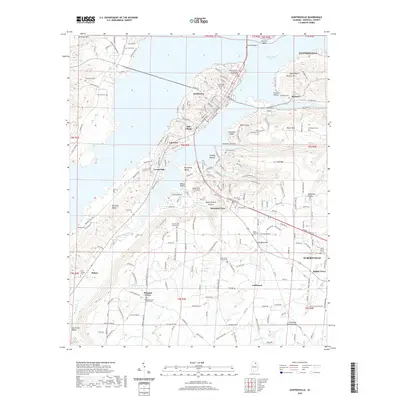 2020 Guntersville2020 Print · USGSThe Tennessee River shoreline and the plateau of Albertville appear here during the early twenty-first century. Researchers can trace family history through numerous landmarks like the Marshall County Courthouse and Pleasant Grove Church Cem.
 - 2024 Map of Guntersville, 2024 Print
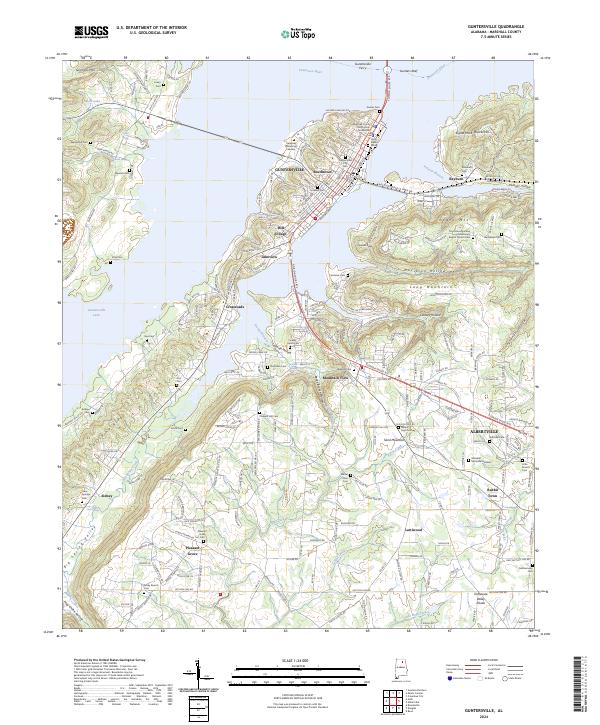 2024 Guntersville2024 Print · USGSThe Tennessee River valley and the heights of Sand Mountain are documented in this contemporary survey of Marshall County. Local researchers can trace family landmarks and rural communities from Rabbit Town to the Guntersville Ferry, including Rehobeth Cem and Mill Village.
 - 2026 Map of Guntersville, 2026 Print
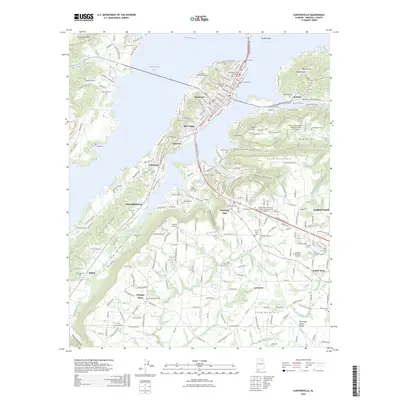 2026 Guntersville2026 Print · USGSCovers Morrow Acres, including Albertville, Guntersville, and other nearby areas
End of results
Showing maps 1-19 of 19
Top cities near Morrow Acres
- Huntsville historical maps
- Albertville historical maps
- Scottsboro historical maps
- Boaz historical maps
- Guntersville historical maps
- Arab historical maps
See more
Frequently asked questions
- What are the different types of historical maps available for Morrow Acres?
- What is the oldest map of Morrow Acres?
- Where can I purchase historical maps of Morrow Acres for my home or office?
- Where can I download high-res historical maps of Morrow Acres?
- Are there historical topographic maps available for Morrow Acres?
- Is there historical aerial imagery available for Morrow Acres?
- Where are historical maps of Morrow Acres sourced from?