1900s (20th Century) Maps of Childersburg, Alabama
Explore 11 historic maps of Childersburg from the 1900s (20th Century). These maps offer a rare glimpse into what life looked like during the 1900s — showing old roads, neighborhoods, homes, and landmarks that have changed or disappeared over time.
Whether you're researching your family's past, planning a metal detecting trip, or studying how Childersburg's landscape evolved across the 1900s, these high-resolution maps are a powerful tool for exploring the history of this region.
- Focus on a specific era: All maps on this page are from the 1900s, giving you a focused view of this time period.
- See what’s changed: Compare century-old streets, trails, and buildings to today's modern landscape using overlays and satellite layers.
- Research with precision: Use these maps for genealogy, historical research, land use analysis, or educational projects.
- View, download, or print: Maps are fully viewable online in high resolution, and can be downloaded or printed for your own records.
Start exploring Childersburg's history through authentic maps from the 1900s. This is your window into the past.
Childersburg, AL maps
(11)- 1915 Map of Gantts Quarry
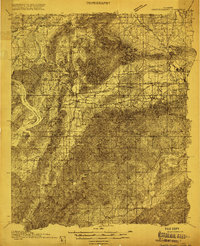 1915 Gantts Quarry1915 Print · USGSTalladega and Shelby counties appear here during the height of the early twentieth-century marble boom. Researchers can trace the rail-driven economy near Sylacauga and locate family landmarks like Oak Grove Church, Gantts Quarry, and Center Hill School.4 unique versions available
 - 1917 Map of Gantts Quarry
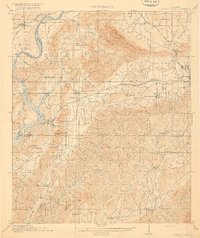 1917 Gantts Quarry1917 Print · USGSThe marble-rich corridor between the Coosa River and Sylacauga is captured here during the height of the early twentieth-century quarrying boom. Researchers can trace the rail-and-river economy through landmarks like Gantts Quarry, Mc Gowan Ferry, and Eureka Quarry.3 unique versions available
 - 1953 Map of Birmingham, 1964 Print
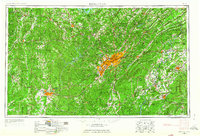 1953 Birmingham1964 Print · USGSCentral Alabama at mid-century shows a landscape defined by industrial expansion and the iron-rich ridges surrounding Birmingham. Researchers can trace the extensive rail networks of the L & N RR or locate historic federal sites like the Anniston Ordnance Depot.4 unique versions available
 - 1956 Map of Birmingham
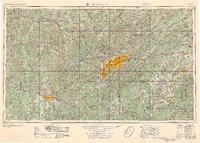 1956 Birmingham1956 Print · USGSCentral Alabama in the mid-fifties exhibits a landscape of growing cities and deep-rooted industrial corridors. Genealogists and historians can trace the development of suburban Mountain Brook or locate regional hubs like Sylacauga and Jasper.
 - 1957 Map of Birmingham
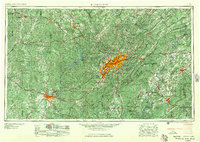 1957 Birmingham1957 Print · USGSNorth-Central Alabama in the mid-fifties is an industrial powerhouse centered on the steel valleys and sprawling iron ridges. Genealogists and historians can trace the rail-linked growth of Birmingham and Tuscaloosa, or locate rural landmarks like Talladega College and the Anniston Ordnance Depot.
 - 1958 Map of Childersburg, 1960 Print
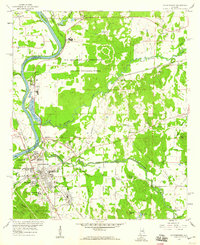 1958 Childersburg1960 Print · USGSChildersburg and the Coosa River valley are shown here during a peak of industrial and military activity in the late fifties. Genealogists can locate family landmarks including Watwood Sch, Mt Zion Cem, and the Alabama Ordnance Works.3 unique versions available
 - 1958 Map of Harpersville, 1960 Print
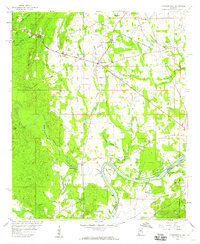 1958 Harpersville1960 Print · USGSHarpersville and the surrounding Shelby County riverlands are captured here in the late fifties, showcasing a landscape of rail-fed commerce and rural communities. Genealogists can trace family landmarks like Baker Grove Ch, Kidd Cem, and the riverfront settlement of Bailey.5 unique versions available
 - 1975 Map of Harpersville, 1977 Print
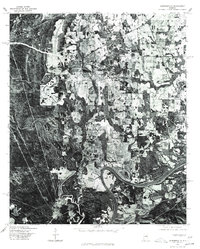 1975 Harpersville1977 Print · USGSHarpersville and the Coosa River valley are seen here in the mid-seventies through detailed aerial imagery. Researchers can trace land use patterns and property boundaries near Harpersville or study the shoreline development along Lay Lake and Childersburg.
 - 1975 Map of Childersburg, 1977 Print
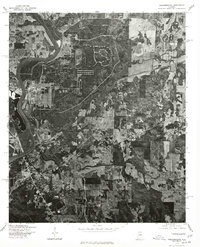 1975 Childersburg1977 Print · USGSThe industrial and riverfront character of Talladega County comes into sharp focus in this mid-1970s orthophotograph. Genealogists and local historians can trace the precise residential layout of Childersburg and its proximity to the waters of Lay Lake and the Coosa River.
 - 1980 Map of Sylacauga West
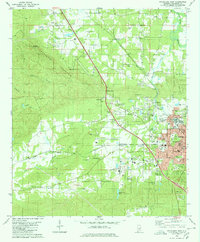 1980 Sylacauga West1980 Print · USGSThe marble industrial corridor west of Sylacauga comes alive in the late 1970s, showing a landscape shaped by stone quarries and rail lines. Genealogists and local historians can trace family-named landmarks like Allen Cem, St Andrews Ch, and the high ridges of Kahatchee Mountain.
 - 1984 Map of Birmingham South, 1985 Print
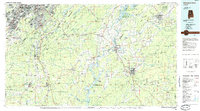 1984 Birmingham South1985 Print · USGSThe Birmingham metropolitan region and the Coosa River valley are shown here in the mid-eighties as suburban growth expanded south into the ridges. Genealogists and local historians can trace the development of communities from Bessemer to Sylacauga alongside the Lay Lake shoreline and the Talladega National Forest.2 unique versions available
End of results
Showing maps 1-11 of 11
Top cities near Childersburg
- Talladega historical maps
- Chelsea historical maps
- Pell City historical maps
- Sylacauga historical maps
- Leeds historical maps
- Lincoln historical maps
See more
Top neighborhoods of Childersburg
- Indian Hill historical maps
- Coosa Court historical maps
- Forest Hills historical maps
- Minor Terrace historical maps
- Pinewood Terrace historical maps
Frequently asked questions
- What are the different types of historical maps available for Childersburg?
- What is the oldest map of Childersburg?
- Where can I purchase historical maps of Childersburg for my home or office?
- Where can I download high-res historical maps of Childersburg?
- Are there historical topographic maps available for Childersburg?
- Is there historical aerial imagery available for Childersburg?
- Where are historical maps of Childersburg sourced from?