1900s (20th Century) Maps of Auke Bay, Alaska
Explore 6 historic maps of Auke Bay from the 1900s (20th Century). These maps offer a rare glimpse into what life looked like during the 1900s — showing old roads, neighborhoods, homes, and landmarks that have changed or disappeared over time.
Whether you're researching your family's past, planning a metal detecting trip, or studying how Auke Bay's landscape evolved across the 1900s, these high-resolution maps are a powerful tool for exploring the history of this region.
- Focus on a specific era: All maps on this page are from the 1900s, giving you a focused view of this time period.
- See what’s changed: Compare century-old streets, trails, and buildings to today's modern landscape using overlays and satellite layers.
- Research with precision: Use these maps for genealogy, historical research, land use analysis, or educational projects.
- View, download, or print: Maps are fully viewable online in high resolution, and can be downloaded or printed for your own records.
Start exploring Auke Bay's history through authentic maps from the 1900s. This is your window into the past.
Auke Bay, AK maps
(6)- 1947 Map of Juneau B-2, 1955 Print
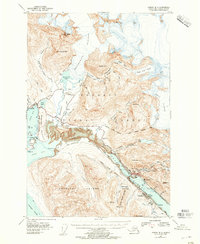 1947 Juneau B-21955 Print · USGSThe industrial waterfront of Juneau and Douglas comes to life in the years following the war. Genealogists and historians can trace mining sites like the Alaska-Juneau Mill, the development of the Juneau Airport, and the early layout of Treadwell.2 unique versions available
 - 1949 Map of Juneau B-2
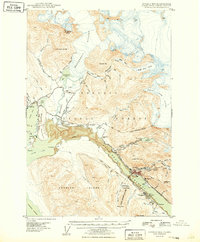 1949 Juneau B-21949 Print · USGSJuneau and Douglas Island appear at a pivotal post-war moment when mining infrastructure and new aviation developments sat side-by-side. Trace the legacy of the gold era through the Alaska Juneau Mill, the Ebner Adit, and the industrial footprint at Treadwell.
 - 1951 Map of Juneau
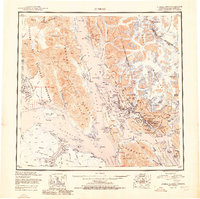 1951 Juneau1951 Print · USGSJuneau and the industrial waterfront of the Gastineau Channel are shown here at the start of the 1950s. Researchers can trace the mid-century footprint of Juneau, the mining history of Treadwell, and remote maritime outposts like Hoonah and Gustavus.4 unique versions available
 - 1962 Map of Juneau B-2, 1963 Print
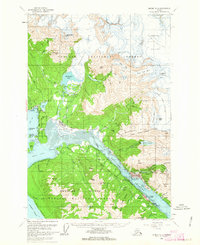 1962 Juneau B-21963 Print · USGSThe Gastineau Channel and the peaks of Douglas Island appear here in the early sixties as the regional mining legacy began to meet modern growth. Genealogists and historians can trace the foundations of the local economy through The Glory Hole, the Alaska Juneau Adit, and the Treadwell site.4 unique versions available
 - 1962 Map of Juneau, 1966 Print
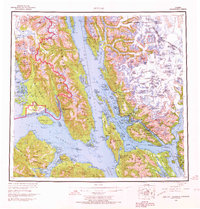 1962 Juneau1966 Print · USGSSoutheast Alaska in the early sixties showcases a maritime landscape defined by the Tongass National Forest and the peaks of the Coast Mountains. Trace the footprints of coastal industry at Treadwell, Thane, and the regional hub of Juneau.7 unique versions available
 - 1986 Map of Juneau B-2 NW, 1987 Print
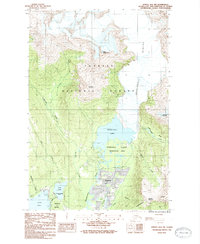 1986 Juneau B-2 NW1987 Print · USGSGreater Juneau in the mid-eighties shows a landscape of glacial retreat and residential expansion near the Mendenhall Valley. Researchers can trace the development of Mendenhaven and the University of Alaska (Juneau) alongside landmarks like Dredge Lake and Auke Lake.2 unique versions available
End of results
Showing maps 1-6 of 6
Frequently asked questions
- What are the different types of historical maps available for Auke Bay?
- What is the oldest map of Auke Bay?
- Where can I purchase historical maps of Auke Bay for my home or office?
- Where can I download high-res historical maps of Auke Bay?
- Are there historical topographic maps available for Auke Bay?
- Is there historical aerial imagery available for Auke Bay?
- Where are historical maps of Auke Bay sourced from?